A major Dubai health hub has launched an Emirati training programme in line with a nationwide push to unlock the potential of local talent.
Dubai Healthcare City Authority, the governing body of the Dubai Healthcare City free zone, will provide three-month placements to Emirati graduates in fields such as business administration, finance, marketing and communications and information technology.
The first class of trainees were invited to name the employment scheme, giving it the title Masari — Arabic for My Pathway.
Our aim is that it will provide us with a pool of talent who we can nurture and develop to play important roles in the future long-term sustainable development of DHCC
Kawthar Kazim,
Dubai Healthcare City (DHCC)
“Enablement and empowerment form the foundations of the work we do at Dubai Healthcare City in line with the UAE National Agenda,” said Kawthar Kazim, vice president of business support at the authority.
“[The] Masari Programme will give young trainees valuable experience that will contribute to their future successes, by enabling them to harness their academic knowledge to build their professional careers.
“They will learn on the job directly from department heads, have their place in a team and will be compensated monthly to get a feel of what it is like in a fully functioning workplace environment.
“Our aim is that it will provide us with a pool of talent who we can nurture and develop to play important roles in the future long-term sustainable development of DHCC.”
In the first phase of the initiative, industry professionals will provide training to the graduates and help them to develop their skills.
Each graduate who completes the authority's training will receive certification, which will help to build their credentials for future employment applications.
Dubai Healthcare City was established in 2002 in an effort to bring together top class health sector services.
It is home to five hospitals and 168 clinics, and is served by more than 4,400 healthcare professionals.
The training programme is part of a wider drive to bolster the Emirati workforce across the country.
The UAE set out plans in September to ensure 10 per cent of the private-sector workforce were citizens in the next five years.
A series of initiatives was launched to increase the number of Emirati private-sector workers by 75,000, by 2026, as part of the Nafis programme.
These included paid training programmes, subsidies for Emiratis working in the private sector and support for local entrepreneurs looking to leave the public sector and start up their own companies.
The Emirati Talent Competitiveness Council was established as part of the ambitious strategy.
Earlier this month, Sheikh Mansour bin Zayed, Deputy Prime Minister and Minister of Presidential Affairs, chaired the first meeting of the council to review its progress and approve new programmes.
The meeting heard that 2,360 Emiratis had been employed by private companies in the first 90 days of the scheme.
The council approved a second package of initiatives, including a training scheme for nurses, a number of training courses to boost the expertise of Emirati graduates in several sectors and a career counselling programme.
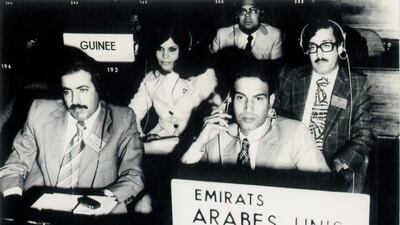
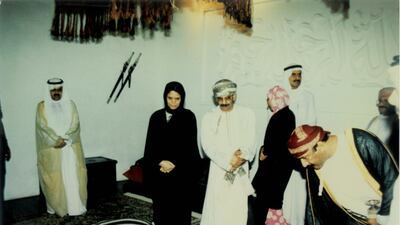
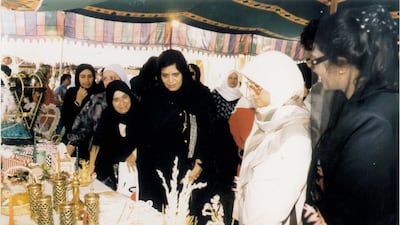
The UAE's first female Emirati to earn a doctorate: in pictures
What is type-1 diabetes
Type 1 diabetes is a genetic and unavoidable condition, rather than the lifestyle-related type 2 diabetes.
It occurs mostly in people under 40 and a result of the pancreas failing to produce enough insulin to regulate blood sugars.
Too much or too little blood sugar can result in an attack where sufferers lose consciousness in serious cases.
Being overweight or obese increases the chances of developing the more common type 2 diabetes.
UAE currency: the story behind the money in your pockets
SPECS
%3Cp%3EEngine%3A%20Twin-turbocharged%204-litre%20V8%3Cbr%3EPower%3A%20625%20bhp%3Cbr%3ETorque%3A%20630Nm%3Cbr%3EOn%20sale%3A%20Now%3Cbr%3EPrice%3A%20From%20Dh974%2C011%3C%2Fp%3E%0A
Where%20the%20Crawdads%20Sing
%3Cp%3E%3Cstrong%3EDirector%3A%20%3C%2Fstrong%3EOlivia%20Newman%3Cbr%3E%3Cstrong%3EStars%3A%3C%2Fstrong%3E%20Daisy%20Edgar-Jones%2C%20Taylor%20John%20Smith%2C%20Harris%20Dickinson%2C%20David%20Strathairn%3Cbr%3E%3Cstrong%3ERating%3A%3C%2Fstrong%3E%202%2F5%3C%2Fp%3E%0A
MATCH INFO
West Ham United 2 (Antonio 73', Ogbonna 90 5')
Tottenham Hotspur 3 (Son 36', Moura 42', Kane 49')
TEAMS
EUROPE:
Justin Rose, Francesco Molinari, Tyrrell Hatton, Tommy Fleetwood, Jon Rahm, Rory McIlroy, Alex Noren, Thorbjorn Olesen, Paul Casey, Sergio Garcia, Ian Poulter, Henrik Stenson
USA:
Brooks Koepka, Justin Thomas, Dustin Johnson, Patrick Reed, Bubba Watson, Jordan Spieth, Rickie Fowler, Webb Simpson, Tiger Woods, Phil Mickelson, Bryson DeChambeau ( 1 TBC)
MATCH INFO
Champions League quarter-final, first leg
Ajax v Juventus, Wednesday, 11pm (UAE)
Match on BeIN Sports
PROFILE OF INVYGO
Started: 2018
Founders: Eslam Hussein and Pulkit Ganjoo
Based: Dubai
Sector: Transport
Size: 9 employees
Investment: $1,275,000
Investors: Class 5 Global, Equitrust, Gulf Islamic Investments, Kairos K50 and William Zeqiri
Ten tax points to be aware of in 2026
1. Domestic VAT refund amendments: request your refund within five years
If a business does not apply for the refund on time, they lose their credit.
2. E-invoicing in the UAE
Businesses should continue preparing for the implementation of e-invoicing in the UAE, with 2026 a preparation and transition period ahead of phased mandatory adoption.
3. More tax audits
Tax authorities are increasingly using data already available across multiple filings to identify audit risks.
4. More beneficial VAT and excise tax penalty regime
Tax disputes are expected to become more frequent and more structured, with clearer administrative objection and appeal processes. The UAE has adopted a new penalty regime for VAT and excise disputes, which now mirrors the penalty regime for corporate tax.
5. Greater emphasis on statutory audit
There is a greater need for the accuracy of financial statements. The International Financial Reporting Standards standards need to be strictly adhered to and, as a result, the quality of the audits will need to increase.
6. Further transfer pricing enforcement
Transfer pricing enforcement, which refers to the practice of establishing prices for internal transactions between related entities, is expected to broaden in scope. The UAE will shortly open the possibility to negotiate advance pricing agreements, or essentially rulings for transfer pricing purposes.
7. Limited time periods for audits
Recent amendments also introduce a default five-year limitation period for tax audits and assessments, subject to specific statutory exceptions. While the standard audit and assessment period is five years, this may be extended to up to 15 years in cases involving fraud or tax evasion.
8. Pillar 2 implementation
Many multinational groups will begin to feel the practical effect of the Domestic Minimum Top-Up Tax (DMTT), the UAE's implementation of the OECD’s global minimum tax under Pillar 2. While the rules apply for financial years starting on or after January 1, 2025, it is 2026 that marks the transition to an operational phase.
9. Reduced compliance obligations for imported goods and services
Businesses that apply the reverse-charge mechanism for VAT purposes in the UAE may benefit from reduced compliance obligations.
10. Substance and CbC reporting focus
Tax authorities are expected to continue strengthening the enforcement of economic substance and Country-by-Country (CbC) reporting frameworks. In the UAE, these regimes are increasingly being used as risk-assessment tools, providing tax authorities with a comprehensive view of multinational groups’ global footprints and enabling them to assess whether profits are aligned with real economic activity.
Contributed by Thomas Vanhee and Hend Rashwan, Aurifer
The Africa Institute 101
Housed on the same site as the original Africa Hall, which first hosted an Arab-African Symposium in 1976, the newly renovated building will be home to a think tank and postgraduate studies hub (it will offer master’s and PhD programmes). The centre will focus on both the historical and contemporary links between Africa and the Gulf, and will serve as a meeting place for conferences, symposia, lectures, film screenings, plays, musical performances and more. In fact, today it is hosting a symposium – 5-plus-1: Rethinking Abstraction that will look at the six decades of Frank Bowling’s career, as well as those of his contemporaries that invested social, cultural and personal meaning into abstraction.