

Two of the world's most prominent climate champions met for the first time this week when Greta Thunberg interviewed Sir David Attenborough on Skype.
The Swedish climate activist guest edited part of BBC Radio 4's Today programme broadcast on Monday, December 30. As part of the show, the 16-year-old Skyped with the award-winning filmmaker and environmentalist from her home town in Sweden.
During the interview Attenborough told Thunberg she had shown great bravery.
Thunberg credited the 93-year-old historian as being the person who opened her eyes to climate change.
"When I was younger, maybe nine or 10 years old, the thing that made me open my eyes with what was happening for the environment were films and documentaries about the natural world and what was going on, so thank you for that," she told Attenborough from Stockholm.

The Blue Planet creator also lauded the youngster for her activism, telling presenter Mishal Husain that Thunberg had "achieved things that many of us who have been working on climate change have failed to achieved."
The pair of climate giants alluded to the importance of the upcoming Cop26 set to take place in Glasgow next year. "The Cop26 is special. I cannot say enough how important it is," said Thunberg while Attenborough warned listeners: "every day we delay things we are missing an opportunity."
A message on repeat
-
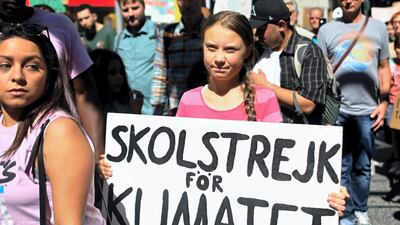
Teen activist Greta Thunberg walks during the Global Climate Strike march on September 20, 2019 in New York City. AFP -
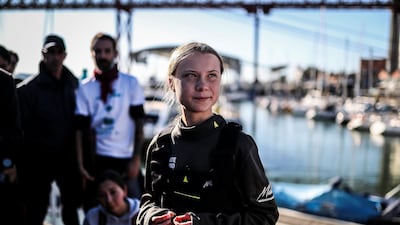
Swedish climate activist Greta Thunberg is pictured after disembarking from the catamaran La Vagabonde at the Santo Amaro docks in Lisbon, on December 3, 2019. AFP -
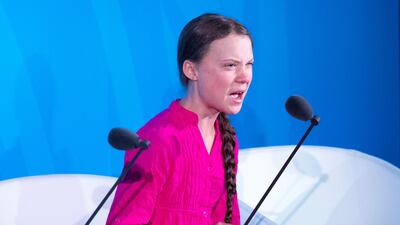
Youth climate activist Greta Thunberg speaks during the UN Climate Action Summit on September 23, 2019 at the United Nations Headquarters in New York City. AFP -
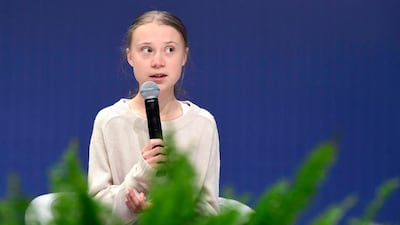
Swedish climate activist Greta Thunberg participates in a conversation with leading climate scientists during the event "Unite behind the science" within the UN Climate Change Conference COP25 at the 'IFEMA - Feria de Madrid' exhibition centre, in Madrid, on December 10, 2019. AFP -
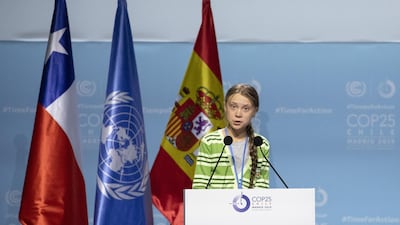
Swedish environment activist Greta Thunberg gives a speech at the plenary session during the COP25 Climate Conference on December 11, 2019 in Madrid, Spain. Getty Images -

A view of a new four-story-high mural of Swedish climate activist Greta Thunberg on November 11, 2019 in San Francisco, California. AFP -
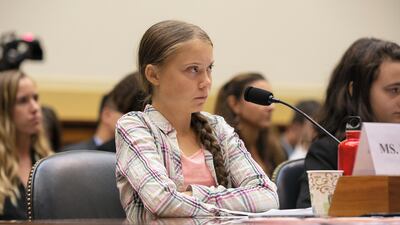
Swedish environment activist Greta Thunberg looks on during a joint hearing before the House Foreign Affairs Committee, Europe, Eurasia, Energy and the Environment Subcommittee, and the House Select Committee on the Climate Crisis, at the Rayburn House Office Building on Capitol Hill in Washington, DC, on September 18, 2019. AFP -
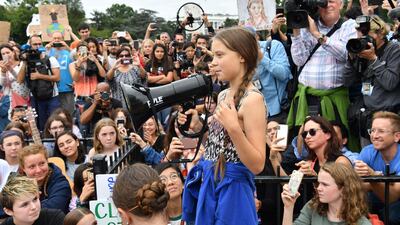
Swedish environment activist Greta Thunberg speaks at a climate protest outside the White House in Washington, DC on September 13, 2019. - Thunberg, 16, has spurred teenagers and students around the world to strike from school every Friday under the rallying cry "Fridays for future" to call on adults to act now to save the planet. AFP -

Swedish climate activist Greta Thunberg holds a press conference with other young activists to discuss the ongoing UN Climate Change Conference COP25 at the 'IFEMA - Feria de Madrid' exhibition centre, in Madrid, on December 9, 2019. AFP -
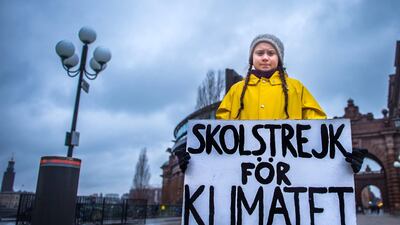
Swedish 15-year-old girl Greta Thunberg holds a placard reading "School strike for the climate" during a protest against climate change outside the Swedish parliament on November 30, 2018. AFP -
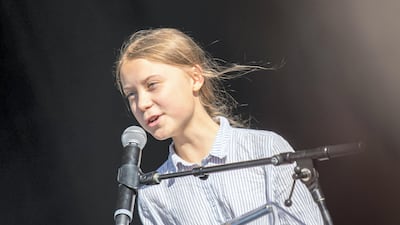
Swedish climate activist Greta Thunberg speaks to the crowd of protesters during the global climate strike in Montreal, Canada, on September 27 2019. AFP -

Swedish climate activist Greta Thunberg poses for a photograph during an inteview with AFP onboard the Malizia II sailing yacht at the Mayflower Marina in Plymouth, southwest England, on August 13, 2019 ahead of her journey across the Atlantic to New York where she will attend the UN Climate Action Summit next month. AFP -
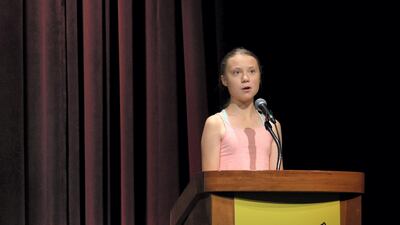
Swedish climate activist Greta Thunberg speaks before receiving the Amnesty International's Ambassador of Conscience award at George Washington University in Washington, DC on September 16, 2019. AFP -
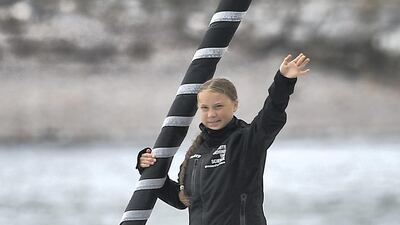
Swedish climate activist Greta Thunberg waves from aboard the Malizia II IMOCA class sailing yacht off the coast of Plymouth, southwest England, on August 14, 2019, as she starts her journey across the Atlantic to New York where she will attend the UN Climate Action Summit next month. AFP -
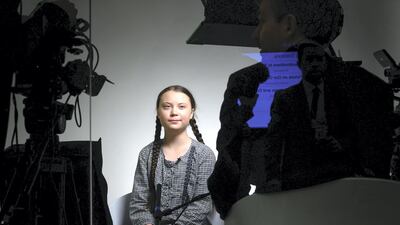
Swedish youth climate activist Greta Thunberg smiles during a TV interview at the World Economic Forum (WEF) annual meeting, on January 25, 2019 in Davos, eastern Switzerland. AFP


Thunberg, who will turn 17 on Friday, January 3, asked Attenborough if mentioning climate change was controversial 20 years ago when he was making documentaries.
"We could see the writing very clearly on the wall then and I did a programme in Easter Island to mark the beginning of the new millennium, and I stood in front of those great memorials to a broken civilisation and said 'this is an example of what happens if you don’t care about the environment'."
The former BBC controller also asked Thunberg how long she could sustain saying the same thing.
"It is a problem with repeating things over and over again, but that’s what we need to do because they’re obviously not listening. You need to repeat it until it is being understood," answered the teen.
The pair signed off by expressing a desire to meet in person in the future and Attenborough reiterated his thanks to the teenager saying: "Until we do, I do thank you very much."
Fans of both personalities took to twitter to thank the climate change champions for their work.
The radio programme focused heavily on environmental issues as a whole, with reports on sustainable flying, forest fire warnings in Australia and an interview with Svante Thunberg, Greta's father.

