Dr Khaled Azzam, Director of the Prince’s School of Traditional Arts in London, with some of the work produced by his students and previous alumni. Mark Chilvers for The National

Coronation pride for royal architect Khaled Azzam


Jacqueline Fuller
  • English
  • Arabic

The Chelsea Flower Show was just some annual event that happened in London as far as Khaled Azzam was concerned, until the day he answered a call from the heir to the throne.

Prince Charles, inspired by two antique Turkish rugs at his residence in Gloucestershire, was on the phone with an unusual brief: “I want you to work with me to design a garden.”

“I thought it was fabulous,” Azzam tells The National. “I’d never designed a garden before in my life so I went to see him at Highgrove House. He’s long been fascinated with Islamic art and architecture, and, because that's what I practise, we always spoke about such things.

“He said, ‘All these carpets that I live with and love are interpretations of gardens, but I would like to design and build a garden that is an interpretation of carpets. I want to flip it around'.”

So it was that in 2001, among the usual avant-garde displays and emerging trends at the horticultural showcase, the first entry ever submitted by a member of the British royal family instead dug deep into the past.

The classic Islamic charbagh representing the four gardens of Paradise in the Quran was a crowd-drawing triumph yet, when it won a coveted silver-gilt medal, Azzam remembers thinking: “Whoa, that’s crazy.”

The Carpet Garden, now in situ at Highgrove, is the living incarnation of the long combined efforts of King Charles III and Khaled Azzam to bring forth new shoots from ancient artistic roots. Photo: Highgrove Gardens / The Prince’s Foundation

In situ ever since at the Highgrove estate, The Carpet Garden is the living incarnation of the two men’s long combined efforts to bring forth new shoots from ancient artistic roots.

Now, more than 20 years on, Azzam presides as director of the Prince’s School of Traditional Arts that is regarded as a centre for excellence in teaching the geometries held to be the common thread between age-old skills all but abandoned in much of the modern world.

The aim is to nurture patterning techniques such as the kind of inlaid stone workmanship used to create the Cosmati Pavement, the 13th-century mosaic floor on which, fittingly, the throne will be placed during the coronation ceremony for King Charles III inside Westminster Abbey on Saturday.

An extensive network of PSTA outreach programmes has spread across the globe from the core educational base in London to regenerate the cultural heritage of different regions and communities, from Jamaica to the UAE to China.

But, from the outset, the school’s ethos often evoked incomprehension, ridicule and, at times, undisguised animosity from some within the art establishment.

“There were moments that I was very, very worried, saying, ‘if this dies, it dies with us',” Azzam recalls. “What His Majesty was saying that architecture, cities and education should be about, and how we should deal with the environment, was not commonplace. All those things were seen to be interesting and quaint. We never saw ourselves as being alternative. We were part of what we used to call ‘essential thinking’.

“Very early on, we had this strong bond; we understood exactly what we had to do. Then, I had to understand something. He was a prince, now he’s a king. We’ve had visionaries, we’ve had patrons all throughout history, that is the role of a prince. But my role is to make it happen.”

If the mission was to accumulate centuries of precious creative knowledge for alumni to reinvigorate and, in turn, hand to the next generation then there was one significant impediment.

“There weren’t any masters to teach us,” Azzam says.

The disconcerting discovery came when he went to set up a regional centre in his birthplace in 2005 with the Egyptian Ministry of Culture, Art Jameel and local artisans from whom he had hoped to gain a deeper understanding of tradition.

Instead, Azzam had a moment of transformational thinking that “not everything old is beautiful” — the craftsmen and women, in spite of their evident skills, had for generations been learning by rote.

“I really respect them and their role in the community but some of it was quite shoddy workmanship. They would start telling me, ‘Ah, but you don’t know, I am an eighth-generation carpenter and I learnt this from my grandfather'.

Khaled Azzam introduces the then Prince of Wales to post-graduate students at his School of Traditional Arts in east London. Photo: PA Images via Getty Images

“But, because we came from an academic background and could analyse this stuff, I said, ‘your grandfather made a mistake three generations ago and you’re just repeating that mistake'.”

Most saddening for Azzam, however, was that the artists were stuck perpetually reproducing the same designs over and over again. Without much grasp of the underlying mathematical principles, they were incapable of extending the lineage of their traditional arts and crafts by creating anything new.

“It opened my eyes to the limitations of simply teaching young people through copying the forms of the past. We had to go back to the origin, to deconstruct buildings and understand how they were built. We had to look at certain principles to see what they were about. In a way, it was a voyage backwards.

“Then there was a moment where we started turning around, and now we feel that there is enough of a contemporary heritage to call it a living tradition and move into the future.

“If we’ve been successful in one thing, it’s in really delivering the philosophy into practice. It’s not just talk, it’s about making things, creating this process from the origin to the manifestation.”

That their son would end up running any school, let alone a prestigious art institution for the Prince’s Foundation, would once have been inconceivable for Azzam’s parents, Laila and Omar, who long kept quiet their fears over his prospects.

The fact that I not just got into university but got a PhD and became involved in education… my brother says it's a sign of the end of the world

Young Khaled, despite being widely read and full of curiosity about what was happening in the world, was nonetheless lost within the four walls of a classroom.

“I was always last in the class because I just didn’t understand what was going on at all.

“Although my parents never let on, they admitted it much later, saying, ‘You know, we didn't think you'd even make it into university'.

“And the fact that I not just got into university but then got a PhD and became involved in education … my brother says it's a sign of the end of the world,” he says, smiling affectionately at the long-running joke.

It pops up again when we’re discussing Azzam’s receipt of the Lieutenant of the Royal Victorian Order, a knighthood granted by Queen Elizabeth II in 2009, and his speech before Pope Benedict XVI as representative of Muslims at an interfaith forum the following year.

“I don’t know why until this day that I was chosen,” he says. “It’s another sign of the end of the world, according to my brother.”

Azzam puts being such “a terrible student” down to a childhood disrupted by frequent geographical moves but doesn’t rule out an undiagnosed learning difficulty. “In our day, you were just stupid if you didn’t get it,” he says.

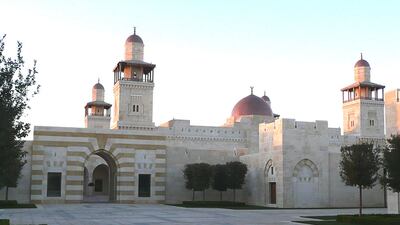
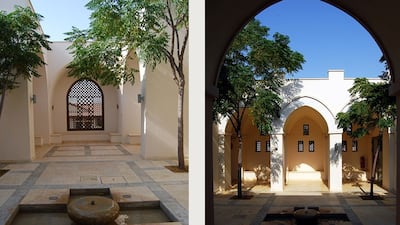
  • The Royal Hashemite Court in Jordan. All photos: Khaled Azzam
    The Royal Hashemite Court in Jordan. All photos: Khaled Azzam
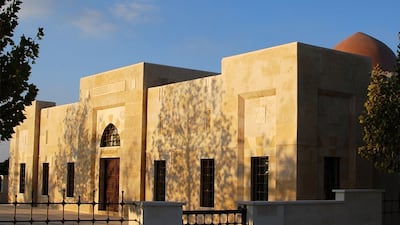
  • The Museum of Aal El Beyyt in Jordan
    The Museum of Aal El Beyyt in Jordan
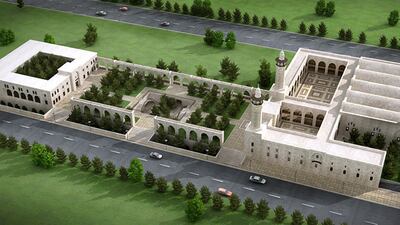
  • The Tripoli Mosque in Lebanon
    The Tripoli Mosque in Lebanon
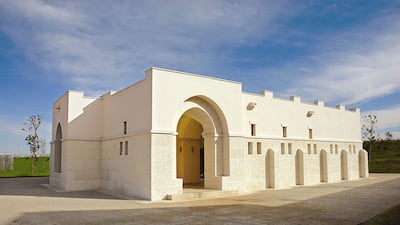
  • The Madaba Mosque in Jordan.
    The Madaba Mosque in Jordan.
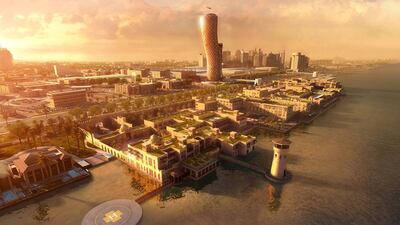
  • The Souk of Abu Dhabi in the UAE
    The Souk of Abu Dhabi in the UAE
  • The King Hussein Institute for Biotechnology and Cancer in Jordan
    The King Hussein Institute for Biotechnology and Cancer in Jordan
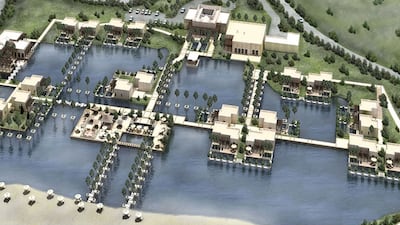
  • The Sanctuary in Jordan
    The Sanctuary in Jordan
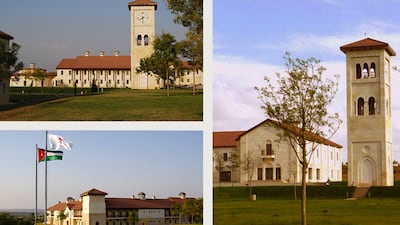
  • The King’s Academy School in Jordan
    The King’s Academy School in Jordan
  • The El Gouna Six Stars Hotel in Egypt
    The El Gouna Six Stars Hotel in Egypt

Education eventually took its place as the most important part of his working life once he began to understand that the Latin root, educere, means “to draw out of” not “to put into”.

As a consequence of his own difficulties, he feels an enormous responsibility towards those unable to cope with school systems intent on treating students like empty vessels that need filling with facts and figures.

“I became very, very interested in the journey you take a student through to bring what’s in them out to the surface,” he says.

Though born in Egypt, where his mother “always returned to have her babies”, the family lived abroad because of his father’s job as a senior urban planner for the UN.

After a stint in Saudi Arabia, there was a relatively settled period of 10 years in Lebanon until civil war broke out. They struggled on for almost a year until Omar, working in Paris at the time, suggested that the rest of the family join him temporarily: “Just come over for Christmas,” was the gist, “things will die down.”

I felt I belonged in that building, that it was part of me. It was a very profound experience that changed my life somehow

“We managed to get on a flight one day very, very quickly — just packed a hand bag each and ran off to the airport. We left everything behind, all our books, our toys, our belongings, our clothes and just never went back because the war never ended. We had to rebuild our life. Then England became my home and I’m very grateful.”

This is not quite how his younger self felt when first pitching up late one Autumn afternoon in what was then the “very, very small town” of Cambridge.

“There was nothing to do. In those days, everything shut at five o’clock. It was foggy, cold and damp, and I’d just spent two years in the South of France. I was trying to figure out what I had done wrong.”

The posse of four siblings received a hospitable welcome from the locals and quickly grew to love their adopted home and the architecture lining the cobbled streets.

There was a particularly memorable encounter, surrounded by fluted limestone columns, medieval stained-glass windows and Tudor symbols in King’s College Chapel that would later inform much of Azzam’s work.

Beneath the celebrated fan-vaulted ceiling of the 500-year-old King's College Chapel built by a succession of English monarchs, a teenaged Khaled Azzam made an unexpected discovery: he found himself. Photo: Carl Court/Getty Images

Beneath the celebrated fan-vaulted ceiling of the 500-year-old Gothic landmark built by a succession of English monarchs, the teenager made an unexpected discovery: he found himself.

“Physically, I had nothing to do with that place. Culturally, I was an Egyptian who came to England. I wasn’t even an architect yet. I was doing my O-Levels and A-Levels.

“But there was something in me that completely understood that building; the message, the beauty of it.

“I felt I belonged there, that it was part of me. It was a very profound experience that changed my life somehow.”

Arriving at what he says all the great civilisations of the world had known, however, came only with time and experience.

Students at the Prince's School of Traditional are taught traditional geometry and patterning skills using a compass and ruler. Photo: Mark Chilvers

It has been a constant journey of learning with two particular guiding lights along the way. The first was Abdel Wahed El Wakil, the foremost authority in Islamic architecture with whom Azzam subjected himself completely for eight intense years at a “hothouse” of an office in London.

“We had a difficult relationship because he was very demanding but he was my master who taught me everything I know about architecture,” he says. “I just totally understood that this idea of apprenticeship is to give yourself to somebody, and if you find that person, you're very, very lucky.”

Through El Wakil, he met Keith Critchlow, the renowned geometer and founder of the Visual and Traditional Arts Department at the Prince’s Institute of Architecture, and developed a deep fascination with the properties underpinning the order of nature.

He talks of the intricate chambers of the nautilus shell and the honeycomb built in hives by bees or the movement of planets over time across the night sky, but perhaps his favourite example is the delicate, six-fold symmetry of a single ice crystal.

“All snowflakes are hexagonal because the molecular structure of water is hexagonal yet — and this blows my mind every time I say it — no two snowflakes that fall on the ground are the same.

“There is a principle of unity manifesting variety. All snowflakes start from the same origin but their final form is the record of their journey down to Earth. In a way, that’s us as human beings as well.

Azzam compares the cross-section of the DNA double helix to the pattern of rose windows in cathedrals such as York Minster. Getty

“If you look at a DNA structure, the very basic thing that binds us all together, it’s a beautiful spiral that has a certain proportional system and yet we’re all different."

The firm belief that we all have the same origin is fundamental not only to his work at the school but also as principal of Khaled Azzam Associates, the “little practice” he started in 1991.

It is hard, he agrees, not to lose count of the many architectural projects he has been involved in over the years: mosques like that commissioned by King Abdallah II to commemorate his father, the late King Hussein, in Amman; royal residences, commercial buildings, offices and schools across the Middle East; and, most recently, the master plan launched by Crown Prince Mohammed bin Salman to sustainably develop the historic Al Ula site in Saudi Arabia where he is headed a few days after our interview.

“I’ve been running two careers, that’s why the number of projects looks bigger than it is,” Azzam, now 62, says modestly.

When it’s pointed out that there doesn’t seem to be much spare time weighing on his hands, Azzam concedes that he wouldn’t know what to do with it if he had any. He works all day, never tiring because, well, he doesn’t see it as work.

Khaled Azzam concedes that he wouldn’t know what to do with spare time if he had any away from work. 'I am blessed in my life because I do things I love,' he says. Photo: Mark Chilvers

“I am blessed in my life because I do things I love. I think very, very early on in my career, I just said: I want work to be part of my identity, part of my character — it all has to be one.

“The school has always been somewhere that I found a great sense of nourishment and fulfilment. And it's very much part of my life. My wife, Mona, complains that they’re my family more than my family at home.”

Home proper is Clapham in south London, where Mona has laid the unshakeable foundation that has made “all this possible”, Azzam acknowledges. Everything is taken care of so that he never has to worry: the house, the well-being of their children, Issam, 24, and Nadia, 19, and the bills “that she knows I won’t pay”.

A few hours before the rest of the family wakes each day, he is already at his desk with a cup of coffee, drawing while looking out across one of London’s largest parks.

“It's very quiet,” he says. “There's nobody there, and then you see one person, then two people, and then you see life coming through, and you start having a funny relationship with it. It's beautiful.”

From his perch, Azzam envies the super fit elderly man who runs around Clapham Common each day, and often wonders with a glint of amusement what the dogs make of their owners diligently picking up after them.

He watches the latest exercise trends come and go with the seasons — the boxing or tai chi or, as with a few years back, “everybody standing on their heads”.

No surprises, though, that after a lifetime eschewing fleeting fashions, he isn’t inclined to join them.


Mercer, the investment consulting arm of US services company Marsh & McLennan, expects its wealth division to at least double its assets under management (AUM) in the Middle East as wealth in the region continues to grow despite economic headwinds, a company official said.

Mercer Wealth, which globally has $160 billion in AUM, plans to boost its AUM in the region to $2-$3bn in the next 2-3 years from the present $1bn, said Yasir AbuShaban, a Dubai-based principal with Mercer Wealth.

Within the next two to three years, we are looking at reaching $2 to $3 billion as a conservative estimate and we do see an opportunity to do so,” said Mr AbuShaban.

Mercer does not directly make investments, but allocates clients’ money they have discretion to, to professional asset managers. They also provide advice to clients.

“We have buying power. We can negotiate on their (client’s) behalf with asset managers to provide them lower fees than they otherwise would have to get on their own,” he added.

Mercer Wealth’s clients include sovereign wealth funds, family offices, and insurance companies among others.

From its office in Dubai, Mercer also looks after Africa, India and Turkey, where they also see opportunity for growth.

Wealth creation in Middle East and Africa (MEA) grew 8.5 per cent to $8.1 trillion last year from $7.5tn in 2015, higher than last year’s global average of 6 per cent and the second-highest growth in a region after Asia-Pacific which grew 9.9 per cent, according to consultancy Boston Consulting Group (BCG). In the region, where wealth grew just 1.9 per cent in 2015 compared with 2014, a pickup in oil prices has helped in wealth generation.

BCG is forecasting MEA wealth will rise to $12tn by 2021, growing at an annual average of 8 per cent.

Drivers of wealth generation in the region will be split evenly between new wealth creation and growth of performance of existing assets, according to BCG.

Another general trend in the region is clients’ looking for a comprehensive approach to investing, according to Mr AbuShaban.

“Institutional investors or some of the families are seeing a slowdown in the available capital they have to invest and in that sense they are looking at optimizing the way they manage their portfolios and making sure they are not investing haphazardly and different parts of their investment are working together,” said Mr AbuShaban.

Some clients also have a higher appetite for risk, given the low interest-rate environment that does not provide enough yield for some institutional investors. These clients are keen to invest in illiquid assets, such as private equity and infrastructure.

“What we have seen is a desire for higher returns in what has been a low-return environment specifically in various fixed income or bonds,” he said.

“In this environment, we have seen a de facto increase in the risk that clients are taking in things like illiquid investments, private equity investments, infrastructure and private debt, those kind of investments were higher illiquidity results in incrementally higher returns.”

The Abu Dhabi Investment Authority, one of the largest sovereign wealth funds, said in its 2016 report that has gradually increased its exposure in direct private equity and private credit transactions, mainly in Asian markets and especially in China and India. The authority’s private equity department focused on structured equities owing to “their defensive characteristics.”

Timeline

2012-2015

The company offers payments/bribes to win key contracts in the Middle East

May 2017

The UK SFO officially opens investigation into Petrofac’s use of agents, corruption, and potential bribery to secure contracts

September 2021

Petrofac pleads guilty to seven counts of failing to prevent bribery under the UK Bribery Act

October 2021

Court fines Petrofac £77 million for bribery. Former executive receives a two-year suspended sentence 

December 2024

Petrofac enters into comprehensive restructuring to strengthen the financial position of the group

May 2025

The High Court of England and Wales approves the company’s restructuring plan

July 2025

The Court of Appeal issues a judgment challenging parts of the restructuring plan

August 2025

Petrofac issues a business update to execute the restructuring and confirms it will appeal the Court of Appeal decision

October 2025

Petrofac loses a major TenneT offshore wind contract worth €13 billion. Holding company files for administration in the UK. Petrofac delisted from the London Stock Exchange

November 2025

180 Petrofac employees laid off in the UAE

The%20specs
%3Cp%3E%3Cstrong%3EEngine%3A%20%3C%2Fstrong%3E3.0%20twin-turbo%20inline%20six-cylinder%0D%3Cbr%3E%3Cstrong%3ETransmission%3A%20%3C%2Fstrong%3Eeight-speed%0D%3Cbr%3E%3Cstrong%3EPower%3A%20%3C%2Fstrong%3E503hp%0D%3Cbr%3E%3Cstrong%3ETorque%3A%20%3C%2Fstrong%3E600Nm%0D%3Cbr%3E%3Cstrong%3EPrice%3A%20%3C%2Fstrong%3Efrom%20Dh450%2C000%0D%3Cbr%3E%3Cstrong%3EOn%20sale%3A%20%3C%2Fstrong%3Enow%3C%2Fp%3E%0A

'Manmarziyaan' (Colour Yellow Productions, Phantom Films)
Director: Anurag Kashyap​​​​​​​
Cast: Abhishek Bachchan, Taapsee Pannu, Vicky Kaushal​​​​​​​
Rating: 3.5/5

CONFIRMED%20LINE-UP
%3Cp%3EElena%20Rybakina%20(Kazakhstan)%0D%3Cbr%3EOns%20Jabeur%20(Tunisia)%0D%3Cbr%3EMaria%20Sakkari%20(Greece)%0D%3Cbr%3EBarbora%20Krej%C4%8D%C3%ADkov%C3%A1%20(Czech%20Republic)%0D%3Cbr%3EBeatriz%20Haddad%20Maia%20(Brazil)%0D%3Cbr%3EJe%C4%BCena%20Ostapenko%20(Latvia)%0D%3Cbr%3ELiudmila%20Samsonova%0D%3Cbr%3EDaria%20Kasatkina%E2%80%AF%0D%3Cbr%3EVeronika%20Kudermetova%E2%80%AF%0D%3Cbr%3ECaroline%20Garcia%20(France)%E2%80%AF%0D%3Cbr%3EMagda%20Linette%20(Poland)%E2%80%AF%0D%3Cbr%3ESorana%20C%C3%AErstea%20(Romania)%E2%80%AF%0D%3Cbr%3EAnastasia%20Potapova%E2%80%AF%0D%3Cbr%3EAnhelina%20Kalinina%20(Ukraine)%E2%80%AF%E2%80%AF%0D%3Cbr%3EJasmine%20Paolini%20(Italy)%E2%80%AF%0D%3Cbr%3EEmma%20Navarro%20(USA)%E2%80%AF%0D%3Cbr%3ELesia%20Tsurenko%20(Ukraine)%0D%3Cbr%3ENaomi%20Osaka%20(Japan)%20-%20wildcard%0D%3Cbr%3EEmma%20Raducanu%20(Great%20Britain)%20-%20wildcard%3Cbr%3EAlexandra%20Eala%20(Philippines)%20-%20wildcard%3C%2Fp%3E%0A
%20Ramez%20Gab%20Min%20El%20Akher
%3Cp%3E%3Cstrong%3ECreator%3A%3C%2Fstrong%3E%20Ramez%20Galal%3C%2Fp%3E%0A%3Cp%3E%3Cstrong%3EStarring%3A%3C%2Fstrong%3E%20Ramez%20Galal%3C%2Fp%3E%0A%3Cp%3E%3Cstrong%3EStreaming%20on%3A%20%3C%2Fstrong%3EMBC%20Shahid%3C%2Fp%3E%0A%3Cp%3E%3Cstrong%3ERating%3A%20%3C%2Fstrong%3E2.5%2F5%3C%2Fp%3E%0A
How to avoid crypto fraud
  • Use unique usernames and passwords while enabling multi-factor authentication.
  • Use an offline private key, a physical device that requires manual activation, whenever you access your wallet.
  • Avoid suspicious social media ads promoting fraudulent schemes.
  • Only invest in crypto projects that you fully understand.
  • Critically assess whether a project’s promises or returns seem too good to be true.
  • Only use reputable platforms that have a track record of strong regulatory compliance.
  • Store funds in hardware wallets as opposed to online exchanges.

THE SPECS

2020 Toyota Corolla Hybrid LE

Engine: 1.8 litre combined with 16-volt electric motors

Transmission: Automatic with manual shifting mode

Power: 121hp

Torque: 142Nm

Price: Dh95,900

Know your Camel lingo

The bairaq is a competition for the best herd of 50 camels, named for the banner its winner takes home

Namoos - a word of congratulations reserved for falconry competitions, camel races and camel pageants. It best translates as 'the pride of victory' - and for competitors, it is priceless

Asayel camels - sleek, short-haired hound-like racers

Majahim - chocolate-brown camels that can grow to weigh two tonnes. They were only valued for milk until camel pageantry took off in the 1990s

Millions Street - the thoroughfare where camels are led and where white 4x4s throng throughout the festival

TEST SQUADS

Bangladesh: Mushfiqur Rahim (captain), Tamim Iqbal, Soumya Sarkar, Imrul Kayes, Liton Das, Shakib Al Hasan, Mominul Haque, Nasir Hossain, Sabbir Rahman, Mehedi Hasan, Shafiul Islam, Taijul Islam, Mustafizur Rahman and Taskin Ahmed.

Australia: Steve Smith (captain), David Warner, Ashton Agar, Hilton Cartwright, Pat Cummins, Peter Handscomb, Matthew Wade, Josh Hazlewood, Usman Khawaja, Nathan Lyon, Glenn Maxwell, Matt Renshaw, Mitchell Swepson and Jackson Bird.

The specs

Engine: 2.2-litre, turbodiesel

Transmission: 6-speed auto

Power: 160hp

Torque: 385Nm

Price: Dh116,900

On sale: now

Ten tax points to be aware of in 2026

1. Domestic VAT refund amendments: request your refund within five years

If a business does not apply for the refund on time, they lose their credit.

2. E-invoicing in the UAE

Businesses should continue preparing for the implementation of e-invoicing in the UAE, with 2026 a preparation and transition period ahead of phased mandatory adoption. 

3. More tax audits

Tax authorities are increasingly using data already available across multiple filings to identify audit risks. 

4. More beneficial VAT and excise tax penalty regime

Tax disputes are expected to become more frequent and more structured, with clearer administrative objection and appeal processes. The UAE has adopted a new penalty regime for VAT and excise disputes, which now mirrors the penalty regime for corporate tax.

5. Greater emphasis on statutory audit

There is a greater need for the accuracy of financial statements. The International Financial Reporting Standards standards need to be strictly adhered to and, as a result, the quality of the audits will need to increase.

6. Further transfer pricing enforcement

Transfer pricing enforcement, which refers to the practice of establishing prices for internal transactions between related entities, is expected to broaden in scope. The UAE will shortly open the possibility to negotiate advance pricing agreements, or essentially rulings for transfer pricing purposes. 

7. Limited time periods for audits

Recent amendments also introduce a default five-year limitation period for tax audits and assessments, subject to specific statutory exceptions. While the standard audit and assessment period is five years, this may be extended to up to 15 years in cases involving fraud or tax evasion. 

8. Pillar 2 implementation 

Many multinational groups will begin to feel the practical effect of the Domestic Minimum Top-Up Tax (DMTT), the UAE's implementation of the OECD’s global minimum tax under Pillar 2. While the rules apply for financial years starting on or after January 1, 2025, it is 2026 that marks the transition to an operational phase.

9. Reduced compliance obligations for imported goods and services

Businesses that apply the reverse-charge mechanism for VAT purposes in the UAE may benefit from reduced compliance obligations. 

10. Substance and CbC reporting focus

Tax authorities are expected to continue strengthening the enforcement of economic substance and Country-by-Country (CbC) reporting frameworks. In the UAE, these regimes are increasingly being used as risk-assessment tools, providing tax authorities with a comprehensive view of multinational groups’ global footprints and enabling them to assess whether profits are aligned with real economic activity. 

Contributed by Thomas Vanhee and Hend Rashwan, Aurifer

Jetour T1 specs

Engine: 2-litre turbocharged

Power: 254hp

Torque: 390Nm

Price: From Dh126,000

Available: Now

The National in Davos

We are bringing you the inside story from the World Economic Forum's Annual Meeting in Davos, a gathering of hundreds of world leaders, top executives and billionaires.

HIJRA

Starring: Lamar Faden, Khairiah Nathmy, Nawaf Al-Dhufairy

Director: Shahad Ameen

Rating: 3/5

UAE currency: the story behind the money in your pockets
LUKA CHUPPI

Director: Laxman Utekar

Producer: Maddock Films, Jio Cinema

Cast: Kartik Aaryan, Kriti Sanon​​​​​​​, Pankaj Tripathi, Vinay Pathak, Aparshakti Khurana

Rating: 3/5

Hydrogen: Market potential

Hydrogen has an estimated $11 trillion market potential, according to Bank of America Securities and is expected to generate $2.5tn in direct revenues and $11tn of indirect infrastructure by 2050 as its production increases six-fold.

"We believe we are reaching the point of harnessing the element that comprises 90 per cent of the universe, effectively and economically,” the bank said in a recent report.

Falling costs of renewable energy and electrolysers used in green hydrogen production is one of the main catalysts for the increasingly bullish sentiment over the element.

The cost of electrolysers used in green hydrogen production has halved over the last five years and will fall to 60 to 90 per cent by the end of the decade, acceding to Haim Israel, equity strategist at Merrill Lynch. A global focus on decarbonisation and sustainability is also a big driver in its development.

Updated: May 05, 2023, 4:36 PM