UN envoy to Syria Geir Pedersen is hoping for steady progress from talks between Syria’s government, opposition and civil society. EPA

Syria talks to begin in Geneva this week


Mina Aldroubi
  • English
  • Arabic

Representatives of Syria’s government, opposition and civil society are set to begin UN-led talks to draft a new constitution this week.

Set in the Swiss city of Geneva, the talks will be the seventh round between 15 members of each of Syria’s three factions. The latest round in October ended with no agreement on how to move forward.

The UN envoy to Syria, Geir Pedersen, said the parties have agreed on a deal and decided to meet again with his help.

Mr Pedersen has met those who co-chair the committee and they have agreed on a work agenda for the coming week. But said he is sceptical due to the failures of the previous tslks.

“If the three delegations do what they have said they will do, I hope that we can see some steady progress,” Mr Pedersen said. “But I learnt that through the six previous rounds of talks, I should not prejudge the outcome of the discussion.”

Mr Pedersen said the negotiations would seek to draft for popular approval, a reform, either through an amendment of the current constitution or by drafting a new one.

“I have consistently said that the committee should work in a way that builds trust and confidence. And during this session, I hope to see the constitution committee work with a sense of seriousness and purpose and determination to make progress that the situation demands,” said the UN official.

Part of Syria’s road to peace, pushed by the UN in 2012, is the drafting of a new constitution, followed by supervised elections.

However, last May, Syrian President Bashar Al Assad held presidential elections, which he won by a landslide, official figures showed.

It was considered a sham by western countries.

“Let me start by emphasising the obvious, and that is that Syria remains one of the gravest crises in the world and that there is a clear need for progress towards a political solution,” Mr Pedersen said.

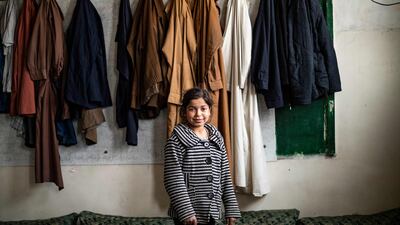
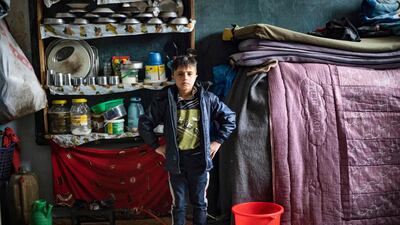
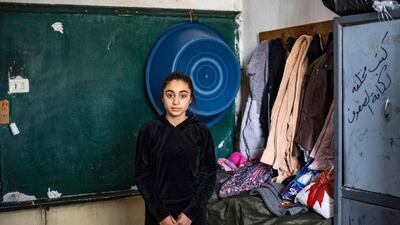
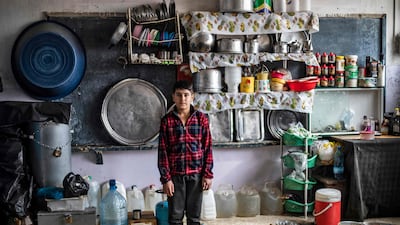
Children displaced by Syria's civil war – in pictures

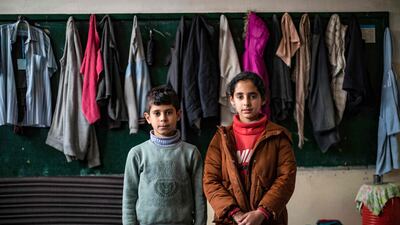
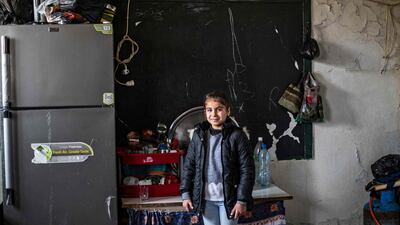
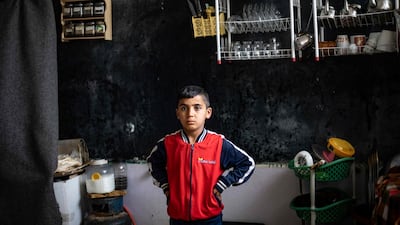
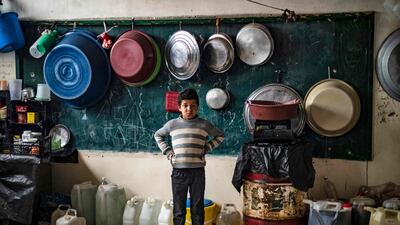
  • Twins Maha, right, and Mohammad Al Obaid, 11, were born in 2011, the year the Syrian war started. Displaced from Ras Al Ain in north-east Syria three years ago, they are pictured at a school on the outskirts of north-eastern city Hassakeh. All photos: AFP
    Twins Maha, right, and Mohammad Al Obaid, 11, were born in 2011, the year the Syrian war started. Displaced from Ras Al Ain in north-east Syria three years ago, they are pictured at a school on the outskirts of north-eastern city Hassakeh. All photos: AFP
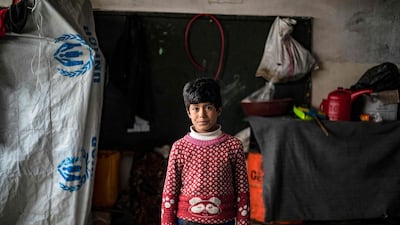
  • Nimr Alaywi, 11, who was also displaced from Ras Al Ain three years ago, at a school near Hassakeh.
    Nimr Alaywi, 11, who was also displaced from Ras Al Ain three years ago, at a school near Hassakeh.
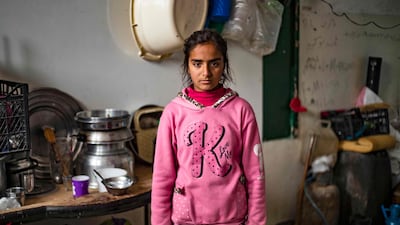
  • Amani Mahmud, 11, whose family fled Ras Al Ain, pictured at the school near Hassakeh. According to some estimates, 13.3 million Syrians have fled their homes since the civil war began on March 15, 2011.
    Amani Mahmud, 11, whose family fled Ras Al Ain, pictured at the school near Hassakeh. According to some estimates, 13.3 million Syrians have fled their homes since the civil war began on March 15, 2011.
  • Mohammad Issa, 11, who was also displaced from Ras Al Ain, at the school near Hassakeh.
    Mohammad Issa, 11, who was also displaced from Ras Al Ain, at the school near Hassakeh.
  • Assil Alaywi, 11, whose family also fled Ras Al Ain for Hassakeh three years ago. Ras Al Ain was the scene of heavy fighting for much of the conflict.
    Assil Alaywi, 11, whose family also fled Ras Al Ain for Hassakeh three years ago. Ras Al Ain was the scene of heavy fighting for much of the conflict.
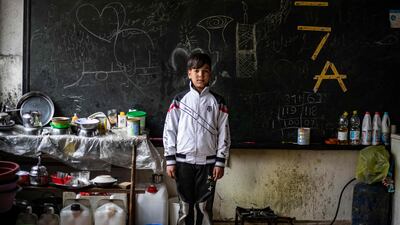
  • Yazan Khodr, 11, at the school near Hassakeh, after his family fled Ras Al Ain. Various groups, including Syrian government forces, extremists and Kurdish fighters, vied for control of Ras Al Ain.
    Yazan Khodr, 11, at the school near Hassakeh, after his family fled Ras Al Ain. Various groups, including Syrian government forces, extremists and Kurdish fighters, vied for control of Ras Al Ain.
  • Liana Ali, 11, in the school building on the outskirts of Hassakeh.
    Liana Ali, 11, in the school building on the outskirts of Hassakeh.
  • Manaf Mahmud, 11, pictured at the school near Hassakeh. Around four million people, at least half of them displaced, now live in the northern region.
    Manaf Mahmud, 11, pictured at the school near Hassakeh. Around four million people, at least half of them displaced, now live in the northern region.
  • Ahmad Abderrazzak, 11, at the school near Hassakeh.
    Ahmad Abderrazzak, 11, at the school near Hassakeh.
  • Fatima Barkal, 11, at the school near Hassakeh.
    Fatima Barkal, 11, at the school near Hassakeh.
  • Ammar Al Khodr, 11, at the school near Hassakeh.
    Ammar Al Khodr, 11, at the school near Hassakeh.
  • Majd Hassan, 11, at the school near Hassakeh, north-east Syria.
    Majd Hassan, 11, at the school near Hassakeh, north-east Syria.

The seventh round of talks will focus on the basics of governing, state identity, state symbols and the structure and functions of public authorities.

The delegates will spend one day working on each principle, before spending Friday trying to concretise any advances made.

The co-chairmen of the committee are Ahmad Kuzbari, head of government delegation, and Syrian opposition negotiations leader Hadi Al Bahra.

The Syrian war entered its 11th year in March. At least 500,000 people have been killed and half of the country’s population of 23 million has been displaced.

More than five million refugees have been scattered across the borders.

The Energy Research Centre

Founded 50 years ago as a nuclear research institute, scientists at the centre believed nuclear would be the “solution for everything”.
Although they still do, they discovered in 1955 that the Netherlands had a lot of natural gas. “We still had the idea that, by 2000, it would all be nuclear,” said Harm Jeeninga, director of business and programme development at the centre.
"In the 1990s, we found out about global warming so we focused on energy savings and tackling the greenhouse gas effect.”
The energy centre’s research focuses on biomass, energy efficiency, the environment, wind and solar, as well as energy engineering and socio-economic research.

Company profile

Date started: 2015

Founder: John Tsioris and Ioanna Angelidaki

Based: Dubai

Sector: Online grocery delivery

Staff: 200

Funding: Undisclosed, but investors include the Jabbar Internet Group and Venture Friends

The%C2%A0specs%20
%3Cp%3E%3Cstrong%3EEngine%3A%3C%2Fstrong%3E%204-cylinder%202.0L%20TSI%0D%3Cbr%3E%3Cstrong%3ETransmission%3A%3C%2Fstrong%3E%20Dual%20clutch%207-speed%0D%3Cbr%3E%3Cstrong%3EPower%3A%3C%2Fstrong%3E%20320HP%20%2F%20235kW%0D%3Cbr%3E%3Cstrong%3ETorque%3A%3C%2Fstrong%3E%20400Nm%0D%3Cbr%3E%3Cstrong%3EPrice%3A%20%3C%2Fstrong%3Efrom%20%2449%2C709%20%0D%3Cbr%3E%3Cstrong%3EOn%20sale%3A%3C%2Fstrong%3E%20now%3C%2Fp%3E%0A
The President's Cake

Director: Hasan Hadi

Starring: Baneen Ahmad Nayyef, Waheed Thabet Khreibat, Sajad Mohamad Qasem 

Rating: 4/5

If you go

Flight connections to Ulaanbaatar are available through a variety of hubs, including Seoul and Beijing, with airlines including Mongolian Airlines and Korean Air. While some nationalities, such as Americans, don’t need a tourist visa for Mongolia, others, including UAE citizens, can obtain a visa on arrival, while others including UK citizens, need to obtain a visa in advance. Contact the Mongolian Embassy in the UAE for more information.

Nomadic Road offers expedition-style trips to Mongolia in January and August, and other destinations during most other months. Its nine-day August 2020 Mongolia trip will cost from $5,250 per person based on two sharing, including airport transfers, two nights’ hotel accommodation in Ulaanbaatar, vehicle rental, fuel, third party vehicle liability insurance, the services of a guide and support team, accommodation, food and entrance fees; nomadicroad.com

A fully guided three-day, two-night itinerary at Three Camel Lodge costs from $2,420 per person based on two sharing, including airport transfers, accommodation, meals and excursions including the Yol Valley and Flaming Cliffs. A return internal flight from Ulaanbaatar to Dalanzadgad costs $300 per person and the flight takes 90 minutes each way; threecamellodge.com

Updated: March 21, 2022, 8:52 AM