Iran and Saudi Arabia’s significant step of re-establishing diplomatic relations could be a major move towards calming tension in the region, but it is the first of many steps on the path towards greater stability for the Middle East.
The two countries cut ties in 2016 when protesters stormed the Saudi embassy in Tehran, and the new agreement comes after years of backchannel talks hosted by Oman and Iraq.
China’s Ministry of Foreign Affairs, which ultimately brokered the deal, said both sides “expressed willingness to make every effort to strengthen international and regional peace”.
Putting two of the region’s biggest powers back on diplomatic speaking terms and normalising relations could help with political breakthroughs from Beirut to Sanaa.
Lebanon has been without a president or full cabinet since last year, with little sign of an end to the deadlock, and it wouldn’t be the first time that a grand political bargain to put a consensus figure into Baabda Palace and the Grand Serail were struck via Riyadh and Tehran.
Iran has been the main backer of Yemen’s Houthi rebels, providing not just political but military assistance. Tehran has helped the group build a sophisticated drone and ballistic missile programme.
The attacks by the Houthis on Saudi Arabia have greatly declined, from hundreds a month to a handful since April 2022, when the UN brokered a ceasefire between the Houthis and the Yemeni government and helped build a renewed push for peace talks.
But Friday’s deal could further boost efforts in this regard ― even if Iran’s support for the Houthi movement isn’t the only card the rebels have, a calmer regional environment will no doubt help.
It’s also no harm if the two long-term rivals can lead by example by burying the hatchet.
The deal comes just weeks after President Ebrahim Raisi visited China hoping to revitalise ties and sign business deals that could breathe new life into Iran’s flagging economy. It’s also only three months since President Xi Jinping visited Saudi Arabia and met leaders and officials from across the Gulf and Middle East.
The visits are just the latest in a growing number that shows the rapidly developing ties between China and the region as well as the focus that Beijing is placing on the Middle East.
“China will continue to play a constructive role in handling hotspot issues and demonstrate our responsibility as a major nation,” said Beijing’s top diplomat Wang Yi after the announcement.
The deal, of course, comes against the background of an aloof US administration which still talks the talk on regional security but has offered little in the way of tangible suggestions to its traditional allies on how to achieve that.
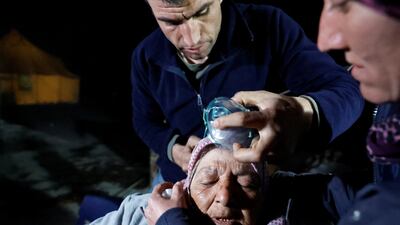
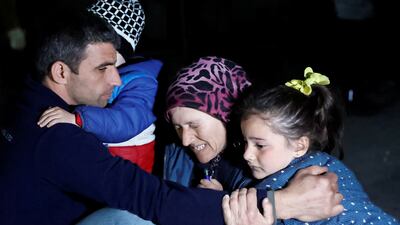
Iran has more enriched uranium than ever, the West Bank and Israel are convulsed by violence, many of the region's largest states are grappling with economic crises, and much of rebel-held Syria and eastern Turkey is facing a humanitarian disaster following the February 6 earthquake that killed more than 50,000 and left millions homeless.
Notable, too, is the language China used in talking about the deal.
Mr Wang said that the Ukraine war wasn’t the only conversation to be had and that talks “progressed based on the consensus of the leaders of China, Saudi Arabia and Iran”.
Rather than the usual talk from the US and western allies of rules-based orders and multilateral diplomacy, China made clear its approach was one of direct engagement between equal parties. It’s one that echoes Beijing’s broader interest in direct negotiation over a reliance on the traditionally western-led multilateral forums like the UN Security Council.
White House spokesman John Kirby said that Riyadh kept Washington in the loop on the talks but they weren't involved.
But the initial US response to the news was to welcome “reports of Iran and Saudi Arabia resuming diplomatic relations” in a sign they may have known about the deal but not the timeline.
Given the US’s expressed regard for regional stability and also concern over Iran’s malign activity in the region, their being outside the circle on such a major issue is perhaps a strong indicator of the state of US-Saudi ties specifically and US-Middle East ties more generally.
Switching%20sides
%3Cp%3EMahika%20Gaur%20is%20the%20latest%20Dubai-raised%20athlete%20to%20attain%20top%20honours%20with%20another%20country.%0D%3C%2Fp%3E%0A%3Cp%3E%3Cstrong%3EVelimir%20Stjepanovic%20(Serbia%2C%20swimming)%20%3C%2Fstrong%3E%0D%3Cbr%3EBorn%20in%20Abu%20Dhabi%20and%20raised%20in%20Dubai%2C%20he%20finished%20sixth%20in%20the%20final%20of%20the%202012%20Olympic%20Games%20in%20London%20in%20the%20200m%20butterfly%20final.%20%0D%3C%2Fp%3E%0A%3Cp%3E%3Cstrong%3EJonny%20Macdonald%20(Scotland%2C%20rugby%20union)%20%3C%2Fstrong%3E%0D%3Cbr%3EBrought%20up%20in%20Abu%20Dhabi%20and%20represented%20the%20region%20in%20international%20rugby.%20When%20the%20Arabian%20Gulf%20team%20was%20broken%20up%20into%20its%20constituent%20nations%2C%20he%20opted%20to%20play%20for%20Scotland%20instead%2C%20and%20went%20to%20the%20Hong%20Kong%20Sevens.%20%0D%3C%2Fp%3E%0A%3Cp%3E%3Cstrong%3ESophie%20Shams%20(England%2C%20rugby%20union)%20%3C%2Fstrong%3E%0D%3Cbr%3EThe%20daughter%20of%20an%20English%20mother%20and%20Emirati%20father%2C%20Shams%20excelled%20at%20rugby%20in%20Dubai%2C%20then%20after%20attending%20university%20in%20the%20UK%20played%20for%20England%20at%20sevens.%20%0D%3C%2Fp%3E%0A
Mercer, the investment consulting arm of US services company Marsh & McLennan, expects its wealth division to at least double its assets under management (AUM) in the Middle East as wealth in the region continues to grow despite economic headwinds, a company official said.
Mercer Wealth, which globally has $160 billion in AUM, plans to boost its AUM in the region to $2-$3bn in the next 2-3 years from the present $1bn, said Yasir AbuShaban, a Dubai-based principal with Mercer Wealth.
“Within the next two to three years, we are looking at reaching $2 to $3 billion as a conservative estimate and we do see an opportunity to do so,” said Mr AbuShaban.
Mercer does not directly make investments, but allocates clients’ money they have discretion to, to professional asset managers. They also provide advice to clients.
“We have buying power. We can negotiate on their (client’s) behalf with asset managers to provide them lower fees than they otherwise would have to get on their own,” he added.
Mercer Wealth’s clients include sovereign wealth funds, family offices, and insurance companies among others.
From its office in Dubai, Mercer also looks after Africa, India and Turkey, where they also see opportunity for growth.
Wealth creation in Middle East and Africa (MEA) grew 8.5 per cent to $8.1 trillion last year from $7.5tn in 2015, higher than last year’s global average of 6 per cent and the second-highest growth in a region after Asia-Pacific which grew 9.9 per cent, according to consultancy Boston Consulting Group (BCG). In the region, where wealth grew just 1.9 per cent in 2015 compared with 2014, a pickup in oil prices has helped in wealth generation.
BCG is forecasting MEA wealth will rise to $12tn by 2021, growing at an annual average of 8 per cent.
Drivers of wealth generation in the region will be split evenly between new wealth creation and growth of performance of existing assets, according to BCG.
Another general trend in the region is clients’ looking for a comprehensive approach to investing, according to Mr AbuShaban.
“Institutional investors or some of the families are seeing a slowdown in the available capital they have to invest and in that sense they are looking at optimizing the way they manage their portfolios and making sure they are not investing haphazardly and different parts of their investment are working together,” said Mr AbuShaban.
Some clients also have a higher appetite for risk, given the low interest-rate environment that does not provide enough yield for some institutional investors. These clients are keen to invest in illiquid assets, such as private equity and infrastructure.
“What we have seen is a desire for higher returns in what has been a low-return environment specifically in various fixed income or bonds,” he said.
“In this environment, we have seen a de facto increase in the risk that clients are taking in things like illiquid investments, private equity investments, infrastructure and private debt, those kind of investments were higher illiquidity results in incrementally higher returns.”
The Abu Dhabi Investment Authority, one of the largest sovereign wealth funds, said in its 2016 report that has gradually increased its exposure in direct private equity and private credit transactions, mainly in Asian markets and especially in China and India. The authority’s private equity department focused on structured equities owing to “their defensive characteristics.”
At Eternity’s Gate
Director: Julian Schnabel
Starring: Willem Dafoe, Oscar Isaacs, Mads Mikkelsen
Three stars
Avatar: Fire and Ash
Director: James Cameron
Starring: Sam Worthington, Sigourney Weaver, Zoe Saldana
Rating: 4.5/5
Groom and Two Brides
Director: Elie Semaan
Starring: Abdullah Boushehri, Laila Abdallah, Lulwa Almulla
Rating: 3/5
Gulf Under 19s final
Dubai College A 50-12 Dubai College B
Director: Laxman Utekar
Cast: Vicky Kaushal, Akshaye Khanna, Diana Penty, Vineet Kumar Singh, Rashmika Mandanna
Rating: 1/5
The drill
Recharge as needed, says Mat Dryden: “We try to make it a rule that every two to three months, even if it’s for four days, we get away, get some time together, recharge, refresh.” The couple take an hour a day to check into their businesses and that’s it.
Stick to the schedule, says Mike Addo: “We have an entire wall known as ‘The Lab,’ covered with colour-coded Post-it notes dedicated to our joint weekly planner, content board, marketing strategy, trends, ideas and upcoming meetings.”
Be a team, suggests Addo: “When training together, you have to trust in each other’s abilities. Otherwise working out together very quickly becomes one person training the other.”
Pull your weight, says Thuymi Do: “To do what we do, there definitely can be no lazy member of the team.”
US tops drug cost charts
The study of 13 essential drugs showed costs in the United States were about 300 per cent higher than the global average, followed by Germany at 126 per cent and 122 per cent in the UAE.
Thailand, Kenya and Malaysia were rated as nations with the lowest costs, about 90 per cent cheaper.
In the case of insulin, diabetic patients in the US paid five and a half times the global average, while in the UAE the costs are about 50 per cent higher than the median price of branded and generic drugs.
Some of the costliest drugs worldwide include Lipitor for high cholesterol.
The study’s price index placed the US at an exorbitant 2,170 per cent higher for Lipitor than the average global price and the UAE at the eighth spot globally with costs 252 per cent higher.
High blood pressure medication Zestril was also more than 2,680 per cent higher in the US and the UAE price was 187 per cent higher than the global price.
Polarised public
31% in UK say BBC is biased to left-wing views
19% in UK say BBC is biased to right-wing views
19% in UK say BBC is not biased at all
Source: YouGov
More coverage from the Future Forum