People walk by the Pfizer world headquarters in New York this week. Pfizer has announced its vaccine is "90 per cent effective" against Covid-19 infections. AFP
People walk by the Pfizer world headquarters in New York this week. Pfizer has announced its vaccine is "90 per cent effective" against Covid-19 infections. AFP
People walk by the Pfizer world headquarters in New York this week. Pfizer has announced its vaccine is "90 per cent effective" against Covid-19 infections. AFP
The latest UAE Government briefing on coronavirus told us more about the current state of infection in this country.
This week, officials announced that there had been 1,214 new infections from 114,653 tests in the latest 24-hour reporting period, as well as 741 recoveries and two new deaths. The number of active cases now stands at 4,637.
On several occasions in the past few weeks, although not on Wednesday, recoveries have outpaced new cases and at this point in the progress of the pandemic, active cases may tell the most accurate story of how live the virus is in the country.
Although the number of active infections has risen since the start of this month, when they briefly dipped below 2,000 open cases, they are still back down at the level of infections that were being reported in mid-April.
Furthermore, active cases had been trending downwards for more than a month until the beginning of November. The current number of active cases is around a quarter of the number of infections when the pandemic reached its peak in the UAE in early June.
The broader data released on Tuesday told us that 894,104 tests had been conducted nationwide in the week ending November 10, underlining the country’s commitment to mass testing that has been so evident throughout this crisis.
Approximately 15 million tests have been carried out since the outbreak began in a country with a population of 10 million. With mandatory regular testing in place in several industries and economic sectors, that overall test figure will breach 20 million in December.
Dr Saif Al Dhaheri, spokesperson for the UAE’s National Covid-19 Crisis Recovery Management and Governance Committee, said that the country was on the “right track” on the road to what he termed final recovery. "The health sector is able to control the situation, which is reflected in the number of recoveries,” he added.
That last point is crucial, because medical science and healthcare professionals have helped build out our understanding of effective treatment for the virus and ensured the death rate in this country has remained low. The worst-case scenarios have not transpired. Instead, recovery rates have been growing stronger as the months have passed.
A vaccine volunteer gets a medical check-up at the Adnec volunteer facility. Victor Besa / The National
The pandemic is not just about the right now, it is about tomorrow and the day after
It also helps explain why more elements of society are opening back up, particularly for young people. The final three year groups in Abu Dhabi’s private schools will go back to in-person teaching in January after being on distance-learning programmes since March. Sporting activity for children over 12 years old has more fully opened up in the past few days.
This should give us hope, but there are still obstacles to be negotiated, particularly as the global picture for recovery is mixed.
Covid-19 cases are being reported in record numbers elsewhere in the world, but the race to produce a vaccine has been turbocharged this week by the news that a Pfizer and BioNTech venture has proved 90 per cent effective in clinical trials. The vaccine developed by Sinopharm, meanwhile, has already been administered here to key officials, ministers and workers here in the UAE, along with tens of thousands of volunteers. Other vaccines are in progress in a 21st Century approximation of the so-called space race of the 1960s, which spurred an era of innovation and accomplishment.
The Pfizer/BioNTech news was initially met with great excitement, but the cold reality of what will happen next is beginning to settle in. It will take time and huge amounts of capital to undertake a worldwide vaccination campaign. The cost of such an undertaking with the Pfizer vaccine was initially estimated at $20 a dose and there will be fierce demand for it. It may be years before it truly delivers on its promising headlines.
Perhaps playing to this general point, the National Crisis and Emergency Management Authority, or Ncema, tweeted shortly after the Tuesday night briefing that responsibility for containing the virus “rests with everyone”, which means observing the now well-established safety protocols that are part of our daily routine. There is no magic formula for now.
In parts of the region and in Europe, meanwhile, lockdowns are being re-imposed. Lebanon will enter a two-week lockdown on November 14, with intensive care units in the country nearing capacity. England entered what has been termed "lockdown 2" earlier this month, although as The National reported, "masses of humanity roamed footloose" in the country over the weekend in mild defiance of policymakers.
This is not surprising. Governments need to weigh the potential benefits of locking down their societies against the many downsides, such as increased incidents of anxiety, stress, insomnia and depression that could be triggered by isolation, disconnection and lack of human interaction among those who do not contract the virus and are required to shelter at home. Higher rates of obesity have also been recorded in some countries under restriction of movement orders.
Keeping economies and societies open, while having appropriate guidelines in place to reduce the chances of infection, appears to represent a better path forward than the enforced disconnection of lockdowns, although they still serve a purpose when hospitals and health care sectors become stretched to breaking point and when they are applied strategically.
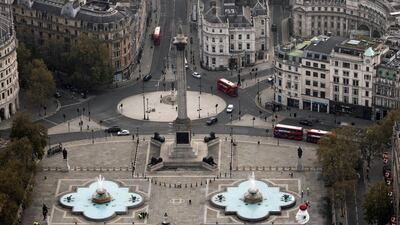
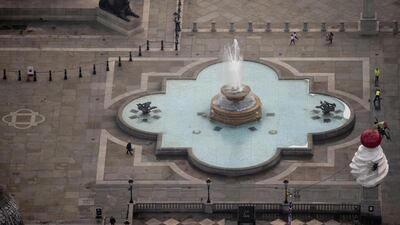
A quiet Trafalgar Square in London. Getty Images
England today began a second national lockdown to curb a surge in Covid-19 cases, closing pubs, restaurants and an array of shops deemed non-essential. Getty Images
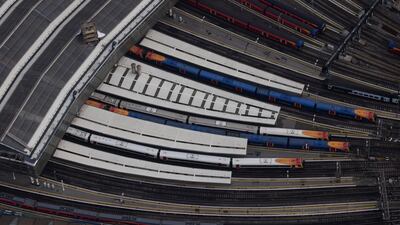
Trains at Waterloo Station. The new rules, which will expire on 2 December, also ban most indoor and outdoor household mixing and grass-roots sports. Getty Images
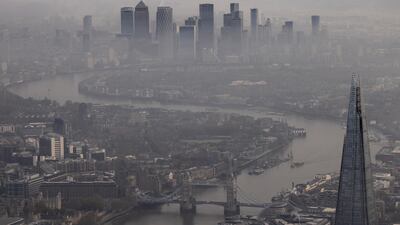
Fog shrouds the Shard and the view towards the Canary Wharf business district. Unlike the first lockdown earlier this year, schools in England will remain open. Getty Images
People walk through Hyde Park. Getty Images
Sports pitches near the Barbican. Getty Images
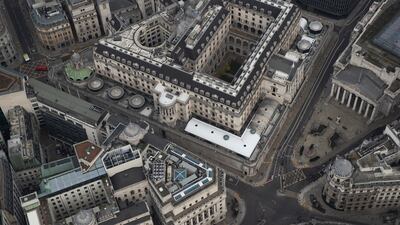
The Bank of England in the City of London's Square Mile. Getty Images
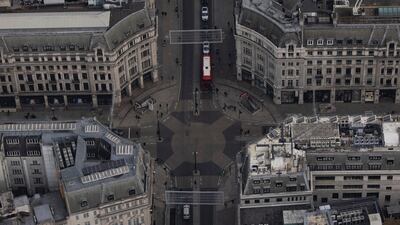
A quiet Oxford Circus. Getty Images
Fog shrouds the Canary Wharf business district. Getty Images
A quiet Piccadilly Circus. Getty Images
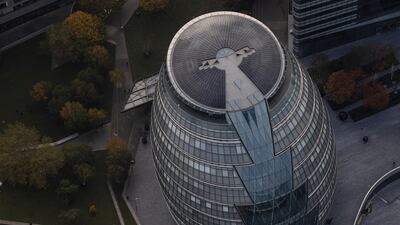
City Hall on the first day of the new national lockdown. Getty Images
A new study has also found that those who recover from coronavirus are more likely to experience psychological stress, which means governments must now also balance containing and constraining the virus with rehabilitation and support for those who have recovered.
This underlines once again that this a vast human crisis and one that extends far beyond how many new cases have been identified on any given day. The pandemic is not just about the right now, it is about tomorrow and the day after.
Nick March is an assistant editor-in-chief at The National
How much sugar is in chocolate Easter eggs?
The 169g Crunchie egg has 15.9g of sugar per 25g serving, working out at around 107g of sugar per egg
The 190g Maltesers Teasers egg contains 58g of sugar per 100g for the egg and 19.6g of sugar in each of the two Teasers bars that come with it
The 188g Smarties egg has 113g of sugar per egg and 22.8g in the tube of Smarties it contains
The Milky Bar white chocolate Egg Hunt Pack contains eight eggs at 7.7g of sugar per egg
The Cadbury Creme Egg contains 26g of sugar per 40g egg
Ten tax points to be aware of in 2026
1. Domestic VAT refund amendments: request your refund within five years
If a business does not apply for the refund on time, they lose their credit.
2. E-invoicing in the UAE
Businesses should continue preparing for the implementation of e-invoicing in the UAE, with 2026 a preparation and transition period ahead of phased mandatory adoption.
3. More tax audits
Tax authorities are increasingly using data already available across multiple filings to identify audit risks.
4. More beneficial VAT and excise tax penalty regime
Tax disputes are expected to become more frequent and more structured, with clearer administrative objection and appeal processes. The UAE has adopted a new penalty regime for VAT and excise disputes, which now mirrors the penalty regime for corporate tax.
5. Greater emphasis on statutory audit
There is a greater need for the accuracy of financial statements. The International Financial Reporting Standards standards need to be strictly adhered to and, as a result, the quality of the audits will need to increase.
6. Further transfer pricing enforcement
Transfer pricing enforcement, which refers to the practice of establishing prices for internal transactions between related entities, is expected to broaden in scope. The UAE will shortly open the possibility to negotiate advance pricing agreements, or essentially rulings for transfer pricing purposes.
7. Limited time periods for audits
Recent amendments also introduce a default five-year limitation period for tax audits and assessments, subject to specific statutory exceptions. While the standard audit and assessment period is five years, this may be extended to up to 15 years in cases involving fraud or tax evasion.
8. Pillar 2 implementation
Many multinational groups will begin to feel the practical effect of the Domestic Minimum Top-Up Tax (DMTT), the UAE's implementation of the OECD’s global minimum tax under Pillar 2. While the rules apply for financial years starting on or after January 1, 2025, it is 2026 that marks the transition to an operational phase.
9. Reduced compliance obligations for imported goods and services
Businesses that apply the reverse-charge mechanism for VAT purposes in the UAE may benefit from reduced compliance obligations.
10. Substance and CbC reporting focus
Tax authorities are expected to continue strengthening the enforcement of economic substance and Country-by-Country (CbC) reporting frameworks. In the UAE, these regimes are increasingly being used as risk-assessment tools, providing tax authorities with a comprehensive view of multinational groups’ global footprints and enabling them to assess whether profits are aligned with real economic activity.
Contributed by Thomas Vanhee and Hend Rashwan, Aurifer
The National Archives, Abu Dhabi
Founded over 50 years ago, the National Archives collects valuable historical material relating to the UAE, and is the oldest and richest archive relating to the Arabian Gulf.
Much of the material can be viewed on line at the Arabian Gulf Digital Archive - https://www.agda.ae/en
Profile
Company name: Jaib
Started: January 2018
Co-founders: Fouad Jeryes and Sinan Taifour
Based: Jordan
Sector: FinTech
Total transactions: over $800,000 since January, 2018
Investors in Jaib's mother company Alpha Apps: Aramex and 500 Startups
Mercer, the investment consulting arm of US services company Marsh & McLennan, expects its wealth division to at least double its assets under management (AUM) in the Middle East as wealth in the region continues to grow despite economic headwinds, a company official said.
Mercer Wealth, which globally has $160 billion in AUM, plans to boost its AUM in the region to $2-$3bn in the next 2-3 years from the present $1bn, said Yasir AbuShaban, a Dubai-based principal with Mercer Wealth.
“Within the next two to three years, we are looking at reaching $2 to $3 billion as a conservative estimate and we do see an opportunity to do so,” said Mr AbuShaban.
Mercer does not directly make investments, but allocates clients’ money they have discretion to, to professional asset managers. They also provide advice to clients.
“We have buying power. We can negotiate on their (client’s) behalf with asset managers to provide them lower fees than they otherwise would have to get on their own,” he added.
Mercer Wealth’s clients include sovereign wealth funds, family offices, and insurance companies among others.
From its office in Dubai, Mercer also looks after Africa, India and Turkey, where they also see opportunity for growth.
Wealth creation in Middle East and Africa (MEA) grew 8.5 per cent to $8.1 trillion last year from $7.5tn in 2015, higher than last year’s global average of 6 per cent and the second-highest growth in a region after Asia-Pacific which grew 9.9 per cent, according to consultancy Boston Consulting Group (BCG). In the region, where wealth grew just 1.9 per cent in 2015 compared with 2014, a pickup in oil prices has helped in wealth generation.
BCG is forecasting MEA wealth will rise to $12tn by 2021, growing at an annual average of 8 per cent.
Drivers of wealth generation in the region will be split evenly between new wealth creation and growth of performance of existing assets, according to BCG.
Another general trend in the region is clients’ looking for a comprehensive approach to investing, according to Mr AbuShaban.
“Institutional investors or some of the families are seeing a slowdown in the available capital they have to invest and in that sense they are looking at optimizing the way they manage their portfolios and making sure they are not investing haphazardly and different parts of their investment are working together,” said Mr AbuShaban.
Some clients also have a higher appetite for risk, given the low interest-rate environment that does not provide enough yield for some institutional investors. These clients are keen to invest in illiquid assets, such as private equity and infrastructure.
“What we have seen is a desire for higher returns in what has been a low-return environment specifically in various fixed income or bonds,” he said.
“In this environment, we have seen a de facto increase in the risk that clients are taking in things like illiquid investments, private equity investments, infrastructure and private debt, those kind of investments were higher illiquidity results in incrementally higher returns.”
The Abu Dhabi Investment Authority, one of the largest sovereign wealth funds, said in its 2016 report that has gradually increased its exposure in direct private equity and private credit transactions, mainly in Asian markets and especially in China and India. The authority’s private equity department focused on structured equities owing to “their defensive characteristics.”
You can donate to several registered charities through a “donation catalogue”. The use of the donation is quite specific, such as buying a fan for a poor family in Niger for Dh130.
The site has an e-donation service accepting debit card, credit card or e-Dirham, an electronic payment tool developed by the Ministry of Finance and First Abu Dhabi Bank.
You can donate online or order Smiles n’ Stuff products handcrafted by Al Noor students. The centre publishes a wish list of extras needed, starting at Dh500.
Beit Al Khair Society has the motto “From – and to – the UAE,” with donations going towards the neediest in the country. Its website has a list of physical donation sites, but people can also contribute money by SMS, bank transfer and through the hotline 800-22554.
Dar Al Ber Society, which has charity projects in 39 countries, accept cash payments, money transfers or SMS donations. Its donation hotline is 800-79.
Dubai Cares provides several options for individuals and companies to donate, including online, through banks, at retail outlets, via phone and by purchasing Dubai Cares branded merchandise. It is currently running a campaign called Bookings 2030, which allows people to help change the future of six underprivileged children and young people.
Those who travel on Emirates have undoubtedly seen the little donation envelopes in the seat pockets. But the foundation also accepts donations online and in the form of Skywards Miles. Donated miles are used to sponsor travel for doctors, surgeons, engineers and other professionals volunteering on humanitarian missions around the world.
On the Emirates Red Crescent website you can choose between 35 different purposes for your donation, such as providing food for fasters, supporting debtors and contributing to a refugee women fund. It also has a list of bank accounts for each donation type.
Gulf for Good raises funds for partner charity projects through challenges, like climbing Kilimanjaro and cycling through Thailand. This year’s projects are in partnership with Street Child Nepal, Larchfield Kids, the Foundation for African Empowerment and SOS Children's Villages. Since 2001, the organisation has raised more than $3.5 million (Dh12.8m) in support of over 50 children’s charities.
Sheikh Mohammed bin Rashid Al Maktoum launched the Noor Dubai Foundation a decade ago with the aim of eliminating all forms of preventable blindness globally. You can donate Dh50 to support mobile eye camps by texting the word “Noor” to 4565 (Etisalat) or 4849 (du).
The specs: 2019 Audi A8
Price From Dh390,000
Engine 3.0L V6 turbo
Gearbox Eight-speed automatic
Power 345hp @ 5,000rpm
Torque 500Nm @ 1,370rpm
Fuel economy, combined 7.5L / 100km
Know your Camel lingo
The bairaq is a competition for the best herd of 50 camels, named for the banner its winner takes home
Namoos - a word of congratulations reserved for falconry competitions, camel races and camel pageants. It best translates as 'the pride of victory' - and for competitors, it is priceless