India’s eastern coast is on alert for a severe cyclone brewing in the Bay of Bengal, days after a powerful storm battered the western coast, killing at least 140 people.
Cyclone Yaas is expected to make landfall on Wednesday and could pack sustained winds of up to 165 kilometres per hour, the India Meteorological Department said. The storm is forecast to hit the eastern states of West Bengal and Odisha.
Disaster relief teams have already been deployed in the two states for rescue and recovery operations and the coastal areas are being evacuated. India’s air force and navy said they have helicopters and vessels ready to carry out relief work.
Yaas will be the second storm to hit India in 10 days after Cyclone Tauktae killed at least 140 people across western states last week.
The massive storms come as India is battling a devastating coronavirus surge, complicating efforts.
In neighbouring Bangladesh, authorities asked all fishing boats and trawlers over the North Bay of Bengal and the deep sea to move closer to the coast before Yaas.
Oil explorers working in the Bay of Bengal have been asked to take all precautions to maintain safe operations, the Directorate General of Hydrocarbons said in a Twitter post. Oil and Steel Minister Dharmendra Pradhan said that as a precautionary measure all major oil and steel industrial units along the east coast will operate with minimum manpower for the next two to three days.
Authorities are cautious this time after a fatal accident last week. The Indian Navy recovered 70 bodies after a barge and a tug boat, working for state-run Oil & Natural Gas Corp, sank following cyclone Tauktae that hit the west coast on May 17. The navy rescued 188 people, but some are still missing.
The National Disaster Response Force has deployed almost 100 teams along India’s east coast, the agency said in Twitter posts.
-

People attempt to salvage a boat damaged when Cyclone Tauktae hit Navabandar village, in the western state of Gujarat, India. Reuters -
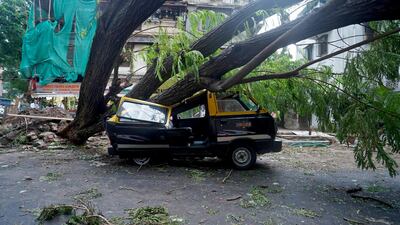
Heavy winds resulted in widespread damage in Mumbai, India. Reuters -
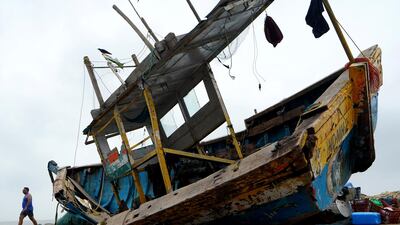
A damaged fishing boat after heavy winds caused by Cyclone Tauktae, in Mumbai, India. Reuters -
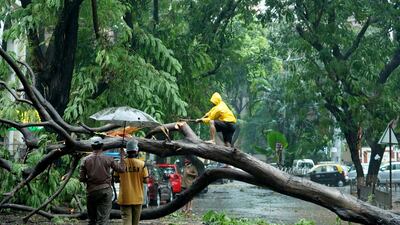
Men try to clear a road blocked by a fallen tree in Mumbai. Reuters -
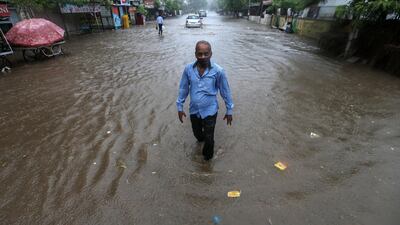
Heavy rain caused by Cyclone Tauktae flooded areas of Ahmedabad, in Gujarat, India. EPA -

Cyclone Tauktae hit the coastal areas of Gujarat with wind speeds up to 150kph, affecting Kerala, Karnataka, Maharashtra and Goa. EPA -
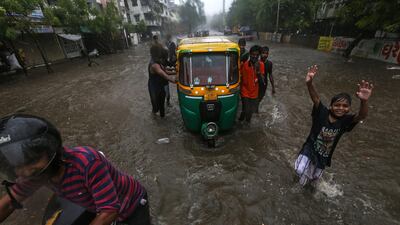
Flooding caused by Cyclone Tauktae in Ahmedabad, India. EPA -
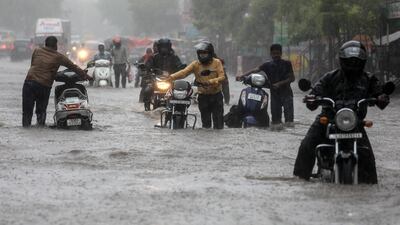
Severe flooding in Ahmedabad after heavy rains caused by Cyclone Tauktae. EPA -

Three men navigate a flooded street in Ahmedabad after Cyclone Tauktae struck. The storm was the most powerful to hit the region in more than two decades. AP Photo -
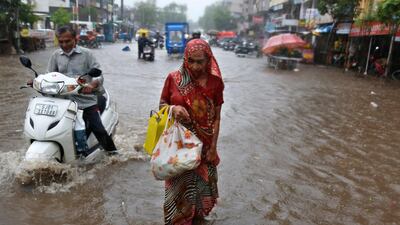
Many streets in Ahmedabad were flooded by Cyclone Tauktae. AP Photo -

Cyclone damage in Mumbai, India. Reuters -

Buildings in Mumbai suffered wind damage in the cyclone. Reuters -

People salvage belongings from a damaged house in Navabandar village in the western state of Gujarat, India. Reuters -

A man wraps a plastic sheet to cover himself as heavy rain continues in Allahabad on Wednesday. AFP -
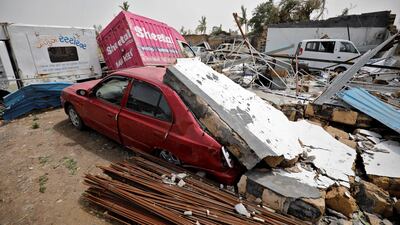
A vehicle crushed by falling masonry after Cyclone Tauktae hit Una in the western state of Gujarat, India. Reuters -

An uprooted tree in Ahmedabad, Gujarat, India. EPA -
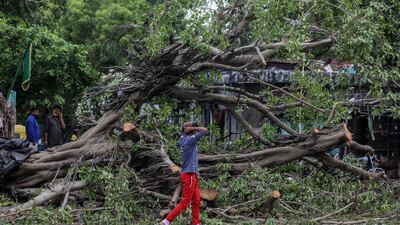
People walk past a tree toppled by Cyclone Tauktae in Ahmedabad, Gujarat, India. EPA -
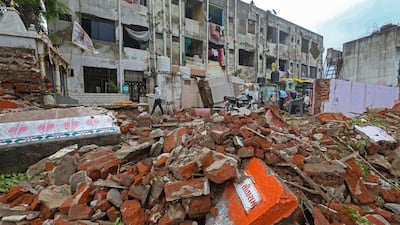
A damaged temple and compound wall of a residential building after the cyclone swept Ahmedabad, Gujarat, India. EPA


Sea levels may reach as high as 2 meters above astronomical tides and inundate some low-lying areas, the weather department said, advising fishermen not to venture into the sea until at least May 26.
A weather bulletin from the country’s Meteorological Department in Dhaka said that ships should leave the maritime ports of Chattogram, Mongla, Cox’s Bazar and Payra.
Scientists say cyclones in India are becoming more frequent and changing climate patterns have caused them to become more intense.
Last May, nearly 100 people died in Cyclone Amphan, the most powerful storm to hit eastern India in more than a decade. It flattened villages, destroyed farms and left millions without power in eastern India and Bangladesh.