

Live updates: Follow the latest news on Israel-Gaza
With each day of Israel’s unrelenting bombardment and ground assault of the Gaza Strip, the pressure on US President Joe Biden to call for a ceasefire builds.
As the death toll in the densely populated enclave approaches 20,000 people, according to Gaza officials, and images of dead and gravely wounded children are seen across the world, Mr Biden has remained resolute in his support of Israel and its war efforts.
But a chink in his unyielding support may now be showing. On Tuesday, he offered his strongest rebuke yet of Israel’s military actions in Gaza, calling its bombings “indiscriminate”.
“Israel’s security can rest on the United States, but right now it has more than the United States," Mr Biden told a fund-raising event.
"It has the European Union, it has Europe, it has most of the world supporting them.
“They’re starting to lose that support by indiscriminate bombing that takes place.”
The White House tried to play down the comments and the Pentagon has refused to say if it agrees with the Commander-in-Chief's assessment.
“The President was reflecting a concern that we have had for some time, and will continue to have as this military operation proceeds, about the need for reducing civilian harm and being as precise and careful and deliberate as possible,” National Security Council spokesman John Kirby said.
As the war has progressed, US officials including Secretary of State Antony Blinken have increasingly called on Israel to do more to protect Palestinian civilians.
But their words appear to have yielded few results, with Israel's military shift to the south of the Gaza Strip as deadly as its initial assault on the north.
And even as US leaders sound a more critical public tone, Washington has continued to support Israel’s military actions.
Last week, the US vetoed a UN resolution for an immediate ceasefire, the lone dissenting voice on the Security Council, expressing outrage that the measure did not include a condemnation of the October 7 Hamas attacks.
The State Department went so far as to bypass Congress to push the sale of about 13,000 tank rounds to Israel, despite acknowledging a “gap” between Israel’s intention to protect civilians and the results.
“In the case of this President, I think his frame has evolved in relation to the exponential rise of Palestinian deaths and the humanitarian catastrophe in Gaza,” said Aaron David Miller, a former State Department official and a senior fellow at the Carnegie Endowment for International Peace.
“[But] even though the rhetoric has essentially gotten tougher, watch what American presidents do. Don't always watch what they say.”

Mr Biden is also under intense domestic pressure as calls for a ceasefire grow and support for Israel appears to wane.
A poll last month showed an 11 per cent drop in Americans who believed Washington should support Israel.
Mr Biden, a self-proclaimed Zionist who has a more than 50-year relationship with Israel, must next year answer to voters.
“The Israeli operational clock in Gaza is measured in months,” Mr Miller said.
“Biden's political clock is measured in weeks, and it is quite conceivable that by January – and I think the administration has January in mind – by January they're expecting to see an end to the intense kinetic military operations Israeli conducted in the north and south.”
Mr Miller told The National that Mr Biden can maintain the same level of support and defence of Israel for another six weeks tops, an estimate shared by other regional analysts.
US media reports including by The New York Times suggest that US officials have told the Israeli authorities that the intensity of the bombardment needs to be reduced in a matter of weeks.
Despite this, on Israel's Minister of Defence Yoav Gallant said on Thursday that the country needed months to reach its objective of destroying Hamas.
“It will require a long period of time – it will last more than several months, but we will win and we will destroy them,” Mr Gallant said.
Ghaith Al Omari, a senior fellow at the Washington Institute for Near East Policy, said he thought the US would ultimately support Israel longer than a few weeks.
“What we're going to start seeing more and more is what we're seeing right now, which is an occasional kind of expression of frustration from maybe spokespeople," Mr Al Omari told The National.
"But when it comes to the principles, they will continue showing support. I just don't see this eroding in the next two or three weeks."
For now, Israelis can bank on Mr Biden's support, but that may change in the new year if the bombardment continues unabated.
Latest from the Israel-Gaza war – in pictures
-
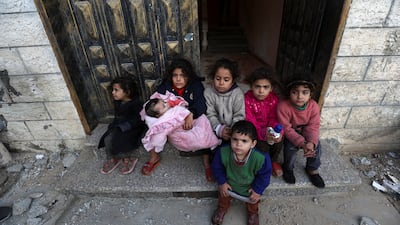
Palestinian children look at the site of an Israeli strike on a house. Reuters -
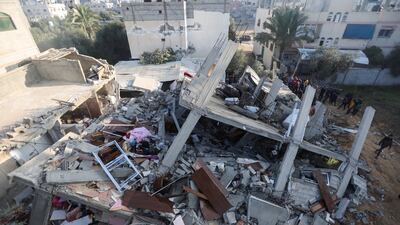
Palestinians inspect the site after an Israeli strike on a house. Reuters -
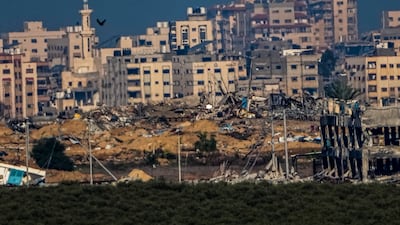
Israeli military vehicles as seen from southern Israel, operate inside Gaza Strip on Sunday. AP Photo -
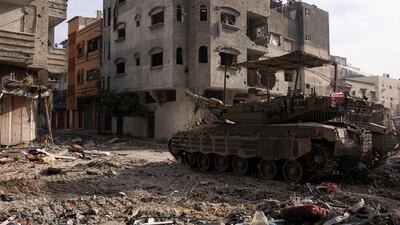
An Israeli Merkava tank in the Gaza Strip amid the continued war between Israel and Gaza. Reuters -
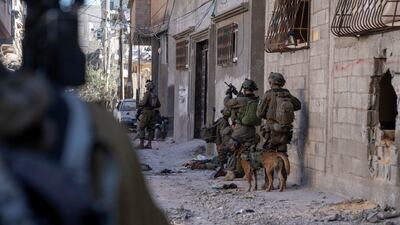
Israeli soldiers in the Gaza Strip. Reuters -
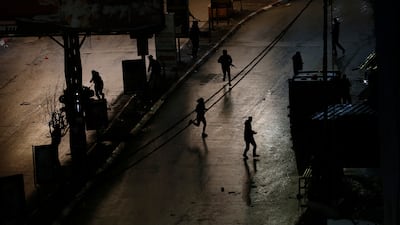
Palestinian militants clash with the Israelis at Jenin refugee camp in the occupied the West Bank. EPA -
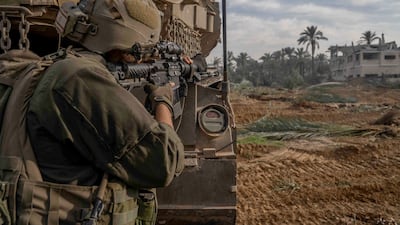
An Israeli soldier in the Gaza Strip. Reuters -
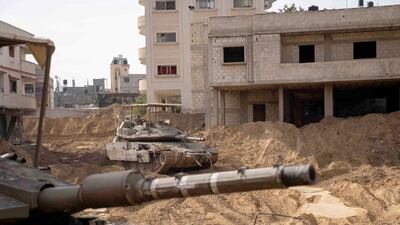
Israeli military vehicles. Reuters -
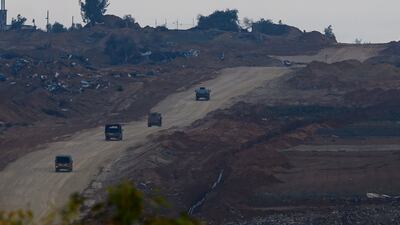
Israeli vehicles drive into Gaza from Israel. Getty Images -
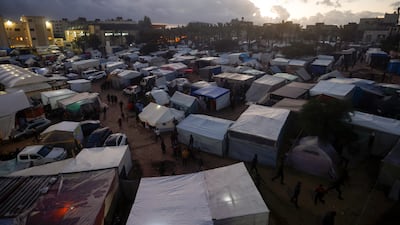
Displaced Palestinians in tents in Khan Younis. AP -
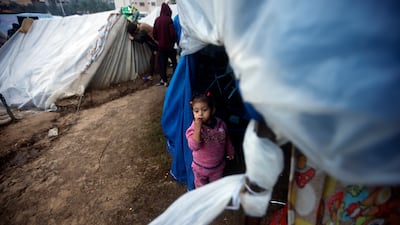
A Palestinian child in Khan Younis. AP -

Benjamin Netanyahu vows to fight on in Gaza. 'Nothing will stop us,' he said. AP -

A Palestinian girl wounded in the Israeli bombardment arrives at a hospital in Rafah. AP -
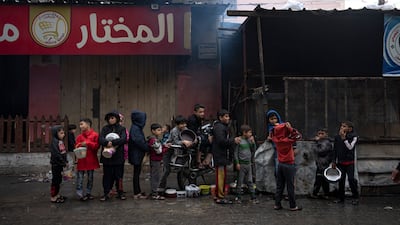
Palestinian children wait in line for food in Rafah. AP -

Family and friends mourn during a funeral for Maj Roy Meldasi in Afula, Israel. Getty Images -
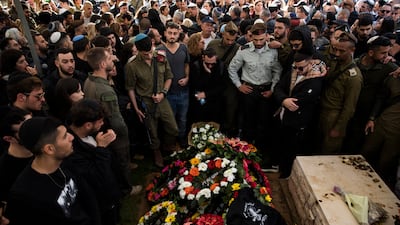
Maj Meldasi's funeral. Getty Images -

An Israeli military helicopter fires a missile. EPA -
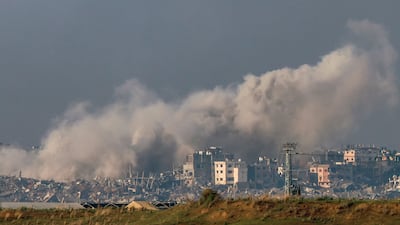
Smoke billowing during Israeli bombardment on northern Gaza. AFP -
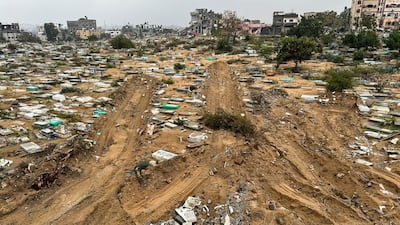
Graves damaged during the Israeli ground offensive in the Fallujah neighbourhood, in Jabalia. Reuters -
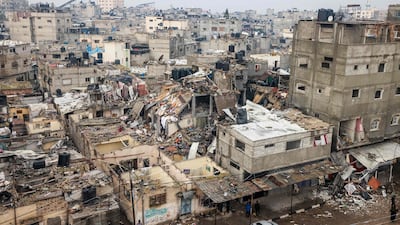
Damage in Rafah. AFP -
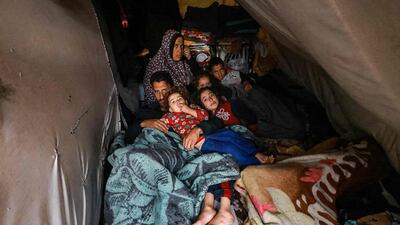
Palestinians rest in their makeshift tent at a camp set up at a school in Rafah. AFP -

Palestinian boys in their tent. AFP -
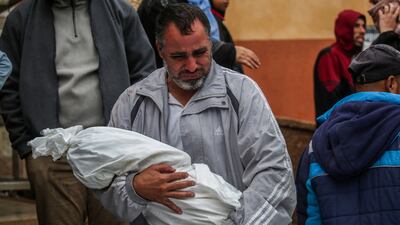
Mourners collect the bodies of Palestinians killed in an air strike in Khan Younis. Getty Images -

The results of a draft resolution vote calling for a ceasefire at the UN General Assembly. Getty Images -
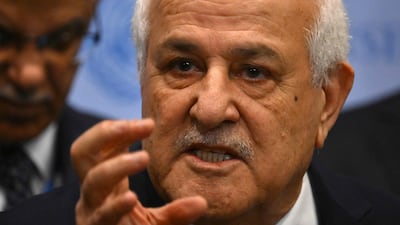
Palestinian ambassador to the UN Riyad Mansour speaks after the vote in New York. AFP -

Humanitarian aid lorries wait to be inspected at the Kerem Shalom crossing. Reuters -
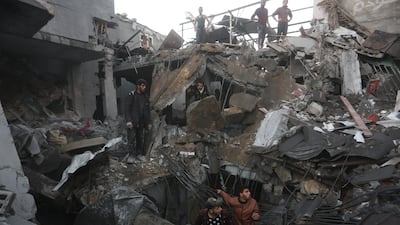
Palestinians look for survivors in Rafah. AP -
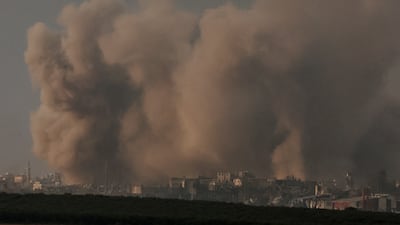
Smoke rises over Gaza, seen from southern Israel. Reuters -

A child reacts following an Israeli air strike on Palestinian houses in Rafah. Reuters



