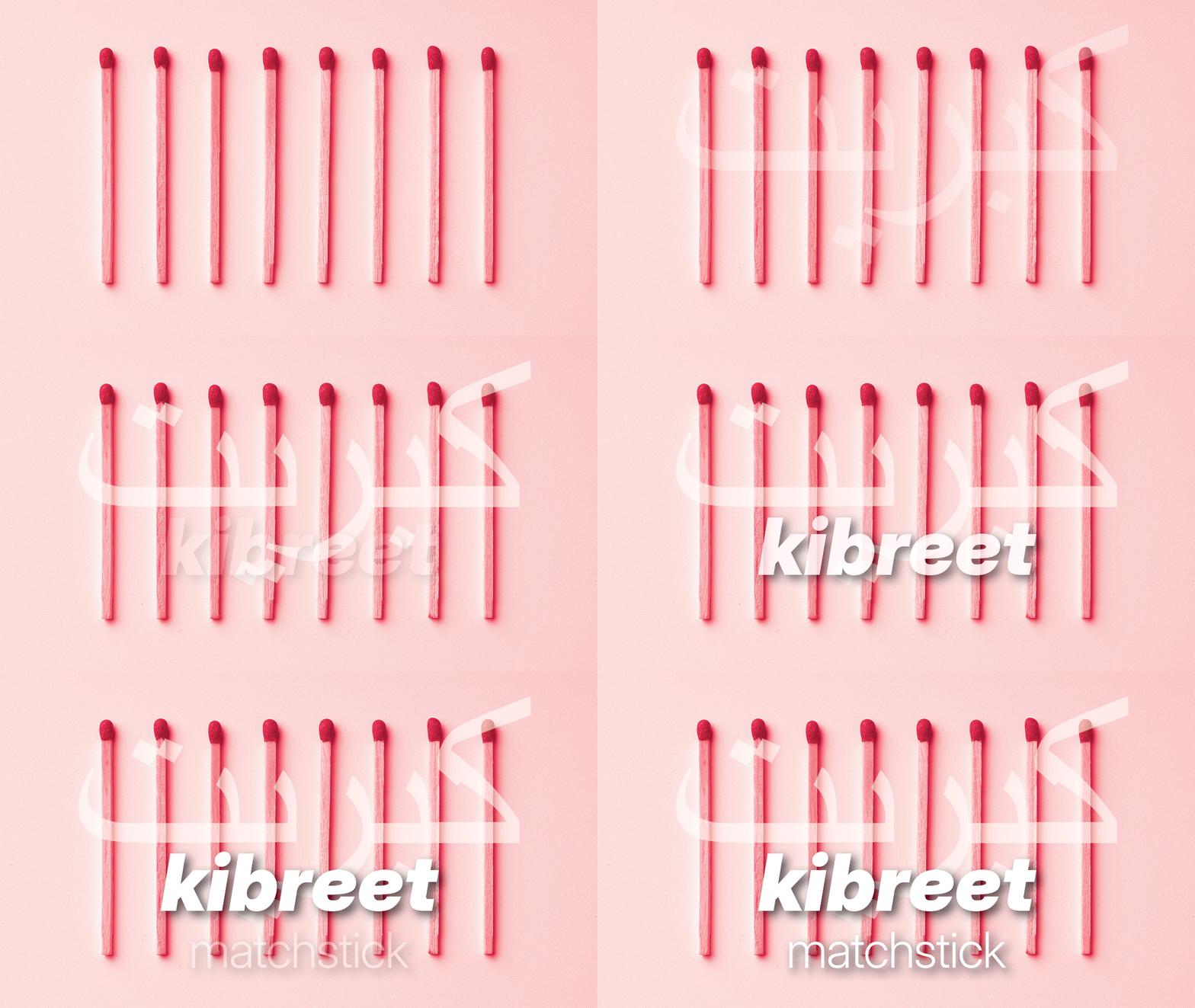

Before it came to mean matchstick, the Arabic word kibreet referred to sulphur, with meanings that were perplexingly contradictory but echoed the manifold uses of the element.
For farmers, it is used as a pesticide, vital for the safety of their crops and livelihood. Doctors use it for skin ailments, primarily acne, with creams, lotions and ointments containing the element. And, of course, it is still a component in gunpowder.
Historically, sulphur’s importance was even greater. Arab alchemists saw kibreet as a foundational element, with fiery and masculine principles, in contrast with mercury (zaybaq), which was seen as a symbolising femininity and fluidity.
The 8th century scholar Jabir ibn Hayyan posited that all metals were a balance between sulphur and mercury, with gold formed in perfect equilibrium. Ibn Hayyan is documented to have used sulphur to prepare acids and chemical compounds.
-

The Arabic word for sign is aya. All photos: The National -

The Arabic word for cat is qita -
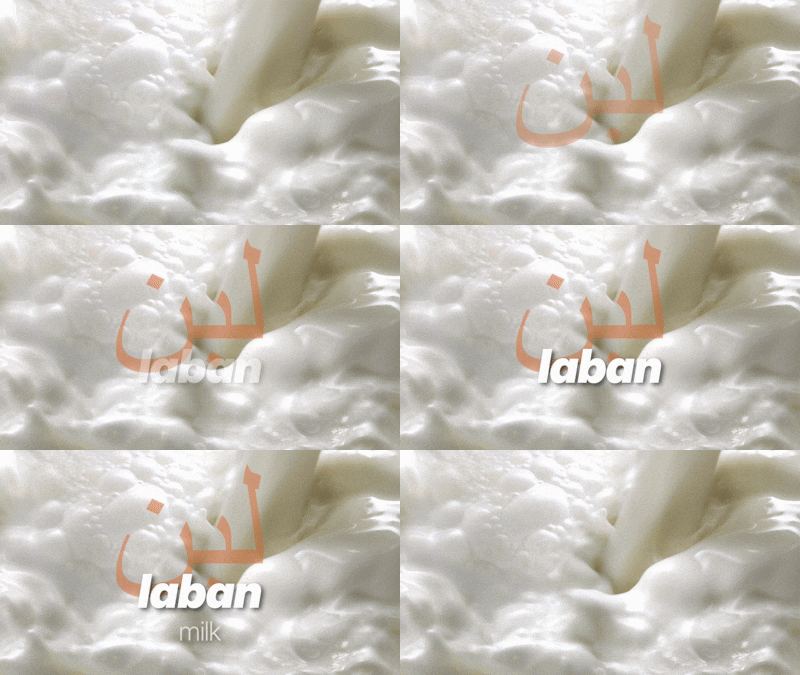
Laban is the Arabic word for milk -

Mosa, or Moses in English, is mentioned 136 times in the Quran -

The Arabic word for ownership is tamalouk -

The Arabic word for mint is ne’ena’a -

Shuback is the Arabic word for window -
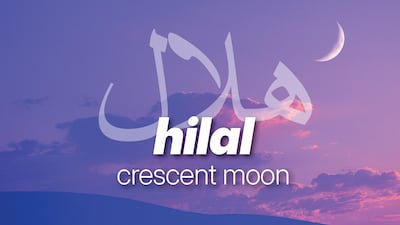
Hilal is Arabic for crescent -

Musafir, the Arabic word for traveller, is often used in music and poetry, evoking a sense of longing and passion -

Raqaba, the Arabic word for neck, can also denote caution and scrutiny -

Ithin, the Arabic word for permission, has many bureaucratic uses -
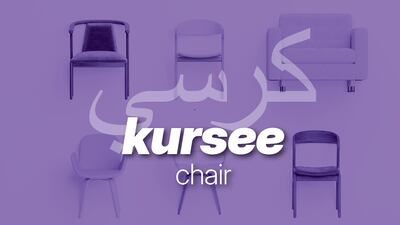
The Arabic word for chair is kursee -

Faten is Arabic name that has many spiritual and poetic meanings -
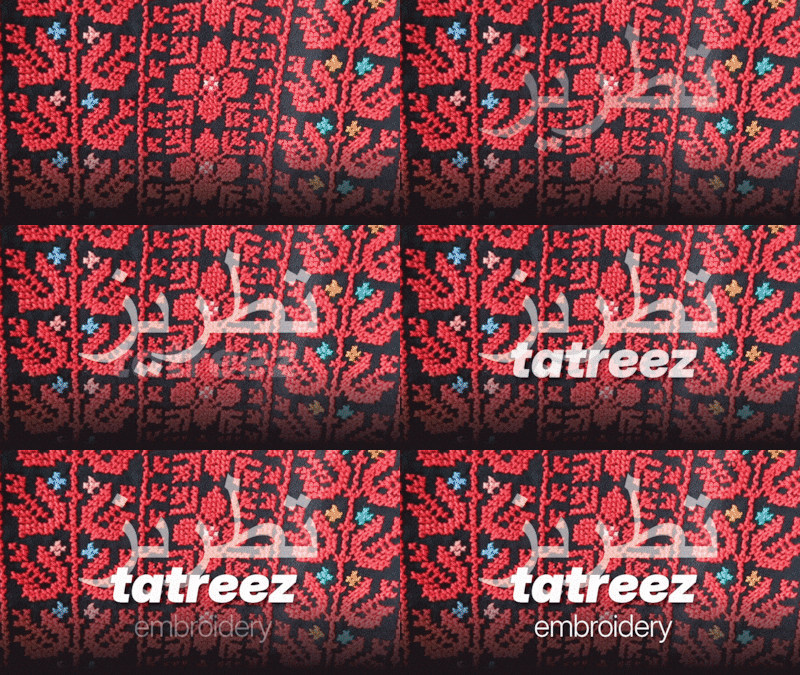
The Arabic word for embroidery is tatreez -
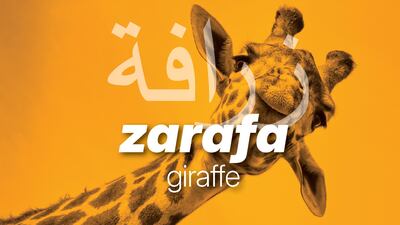
Zarafa is Arabic for giraffe -

The Arabic word for dignity, honour and respect is izza -

Hewi is the Emirati word for front garden -

Lahja is the Arabic word for dialect -
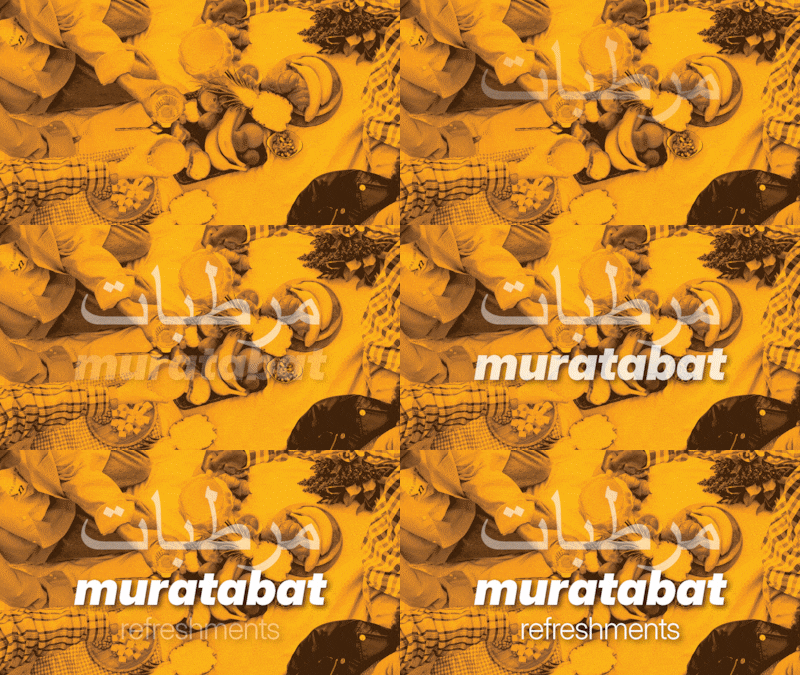
Muratabat is often translated as refreshments -

Handasa is the Arabic word for engineering -

The Arabic word for octopus is akhtaboot -

The Arabic word for mightiness is jabarut -

The Arabic word kibriyaa, often seen in Quranic verses, speaks to might and humility -

Junoon is the Arabic word for madness and obsession -

Adheem is commonly translated as great, magnificent or mighty -

Tanamor is the Arabic word for bullying -

The Arabic word for forgetfulness and oblivion is alnisyan -

Yallah, the Arabic word for 'let's go', is an expression of urgency, encouragement or even impatience -
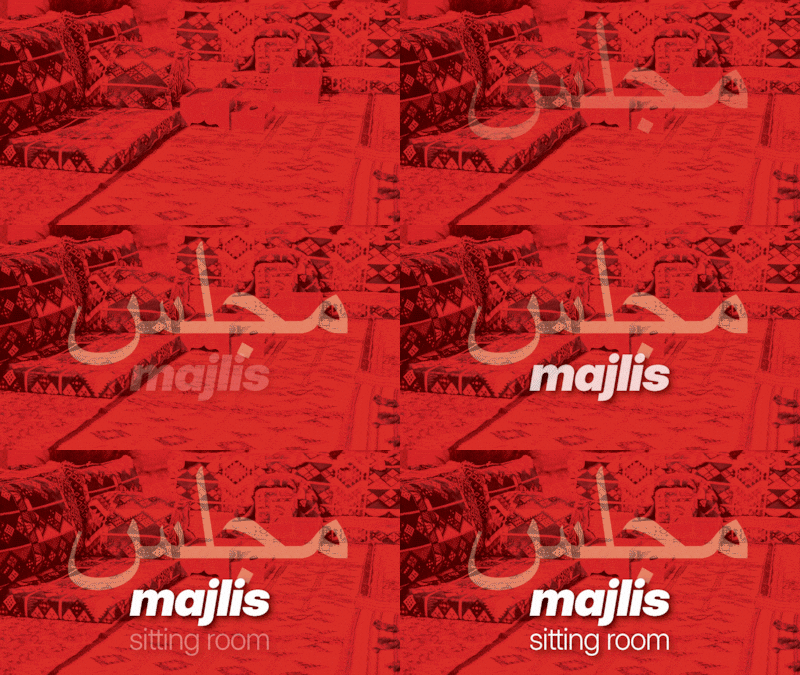
The Arabic word majlis, rooted in Bedouin tradition, refers to a space for hospitality and dialogue -

Falaj is Arabic for water channel -

Ne'meh is Arabic for blessing -

The Arabic word sumud means resilience and steadfastness -

The Arabic word for mountain is jabal -
Kibreet is Arabic for matchstick -

Sahaba means cloud in Arabic -

Qilada is the Arabic word for necklace


But perhaps one of the most interesting connotations of kibreet is its association with torment and divine retribution. The acrid scent and flammable quality of sulphur made the element, mostly in Christianity and Biblical traditions, an obvious representation of hellfire and eternal suffering.
The origin of the word kibreet may have come from other Middle Eastern languages. Historians believe the word has roots in the Syriac kuprah or kupr-it, which meant flame or lantern.
Though its connotations are wide – from the fiery to the medicinal – the word kibreet these days often exclusively refers to matchsticks. A matchbox, for instance, is ilbit kibreet. You can even find the word in some chemical compounds where sulphur is present: aluminium sulphate, for example, is kibreetat aluminium.