

Middle East low-cost airline Air Arabia has said its first-quarter performance, which is due to be released this week, is expected to be "good" as air travel continues its recovery from the Covid-19 pandemic.
The airline said it was "optimistic" about the financial outlook for 2022 as it anticipates air travel demand to remain strong this year and next, after two years' of dampened appetite during the pandemic, Adel Ali, group chief executive of Air Arabia, said at the Arabian Travel Market in Dubai on Tuesday.
"The business seems to be good and yields are on the right side," he said. "Fuel is a challenge always when there is a conflict ... a good oil price is good for the region because the economy is good and people will have more disposable income to travel."
With Covid-related travel restrictions easing worldwide, pent-up air travel demand is being unleashed, said the International Air Transport Association (Iata).
Total traffic in March 2022 (measured in revenue passenger kilometres or RPKs) was up 76 per cent on March 2021, the aviation trade body said in its monthly report.
Although that was lower than the 115.9 per cent rise in February's year-on-year demand, volumes in March were the closest to 2019 pre-pandemic levels, despite being 41 per cent below.
UAE-listed Air Arabia plans to start operations of its new joint-venture airlines in Pakistan and Armenia before the summer, Mr Ali said.
Air Arabia will place three leased Airbus A320 jets with Karachi-based Fly Jinnah to start with domestic flights initially, while Fly Arna will be leased two A320s to begin its first international route, he said in March.
Air Arabia Abu Dhabi, a low-cost joint venture with Etihad Airways, will increase capacity to operate 10 planes by the end of the year, up from the four Airbus narrowbodies it currently operates, Mr Ali said on Tuesday.
Air Arabia operates a network of bases spread across the Middle East, North Africa and Asia. The airline, with headquarters in Sharjah, has been pressing ahead with expansion as low-cost groups bet on a recovery in short-haul travel demand amid rapid Covid-19 vaccine campaigns around the world.
Air Arabia signed the joint-venture deals to establish new airlines in Abu Dhabi in 2020, and in Armenia and Pakistan in 2021.
_______________________
Arabian Travel Market 2022 - in pictures
-

Visitors at the Dubai stand on the third day of the Arabian Travel Market held at Dubai World Trade Centre. Pawan Singh / The National -

Visitors at the Etihad stand. Pawan Singh / The National -
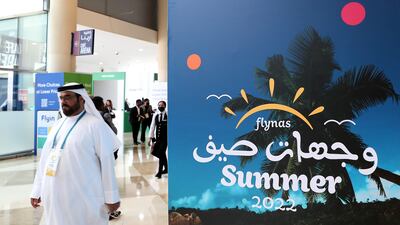
A Flynas advertisement on the first day of Arabian Travel Market. -

The Iraq stand. Pawan Singh / The National -

Visitors at the Qatar stand on the first day of Arabian Travel Market. -

Visitors at the Rotana stand. Pawan Singh / The National -

Children's toys on display at the Emirates stand. Pawan Singh / The National -

The Neom stand. Pawan Singh / The National -

The Armani stand. Pawan Singh / The National -

The Flynas stand. Pawan Singh / The National -

Performers dance at the Saudi Arabia stand on the second day of the Arabian Travel Market. Pawan Singh / The National -

Visitors take photos at the flydubai stand. Pawan Singh / The National -

The Jordan stand. Pawan Singh / The National -

The second day of Arabian Travel Market welcomed visitors from around the world. Pawan Singh / The National -

The event is considered a bellwether for the travel industry in the Middle East, offering an insight into the trends that will shape the year ahead. Pawan Singh / The National -

A total of 112 countries looking to revive their tourism numbers will be featured on the exhibition's show floor, from Japan to Jamaica and South Africa to Italy. Pawan Singh / The National -

People visit the South Africa stand at the Arabian Travel Market. Pawan Singh / The National -

A model of the Airbus A350-1000 at the Etihad stand on the first day of Arabian Travel Market held at Dubai World Trade Centre. All photos: Pawan Singh/The National -

More than 1,500 exhibiting companies are taking part in the four-day tourism showcase that will welcome about 20,000 visitors. -

Travel and tourism are starting to show signs of recovery from the impact of the coronavirus pandemic, with many companies starting to ramp up their recruitment as countries reopen their borders. -
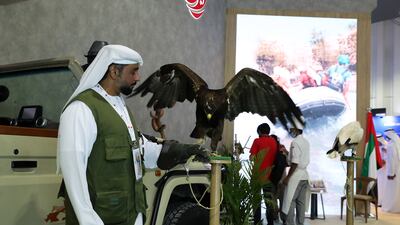
Staff from Al Ain Zoo showing some birds and reptiles at the Abu Dhabi stand. -

Saudi Arabia has a major presence at this year's Arabian Travel Market, including representatives from Neom, the kingdom's $500 billion futuristic mega city. -

Arabian Travel Market is considered a bellwether for the travel industry in the Middle East, offering an insight into trends for the year ahead. -

Emirates airline launched its premium economy cabin at Arabian Travel Market. -

The Abu Dhabi stand at Arabian Travel Market was busy on the first day of the event. -

Artists showcasing handmade items at the Abu Dhabi stand. -
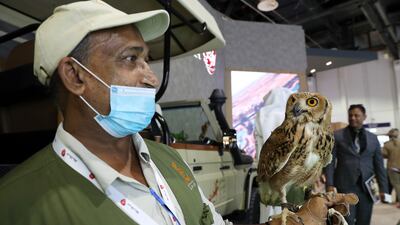
Staff from Al Ain Zoo introduce visitors to birds at the Abu Dhabi stand. -

Etihad Airways showcasing its economy class seats at Arabian Travel Market. -
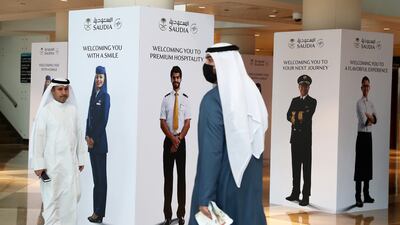
The soaring price of oil and the impact of the war in Ukraine are tempering the travel industry's expected resurgence. -

Staff from Al Ain Zoo show visitors reptiles at the Abu Dhabi stand. -

The Darina holidays stand on the first day of Arabian Travel Market held at Dubai World Trade Centre in Dubai. -

Visitors at the Brussels stand. -

Visitors at the Maldives stand.


_______________________
Staff costs will rise in 2022 but should stabilise by the end of the year, Mr Ali said, when asked about the labour shortages that the aviation industry is facing in parts of the world.
One challenge that airlines and airports around the world are tackling is staff shortages after an increase in travel demand, Iata said in April.
Passengers are experiencing flight restrictions or cancellations as airports and airlines struggle to bring back staff after a wave of layoffs during the pandemic.
Air Arabia had ordered 120 Airbus A320 family jets worth $14 billion in 2019 and has yet to select an engine maker to power the single-aisle planes.
The airline is holding talks with General Electric's CFM venture and Pratt & Whitney, the rival providers for the Airbus A320 Neo, for the engine order.
"To negotiate for such a size, you want the best deal, so it takes longer," Mr Ali told reporters. "It continues to be discussed."
The airline will take delivery of the planes in the last quarter of 2024 and is likely to make a decision on the engines within months, he said.
Asked about inflationary pressure on airlines, Mr Ali said the yield and pent-up demand is "good" and that the airline has no current plan to impose a fuel surcharge due to higher oil prices.
The airline is hedged above 50 per cent for fuel this year and next, he said.
Fuel bills typically comprise about 25 per cent of an airline's total costs, posing an additional challenge amid a rallying oil price.
_________________________
Air Arabia, flydubai and Wizz Air: world's top 20 safest low-cost airlines
-
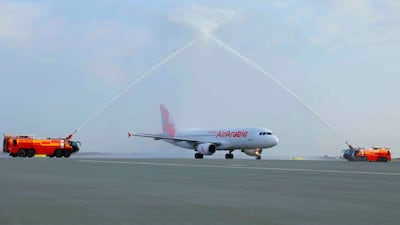
AirlineRatings.com has released its 2022 top 10 of the world's safest low-cost airlines. First on the alphabetical list is Air Arabia, the first budget carrier in the UAE. -
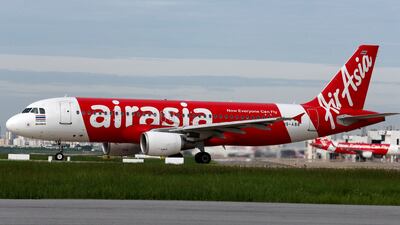
A Thai Air Asia Airbus A320-200 plane at Don Mueang International Airport, Bangkok. Reuters -

Allegiant Air operates in the US and is North America's 14th biggest airline. AFP -
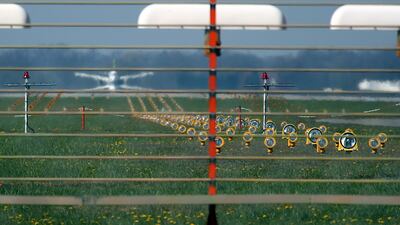
An airBaltic Airbus A220-300 at Munich International Airport -
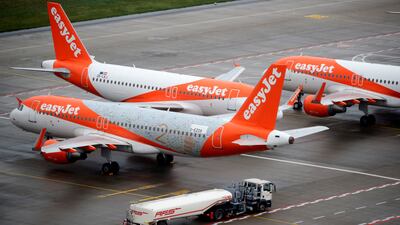
Incident records, crash records and fleet age were among the factors used to compile the list. UK operator easyJet has 31 planes in a fleet that flies throughout Europe. AFP -

flydubai operates to more than 90 destinations from its Dubai hub. Jeff Topping for The National -
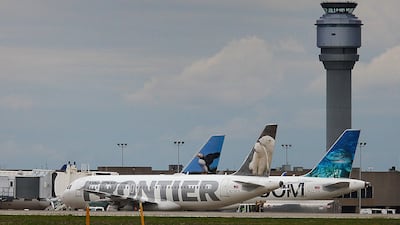
Colorado carrier Frontier Airlines flies to more than 100 US destinations and employs more than 3,000 staff. Getty -

Jetstar Group, launched by Australia's flag carrier Qantas, has operated out of Melbourne since 2017. AFP -
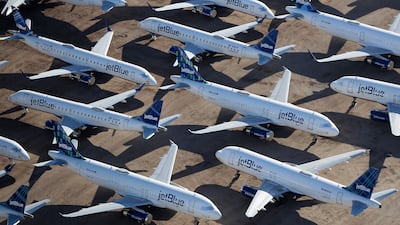
JetBlue, which has its headquarters in New York, is North America's seventh-biggest airline by passengers carried. AFP -
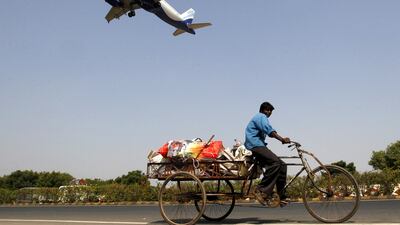
An IndiGo Airlines aircraft in Ahmedabad, India. The low-cost carrier is the country's largest passenger airline. Reuters -
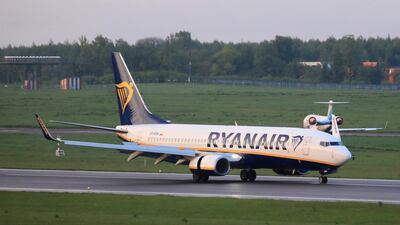
Since its formation in 1984, Irish carrier Ryanair has grown to be one of the giants of low-cost travel, with a fleet of more than 400 and bases at Dublin and London Stansted airports. AFP -
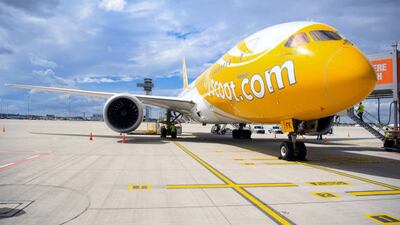
Singapore Airlines' low-cost subsidiary Scoot Airlines ranks in the top 20. Getty Images -
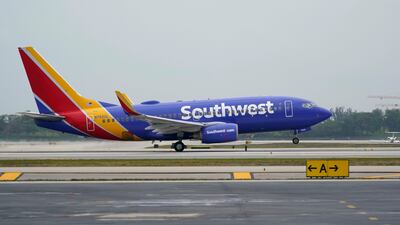
Southwest is the world's largest low-cost airline. AP -
India's SpiceJet flies to 64 destinations, including 52 domestic and 12 international routes. EPA -
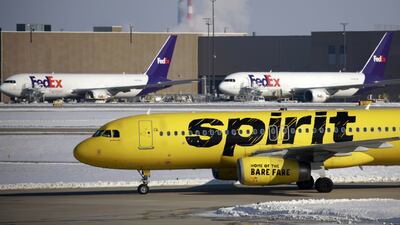
Spirit Airlines, one of the largest low-cost carriers in the US. Bloomberg -
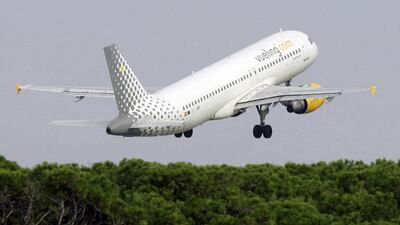
Vueling, Spain's largest airline, has hubs in Barcelona and Rome. AFP -
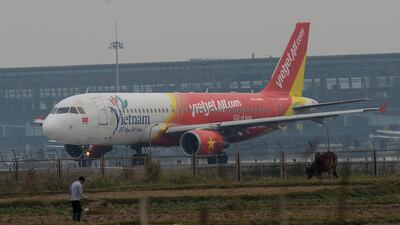
VietJet Air flies to 46 destinations from Hanoi in Vietnam. AFP -
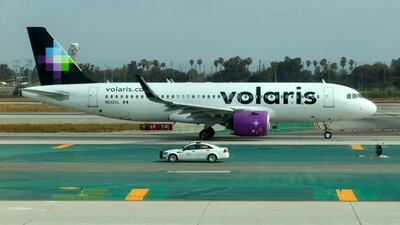
Volaris Airlines is the second largest airline in Mexico after flag carrier Aeromexico and the main operator for domestic flights. AFP -

Canada's WestJet airlines operates more than 700 North American flights a day, carrying more than 66,000 passengers. AFP -
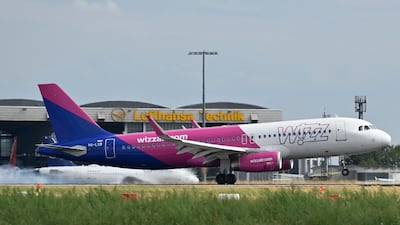
Wizz Air, a Hungarian airline that flies to 44 countries in Europe, Africa and the Middle East, and that has a subsidiary in the UAE, Wizz Air Abu Dhabi, rounded the original top 10 list and is one of the world's safest budget airlines. AFP



