Boeing will officially bid farewell to its 747 jumbo jet as it makes its final commercial delivery of the aircraft, ending a production run of more than half a century for the double-decker, four-engine, twin-aisle pioneer that entered service in January 1970.
Thousands of current and former employees will converge on Tuesday afternoon at Boeing's factory in Everett, Washington, for a final sendoff celebration in parallel with the delivery of a Boeing 747-8 cargo plane to Atlas Air.
The move comes as US-based Boeing transitions to two-engine jetliners amid airlines’ push for more fuel-efficient planes.
“For more than half a century, tens of thousands of dedicated Boeing employees have designed and built this magnificent airplane that has truly changed the world,” said Kim Smith, Boeing's vice president and general manager for the 747 and 767 programmes.
“We are proud that this plane will continue to fly across the globe for years to come.”
Boeing’s “Queen of the Skies” made its debut more than 50 years ago. Passenger versions had a spiral staircase that led to a luxurious upstairs lounge.
Freighter models featured a hinged nose that flipped open to load everything from cars to oil-drilling gear.
50 years of the Boeing 747 — in pictures
-
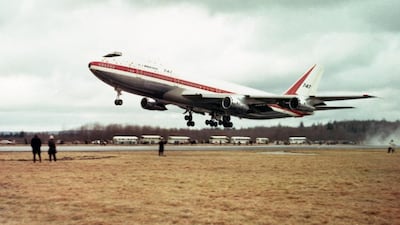
The 747 takes off for its first flight in 1969. All images courtesy Boeing -
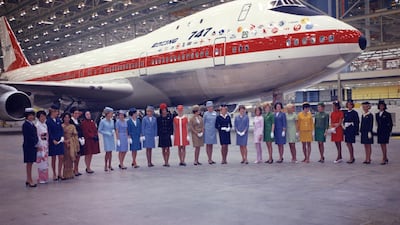
Flight attendants pose in front of the jumbo jet. -
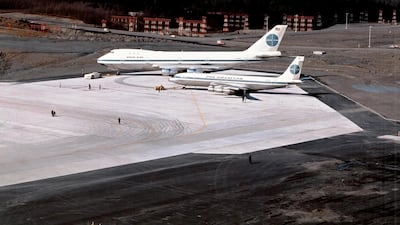
The Boeing 747 next to the 707. -
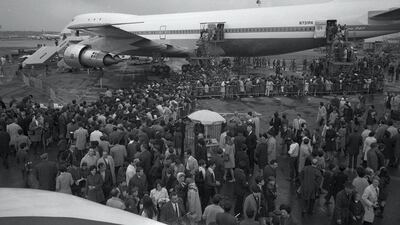
Crowds tour the 747 for a closer look. -
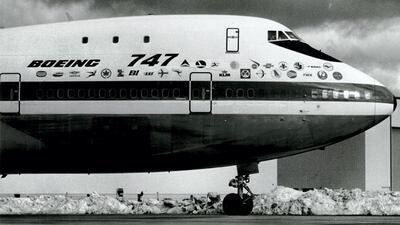
The iconic 747 nose. -
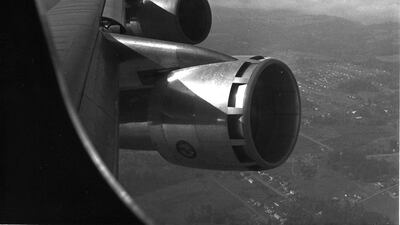
A close-up of the early 747 engines. -
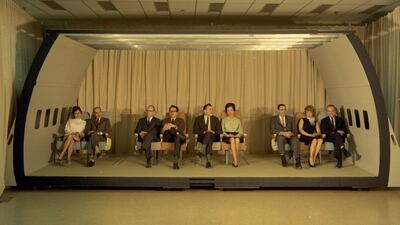
A mock-up of the 747 interior. -
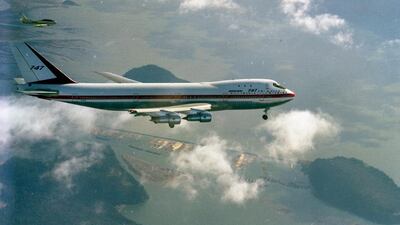
The first 747 flight in 1969. -

A 747 byline on the occasion of the Queen of the Skies 50th first flight anniversary. All photos by Boeing -
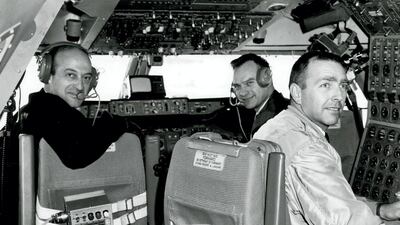
The flight crew for the first flight in 1969. -
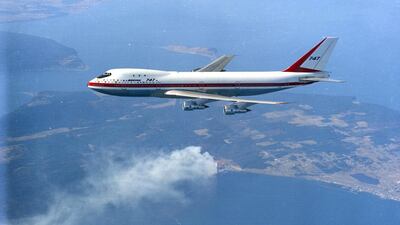
A 747 byline on the occasion of the Queen of the Skies 50th first flight anniversary. All photos by Boeing -
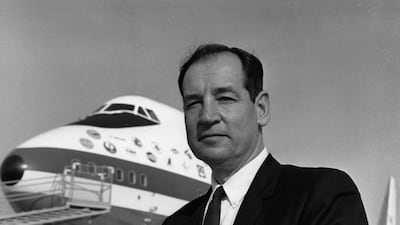
Joe Sutter headed the design team and has since been known as the “Father of the 747.” -

The first 747 flight in 1969. -
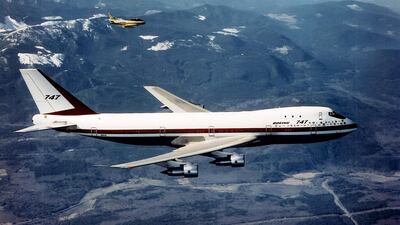
A 747 byline on the occasion of the Queen of the Skies 50th first flight anniversary. All photos by Boeing -
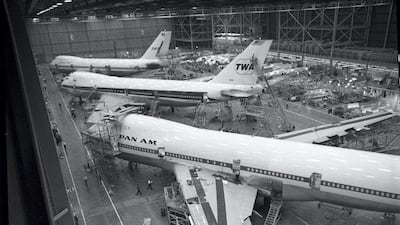
Pan Am 747s in the factory. -
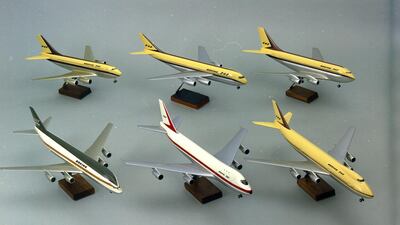
Model mock-ups of the 747. -
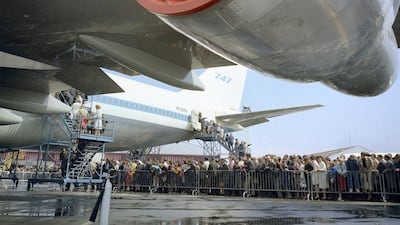
Crowds queue to board a 747 at an air show. -
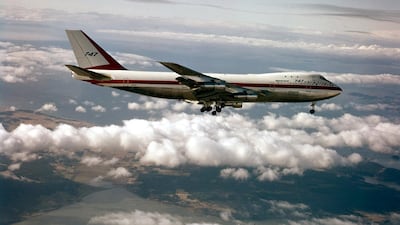
The first 747 flight in 1969. -
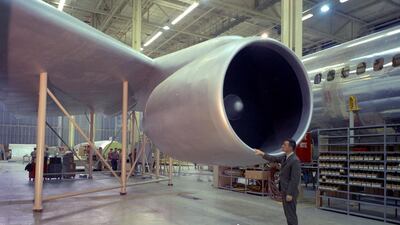
The 747 marked the first commercial use of the high bypass turbofan engine. -
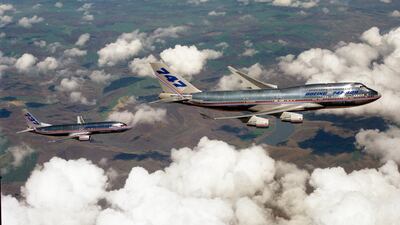
A Boeing 747-400 flies alongside a 737-400. -
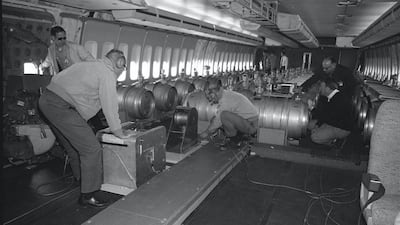
Balast tanks during the assembly of the 747. -
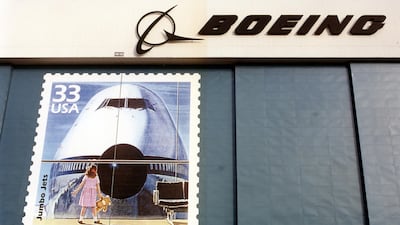
A stamp on the side of the Boeing plant at Everett, Washington. -
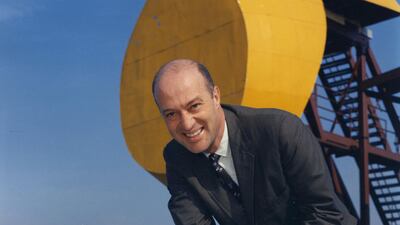
747 project test pilot Jack Waddell.


The 747 was the largest commercial aircraft in the world until the Airbus A380 came along in 2007 — when it was commercially launched — and set several records.
It was also the first aircraft to have a flatbed seat, pioneered by British Airways in 1999.
Qantas used the jet to fly the world’s first non-stop commercial flight from London to Sydney in 20 hours and nine minutes.
That 30-year record was only broken in 2019, when Qantas operated a 787 Dreamliner from London to Sydney direct in 19 hours and 19 minutes.
However, the final version of the 747 and Europe’s Airbus A380 superjumbo never caught on commercially as airlines turned to twin-engine aircraft and fuel-efficient planes.
The A380 made its maiden flight in 2005 and won over passengers with its audacious scale — its wingspan is wider than a football pitch.
Ultimately, airlines were turned off by its high operating costs. Airbus killed off the programme in 2019.
United and Delta said goodbye to their 747 fleet years before the Covid-19 pandemic struck while Qantas and British Airways grounded their 747s for good in 2020 during the worldwide travel slump.
Meanwhile, the 747 played a key role in Boeing’s history of aerospace leadership, the aircraft maker said.
Production of the 747 began in 1967 and spanned 54 years, during which a total of 1,574 aircraft were built, Boeing said.
The Everett factory was constructed specifically for the jumbo jet in 1967, CNBC reported.
The Boeing 747 made its first transatlantic passenger flight — from New York to London — in May 1970, carrying 350 passengers, a record at the time.
At 76 metres, the 747-8 is the longest commercial aircraft in service.
At typical cruising speeds, it travels roughly the length of three Fifa football fields, or NFL football fields, per second, Boeing said.
The 747-8 freighter model has a revenue payload of 133.1 tonnes, enough to transport 10,699 solid gold bars or about 19 million ping-pong balls or golf balls, it said.
The 747 still serves as Air Force One and two already-assembled planes are undergoing work to be transformed into the next generation of the US presidential jet, according to CNN.
Those planes won’t be delivered for at least four years due to delays.
Boeing hasn’t built a passenger version of the 747 jet since it delivered the last one to Korean Airlines in 2017, CNN said.
Today, there are only 44 passenger versions of the 747 still in service, according to aviation analytics company Cirium. More than half of those — 25 — are flown by Lufthansa.
But there are still 314 Boeing 747 freighters in use, many of which were initially used as passenger jets before being renovated into cargo planes, according to Cirium.
Boeing delivered the first 747 passenger jets in December 1969 to two airlines that no longer exist — TWA and Pan Am, CNN said.