
The GCC has dominated global initial public offerings in 2022, raising about 23 per cent ($21 billion) of the $91 billion raised in all IPOs worldwide this year.
This is a remarkable feat when you consider that in 2021, the region accounted for only 2 per cent ($10 billion) of the global IPO flow.
But what has led to this point?
The Russia-Ukraine conflict provoked extraordinary investor interest in the GCC region, particularly emerging market-focused investors, for whom the GCC countries collectively represent the largest potential exposure to high oil prices.
Today, the four major GCC countries — Kuwait, Qatar, Saudi Arabia and the UAE — constitute more than 7 per cent of the total MSCI Emerging Markets Index.
At the same time, volatility in global financial markets has squeezed IPO activity outside the region and GCC companies have been able to sell equity at high valuations.
The real step change came in the UAE: 12 companies came to the market in 2022, raising $11 billion in addition to the joint Abu Dhabi-Riyadh listing of Mena food franchisee Americana, which raised $1.8 billion in late 2022.
Dubai has been particularly active in 2022, after many years of virtually no activity. The March listing of the Dubai Electricity and Water (Dewa) was the largest GCC IPO this year, raising $6.1 billion at a perfect time when global investor attention was rapidly shifting from Russia to the GCC.
The offering size was more than doubled; 8.5 billion shares were sold at Dh2.48 each, up from an initial 3.25 billion shares. Dewa is now the largest by market capitalisation on the Dubai exchange.
Investors have been attracted to Dewa due to steady cash flow and potential for dividend generation, and they saw similar strengths in other major Dubai listings in 2022, when Salik, Empower and Tecom collectively raised $2.2 billion in June, September and November, respectively.
All four were government-owned but some important consumer-focused companies with a private-sector affiliation were listed in 2022.
Last month, educational company Taaleem listed in Dubai, raised $205 million. In the previous month, healthcare operator Burjeel listed on the Abu Dhabi market and raised $300 million.
Last but not least, the above-mentioned Americana IPO was a pioneer in many ways. The company had been listed before, in the Kuwait market, but was taken private in 2017 for $3.5 billion.
Its new owners included Emaar founder Mohamed Alabbar, Saudi Arabia’s Public Investment Fund (PIF) and Abu Dhabi investors. This year’s IPO was the first dual listing on the Saudi and Abu Dhabi exchanges, and it valued the company at $6.2 billion.
The deal highlights the extraordinary progress that GCC markets have made in the past five years.
In December 2017, GCC markets accounted for 1.2 per cent of the MSCI Emerging Markets Index; today, they are 7.5 per cent.
Turnover for the four major GCC countries has averaged $2.7 billion a day in 2022; in 2017, that figure was $1.2 billion. Foreign investors bought $21.5 billion net in the GCC in the first ten months of 2022.
Looking ahead, the IPO pipeline for 2023 looks very strong. Governments and private companies are keen to sell equity while there is strong interest in the region.
Oil prices have wobbled in recent weeks because of concerns about global growth next week, but we think that they will stay elevated — well above $70 a barrel — in the medium term.
GCC markets are trading at a decent premium to emerging market peers. The MSCI GCC index is at 13.2 times 2023 price-to-earnings (PE); the MSCI EM index is at 11.5 times 2023 PE. This premium is large enough for GCC companies to sell equity, but not large enough to deter investors.
-

Mohamed Alabbar, centre, chairman of Americana Restaurants, and his vice chairman Abdulmalik Al-Hogail ring the bell at the Abu Dhabi Securities and Exchange as ADX chairman Hisham Malak looks on. Victor Besa / The National -

The company's shares will under the ticker symbol 'AMR' on the ADX. Victor Besa / The National -
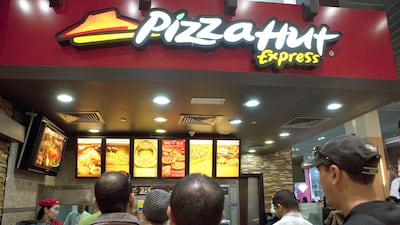
Americana owns the exclusive rights to the KFC and Pizza Hut franchises across the Middle East. Jaime Puebla / The National -

A customer waits at the counter at a KFC outlet in Abu Dhabi. Ravindranath K / The National -

Americana operates KFC among other brands. Pawan Singh / The National -

Customers eat at a Baskin Robbins outlet at the Dubai Mall. Bloomberg -

An Americana stand at the Gulfood conference in Dubai in 2011. Photo: Charles Crowell for The National


However, 2023 will be a year of change in the GCC. Dollar pegs mean that when the US Fed raises interest rates — as it did this week by raising 50 basis points — GCC central banks must follow suit.
Local investors in the region face a trade-off: they either keep investing in IPOs and the broader market or take some money off the table and put it in bank deposits. That makes it more important for GCC companies to appeal to foreign investors as they come to the market.
For companies in Saudi Arabia, that means they should start taking steps to register with US regulators to offer shares to US investors. More broadly, GCC stock exchanges should keep developing their markets to attract foreign institutions.
It is good to see governments selling stakes in more mature businesses such as Dewa or Adnoc Drilling, freeing up cash to invest elsewhere.
However, notwithstanding the recent listing of Americana, private companies are still underrepresented in the GCC IPO market. 2023 should be the year in which more GCC private companies meet global emerging market investors in the continuing GCC boom.
Simon Kitchen is managing director and head of strategy at EFG Hermes Research

