We have pledged one of the biggest steps in the history of our organisation — to reach net zero in 10 years. For any company in any sector, that is a huge goal. For us, it is an ambitious target. We are a fossil fuel company in a country that is the third-largest member of Opec.
The UAE is based in the world’s historical centre of fossil fuel production.
Equally, we believe the energy industry lies at the core of making net zero possible. We are determined to make the next decade truly count as we strive to support the three Ps — people, planet and profit — while supporting energy security, a cornerstone of modern-day civilisation.
The need for rapid change has never been greater. The Middle East is warming at twice the global average, according to the Max Planck Institute for Chemistry.
The impact of global strain will also reverberate across the region. For one, the number of climate-related disasters worldwide has surged fivefold in the last five decades, according to the World Meteorological Organisation.
Fossil fuels 2.0
For more than 150 years, the oil and gas industry has continued to innovate, propelling the growth of the sector.
The industry has ventured into an uncharted and difficult territory to explore and produce fossil fuels. It has nurtured cross-border partnerships, often insulated from turbulent geopolitics, finding common ground and establishing best standards, especially in health and safety, as well as technology advancements.
Against this backdrop lies a rallying cry for the sector to pivot, using decades of experience in troubleshooting to tackle the challenges of net zero, efficiently and effectively.
We are already seeing the positive power of this transition in the UAE, the first nation in the Mena region to announce a net-zero target, by 2050, when others have set 2060 or 2070 as targets.
The UAE and the world’s other energy giants will have a global stage to showcase how they can help achieve one of the trickiest balancing acts in modern history — achieve net zero without jeopardising energy security — at Cop28 in Dubai later this year. The biggest global climate gathering must move the needle this year.
Hitting the accelerator
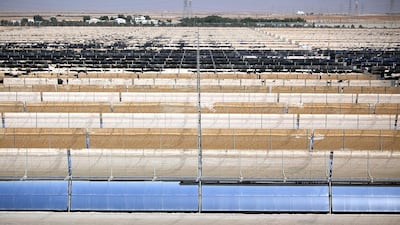
We have a busy and exciting decade ahead. Our plans include establishing a carbon capture and storage business by 2025 and building solar power stations to replace our energy consumption by 2032.
We will also sponsor research on energy storage and green hydrogen at the American University of Sharjah and the University of Sharjah, supporting the UAE’s goal to capture 25 per cent of the world’s low-carbon hydrogen market by 2030.
Plans to convert our fleet of company vehicles to make them electric are under way too, among many other endeavours.
The road ahead will bring challenges but we have some practice; we have been making environmental strides for decades. For one, nearly all our methane emissions — the second largest man-made cause of climate change after carbon dioxide emissions — have been abated since 2000.
This is important considering the oil and gas industry is the number one cause of global methane emissions, which can be 28 times more potent on a 100-year time scale than carbon dioxide.
Sharjah National Oil Corporation (SNOC) introduced a zero-operational-flare policy more than 20 years ago. Even during operational upsets, we prioritise “no flaring” over “production”.
We also have a continuing programme to identify and mitigate all leaks in the flare system. Tackling flaring is key to enhancing energy efficiency; the natural gas flared worldwide in 2021 was equivalent to the total volume of natural gas imported into Germany, France and the Netherlands, according to the International Energy Agency.
Another environmental campaign of ours from 1998 to 2003 included shutting down redundant equipment to reduce gas consumption. Meters were also installed on all flares to monitor volumes and a robust greenhouse gas (GHG) measurement and accounting system was established — one that is still in use today.
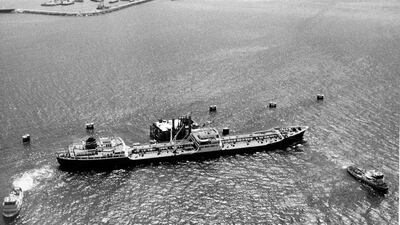
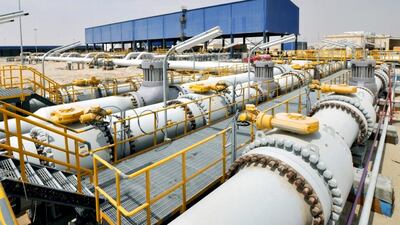
Over the years, we have also converted 15 per cent of power consumption at our liquefied petroleum, gas and condensate export terminals into solar power.
We also launched an education campaign called ‘Net Zero in SNOC and Beyond’ in 2022, which focuses on enhancing awareness of climate change, global warming and the linkage to GHG emissions.
It is focused on our employees, their families, university students and the community at large — the energy guardians of the future.
We wholeheartedly believe that the dedication and creativity of our hearts and minds will make our journey to net zero — the toughest goal the world’s energy sector has ever collectively faced — possible in less than 10 years.
Hatem Al Mosa is chief executive of Sharjah National Oil Corporation
What can victims do?
Always use only regulated platforms
Stop all transactions and communication on suspicion
Save all evidence (screenshots, chat logs, transaction IDs)
Report to local authorities
Warn others to prevent further harm
Courtesy: Crystal Intelligence
Ferrari 12Cilindri specs
Engine: naturally aspirated 6.5-liter V12
Power: 819hp
Torque: 678Nm at 7,250rpm
Price: From Dh1,700,000
Available: Now
Europe’s rearming plan
- Suspend strict budget rules to allow member countries to step up defence spending
- Create new "instrument" providing €150 billion of loans to member countries for defence investment
- Use the existing EU budget to direct more funds towards defence-related investment
- Engage the bloc's European Investment Bank to drop limits on lending to defence firms
- Create a savings and investments union to help companies access capital
Joker: Folie a Deux
Starring: Joaquin Phoenix, Lady Gaga, Brendan Gleeson
Director: Todd Phillips
Rating: 2/5
The specs
Engine: 2.0-litre 4-cyl turbo
Power: 201hp at 5,200rpm
Torque: 320Nm at 1,750-4,000rpm
Transmission: 6-speed auto
Fuel consumption: 8.7L/100km
Price: Dh133,900
On sale: now
The specs: 2018 Mercedes-Benz S 450
Price, base / as tested Dh525,000 / Dh559,000
Engine: 3.0L V6 biturbo
Transmission: Nine-speed automatic
Power: 369hp at 5,500rpm
Torque: 500Nm at 1,800rpm
Fuel economy, combined: 8.0L / 100km
Company%20profile
%3Cp%3E%3Cstrong%3EName%3A%20%3C%2Fstrong%3EEmonovo%20(previously%20Marj3)%0D%3Cbr%3E%3Cstrong%3EBased%3A%20%3C%2Fstrong%3ECairo%0D%3Cbr%3E%3Cstrong%3ELaunch%20year%3A%20%3C%2Fstrong%3E2016%0D%3Cbr%3E%3Cstrong%3ENumber%20of%20employees%3A%20%3C%2Fstrong%3E12%0D%3Cbr%3E%3Cstrong%3ESector%3A%20%3C%2Fstrong%3Eeducation%20technology%0D%3Cbr%3E%3Cstrong%3EFunding%3A%20%3C%2Fstrong%3Ethree%20rounds%2C%20undisclosed%20amount%3C%2Fp%3E%0A
Ten tax points to be aware of in 2026
1. Domestic VAT refund amendments: request your refund within five years
If a business does not apply for the refund on time, they lose their credit.
2. E-invoicing in the UAE
Businesses should continue preparing for the implementation of e-invoicing in the UAE, with 2026 a preparation and transition period ahead of phased mandatory adoption.
3. More tax audits
Tax authorities are increasingly using data already available across multiple filings to identify audit risks.
4. More beneficial VAT and excise tax penalty regime
Tax disputes are expected to become more frequent and more structured, with clearer administrative objection and appeal processes. The UAE has adopted a new penalty regime for VAT and excise disputes, which now mirrors the penalty regime for corporate tax.
5. Greater emphasis on statutory audit
There is a greater need for the accuracy of financial statements. The International Financial Reporting Standards standards need to be strictly adhered to and, as a result, the quality of the audits will need to increase.
6. Further transfer pricing enforcement
Transfer pricing enforcement, which refers to the practice of establishing prices for internal transactions between related entities, is expected to broaden in scope. The UAE will shortly open the possibility to negotiate advance pricing agreements, or essentially rulings for transfer pricing purposes.
7. Limited time periods for audits
Recent amendments also introduce a default five-year limitation period for tax audits and assessments, subject to specific statutory exceptions. While the standard audit and assessment period is five years, this may be extended to up to 15 years in cases involving fraud or tax evasion.
8. Pillar 2 implementation
Many multinational groups will begin to feel the practical effect of the Domestic Minimum Top-Up Tax (DMTT), the UAE's implementation of the OECD’s global minimum tax under Pillar 2. While the rules apply for financial years starting on or after January 1, 2025, it is 2026 that marks the transition to an operational phase.
9. Reduced compliance obligations for imported goods and services
Businesses that apply the reverse-charge mechanism for VAT purposes in the UAE may benefit from reduced compliance obligations.
10. Substance and CbC reporting focus
Tax authorities are expected to continue strengthening the enforcement of economic substance and Country-by-Country (CbC) reporting frameworks. In the UAE, these regimes are increasingly being used as risk-assessment tools, providing tax authorities with a comprehensive view of multinational groups’ global footprints and enabling them to assess whether profits are aligned with real economic activity.
Contributed by Thomas Vanhee and Hend Rashwan, Aurifer
Mercer, the investment consulting arm of US services company Marsh & McLennan, expects its wealth division to at least double its assets under management (AUM) in the Middle East as wealth in the region continues to grow despite economic headwinds, a company official said.
Mercer Wealth, which globally has $160 billion in AUM, plans to boost its AUM in the region to $2-$3bn in the next 2-3 years from the present $1bn, said Yasir AbuShaban, a Dubai-based principal with Mercer Wealth.
“Within the next two to three years, we are looking at reaching $2 to $3 billion as a conservative estimate and we do see an opportunity to do so,” said Mr AbuShaban.
Mercer does not directly make investments, but allocates clients’ money they have discretion to, to professional asset managers. They also provide advice to clients.
“We have buying power. We can negotiate on their (client’s) behalf with asset managers to provide them lower fees than they otherwise would have to get on their own,” he added.
Mercer Wealth’s clients include sovereign wealth funds, family offices, and insurance companies among others.
From its office in Dubai, Mercer also looks after Africa, India and Turkey, where they also see opportunity for growth.
Wealth creation in Middle East and Africa (MEA) grew 8.5 per cent to $8.1 trillion last year from $7.5tn in 2015, higher than last year’s global average of 6 per cent and the second-highest growth in a region after Asia-Pacific which grew 9.9 per cent, according to consultancy Boston Consulting Group (BCG). In the region, where wealth grew just 1.9 per cent in 2015 compared with 2014, a pickup in oil prices has helped in wealth generation.
BCG is forecasting MEA wealth will rise to $12tn by 2021, growing at an annual average of 8 per cent.
Drivers of wealth generation in the region will be split evenly between new wealth creation and growth of performance of existing assets, according to BCG.
Another general trend in the region is clients’ looking for a comprehensive approach to investing, according to Mr AbuShaban.
“Institutional investors or some of the families are seeing a slowdown in the available capital they have to invest and in that sense they are looking at optimizing the way they manage their portfolios and making sure they are not investing haphazardly and different parts of their investment are working together,” said Mr AbuShaban.
Some clients also have a higher appetite for risk, given the low interest-rate environment that does not provide enough yield for some institutional investors. These clients are keen to invest in illiquid assets, such as private equity and infrastructure.
“What we have seen is a desire for higher returns in what has been a low-return environment specifically in various fixed income or bonds,” he said.
“In this environment, we have seen a de facto increase in the risk that clients are taking in things like illiquid investments, private equity investments, infrastructure and private debt, those kind of investments were higher illiquidity results in incrementally higher returns.”
The Abu Dhabi Investment Authority, one of the largest sovereign wealth funds, said in its 2016 report that has gradually increased its exposure in direct private equity and private credit transactions, mainly in Asian markets and especially in China and India. The authority’s private equity department focused on structured equities owing to “their defensive characteristics.”