
In the more than two decades since Mubadala Investment Company was established, Abu Dhabi’s strategic investment arm has helped to advance the UAE's agenda for knowledge creation, innovation and developing greater opportunities for future generations, Sheikh Mansour bin Zayed, Deputy Prime Minister, Minister of the Presidential Court and chairman of Mubadala said on Sunday.
“Since then, Mubadala’s commitment to that vision and its ability to further respond and support evolving national priorities has contributed to shaping the UAE and its place in the world today,” Sheikh Mansour was quoted by state news agency Wam as saying.
The company's partnership philosophy, its agility and long-term responsible investment approach have created a vast array of opportunities for Emiratis that did not exist two decades ago, he added.
On Friday, Mubadala said it invested Dh107 billion ($29.13 billion) in 2022 across a range of sectors and received proceeds of Dh106 billion ($29 billion) by monetising assets at strong valuations.
The investments were made in sectors including life sciences, renewable energy and digital infrastructure, in line with the company’s strategy to invest in industries shaping the future, Mubadala said on Friday.
Assets under management across the group stood at Dh1.01 trillion ($276 billion).
Growth was supported by a strong performance in real estate, infrastructure and alternative investments, including private equity and private credit, Mubadala said.
The company did not, however, disclose its total comprehensive income for 2022, but that figure stood at Dh122 billion in 2021.
“Despite global headwinds affecting financial markets and investor sentiment, we outperformed benchmarks, staying the course with our long-term strategy of investing in key markets and sectors,” Khaldoon Al Mubarak, Mubadala’s managing director and group chief executive, said on Friday.
Beyond sustainable economic growth and associated financial returns, Mubadala's impact is evidenced by domestic world-class healthcare and education infrastructure; a diverse, forward-looking economic base; and global investment leadership across sectors shaping a sustainable and positive future, Sheikh Mansour said.
Mubadala’s assets during the past two decades – in pictures
-

Khaldoon Al Mubarak, managing director and Group CEO of Mubadala. Photo: Mubadala -

MUBADALA ASSETS: Dolphin Energy is one of the largest energy investments in the Gulf region, and is established as a joint-venture between Mubadala, Occidental Petroleum and Total to produce and transport gas from Qatar’s North Field to the UAE and Oman. Jaime Puebla / The National -
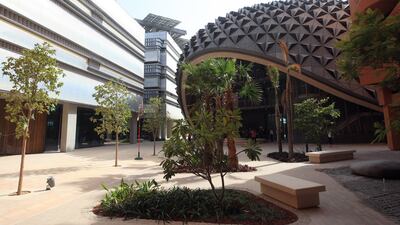
Masdar, the Abu Dhabi Future Energy Company. Ravindranath K / The National -

Mubadala Healthcare was established in 2006. Fatima Al Marzooqi/The National. -
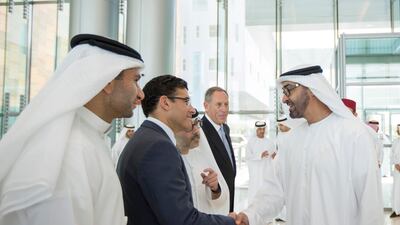
Sheikh Mohamed bin Zayed, Crown Prince of Abu Dhabi and Deputy Supreme Commander of the UAE Armed Forces (right) greets Marc Harrison, MD and chief executive of the Cleveland Clinic Abu Dhabi. Mohamed Al Hammadi / Crown Prince Court - Abu Dhabi -

Masood Mahmood, the chief executive of Yahsat. Mona Al Marzooqi / The National -

Al Maryah Island (formerly Sowwah Island) under construction and, which is now a freezone. Ravindranath K / The National -
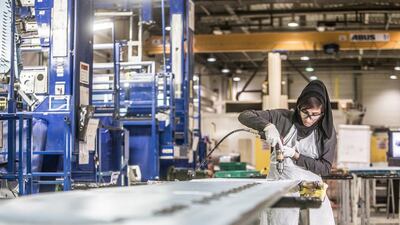
Strata is an integral part of the UAE’s aerospace vision. Courtesy Mubadala -
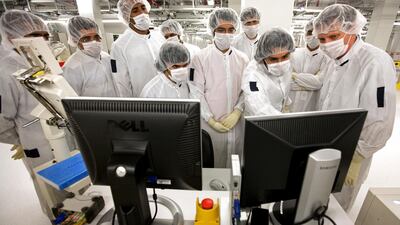
GlobalFoundries has become the world’s semiconductor powerhouse. Jeff Topping / The National -

Imperial College London Diabetes Centrehas a state-of-the-art outpatient facility. Lauren Lancaster / The National -
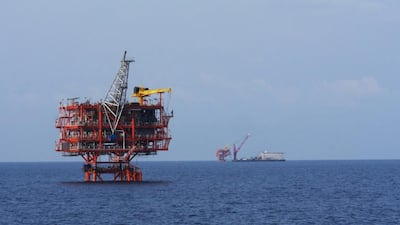
Mubadala Petroleum is a leading oil and gas exploration and production company. Courtesy Mubadala Petroleum -

Emirates Aluminium and Dubai Aluminium joined to create EGA, an industrial champion for the UAE. Courtesy Emal -
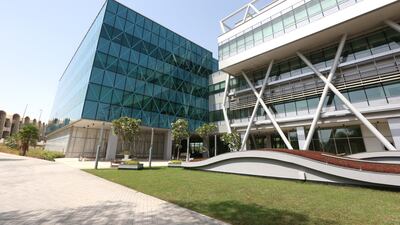
Healthpoint is a specialty health and wellness destination in Abu Dhabi. Fatima Al Marzooqi / The National -

Healthpoint, a specialty health and wellness destination in Abu Dhabi, is open to the public. Ravindranath K / The National -
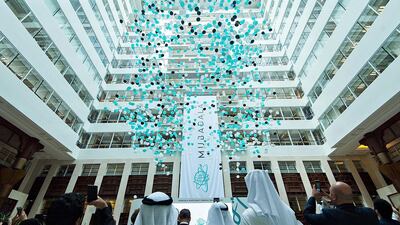
Mubadala Investment Company was inaugurated through a merger between Mubadala Development Company and the International Petroleum Investment Company. Wam -

Abu Dhabi Investment Council joined Mubadala Investment Company. Lauren Lancaster / The National -
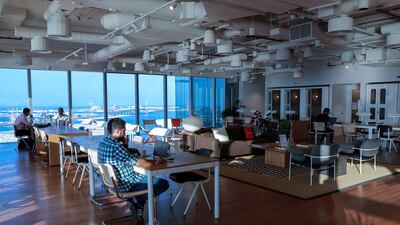
Hub71 was established as part of the Dh50bn Ghadan 21 economic stimulus programme. Victor Besa / The National -
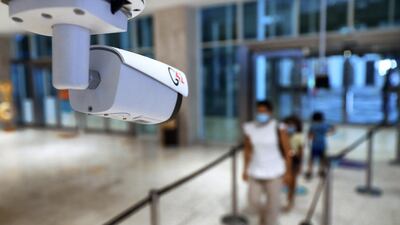
Mubadala invested in G42, the Abu Dhabi-based artificial intelligence and cloud computing company. Victor Besa / The National -
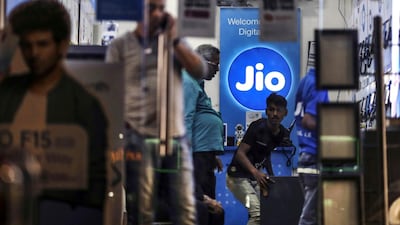
Mubadala invested US$1.2bn in India’s Reliance Jio Platforms. Bloomberg -
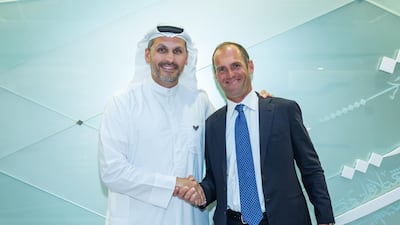
Mubadala invested $2 billion in a 25-year strategy plan for technology investments. Photo: courtesy of Mubadala -
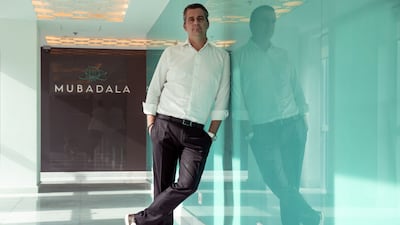
Mubadala Capital commenced operations as a wholly-owned asset management subsidiary of Mubadala Investment Company. Bloomberg -

Mubadala Health incorporates the UAE’s most respected facilities. Photo: Mubadala


“Importantly, the economic diversification Mubadala has enabled has also had a fundamental impact on more than 200 nationalities in our region's most dynamic and competitive economy.”
Mubadala's capabilities and standing as one of the world's largest responsible investors is essential as the UAE embarks on new and highly ambitious programmes under the President, Sheikh Mohamed, he added.
“As always, as we continue to advance the UAE's knowledge-based economy, and we will do so in a way that pioneers and contributes to solutions for critical global challenges in sectors such as health innovation, the climate emergency and future energy sources,” Sheikh Mansour said.
Established in 2002, Mubadala invests on behalf of the Abu Dhabi government and is at the heart of the emirate’s efforts to diversify its revenue base and generate income from sources other than oil.
The sovereign fund’s investment portfolio spans six continents. It has interests in multiple sectors and asset classes, including aerospace, information and communications technology, semiconductors, metals and mining, renewable energy, oil and gas and petrochemicals.

