Apple will be focusing more on student app makers at its Worldwide Developers Conference next month as interest in coding continues to drum up interest among the younger generation.
The third edition of the Swift Student Challenge is a centrepiece of the iPhone maker’s annual convention, which gathers its 30 million-strong army of developers from around the world.
Apple’s student programme is also a potential gateway to a career in app development, which can prove lucrative as the global app ecosystem expands alongside the growth of users’ increasing reliance on digital tools.
“The entire process of submitting [an app] project and the stages you go through helps you learn so much,” Sabrina Sales, a 13-year-old student developer based in Abu Dhabi, told The National ahead of the WWDC.
“It gives you the proper structure of creating and designing an app from scratch. It also gives you the right mindset to deal with the challenges of implementing an idea,” said Ms Sales, who is among the winners of last year’s edition.
The global app market continues to grow, and app marketplaces have rolled out several initiatives to attract coders to help expand their digital offerings.

The number of third-party apps on Apple’s App Store has grown significantly since the platform was launched in 2008. From an initial 500 apps then, it has surged to more than 1.8 million now, representing nearly 100 per cent of all apps, according to Apple.
While significantly below market leader Google Play in terms of the total number of apps — around 3.5 million at present, according to Statista — the App Store still leads in revenue as iPhone sales tend to be higher in countries with higher incomes.
Apple does not specify how much the App Store makes in its financial reports, even though it is part of its strong services segment.
Meanwhile, iOS app revenue surged almost threefold to about $85 billion in 2021 from $28.6bn in 2016, estimates from app data platform Sensor Tower show. Google Play recorded about $48bn last year.
-
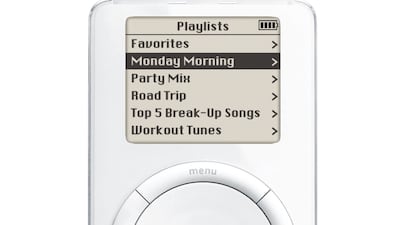
The Apple iPod 1st generation was released October 23, 2001. It cost $399, and had 5GB storage holding 1,000 songs. Photo: Apple -
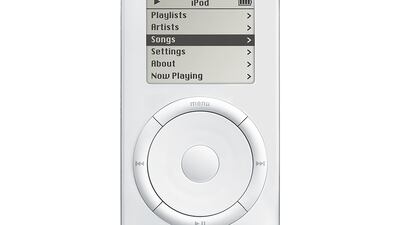
The Apple iPod 2nd generation was released July 17, 2002. It came with 10GB of storage for $399 and later a 20GB version was released for $499. Photo: Apple -
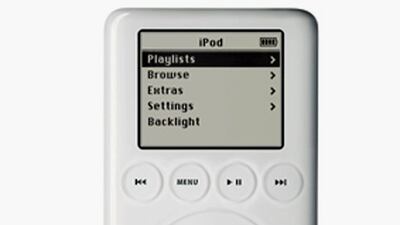
The Apple iPod 3rd generation was released April 28, 2003 and started making use of the iTunes store. It was the first to have an all-touch wheel to scroll. Prices ranged from $299 to $499 depending on storage size. Photo: Apple -
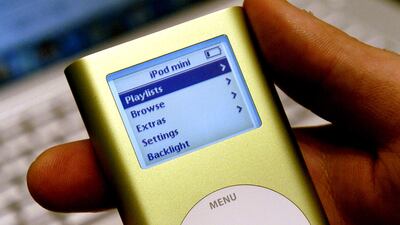
The Apple iPod mini 1st generation was released January 6, 2004. This was the first time the click wheel was used and the pod came in five different colours - blue, pink, silver, green, and gold. It sold for $249. Photo: Getty Images -
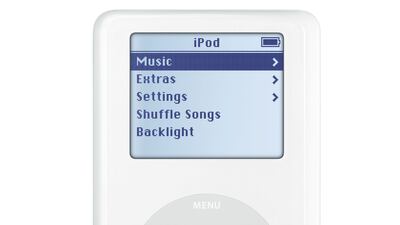
The Apple iPod 4th generation was released July 19, 2004. The function buttons were moved on to the wheel. A 20 GB model sold for $299, while a 40 GB model was available for $399. Photo: Apple -
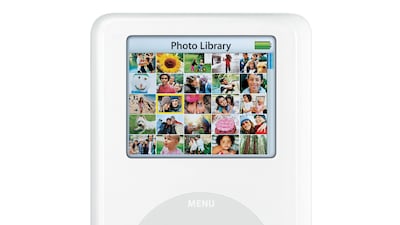
The Apple iPod 4th generation with a colour screen was released October 26, 2004. Album covers could be seen for the first time and the shuffle function was introduced. Photo: Apple -
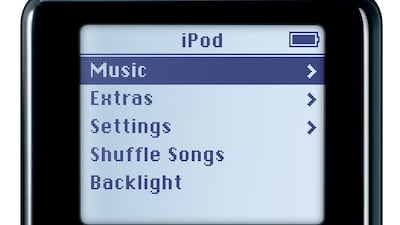
The Apple iPod U2 Edition was released at the same time as the 4th generation. It held up to 5,000 songs and featured a black enclosure with a red click wheel and custom engraving of U2 band member signatures. It retailed at $349. Photo: Apple -
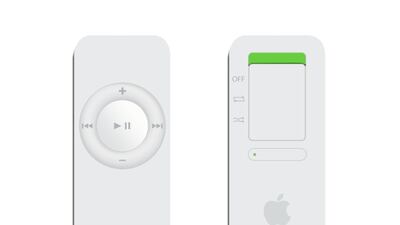
The Apple iPod shuffle 1st generation was released January 11, 2005. A first entry to the low-end market, it had no screen and just buttons to play / pause, next song or previous. The 512MB model sold for $99, while the 1GB model sold for $149. Photo: Apple -
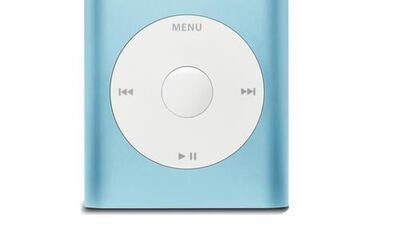
The Apple iPod mini 2nd generation was released February 22, 2005. It had just minor changes from the first generation mini, and the 4GB version sold for $199, while the 6GB model sold for $249. Photo: Getty Images -
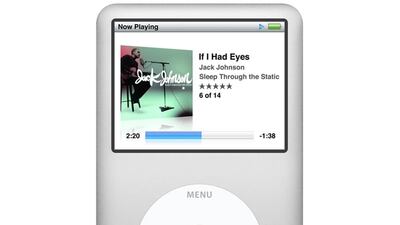
The Apple iPod 6th generation was released September 5, 2007. It came in a 160GB model for $349. Photo: Apple -
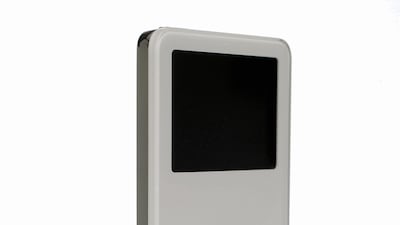
The Apple Nano iPod 1st generation was released September 7, 2005. This was a super thin iPod at just 0.27in thick. It used flash memory for storage, and sold at $199 and $249 for 4BG and 6GB respectively. Photo: Getty Images -
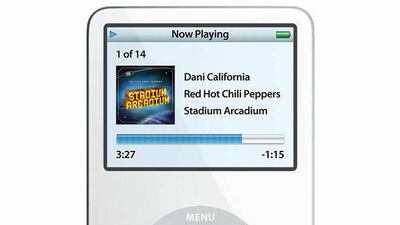
The Apple iPod 5th generation was released October 12, 2005. This had a larger screen, smaller wheel and played video. In 2005, Apple also released the iPod nano and iPod shuffle. Photo: Apple -
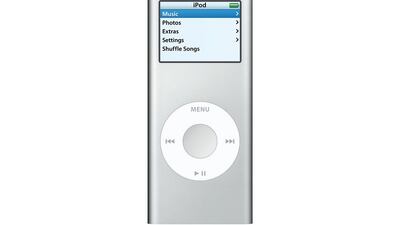
The Apple Nano iPod 2nd generation was released September 12, 2006. More colour options were added, plus an 8GB version for $249. Photo: Apple -

The Apple iPod shuffle 2nd generation was released September 12, 2006. A small, clip-on size was introduced in a variety of colours. A dock replaced the integrated USB connector. With 1GB is was $79. Photo: Apple -
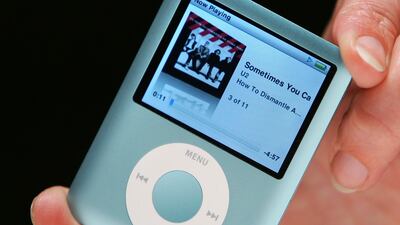
The Apple iPod Nano 3rd generation was released September 5, 2007. A big change in shape to allow video display. The 4GB model was $149, while the 8GB model was $199. Photo: Getty Images -

The Apple iPod Touch 1st generation was released September 5, 2007. It was basically the iPhone without the camera and phone capabilities. An 8GB model sold for $299, and a 16 GB model sold for $399. Photo: Apple -
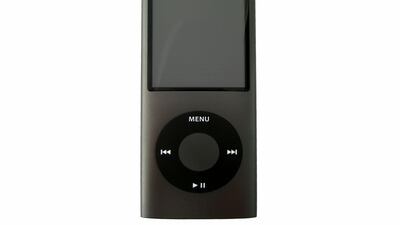
The Apple Nano iPod 4th generation was released September 9, 2008. It was a return to the rectangular shape, while the "Genius" playlist option was introduced. It had bigger capacity, came in nine colours and was $149 and $199 for 8GB and 16GB respectively. Photo: Getty Images -
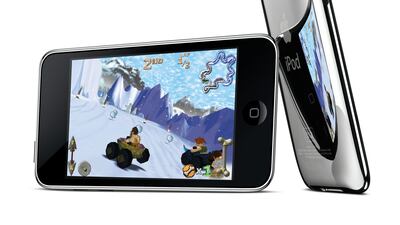
The Apple iPod Touch 2nd generation was released September 9, 2008. It featured the new iPhone 2.0 OS and a curved back. An 8GB model was $229, a 16GB model was $299, and a 32GB model was $399. Photo: Apple -
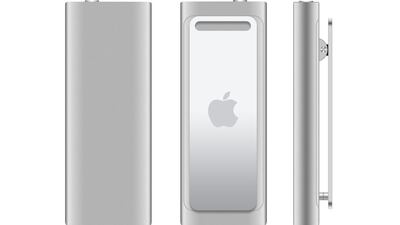
The Apple iPod shuffle 3rd generation was released March 11, 2009. A shape change saw it go back to rectangular. It included Apple's new VoiceOver feature, with song title, artist, and playlist title spoken aloud. Photo: Apple -
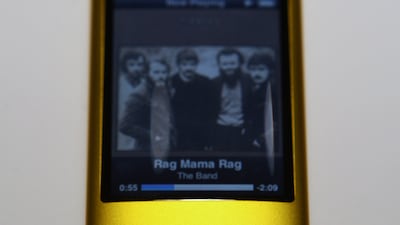
The Apple iPod Nano 5th generation was released September 9, 2009. An integrated video camera, FM radio and pedometer were added. 8GB and 16 GB cost $149 and $179 respectively. Photo: Getty Images -
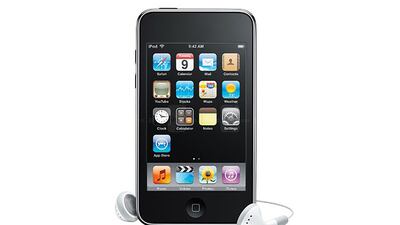
The Apple iPod Touch 3rd generation was released September 9, 2009. Faster and with greater capacity, it came in 32GB and 64GB for $299 and $399 respectively. Photo: Apple -
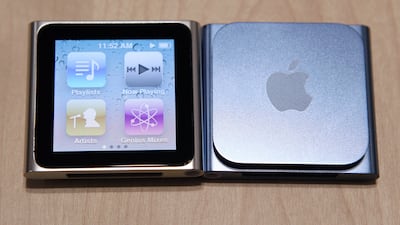
The Apple iPod Nano 6th generation was released September 1, 2010. It was goodbye click wheel and hello touch screen. The camera was removed, while it was sold in seven colors, in capacities of 8 and 16 GB, for $149 and $179, respectively. Photo: Getty Images -

The Apple iPod shuffle 4th generation was released September 1, 2010. It shrunk in size again and was sold with 2GB of storage for $49, in five colours. Photo: Apple -

The Apple iPod Touch 4th generation was released September 1, 2010. It brought in iPhone 4 enhancements such as retina display, front and rear cameras. 8GB was $229, 32GB was $299 and 64GB $399. Photo: Apple -
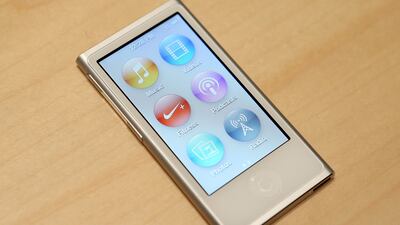
The Apple iPod Nano 7th generation was released September 12, 2012. Another change in shape - back to tall and thin. It sold in eight colours, with 16GB of storage for $149. Photo: Getty Images -
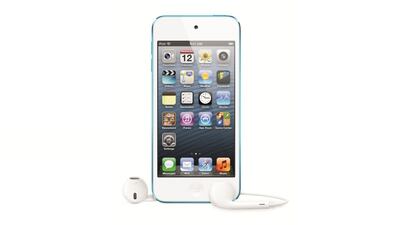
The Apple iPod Touch 5th generation was released September 12, 2012. A bigger 4in screen was added, plus Bluetooth 4.0 and the lightning connector. 32GB was $299 and 64GB $399. Photo: Apple -
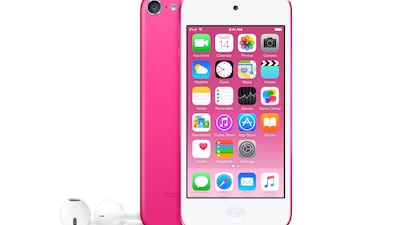
The Apple iPod Touch 6th generation was released July 15, 2015. The A8 processor found in the iPhone 6 was brought in, plus better cameras. 16 GB was sold for $199, 32 GB for $249, 64GB for $299 and 128GB for $399. Photo: Apple -
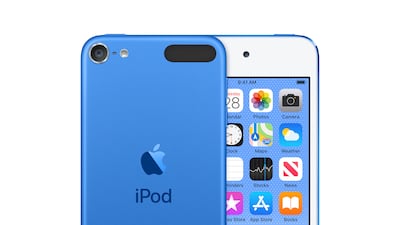
The Apple iPod Touch 7th generation was released May 28, 2019. The quad-core A10 chip from the iPhone 7 was used, and Apple said it had a 40-hour battery life for music. It coincided with the launch of Apple Arcade games. 32, 128, and 256GB cost $199, $299 and $399 respectively. Photo: Apple


Developers, in turn, have earned more than $260bn — $60bn in 2021 alone — through the sale of digital goods and services on the App Store since its launch, Apple said in January.
“By providing many ways for iPhone users to expand and complement their experience, the App Store has been central to the continued success of the iPhone,” Juliette Caminade and Markus von Wartburg, economists at Boston-based Analysis Group, wrote in an April study.
Apple does not break down its app developers by age group, but it did acknowledge that its coding programmes, such as Everyone Can Code, App Development in Swift and Swift Playgrounds, had almost 2 million students and educators in 2020.
The Cupertino-based company, among the most valuable in the world, also offers free sessions to the general public through its Today at Apple events at its physical stores.
Abu Dhabi-based app developer and Apple Swift Challenge winner
Coding is seen as a valuable tool for the future economy, which is built on new-age technologies and digital experiences.
Governments are also recognising its importance. Dubai, for instance, launched the One Million Arab Coders initiative in 2017 and a challenge programme in 2021, seeking the best talent among the youth’s ranks and equipping them with the skills needed for the future.
The winner, announced on May 11, was Syrian refugee Mahmoud Shahoud, who clinched $1 million as the top prize.
“A long-term goal I have is to be accepted into a prestigious university known for computer science. And, hopefully, to play a part in making the UAE into a global hub for innovation," Ms Sales said.
Her entry this year is called Procrastigator, a game she developed so she could "help educate my peers on how to manage their time in a fun and easy way".
"I hope to learn how to write more efficient code. I’m excited to see the new technologies and features Apple releases for us this year and want to learn as much as I can from Apple engineers and other developers," she said.
The WWDC will be held online for the third straight year, but Apple last week sent out a limited number of in-person invitations to attend the June 6 kick-off event.
Apple has also updated its training and certifications for IT support and management professionals skilled in supporting and managing Apple products, it said.
The training has been moved to an online and self-paced format, and users can demonstrate their competency with two new exams and earn certification from Apple, the company said.
-

The iPhone through the ages: Former Apple CEO Steve Jobs introduces the iPhone to the world in San Francisco, California, on January 9, 2007. It had a 3.5-inch screen and 2MP camera. Reuters -

The iPhone 3G was launched in 2008 with a faster 3G connection. It also added location services. Reuters -
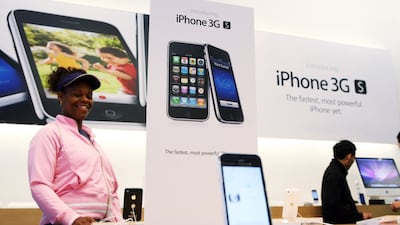
The iPhone 3GS was released on June 19, 2009. It was twice as fast as its previous version. AFP -

The iPhone 4 was released on June 24, 2010. It featured FaceTime for the first occasion as well as a retina screen. Reuters -

A later release, this time on October 14, 2011, the iPhone 4S had a new dual-core processor. Reuters -

Apple CEO Tim Cook takes to the stage following the reveal of the iPhone 5 in San Francisco, California, on September 12, 2012. This was the first 4-inch screen and the phone was faster and slimmer. Reuters -
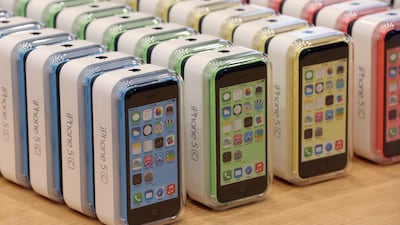
The iPhone 5C arrived on September 20, 2013 and was less expensive and very similar to the iPhone 5 except it came with colourful casing. Getty Images -
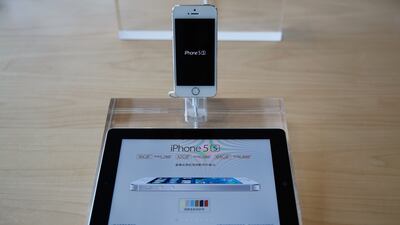
The iPhone 5s came at the same time as the 5C and introduced touch ID and a motion data processor as health and fitness apps started to come to the fore. Getty Images -
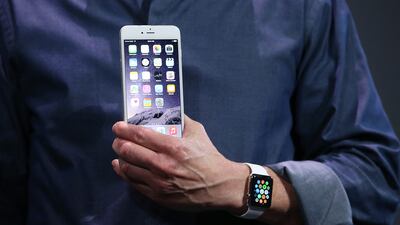
The iPhone 6 marked another double launch when unveiled on September 9, 2014. The 6 had a 4.7-inch screen, faster processor and improved camera. AFP -

The iPhone 6 Plus had a 5.5-inch screen and was $100 more expensive. Reuters -
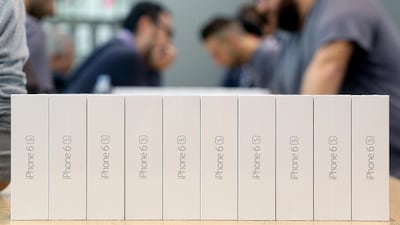
The iPhone 6s came on September 25, 2015 with 3D touch and a camera that could shoot 4K video. EPA -

The iPhone 6s Plus is displayed at Tokyo's flagship store on September 25, 2015. Both new phones came in a new colour - rose gold. AFP -
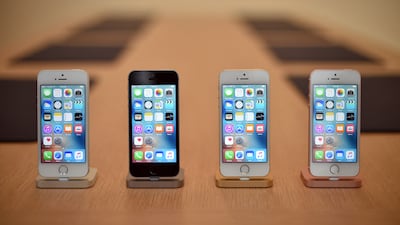
Unveiled on March 21, 2016, the iPhone SE had the same design as the iPhone 5 and saw a return to the 4-inch screen which was preferred by some users. It was more affordable and hence lacked features such as Touch ID. AFP -

The iPhone 7 announced on September 7, 2016, said somewhat controversially goodbye to the audio jack. Reuters -
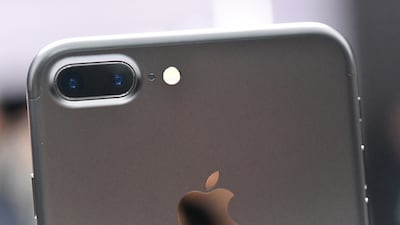
The iPhone 7 Plus had a dual camera added. AFP -

The iPhone 8 was released on September 22, 2017 and had a new glass and aluminium design, retina HD screen. Reuters -
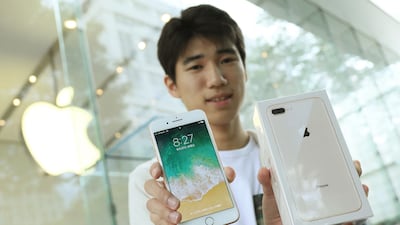
A customer gets his hands on an iPhone 8 Plus on launch day in Tokyo on September 22, 2017. The launches also saw speakers that were 25% louder and the most powerful and smartest chip in a smartphone (according to Apple). AFP -

The iPhone X marked a decade of iPhones on September 12, 2017. It's main changes were an edge-to-edge super retina screen. Touch ID was removed with Face ID introduced. Reuters -

The iPhone XS was released on September 21, 2018 and had a Super Retina OLED screen with improved scratch and water resistance. Face ID was faster. Reuters -

The iPhone XS Max had the largest iPhone screen to date at 6.5 inches. It could handle 3 million pixels. Reuters -
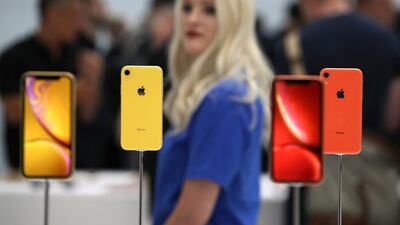
The iPhone XR was slightly cheaper than the XS and came with a 6.1-inch screen. AFP -
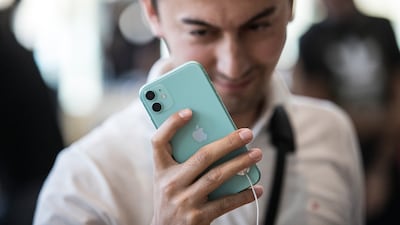
A customer looks at the iPhone 11 at an Apple store in Dubai Mall on September 20, 2019. EPA -
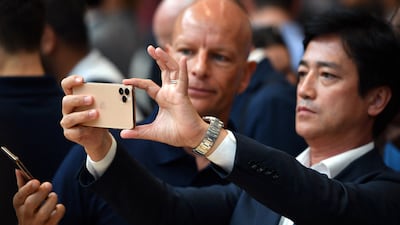
A man tries out the iPhone 11 Pro in Cupertino, California, on September 10, 2019. AFP -

Midnight Green was introduced for the iPhone 11 Pro Max, while there was also a new three-camera system. Reuters -
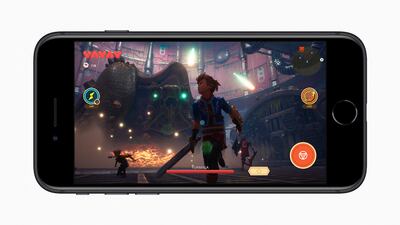
Arriving on April 15, 2020, the iPhone SE was for budget-minded customers and was pretty much a replica of the iPhone 8. Its 4.7-inch screen felt rather on the small side compared to the big screens of its big brothers. Apple Inc. / AFP -
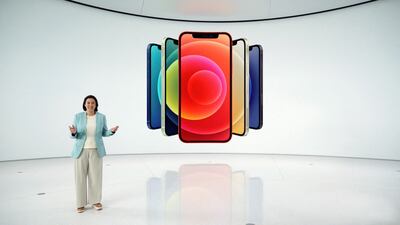
The iPhone 12 on October 13, 2020 introduced a new processor and a screen that offered four times better protection if dropped. Apple / AFP -

The iPhone 12 mini offered a 5.4-inch screen. Getty Images -
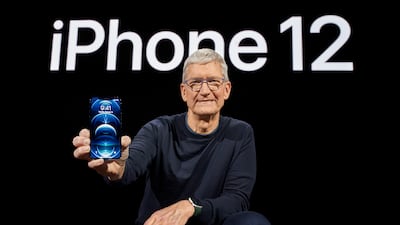
Mr Cook showcases the iPhone 12 Pro during an event at Apple Park in Cupertino, California, on October 13, 2020. This upgrade saw a faster chip, 5G speed, a "camera system that’s killer in low light. A LiDAR Scanner for more realistic AR. And two great sizes to choose from — including our largest display ever". Apple / EPA -

The iPhone 12 Pro Max was categorised as a 'legacy phone'. Reuters -
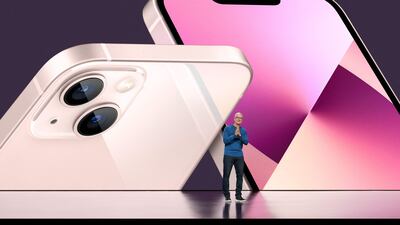
The new iPhone 13 was unveiled on September 14, 2021. It has a smart data mode which helps battery life, more 5G bands and antenna lines that use material made from recycled plastic water bottles. AFP -
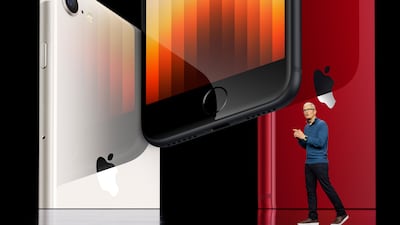
Apple CEO Tim Cook showcasing the third generation iPhone SE featuring 5G and the A15 Bionic chip on March 8, 2022. EPA -
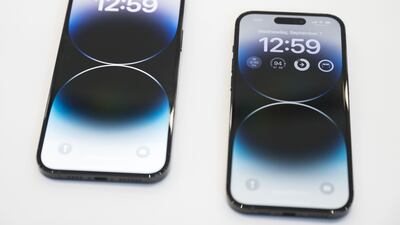
The Apple iPhone 14, 14 Plus, Pro Max and the Apple iPhone 14 Pro were unveiled during an event on September 7, 2022. It didn’t raise its US prices during one of the worst years for inflation in decades. The biggest addition was emergency calling after a car crash. Bloomberg