

Big technology companies such as Apple, Amazon and Facebook owner Meta Platforms plan to freeze hiring amid a slowdown in the US economy, but this is not expected to hit IT spending significantly as demand for services continues to grow, industry experts have said.
The companies are bracing for one of the “worst economic downturns”, with Amazon saying it is overstaffed after reporting a second-quarter loss of $2 billion last week.
Facebook has also scaled back plans to hire engineers while Microsoft, Netflix and Tesla have been eliminating jobs in recent months, Bloomberg reported.
However, the Big Tech hiring freeze is being offset by “significant uptake of demand for IT services”, which are mostly driven by the requirements of digital transformation that accelerated during the pandemic, said DD Mishra, a senior director analyst at Gartner.
“Most of the Big Tech firms are anticipating the risk of a recession and slowdown in the US economy, and are taking some measures in the form of a hiring freeze and slowdown in hiring due to the global economic environment, geopolitical situations and other challenges,” Mr Mishra told The National.
“[But] inflation, geopolitical disruption and talent shortages are not expected to slow IT investments significantly for now. Purchasing and investing preferences will be focused on areas including analytics, cloud computing, seamless customer experiences and security.”
Geopolitical and economic uncertainty is mounting across the world after Russia’s military offensive against Ukraine, with inflation also rising due to higher commodity prices and supply chain disruptions.
In July, the US economy shrunk for a second quarter in a row, triggering one definition of a “technical recession”, as record-high inflation and aggressive interest rate increases by the Federal Reserve hit business and housing demand.
However, the US hiring market remains strong, with employers having added more jobs in June than forecast and the unemployment rate near a five-decade low, suggesting recruitment needs are, so far, eclipsing concerns about the economic outlook.
Meanwhile, the number of information technology professionals globally is expected to grow more than 12 per cent to about 62 million in 2023, from 55.3 million in 2020, data from Statista shows.
Earlier this year, Gartner projected end-user IT services spending would grow at a compound annual rate of 9.1 per cent between 2020 and 2025.
However, the research company has since lowered its forecast to an annual growth rate of 8.5 per cent between 2021 and 2026.
“The demand pipeline for IT services is expected to stabilise, and a slowdown in additional demand could also be one of the reasons for taking steps towards stabilising demand and supply,” said Mr Mishra.
He said 2023 and 2024 would be “much better”, compared with this year.
“A combination of all these factors may require some short-term and long-term measures to navigate through emerging situations … we have not seen such an impending challenge from a services perspective in the short term.”
Technology companies may have to consider pausing their hiring plans to sustain the record growth they experienced during the Covid-19 pandemic, said George Foley, a Dubai-based senior consultant at recruitment company Michael Page.
-
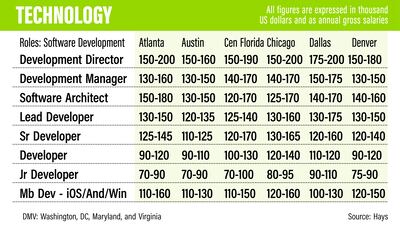
US salary guide 2022 - Hays -
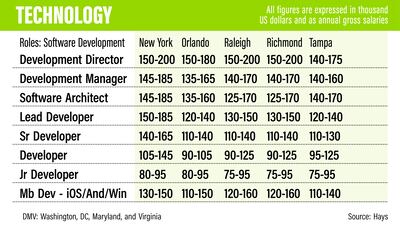
US salary guide 2022 - Hays -

US salary guide 2022 - Hays -
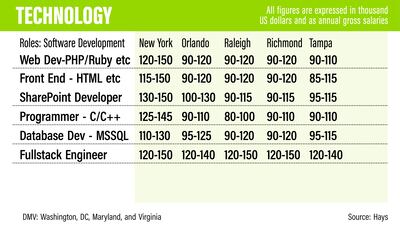
US salary guide 2022 - Hays -
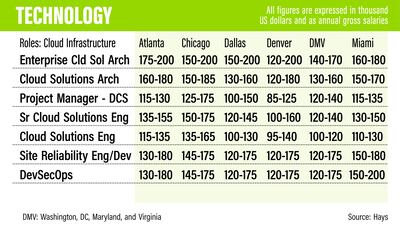
US salary guide 2022 - Hays -
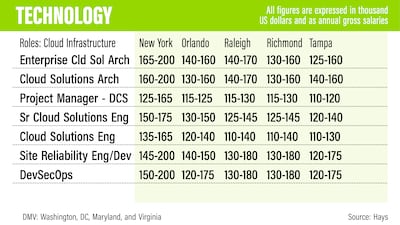
US salary guide 2022 - Hays -
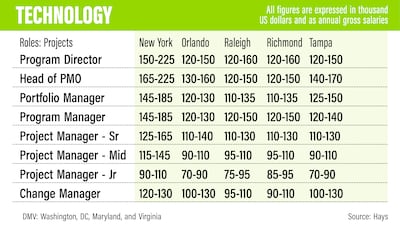
US salary guide 2022 - Hays -

US salary guide 2022 - Hays -

US salary guide 2022 - Hays -
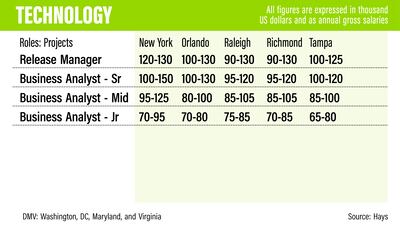
US salary guide 2022 - Hays -
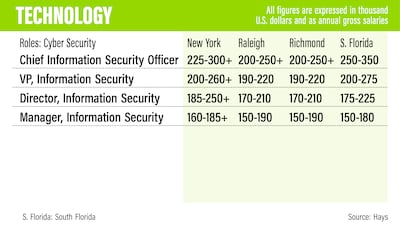
US salary guide 2022 - Hays -
US salary guide 2022 - Hays -

US salary guide 2022 - Hays -
US salary guide 2022 - Hays -
US salary guide 2022 - Hays -
US salary guide 2022 - Hays -
US salary guide 2022 - Hays -

US salary guide 2022 - Hays -
US salary guide 2022 - Hays -
US salary guide 2022 - Hays -
US salary guide 2022 - Hays -

US salary guide 2022 - Hays -

US salary guide 2022 - Hays -

US salary guide 2022 - Hays -
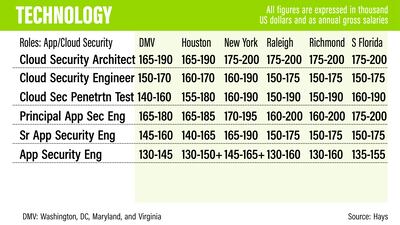
US salary guide 2022 - Hays -
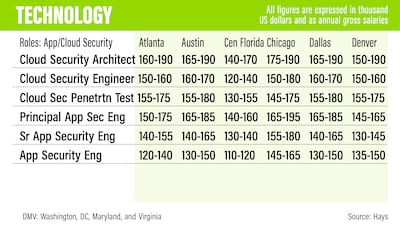
US salary guide 2022 - Hays -
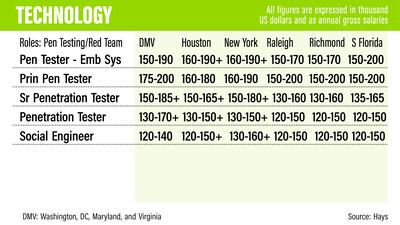
US salary guide 2022 - Hays -
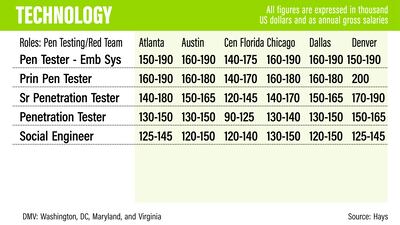
US salary guide 2022 - Hays -
US salary guide 2022 - Hays -
US salary guide 2022 - Hays -
US salary guide 2022 - Hays -
US salary guide 2022 - Hays -
US salary guide 2022 - Hays -

US salary guide 2022 - Hays -
US salary guide 2022 - Hays -
US salary guide 2022 - Hays -
US salary guide 2022 - Hays -
US salary guide 2022 - Hays -
US salary guide 2022 - Hays -
US salary guide 2022 - Hays -
US salary guide 2022 - Hays -
US salary guide 2022 - Hays -
US salary guide 2022 - Hays -
US salary guide 2022 - Hays -
US salary guide 2022 - Hays -
US salary guide 2022 - Hays -
US salary guide 2022 - Hays -
US salary guide 2022 - Hays -
US salary guide 2022 - Hays -
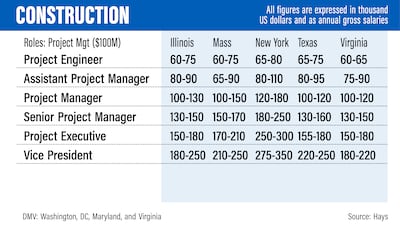
US salary guide 2022 - Hays -
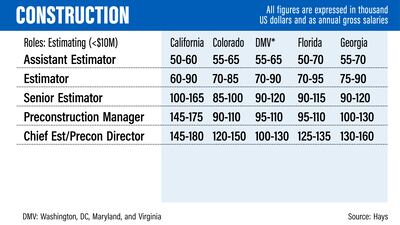
US salary guide 2022 - Hays -

US salary guide 2022 - Hays -
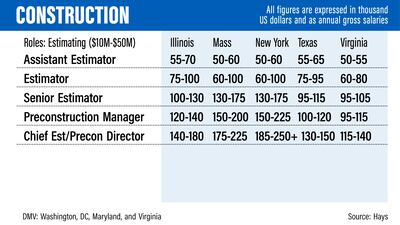
US salary guide 2022 - Hays -
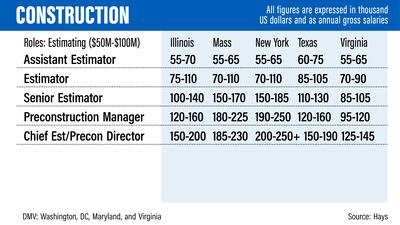
US salary guide 2022 - Hays -
US salary guide 2022 - Hays -
US salary guide 2022 - Hays -
US salary guide 2022 - Hays -
US salary guide 2022 - Hays -
US salary guide 2022 - Hays -
US salary guide 2022 - Hays -
US salary guide 2022 - Hays -
US salary guide 2022 - Hays -
US salary guide 2022 - Hays -
US salary guide 2022 - Hays -
US salary guide 2022 - Hays -

US salary guide 2022 - Hays -
US salary guide 2022 - Hays -
US salary guide 2022 - Hays -

US salary guide 2022 - Hays -
US salary guide 2022 - Hays -
US salary guide 2022 - Hays -
US salary guide 2022 - Hays -
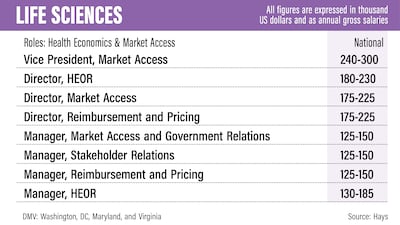
US salary guide 2022 - Hays -
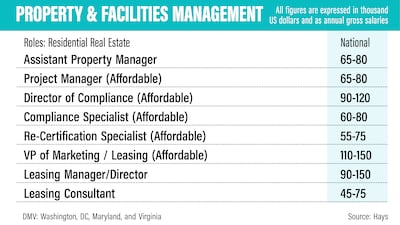
US salary guide 2022 - Hays -
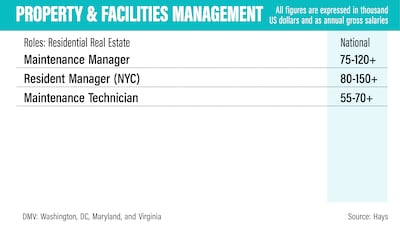
US salary guide 2022 - Hays -

US salary guide 2022 - Hays -

US salary guide 2022 - Hays -

US salary guide 2022 - Hays


“The worst of the pandemic seems to be over and now these tech companies are in a great position for sustainable long-term growth. While this may mean temporary freezes for some during this transition period, we are more positive about the technological future than ever before,” Mr Foley said.
Kazim Hussain, a Dubai-based business manager for cloud infrastructure and telecoms at recruitment company Cooper Fitch, said that while the technology sector in the Mena region continued to grow, some companies were slowing down overall hiring plans to ensure the employment of people with niche skills in cloud computing and machine learning.
However, it is important for technology start-ups to avoid overhiring, he said.
“[I have] witnessed many start-ups overhiring talent without demonstrating any real business growth, and then cutting jobs to balance their books.”
What Big Tech companies say about their workforce:
Amazon: the world's biggest e-commerce marketplace is also the technology sector's largest employer, with about 1.52 million people on its payroll. Now, it says it is overstaffed and has about 100,000 fewer employees, compared with the first quarter. It remains to be seen if the company — which last week reported a $2b second-quarter loss — will continue its tradition of hiring more staff in preparation for the busy holiday shopping season.
Apple: the iPhone maker could slow hiring in some units, according to Bloomberg, citing sources. Still, the company is sticking to its aggressive product launch schedule. However, Apple last week reportedly hired a veteran Lamborghini executive to help lead the development of its electric car. The Cupertino-based company had about 154,000 employees as of September 2021.
Meta Platforms: the parent company of Facebook scaled back plans to hire engineers by about a third. Chief executive Mark Zuckerberg has said he was bracing for one of the worst economic downturns ever, and also said last week the company's forecasts were too optimistic. The company had about 77,800 employees at the end of March.
Microsoft: the world's biggest software company, which missed second-quarter sales forecasts, said it would also reduce hiring in certain divisions. Microsoft, which had about 181,000 employees in 2021, recently cut about 1 per cent of its workforce and said it would remove some job vacancies.
Netflix: the world's top streaming service made several highly publicised firings since reporting a loss of 200,000 subscribers in the first quarter, on top of eliminating 150 and 300 jobs in May and June, respectively. The company had 11,300 staff in 2021 and lost 970,000 more subscribers in the second quarter.
Tesla: chief executive Elon Musk said layoffs would be needed in the challenging economic climate. About 200 employees were removed when it closed a plant in San Mateo, California, in June. The company, which beat estimates in the second quarter, had 100,000 employees by the end of 2021.
Twitter: the microblogging platform froze hiring and rescinded job offers in May amid the uncertainty surrounding Mr Musk's acquisition of the company. However, Twitter, with about 7,500 employees, recently said it would scale down its office space, but without reducing jobs. The turmoil surrounding Mr Musk's bid for Twitter also dragged the company to a loss in the second quarter.
Source: Bloomberg

