

Apple’s net profit jumped 13 per cent on a yearly basis in its 2024 fiscal first quarter on strong iPhone sales and an all-time revenue record in services business.
The California-based company’s net profit in the period that ended on December 30 surged to more than $33.9 billion. It was 48 per cent up on a quarterly basis.
The company's revenue surged almost 2 per cent on an annual basis to nearly $119.6 billion during the quarter, exceeding analysts’ estimates of $117.9 billion.
It was the first quarter of increased sales after four consecutive quarters of yearly decline.
Apple's financial year ends in September.
The company posted quarterly earnings for each diluted share of $2.18, up 16 per cent compared to the prior year period. It surpassed analysts’ estimate of $2.10.
Apple’s installed base of active devices has now passed 2.2 billion, said chief executive Tim Cook.

The long-awaited augmented-reality headset, Vision Pro, priced at $3,499, will go on sale in the US market on Friday.
Apple started accepting orders for the device – which was originally announced at the company’s developers conference in June – on January 19.
“As customers begin to experience the incredible Apple Vision Pro tomorrow, we are committed as ever to the pursuit of groundbreaking innovation … in line with our values and on behalf of our customers,” Mr Cook said.
Apple did not issue official guidance about future revenue and profits. The company stopped offering guidance at the start of the Covid-19 pandemic because of uncertainty in business.
Its stock, which has surged almost 24 per cent in the past one year, was trading 1.7 per cent less at $183.69 a share in aftermarket hours on Thursday.
Apple’s market value topped $3 trillion in June, anchoring its position as the world's most valuable company at that time. It stood at $2.89 trillion at market close on Thursday.
iPhone sales account for more than 58 per cent of the company's total revenue in the holiday quarter.
Smartphone sales surged nearly 6 per cent to more than $69.7 billion in the quarter from the prior year period, exceeding analyst estimates of $67.8 billion.
“Apple reported a solid quarter, highlighting the durability of the company’s brand as the iPhone giant continues to grow its customer base,” Jesse Cohen, senior analyst at Investing.com, told The National.
“Solid demand growth for its line-up of high-end iPhones helped offset incremental weakness in other areas of the business.
"Despite the strong quarter, investors were left wanting more from Apple, which is held to a higher standard than any other tech company.”
The company’s total revenue from its services division grew about 11.3 per cent annually to more than $23.1 billion, while revenue from wearables, home and accessories products dropped 11.3 per cent annually to nearly $12 billion.
Revenue from iPads and computers dropped almost 13.5 per cent to more than $14.8 billion.
Apple’s sales in the Americas region accounted for more than 42.2 per cent of the company's total first-quarter revenue, with more than $50.4 billion.

It was followed by Europe and the Greater China market (China, Hong Kong and Taiwan), which added $30.4 billion and $20.8 billion, respectively, to the company’s revenue.
In Europe, sales increased 10 per cent while it dropped 13 per cent in the Greater China market.
Japan and the rest of the Asia Pacific market added more than $17.9 billion to Apple’s first-quarter sales, an annual increase of 10 per cent.
“Apple’s worrying China sales figures indicate demand for its high-end iPhones is slowing more than expected in the face of rising competition from local companies, including Huawei,” Mr Cohen said.
“The big question is if this is just a blip, or signs of a bigger shift among consumers as rising interest rates and a weaker economic backdrop discourage consumers from making pricey purchases.”
Apple’s cash and cash equivalents surged 36 per cent annually to nearly $40.8 billion as of December 31. The company also returned more than $27 billion to its shareholders during the quarter.
“Our December quarter top-line performance combined with margin expansion drove an all-time record EPS ($2.18),” said Luca Maestri, Apple’s chief financial officer.
“We are confident in our future and continue to make significant investments across our business to support our long-term growth plans.”
Apple said its board of directors had declared a cash dividend, payable on February 15, of $0.24 for each share of the company’s common stock.
Apple's iPhone toppled Samsung's devices to become the world's best-selling smartphone in 2023, marking the first time that the South Korean company has lost the top spot since 2010.
Apple recorded 234.6 million iPhone shipments in 2023, accounting for 20.1 per cent of the global market, with an annual growth of 3.7 per cent, according to the latest preliminary data from research company International Data Corporation.
-

Jimmy Grewal owns a rare collection of 250 Apple Mac computers and products. Andy Scott / The National -
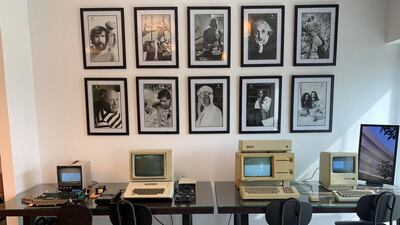
From left, the Apple I, Apple II, Apple Lisa, Macintosh 512k computers. Cody Combs / The National -

The collection includes a rare Apple Computer 1. Andy Scott / The National -

The Apple Computer 1 computer was signed by Apple co-founder Steve Wozniak. The National -

The Apple-1 is still in working order. Antonie Robertson / The National -

The Apple II (serial #92), signed by Steve Wozniak, has no vents on the casing, making it very rare. The National -

The Apple Lisa, which predates the Macintosh. The National -
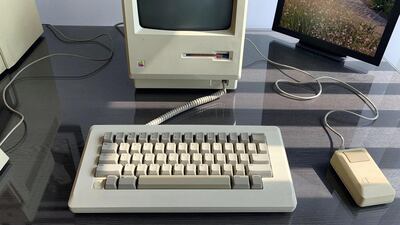
The Macintosh 512k. Cody Combs / The National -
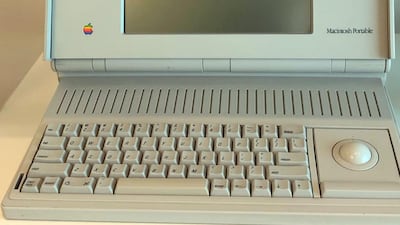
Apple's first attempt at a laptop, the Macintosh Portable, from 1989. It weighed 7kg but its battery lasted from six to 12 hours. Cody Combs / The National -

The Macintosh PowerBook Duo, which was released in 1992. The National -
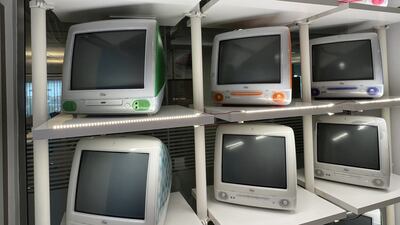
The collection includes various coloured Apple iMac desktop computers. Andy Scott / The National -
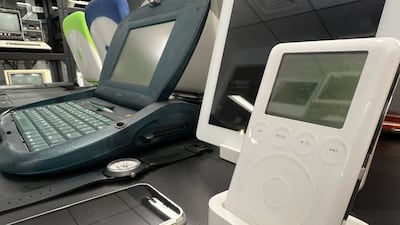
There are also original iPhones and iPods. Andy Scott / The National -

The collection has Apple Mac computers from various years. Cody Combs / The National -
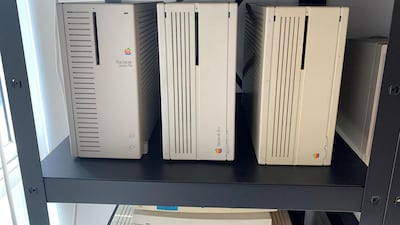
Some of Apple's first attempts at 'tower' Macintosh computers. Cody Combs / The National -
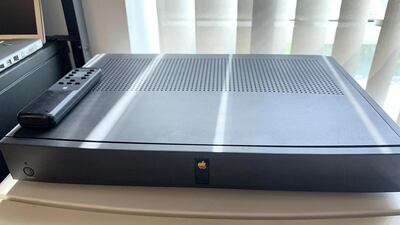
Also in Mr Grewal's collection is an Apple Interactive Television Box from 1994 that was never released. Cody Combs / The National -
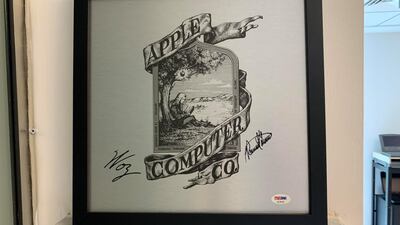
This is a rarely used early rendition of the Apple logo. It was signed by Apple co-founder Steve Wozniak, and the often forgotten co-founder Ron Wayne. Cody Combs / The National -
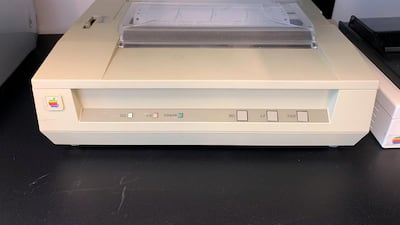
An Apple dot matrix printer, first introduced in 1982. Cody Combs / The National -

The first Apple LaserWriter, manufactured in 1985, is one of several Apple printers in Mr Grewal's collection. Cody Combs / The National



