Global warming could become the main driver of biodiversity loss by the mid-21st century, a new study suggests.
Worldwide biodiversity declined between 2 per cent and 11 per cent during the 20th century due to changes in the way land is used, including for food or timber production, according to a large multi-model study published in Science.
The research suggests that in the future land change use will continue to degrade biodiversity, but its impact will be overtaken, and further worsened, by climate change.
The analysis, led by the German Centre for Integrative Biodiversity Research (iDiv) and the Martin Luther University Halle-Wittenberg (MLU), is the largest modelling study of its kind to date.
Researchers used models to assess the impact of land-use change and climate change in three scenarios, ranging from sustainable development to a high emissions world.
In all three, changes in land use and global warming resulted in biodiversity loss in all world regions.
Akshay Deoras, a research scientist at the National Centre for Atmospheric Science and the Department of Meteorology at the University of Reading, who was not involved in the study, told The National climate change is amplifying an existing effect.
“Biodiversity keeps on evolving. It’s a continuous process. And even in the absence of climate change it would continue to evolve.
“Some of the old species would be destroyed,” he said.
However, climate change worsens its effects by adding extra pressure to the evolution process.
“If you use the land more and more for some sort of agricultural purpose or industry, that will take over the natural habitat of species,” he said.
“This is going to create a lot of migration because they are adapted to their natural habitat. If you somehow distort that, then that is going to add pressure to their survival.”
The relationship with global warming is complicated, said Mr Deoras, because changes in land use also affect climate.
“If you are removing more and more trees, less co2 is going to be absorbed. And that means you are going to be fuelling temperatures. That is going to affect the oceans. So you are going to get a situation in which the polar regions will face problems,” said Mr Deoras.
The researchers said the approach provides the most comprehensive estimate of future global biodiversity.
Even the most sustainable of the three modelling scenarios did not include all of the policies that could be put in place to protect biodiversity.
“There are modelling uncertainties, for sure”, said lead author Prof Henrique Pereira, research group head at the German Centre for Integrative Biodiversity Research (iDiv) and the Martin Luther University Halle-Wittenberg (MLU), which led the analysis.
“Still, our findings clearly show that current policies are insufficient to meet international biodiversity goals. We need renewed efforts to make progress against one of the world’s largest problems, which is human-caused biodiversity change.”
The effects of climate change on the Middle East region - in pictures
-

Flooding in the Al Barsha area of Dubai. Chris Whiteoak / The National -
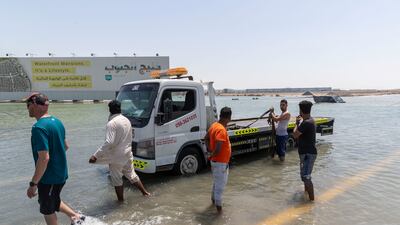
Vehicles being recovered near Al Maktoum airport in Dubai. Antonie Robertson / The National -

Flooding in the Al Barsha area of Dubai. Chris Whiteoak / The National -
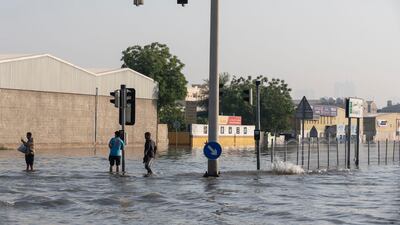
Flooding along Sheikh Zayed Road in Dubai. Antonie Robertson / The National -
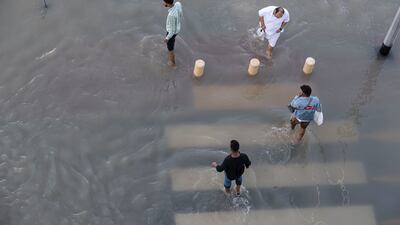
Flooding along Sheikh Zayed Road in Dubai. Antonie Robertson / The National -

Cars move through floodwater in Al Qudra, Dubai. Chris Whiteoak / The National -

Flooding on Dubai's Al Khail Road. Chris Whiteoak / The National -
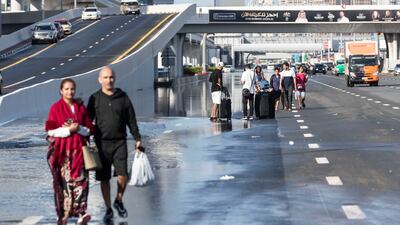
People abandon their cars on Sheikh Zayed Road due to heavy rain. Antonie Robertson/The National -

Flooding on Al Khail Road. Chris Whiteoak / The National -
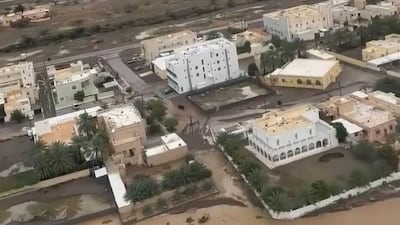
Flooding in Oman. Photo: Royal Oman Police -

A damaged car in Derna, Libya. Reuters -
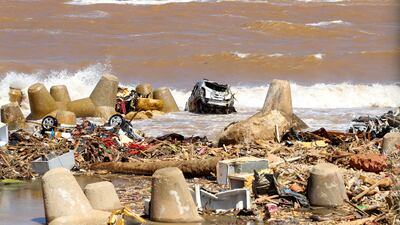
A destroyed vehicle in Derna. AFP -

Abdul Salam Ibrahim Al-Qadi walks on rubble in front of his house, searching for his missing father and brother, in Derna. Reuters -

An aerial view of the destruction in Derna. Reuters -
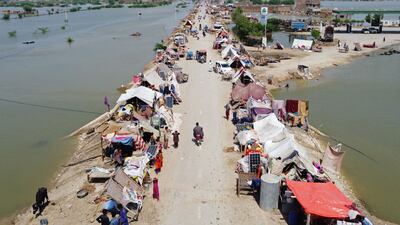
Flood-affected people taking refuge in a makeshift camp after heavy monsoon rains in Jaffarabad district of Balochistan province. AFP -
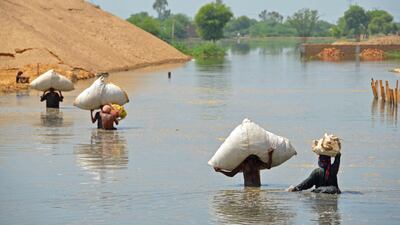
Internally displaced flood-affected people shift husk for their animals in a flood-hit area following heavy rains in Dera Allah Yar in Balochistan. AFP -
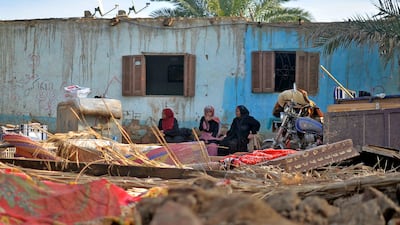
The aftermath of flooding in Egypt's southern city of Aswan, 920 kilometres south of the capital. AFP -

The Nile River from the top of Famine Stela, or Rock of Starvation, Egypt. Reuters -

Volunteers search for people in need following heavy rainfall in east Mosul, Iraq, in March 2020. Reuters -

People clean up after floods in Duhok, Iraq, on March 19. Reuters


Last year, scientists warned that climate change and biodiversity loss are directly damaging human health too, with vulnerable and impoverished communities bearing the most significant effects, facing rising temperatures, extreme weather events and the spread of infectious diseases.
The issue was raised in more than 200 health journals worldwide in a unified editorial that implored world leaders, health professionals and the WHO to acknowledge and address the interlinked crises as a single global health emergency.
Treating them as separate challenges was a “dangerous mistake”, the authors warned.