

The UN has called for massive efforts to cut the emissions that drive climate change after a warning that the world is on track for a “catastrophic” 3.1°C of global warming by the end of this century.
Its annual report highlights the gap between cuts to emissions needed to limit global warming to 1.5°C above pre-industrial levels and what countries are doing and have pledged to do, with the UN Environment Programme (Unep) saying the goal would “soon be dead” without a global mobilisation on a scale and at a pace not seen before.
Depending on the progress made in current climate action pledges, the UN warned the world was currently on track for temperature rises of between 2.6°C and 3.1°C before the next century.
The effects of climate change on the Middle East region - in pictures
-

Flooding in the Al Barsha area of Dubai. Chris Whiteoak / The National -
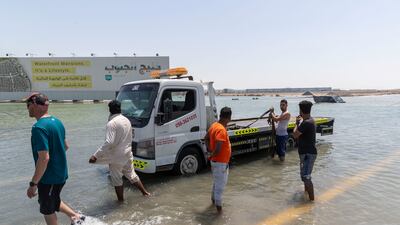
Vehicles being recovered near Al Maktoum airport in Dubai. Antonie Robertson / The National -

Flooding in the Al Barsha area of Dubai. Chris Whiteoak / The National -
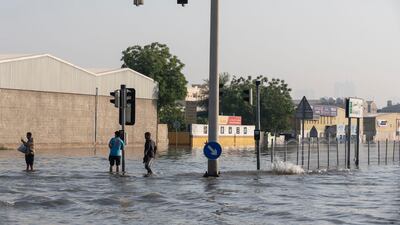
Flooding along Sheikh Zayed Road in Dubai. Antonie Robertson / The National -
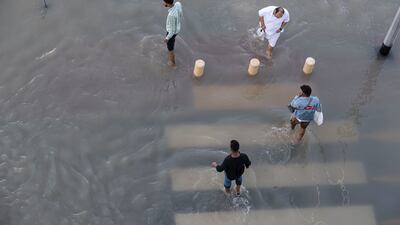
Flooding along Sheikh Zayed Road in Dubai. Antonie Robertson / The National -

Cars move through floodwater in Al Qudra, Dubai. Chris Whiteoak / The National -

Flooding on Dubai's Al Khail Road. Chris Whiteoak / The National -
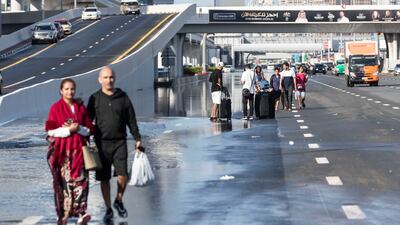
People abandon their cars on Sheikh Zayed Road due to heavy rain. Antonie Robertson/The National -

Flooding on Al Khail Road. Chris Whiteoak / The National -
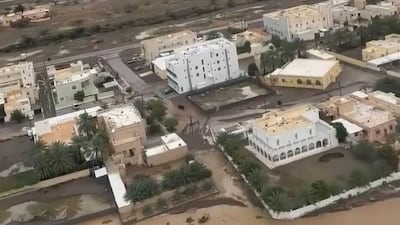
Flooding in Oman. Photo: Royal Oman Police -

A damaged car in Derna, Libya. Reuters -
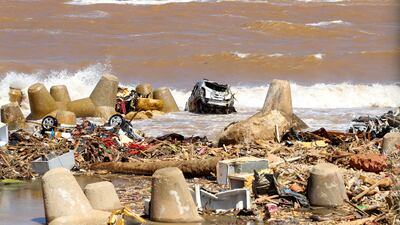
A destroyed vehicle in Derna. AFP -

Abdul Salam Ibrahim Al-Qadi walks on rubble in front of his house, searching for his missing father and brother, in Derna. Reuters -

An aerial view of the destruction in Derna. Reuters -
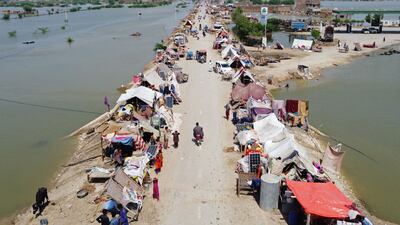
Flood-affected people taking refuge in a makeshift camp after heavy monsoon rains in Jaffarabad district of Balochistan province. AFP -
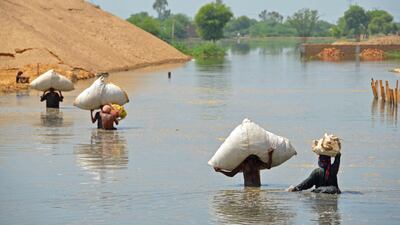
Internally displaced flood-affected people shift husk for their animals in a flood-hit area following heavy rains in Dera Allah Yar in Balochistan. AFP -
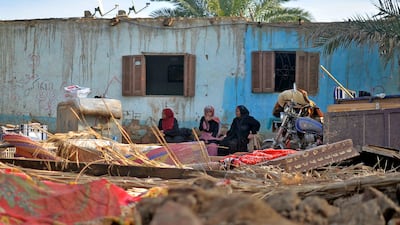
The aftermath of flooding in Egypt's southern city of Aswan, 920 kilometres south of the capital. AFP -

The Nile River from the top of Famine Stela, or Rock of Starvation, Egypt. Reuters -

Volunteers search for people in need following heavy rainfall in east Mosul, Iraq, in March 2020. Reuters -

People clean up after floods in Duhok, Iraq, on March 19. Reuters


The warning comes ahead of next month’s UN Cop29 talks in Baku, the capital of fossil fuel-rich Azerbaijan, where nations are facing calls to agree on bolder action to scale up finance for developing countries to tackle climate change, and to close the emissions gap.
At the Paris climate talks in 2015, countries agreed to limit temperature rises to “well below” 2°C and pursue efforts to curb them to 1.5°C above pre-industrial levels.
Scientists have warned there is no safe amount of climate change but 1.5°C has come to be seen as a threshold beyond which the worst effects of heatwaves, drought, flooding, the collapse of natural systems and rising sea levels will be felt.
Nations have set out country-level action plans, known as nationally determined contributions (NDCs), for meeting the Paris target, through cutting emissions from activities such as burning fossil fuels and creating or restoring habitats such as forests to capture carbon, up to 2030.
But as countries prepare to submit the next set of plans for action up to 2035 in the next few months, Unep is warning the goal of preventing dangerous warming is slipping out of reach.
The report said global greenhouse gases are still rising and were up 1.3 per cent in 2023 on the previous year's levels – a faster increase than the average of the past decade – with the G20 group of leading economies accounting for more than three quarters (77 per cent) of emissions.
Under current policies the world is facing long-term global warming of 3.1°C and even if countries deliver on their climate plans up to 2030, it will lead to temperature rises of 2.6°C to 2.8°C, it added. But countries are off-track even for those plans.
Responding to the report, UN Secretary General Antonio Guterres said the world was “teetering on a planetary tightrope”.
“Either leaders bridge the emissions gap, or we plunge headlong into climate disaster – with the poorest and most vulnerable suffering the most,” he said.
He said people were already suffering from monster hurricanes, biblical floods and record heat, which was turning forests into tinder boxes and cities into saunas, and warned “current policies are taking us towards a catastrophic 3.1°C temperature rise by the end of the century”.
He said governments must drive down all greenhouse gas emissions – weaning the world off fossil fuels, accelerating the introduction of renewables, and halting and reversing deforestation – and agree to a new finance goal at Cop29 to unlock the huge sums of money developing countries need to tackle climate change.
Inger Andersen, executive director of Unep, said: “Climate crunch time is here. We need global mobilisation on a scale and pace never seen before – starting right now, before the next round of climate pledges – or the 1.5°C goal will soon be dead and well below 2°C will take its place in the intensive care unit."
She urged nations meeting for Cop29 to increase action now, set the stage for stronger national plans, then “go all-out to get on a 1.5°C pathway”.
“Even if the world overshoots 1.5°C – and the chances of this happening are increasing every day – we must keep striving for a net-zero, sustainable and prosperous world," she added. “Every fraction of a degree avoided counts in terms of lives saved, economies protected, damages avoided, biodiversity conserved and the ability to rapidly bring down any temperature overshoot.”
Nations must collectively commit to cut 42 per cent of annual greenhouse gas emissions by 2030 and 57 per cent by 2035 in the next round of NDCs to achieve the 1.5°C goal, Unep warned.
It is technically feasible to deliver such a cut, by tripling renewable energy capacity by 2030, stepping up energy efficiency improvements, shifting away from fossil fuel use, and protecting and restoring natural habitats such as forests and mangroves.
But there must be a massive globalisation effort to cut the global greenhouse gases driving rising temperatures, starting today and led by the G20, Unep said.

