

A deadly storm approaches a low-lying coast – exposing vulnerable communities in its path to devastation. But a simple text message pinged on to their phones helps them escape to higher ground. It sounds simple, but early warning systems save lives, yet half the countries in the world are still not covered.
The issue took centre stage at Cop29 in Azerbaijan on Wednesday for an event titled “Delivering early warnings for all and addressing extreme heat”. UN Secretary General Antonio Guterres told the event the world was in the “home stretch of a brutal year” as he urged countries at the talks to deliver funds to help the most vulnerable tackle extreme weather events.
"In this era of climate catastrophe, early-warning systems and protection from extreme heat are not luxuries," said Mr Guterres. "They are necessities. And sound investments."
-

Participants at the Cop29 venue in Baku, Azerbaijan. Reuters -
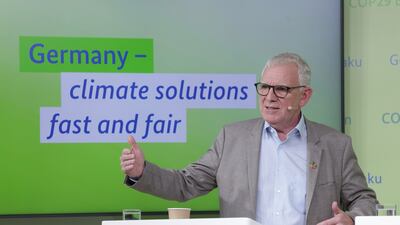
Jochen Flasbarth, State Secretary in the German Ministry for Economic Co-operation and Development, speaks in the Germany pavilion. Getty Images -
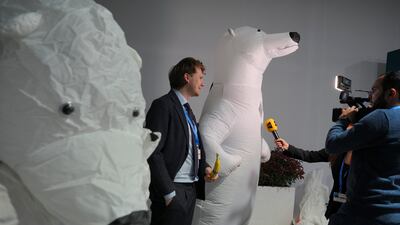
Nuclear power activists demonstrate. AP -
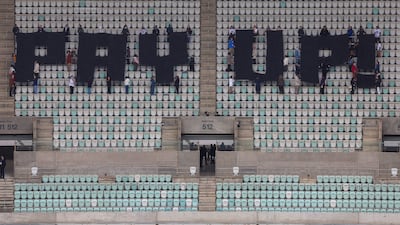
Activists hold a protest calling on developed nations to provide financing. Reuters -
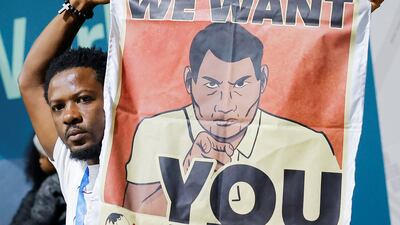
An activist holds up a sign. Reuters -
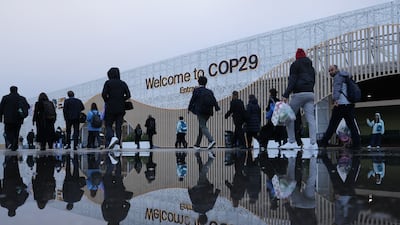
Conference participants arrive on day four. Getty Images -
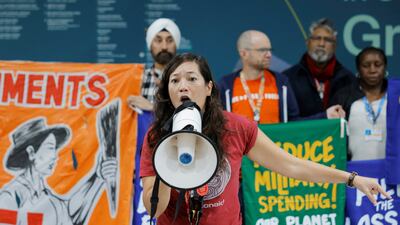
Another protest. Reuters -
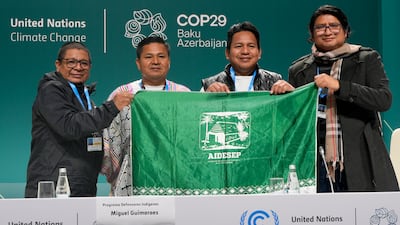
From left, Jorge Perez, Rolando Escobar, Miguel Vasquez and Esteban Cama at a session on Indigenous communities in the Peruvian Amazon. AP -
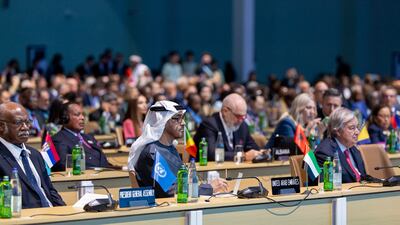
President Sheikh Mohamed attends the World Leaders Climate Action Summit at Cop29, in Azerbaijan's capital Baku. UAE Presidential Court -
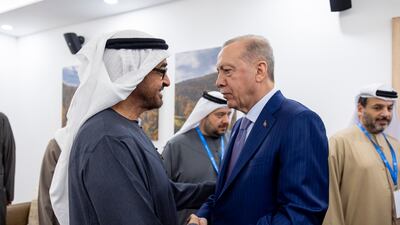
Sheikh Mohamed greets Recep Tayyip Erdogan, President of Turkey. WAM -
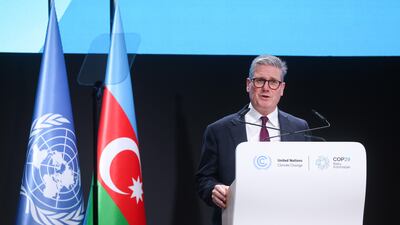
British Prime Minister Keir Starmer at Cop29. Bloomberg -

Ding Xuexiang, China's first Vice Premier, at Cop29. Bloomberg -
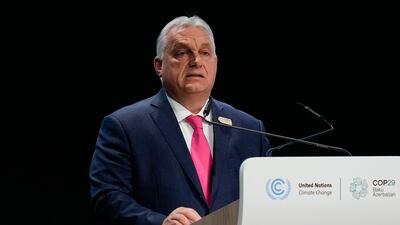
Hungary's Prime Minister Viktor Orban at a plenary session at Cop29. AP -
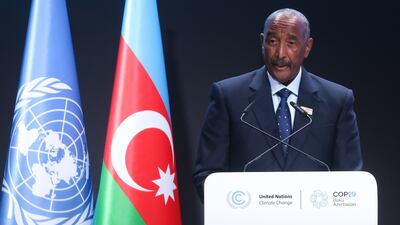
Sudan's military leader Abdel Fattah Al Burhan, at Cop29. Bloomberg -
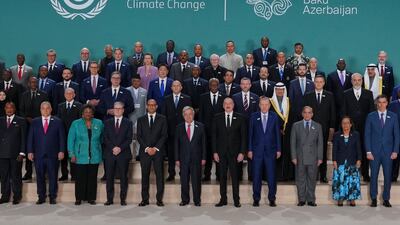
World leaders pose for a group photo at the Cop29 United Nations Climate Change Conference, in Baku, Azerbaijan. AP -
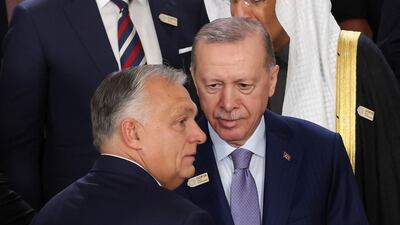
Hungarian Prime Minister Viktor Orban, left, stands next to Turkish President Recep Tayyip Erdogan. Reuters -
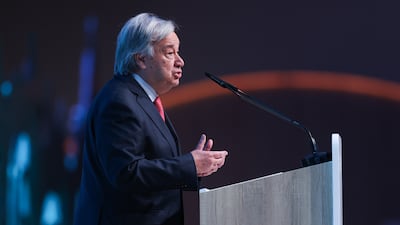
Antonio Guterres, UN secretary-general, addresses Cop29. Bloomberg -
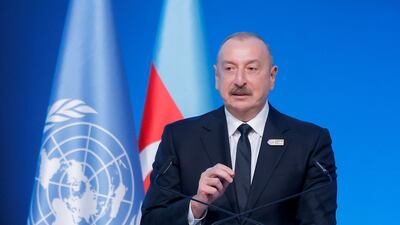
Azerbaijan's President Ilham Aliyev speaks during the Cop29 opening ceremony. Reuters -
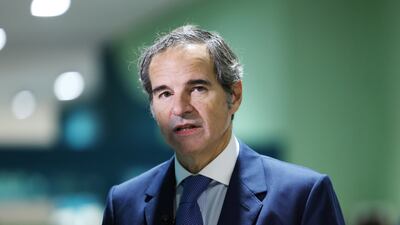
Rafael Grossi, director general of International Atomic Energy Agency (IAEA), at Cop29. Bloomberg -

Activists demonstrate for climate justice and a ceasefire in the Israel-Hamas war in Gaza, on day one of Cop29. AP -

Cop28 President Dr Sultan Al Jaber and Cop29 President Mukhtar Babayev at the official handover. AFP -
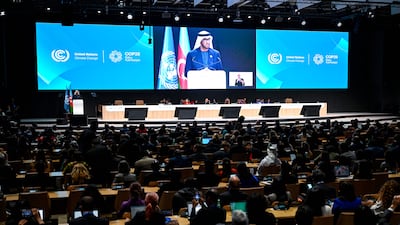
Dr Al Jaber, Minister of Industry and Advanced Technology, delivers a speech during the opening of Cop29 in Baku. AFP -
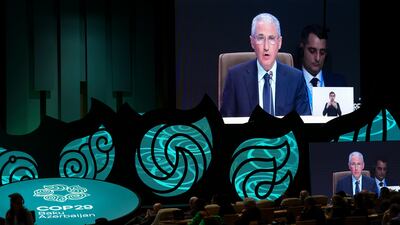
Mr Babayev speaks during the opening plenary session. AP -
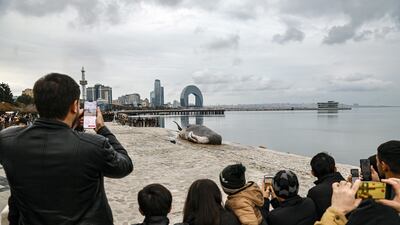
An installation depicting a beached whale by the Belgian art collective Captain Boomer on an embankment in Baku. EPA -

The Turkey Solidarity Centre pavilion. Bloomberg -
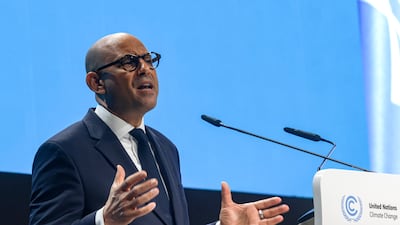
Simon Stiell, executive secretary of the UN Framework Convention on Climate Change, speaks during the opening ceremony. EPA -
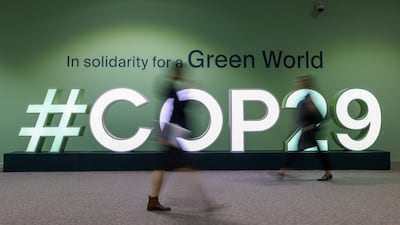
People begin arriving for the start of Cop29 in Baku. Bloomberg -

Dr Al Jaber at Cop29 with Moroccan climate researcher Cherif El Khalil. AP -

A mosaic adorns a wall at the Cop29 venue, Baku Stadium, in the capital of Azerbaijan. Bloomberg -

A woman tries out a VR headset at the tourism booth as the Cop29 UN climate summit gets under way in Baku, Azerbaijan. AP


An early-warning system in particular can be an effective and cost-efficient tool. According to the UN, just 24 hours' notice of an impending hazardous event can reduce damage by 30 per cent, while investing just US$800 million in these types of systems in developing countries can prevent losses of $3 to $16 billion per year.
They can be developed using weather stations, radars, sensors and marine buoys to build a data-driven system to help people on the front lines. A system in the Marshall Islands in the central Pacific, for example, can now help tell when a “king tide” is coming and allow local authorities to build sand barriers before the waters encroach.
“The Marshall Islands relies on early-warning systems to respond to climate disasters which unfortunately are already upon us,” Yetta Aliven, information management officer at the Marshall Islands National Disaster Management Office, told The National. “We are building effective emergency communications systems that can get the word out to the most isolated parts of the country."
Ms Aliven said they also needed systems to protect vital coral reefs that are at risk, but that more assistance was needed. “We welcome the support we have received but we need more. That is why we support the UN Secretary General’s call for more funding to roll out these systems.”
The UN is leading the charge with its Early Warnings for All initiative, which aims to ensure every person on Earth is covered by such systems by 2027. But many remain without one. For example, small, developing island states are responsible for less than one per cent of warming emissions that are the primary driver of climate change, yet only a third have them.
“Too often, the basic data to create these systems is unavailable,” said Mr Guterres. “On average, least-developed countries and small island developing states have less than 10 per cent of the data they need for effective alert systems.”
Mr Guterres also told the summit that small island developing states had a right to be angry with rich nations. "You have every right to be angry. I am too," he said. "You are on the sharp end of a colossal injustice."
Warning systems, meanwhile, could also be used for long-term situations such as drought so authorities and relief agencies get supplies of food and financial support to communities, so they don’t lose their incomes and livelihoods.

“So after the community survives these storms, they have access to seeds or crops or to whatever's required to get them going again,” Andrew Harper, special adviser on climate action at the UNHCR, told The National. “Early warning allows communities to bounce back.”
He said that despite what is often said in the West about seeing huge numbers of people leave areas being affected by climate change, the “vast majority” want to stay. At Cop29, countries are trying to agree on new flows of finance to help those most in need deal with climate change. Three days into the summit, talks remain complex. Mr Harper highlighted a reluctance from people to "invest in the future" or in something "that is not profit-making".
“We have to understand that we're all going to have to live in a future, which is going to become increasingly unpredictable,” he said. “So these investments increase our ability to ... get through this unpredictability.”
Not only are vulnerable countries without these systems, some of the world’s most vulnerable communities are often the last to be thought of when these systems are deployed. Refugees often live in areas prone to extreme weather events, don’t have access to information, are scared and are resistant to leave because they often don’t trust people.
Huge refugee camps in Bangladesh, for example, lie in the path of storms coming in from the cyclone-prone Bay of Bengal with hundreds of thousands of people in shelters crowded together on muddy hills that are liable to collapse. Mr Harper said they had been working with Bangladesh to ensure its successful warning systems were being made available to refugees.
“Early-warning systems are non-negotiable now,” he said. “We now need to invest in what that data and science is telling us. If we don't, there will be consequences. If we do, there'll be lives saved.”

