Live updates: Get the latest news on Cop28
World leaders have come together in Dubai at a UN summit known as Cop which aims to deliver a crucial action plan to combat the growing climate crisis.
The critical conference - which got under way this week - is being staged during a year in which the world has grappled with a series of extreme weather events and many climate records were broken.
It is also being held against a backdrop of major geopolitical tensions, from Ukraine to Gaza.
So what is Cop28, why is it important and what are the chances of success?
What is Cop28?
Cop stands for “conference of the parties”, referring to the almost 200 countries that signed up to the UN’s original climate deal in 1992.
The treaty – the United Nations Framework Convention on Climate Change – came into force in 1994 and aims to prevent dangerous human interference with the world's climate.
The first Cop was held in Bonn, Germany in 1995. There have been 27 to date – so this year it is Cop28.
Cops were once small, technical affairs, but they have grown much larger over the years with negotiations taking place alongside vibrant protests, workshops, discussions and scores of pavilions from countries and organisations dedicated to highlighting the plight of the environment and protecting it.
How long will Cop28 last and where is it being held?
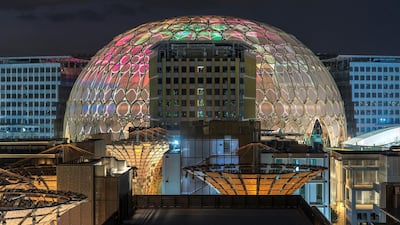
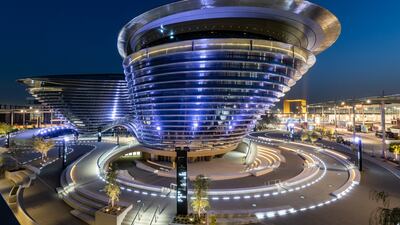
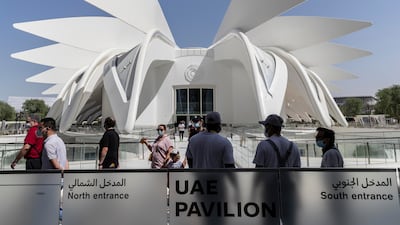
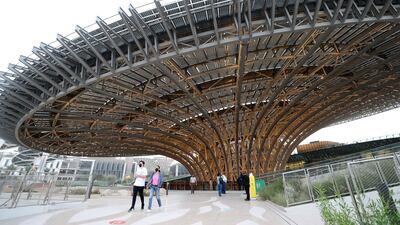
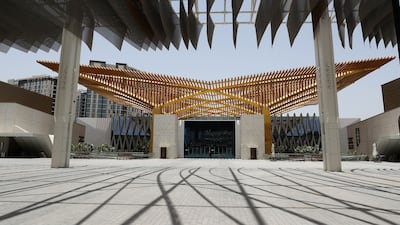
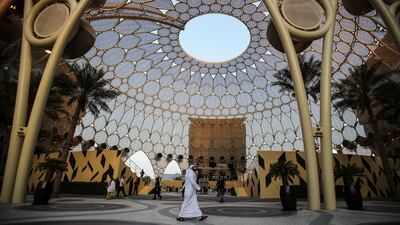
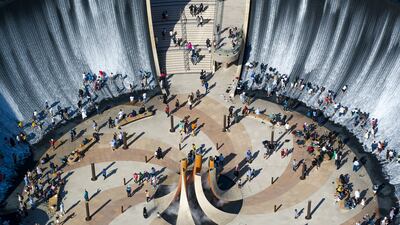
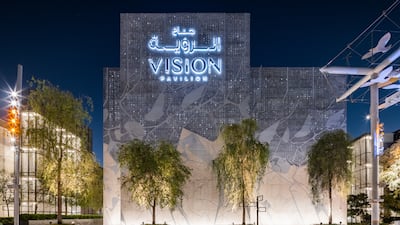
Cop28 started on November 30 and is due to run until December 12 at Expo City Dubai.
The venue previously hosted the six-month Expo 2020 Dubai from 2021 to 2022 that attracted visitors from all over the world.
It is already on track to be the biggest Cop yet. More than 80,000 people have registered to attend the crucial talks, UN data released on Saturday showed.
It is a huge increase on Cop27, which was attended by about 50,000.
Why is Cop28 being held in Dubai?
Cops are rotated through the UN’s five regions every year.
It was the Asia-Pacific group's turn this year and the UAE was chosen to be the host.
Other countries in the Middle East and North Africa such as Morocco, Egypt and Qatar have previously hosted Cops.
Who is attending the summit?
National leaders, government ministers, negotiators, climate advocates and business leaders from around the globe have converged on the UAE.
The UK’s King Charles III delivered a speech on Friday, in which he set out the need to preserve the environment.
UK Prime Minister Rishi Sunak has also attended, along with a host of other international leaders, such as Brazil's Luiz Inacio Lula da Silva and France's Emmanuel Macron.
US Vice President Kamala Harris is taking part in the talks on behalf of President Joe Biden.
Why is Cop28 important?
The world is getting hotter because of human activity, scientists say.
Globally, the world has warmed already by just over 1°C with the UN warning it could be headed for more than 2°C.
This would break pledges under the 2015 Paris deal where countries agreed to “pursue efforts” to limit warming to 1.5°C above pre-industrial levels.
UN scientists have warned that if this threshold is breached, billions of people could be affected by heat and humidity that damages their health.
Cop28 will try to tackle this.
What are the big issues at Cop28?
Countries are assessing how they are measuring up to the goals of the Paris Agreement.
Known as the “global stocktake”, it will examine what has been achieved and what more needs to be done.
The UN has already said the world is way off track in keeping to the 1.5°C goal and emissions that contribute to global warming must be slashed to stay on track.
Burning fossil fuels is the main cause of global warming and leaders will tackle this.
Scaling up climate finance to those who need it most is another. Poorer countries want the annual $100 billion funding goal promised in 2009 by wealthier counties to be delivered, but it is thought trillions of dollars are needed.
Ramping up climate adaptation efforts; getting the contentious loss and damage fund into operation; trying to limit deforestation; and building awareness of nature and its role in tackling climate change are among the other topics up for discussion.
Notable victories have already been achieved in the event's opening days.
Cop28 opened on Thursday with a historic deal to finally launch the loss and damage fund that helps the most vulnerable countries deal with the worst effects of climate change.
Loss and damage has long been sought by countries on the front lines of the crisis that have often done the least to cause the problem.
The UAE and Germany immediately announced $100 million each to the fund, with up to $75 million from the UK.
The US committed $17.5 million and Japan $10 million.
The UAE on Friday pledged to give $30 billion to combat climate change.
The money will go towards a new private investment vehicle, Alterra, which aims to raise $250 billion globally in the next six years to create a fairer climate finance system.
The commitment was announced by President Sheikh Mohamed during his opening address at the summit.
What is the schedule for the event?
Cop28 began with a major leader's summit on December 1 and 2 that set the tone for the event.
The talks will commence and intensify significantly in the final days in the hope of clinching a deal before they all leave.
There will also be themed days on issues including the first in-depth looks at health, nature, food, and youth.
What are the blue zone and green zones?
The venue is divided into two zones: blue and green.
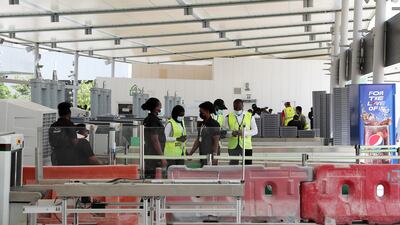
The blue zone is where the negotiations are held, and is the site of country pavilions, presidency events, and hundreds of side events. It is off limits to the public.
The green zone open to the public on Sunday and will host talks, events and performances about green issues.
Will Cop28 make any difference?
Cops try to build momentum to tackle climate change.
Some are more successful than others, and parties at Cop21 signed up to the Paris deal.
Dr Sultan Al Jaber, Cop28 President-designate, said the 1.5°C goal remains the guiding “north star” for Cop28.
Where will be the next Cop be?
Cop29 is scheduled to be staged by a country in the Eastern Europe group, but reports suggest the Ukraine war is complicating efforts to find a host.
Countries will try to agree on a host at Cop28, but there is no formal deadline.
Brazil is expected to host Cop30 in 2025 as part of the Latin American and Caribbean grouping.

Mercer, the investment consulting arm of US services company Marsh & McLennan, expects its wealth division to at least double its assets under management (AUM) in the Middle East as wealth in the region continues to grow despite economic headwinds, a company official said.
Mercer Wealth, which globally has $160 billion in AUM, plans to boost its AUM in the region to $2-$3bn in the next 2-3 years from the present $1bn, said Yasir AbuShaban, a Dubai-based principal with Mercer Wealth.
“Within the next two to three years, we are looking at reaching $2 to $3 billion as a conservative estimate and we do see an opportunity to do so,” said Mr AbuShaban.
Mercer does not directly make investments, but allocates clients’ money they have discretion to, to professional asset managers. They also provide advice to clients.
“We have buying power. We can negotiate on their (client’s) behalf with asset managers to provide them lower fees than they otherwise would have to get on their own,” he added.
Mercer Wealth’s clients include sovereign wealth funds, family offices, and insurance companies among others.
From its office in Dubai, Mercer also looks after Africa, India and Turkey, where they also see opportunity for growth.
Wealth creation in Middle East and Africa (MEA) grew 8.5 per cent to $8.1 trillion last year from $7.5tn in 2015, higher than last year’s global average of 6 per cent and the second-highest growth in a region after Asia-Pacific which grew 9.9 per cent, according to consultancy Boston Consulting Group (BCG). In the region, where wealth grew just 1.9 per cent in 2015 compared with 2014, a pickup in oil prices has helped in wealth generation.
BCG is forecasting MEA wealth will rise to $12tn by 2021, growing at an annual average of 8 per cent.
Drivers of wealth generation in the region will be split evenly between new wealth creation and growth of performance of existing assets, according to BCG.
Another general trend in the region is clients’ looking for a comprehensive approach to investing, according to Mr AbuShaban.
“Institutional investors or some of the families are seeing a slowdown in the available capital they have to invest and in that sense they are looking at optimizing the way they manage their portfolios and making sure they are not investing haphazardly and different parts of their investment are working together,” said Mr AbuShaban.
Some clients also have a higher appetite for risk, given the low interest-rate environment that does not provide enough yield for some institutional investors. These clients are keen to invest in illiquid assets, such as private equity and infrastructure.
“What we have seen is a desire for higher returns in what has been a low-return environment specifically in various fixed income or bonds,” he said.
“In this environment, we have seen a de facto increase in the risk that clients are taking in things like illiquid investments, private equity investments, infrastructure and private debt, those kind of investments were higher illiquidity results in incrementally higher returns.”
The Abu Dhabi Investment Authority, one of the largest sovereign wealth funds, said in its 2016 report that has gradually increased its exposure in direct private equity and private credit transactions, mainly in Asian markets and especially in China and India. The authority’s private equity department focused on structured equities owing to “their defensive characteristics.”
Formula%204%20Italian%20Championship%202023%20calendar
%3Cp%3EApril%2021-23%3A%20Imola%3Cbr%3EMay%205-7%3A%20Misano%3Cbr%3EMay%2026-28%3A%20SPA-Francorchamps%3Cbr%3EJune%2023-25%3A%20Monza%3Cbr%3EJuly%2021-23%3A%20Paul%20Ricard%3Cbr%3ESept%2029-Oct%201%3A%20Mugello%3Cbr%3EOct%2013-15%3A%20Vallelunga%3C%2Fp%3E%0A
Living in...
This article is part of a guide on where to live in the UAE. Our reporters will profile some of the country’s most desirable districts, provide an estimate of rental prices and introduce you to some of the residents who call each area home.
Paris%20Agreement
%3Cp%3EArticle%2014%3C%2Fp%3E%0A%3Cp%3E1.%20%5BThe%20Cop%5D%20shall%20periodically%20take%20stock%20of%20the%20implementation%20of%20this%20Agreement%20to%20assess%20the%20collective%20progress%20towards%20achieving%20the%20purpose%20of%20this%20Agreement%20and%20its%20long-term%20goals%20(referred%20to%20as%20the%20%22global%20stocktake%22)%3C%2Fp%3E%0A%3Cp%3E2.%20%5BThe%20Cop%5D%20shall%20undertake%20its%20first%20global%20stocktake%20in%202023%20and%20every%20five%20years%20thereafter%C2%A0%3C%2Fp%3E%0A
Ten tax points to be aware of in 2026
1. Domestic VAT refund amendments: request your refund within five years
If a business does not apply for the refund on time, they lose their credit.
2. E-invoicing in the UAE
Businesses should continue preparing for the implementation of e-invoicing in the UAE, with 2026 a preparation and transition period ahead of phased mandatory adoption.
3. More tax audits
Tax authorities are increasingly using data already available across multiple filings to identify audit risks.
4. More beneficial VAT and excise tax penalty regime
Tax disputes are expected to become more frequent and more structured, with clearer administrative objection and appeal processes. The UAE has adopted a new penalty regime for VAT and excise disputes, which now mirrors the penalty regime for corporate tax.
5. Greater emphasis on statutory audit
There is a greater need for the accuracy of financial statements. The International Financial Reporting Standards standards need to be strictly adhered to and, as a result, the quality of the audits will need to increase.
6. Further transfer pricing enforcement
Transfer pricing enforcement, which refers to the practice of establishing prices for internal transactions between related entities, is expected to broaden in scope. The UAE will shortly open the possibility to negotiate advance pricing agreements, or essentially rulings for transfer pricing purposes.
7. Limited time periods for audits
Recent amendments also introduce a default five-year limitation period for tax audits and assessments, subject to specific statutory exceptions. While the standard audit and assessment period is five years, this may be extended to up to 15 years in cases involving fraud or tax evasion.
8. Pillar 2 implementation
Many multinational groups will begin to feel the practical effect of the Domestic Minimum Top-Up Tax (DMTT), the UAE's implementation of the OECD’s global minimum tax under Pillar 2. While the rules apply for financial years starting on or after January 1, 2025, it is 2026 that marks the transition to an operational phase.
9. Reduced compliance obligations for imported goods and services
Businesses that apply the reverse-charge mechanism for VAT purposes in the UAE may benefit from reduced compliance obligations.
10. Substance and CbC reporting focus
Tax authorities are expected to continue strengthening the enforcement of economic substance and Country-by-Country (CbC) reporting frameworks. In the UAE, these regimes are increasingly being used as risk-assessment tools, providing tax authorities with a comprehensive view of multinational groups’ global footprints and enabling them to assess whether profits are aligned with real economic activity.
Contributed by Thomas Vanhee and Hend Rashwan, Aurifer
Section 375
Cast: Akshaye Khanna, Richa Chadha, Meera Chopra & Rahul Bhat
Director: Ajay Bahl
Producers: Kumar Mangat Pathak, Abhishek Pathak & SCIPL
Rating: 3.5/5
Jetour T1 specs
Engine: 2-litre turbocharged
Power: 254hp
Torque: 390Nm
Price: From Dh126,000
Available: Now
Living in...
This article is part of a guide on where to live in the UAE. Our reporters will profile some of the country’s most desirable districts, provide an estimate of rental prices and introduce you to some of the residents who call each area home.
The biog
Birthday: February 22, 1956
Born: Madahha near Chittagong, Bangladesh
Arrived in UAE: 1978
Exercise: At least one hour a day on the Corniche, from 5.30-6am and 7pm to 8pm.
Favourite place in Abu Dhabi? “Everywhere. Wherever you go, you can relax.”
MATCH INFO
Watford 1 (Deulofeu 80' p)
Chelsea 2 (Abraham 5', Pulisic 55')
Try out the test yourself
Q1 Suppose you had $100 in a savings account and the interest rate was 2 per cent per year. After five years, how much do you think you would have in the account if you left the money to grow?
a) More than $102
b) Exactly $102
c) Less than $102
d) Do not know
e) Refuse to answer
Q2 Imagine that the interest rate on your savings account was 1 per cent per year and inflation was 2 per cent per year. After one year, how much would you be able to buy with the money in this account?
a) More than today
b) Exactly the same as today
c) Less than today
d) Do not know
e) Refuse to answer
Q4 Do you think that the following statement is true or false? “Buying a single company stock usually provides a safer return than a stock mutual fund.”
a) True
b) False
d) Do not know
e) Refuse to answer
The “Big Three” financial literacy questions were created by Professors Annamaria Lusardi of the George Washington School of Business and Olivia Mitchell, of the Wharton School of the University of Pennsylvania.
Answers: Q1 More than $102 (compound interest). Q2 Less than today (inflation). Q3 False (diversification).
Tamkeen's offering
- Option 1: 70% in year 1, 50% in year 2, 30% in year 3
- Option 2: 50% across three years
- Option 3: 30% across five years
THE%20SPECS
%3Cp%3EBattery%3A%2060kW%20lithium-ion%20phosphate%3Cbr%3EPower%3A%20Up%20to%20201bhp%3Cbr%3E0%20to%20100kph%3A%207.3%20seconds%3Cbr%3ERange%3A%20418km%3Cbr%3EPrice%3A%20From%20Dh149%2C900%3Cbr%3EAvailable%3A%20Now%3C%2Fp%3E%0A
Key facilities
- Olympic-size swimming pool with a split bulkhead for multi-use configurations, including water polo and 50m/25m training lanes
- Premier League-standard football pitch
- 400m Olympic running track
- NBA-spec basketball court with auditorium
- 600-seat auditorium
- Spaces for historical and cultural exploration
- An elevated football field that doubles as a helipad
- Specialist robotics and science laboratories
- AR and VR-enabled learning centres
- Disruption Lab and Research Centre for developing entrepreneurial skills
Who was Alfred Nobel?
The Nobel Prize was created by wealthy Swedish chemist and entrepreneur Alfred Nobel.
- In his will he dictated that the bulk of his estate should be used to fund "prizes to those who, during the preceding year, have conferred the greatest benefit to humankind".
- Nobel is best known as the inventor of dynamite, but also wrote poetry and drama and could speak Russian, French, English and German by the age of 17. The five original prize categories reflect the interests closest to his heart.
- Nobel died in 1896 but it took until 1901, following a legal battle over his will, before the first prizes were awarded.
Islamophobia definition
A widely accepted definition was made by the All Party Parliamentary Group on British Muslims in 2019: “Islamophobia is rooted in racism and is a type of racism that targets expressions of Muslimness or perceived Muslimness.” It further defines it as “inciting hatred or violence against Muslims”.
Countries recognising Palestine
France, UK, Canada, Australia, Portugal, Belgium, Malta, Luxembourg, San Marino and Andorra