

It may be hard to fathom in an age when plastic is largely viewed as a scourge of the planet, but it was once heralded as an eco saviour.
The start of mass production of plastic in the 1950s allowed it to be used in place of paper and cardboard, helping to save countless trees and ease deforestation fears.
Fast forward to 2023, and it is plastic fantastic no more. Today, this former wonder material is often seen as a curse.
Our dependence on plastics is obvious: about 141 million tonnes of plastic packaging is generated globally each year, according to the Waste Resources Action Programme, a non-governmental organisation.
Every year an estimated 4.8 to 12.7 million tonnes of plastic ends up in the oceans, either as large objects or as tiny microplastics, causing numerous harms.
For example, one study found that 90 per cent of seabirds have eaten plastic, and because it accumulates in their stomachs, it can cause starvation. Camels in the UAE have starved to death because their stomachs have been filled with plastic.
Should we ditch plastic for paper?
As the problems created by plastic, including in packaging, have become increasingly apparent, could there be a switch back to paper and cardboard?
Some brands have trumpeted a move away from plastic, such as restaurant chain Nordsee, which in 2022 announced it was replacing packaging made from plastic and aluminium with corrugated cardboard.
Nestle has said that it has replaced more than 400 types of plastic packaging associated with its Smarties sweets with recyclable paper-based materials.
Paper and cardboard is more commonly recycled than plastic, with rates above 85 per cent being quoted for Europe.
But eliminating plastic is not always easy, for both commercial and technical reasons. Plastic can be light, it is cheap to produce, it stacks easily and its costs of disposal are typically not borne by the producer, which makes it popular with manufacturers.
“I think that where it’s possible, companies do try to replace plastic with paper. But sometimes in the fast-moving consumer goods category, it’s not technically possible,” Dr Tatiana Sokolova, an associate professor at Tilburg University in the Netherlands who researches packaging, said.
“You cannot pack yoghurt in paper. You cannot pack shampoo in paper, or any product that suffers from humidity.”
Papering over the cracks?
Sometimes when paper alternatives are available, they need a plastic lining that make recycling more difficult, often requiring the products to be sent to specialist facilities. In the real world this often means that such items are burnt or end up in landfill sites.
“Coffee cups will often use some form of plastic in the internal liner,” Dan Eatherley, an environmental consultant who has carried out projects on recycling for organisations including Google and the European Union, said.
Developing new and possibly more environmentally friendly forms of packaging is a vast area of research and although some alternatives to plastic are currently “technically or commercially non-viable”, Mr Eatherley said, myriad new types are under development. Governments can play a role in supporting this innovation, he suggested.
“If non-fossil-derived products were subsidised, you could see them becoming way more viable, more attractive for supermarkets to use,” he said.
Legislation too can drive change, with Dr Sokolova saying restrictions on the use of plastic straws, for example, spurred the development of alternatives.
Another limitation of moving over to paper or cardboard is that the number of times that it can be recycled is limited, because the fibres within it eventually become too short to be re-used.
While paper is often sourced sustainably, this is not always the case, and paper and packaging firms “contribute heavily to biodiversity loss” because they use wood products as a raw material, and as a result of “unsustainable management in their supply chain”, according to the management consultants Bain and Company.
Chemicals used to produce paper, such as bleaches and chlorine, can end up as pollutants in rivers and other water courses.
A world weighed down by packaging
In this context, it is perhaps unsurprising that some analysts suggest that the replacement of plastic with paper packaging does not necessarily bring significant environmental benefits.
The Changing Markets Foundation, in a 2020 report called Talking Trash: The corporate playbook of false solutions to the plastic crisis, highlighted the importance of trying to cut the use of any packaging.
-
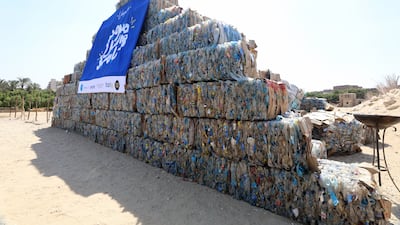
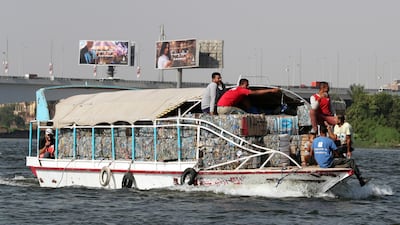
VeryNile is the group behind a project to build the largest plastic pyramid in the world, using bottles collected from the Nile by fishermen. All photos: EPA -
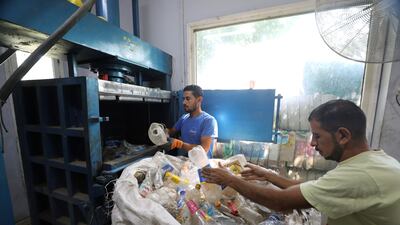
Volunteers sort plastic at a community-owned recycling unit, with some bottles to be used for the pyramid project in Giza. -
The initiative aims to raise awareness about plastic pollution in the Nile. -
VeryNile was founded in 2018 and is supported by the Egyptian Ministry of Environment. -
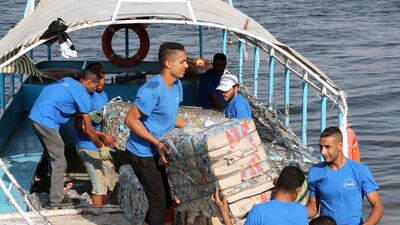
Fishermen working for the group remove plastic waste from the river. -
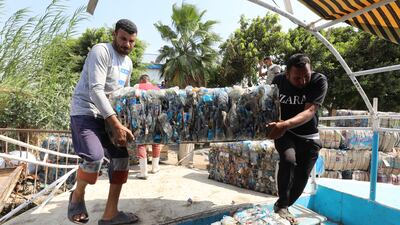
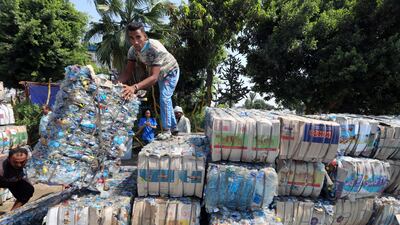
The plastic is brought to VeryNile's recyling centre, where it is segregated and compacted. -
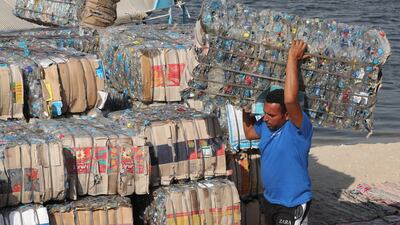
The group says it has collected more than 300 kilograms of plastic since it started. -
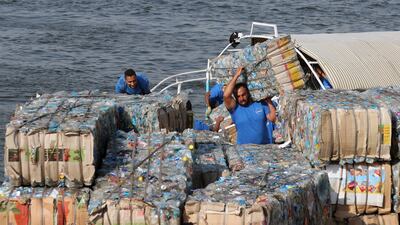
Egyptian volunteers carry plastic waste to build the 7,500 kilogram pyramid. -
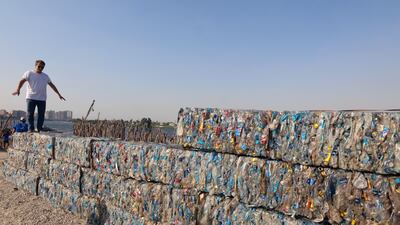
VeryNile director Alban de Menonville at the project site.


“This reduction in single-use plastics should avoid, where possible, substitution with other single-use materials – such as paper, wood or bamboo – as this perpetuates a throwaway culture, and is likely to have unintended environmental consequences,” the report said.
Highlighting issues such as the pollution associated with the production of paper, Mr Eatherley echoed this view.
“We have to reduce our overall consumption of packaging regardless of what it’s made of,” he said.
Moving completely away from packaging – plastic or paper – is not necessarily easy, as evidenced by the recent bankruptcy of Pieter Pot, a Dutch company that supplied food in reusable pots which could be returned to be washed and refilled.
While the company attracted tens of thousands of customers, it struggled to achieve profits and was declared bankrupt in December, although its founders remain keen to secure financial support to restart operations.
The range of goods available when products are supplied in pots or jars tends to be more limited than with disposable plastic packaging, and transportation costs may be higher because they are heavier.
“Your bag of pasta comes in packaging that weighs just as much as the pasta itself,” Dr Sokolova said, as an example. “There’s this demand for less packaging, but how much are [consumers] willing to pay for that?”
Indeed the practicality of plastic packaging is seen as one of its major benefits, even compared to paper alternatives.
While concerns over the environment have caused some retailers like Pieter Pot to try to eliminate packaging, they may also have caused others to use more packaging.
Dr Sokolova and other researchers found that when additional paper wrapping was used with a product already contained within plastic, the packaging was perceived as being more environmentally friendly than if just the plastic was used.
What is more, it appears that companies may be aware of this, because extra, unnecessary paper packaging tends to be used more often in products that are likely to appeal to environmentally conscious shoppers.
“We did find some evidence it’s strategic in some sense,” Dr Sokolova said. “There’s research looking at what products tend to feature this additional paper packaging. It’s often organic products.”
It may be that these more expensive, premium products are better able to bear the additional cost of extra layers of packaging. It seems that consumers “don’t really penalise excessive packaging if it’s paper”, Dr Sokolova said.
The growth in online deliveries may also have resulted in increased use of additional layers of paper packaging, she suggested.
So while concerns about the environment have never been higher on the agenda, the world’s addiction to packaging – whether that’s plastic or paper – shows little signs of lessening.

