
The number of the world's largest companies to have set net-zero targets has almost doubled in the past two and a half years but many lack transparency, making the commitments largely meaningless, a report has found.
Net Zero Tracker, which monitors the decarbonisation progress of companies, cities and countries internationally, shows 909 of the world’s 2,000 largest companies have set targets, up by 46 per cent from 417 in December 2020.
But only 4 per cent of those commitments meet the UN Race to Zero campaign's "starting line criteria", which includes conditions such as covering all greenhouse gases and a published plan.
And only 37 per cent of the targets fully cover emissions from the products a company sells, while 13 per cent specify quality conditions under which any offsets would be used.
Of the world's biggest 112 fossil fuel companies, 75 have committed to reaching net zero, up from only 51 a year ago, according to the assessment of publicly available data.
But most of those targets do not fully cover or lack transparency on Scope 3 emissions – which include the use of a company's products, the biggest source of emissions for fossil fuel companies – or don't include short-term reduction plans, researchers who run the tracker said.
That made the goals "largely meaningless", they said. The report also found none of the fossil fuel companies were making the necessary commitments to move away from fossil fuel extraction or production.
Net Zero Tracker is run by researchers from bodies such as the Energy and Climate Intelligence Unit and the University of Oxford.
Researchers presenting their findings at climate talks in Bonn, Germany told The National a cleaner future for fossil fuel companies depended on a wider societal switch to green energy.
“They will need to think about this bigger transition and the system as a whole will need to think about how we support that transition,” said Thomas Hale, a co-author of the report and researcher at the University of Oxford.
He said a “really positive story” was on the cards if fossil fuel companies could invest windfall profits caused by recent surging prices back into clean energy transition.
“That could lead to a really bright future for these companies and also for the countries, workers and communities and all of us who use their products," he said. "That’s where we need to get to."
Dr Steve Smith, executive director of Oxford Net Zero and CO2RE, a research group that analyses the reduction of greenhouse gases, said expecting fossil fuel companies to aim for net zero “might seem like asking turkeys to vote for Christmas”.
"But even in a fossil-free world we will need clean energy for all and companies sequestering residual carbon," Dr Smith added. "People in fossil fuel companies have the skills to build the future.
"By falling prey to the status quo, companies are either delaying the net-zero transition, or maybe worse from their perspective, are lagging behind on the industries of tomorrow and increasingly today."
Climate change tipping points - in pictures
-
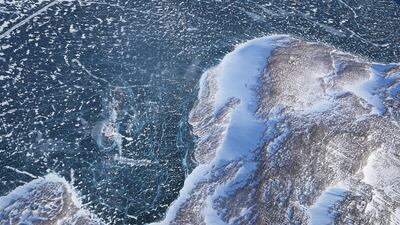
Greenland ice sheet disintegration – Rising temperatures causing the retreat of the ice sheet, which would cause sea levels to rise. -
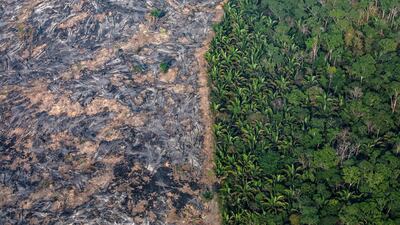
Amazon rainforest dieback – Large-scale dieback of the forest, via increased temperatures and drying, or direct deforestation, would amplify global warming. -

Permafrost loss – Thawing of carbon-rich soils, which releases greenhouse gas into the atmosphere. -

Atlantic meridional overturning circulation breakdown – An increased amount of freshwater in the Northern Atlantic disrupting the system of currents. -
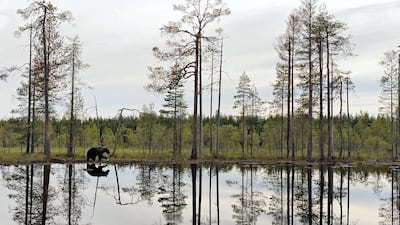
Boreal forest shift – Warming causes dieback in the south of the forests, and expansion into the tundra in the north, which would cause regional warming. -

West Antarctic ice sheet disintegration – The melting of major ice sheets would lead to significant increases in sea level. -
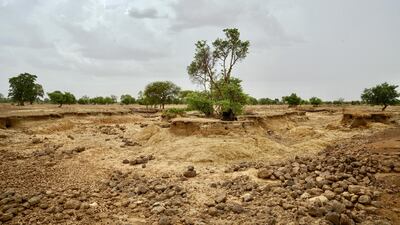
West African monsoon shift – A change in the monsoon season would lead to agricultural disruption and effect the ecosystem. -
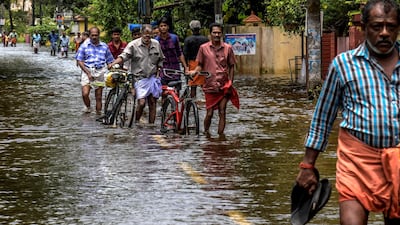
Indian monsoon shift – An increase in the planetary albedo (increases in the atmospheric brown cloud haze over India) has the capability of switching off the monsoon, which is crucial for the local economy, as well as being important for agriculture. -
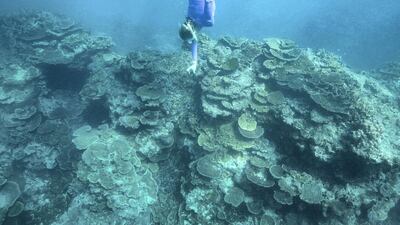
Coral reef die-off – Exposure to increased sea temperatures can kill off reefs, which has a serious effect on ecosystems and local economies.


About 4,000 countries, states, regions, cities and companies have now committed to net zero around the world.
In November, the UN issued guidance on what a "good" net-zero strategy should look like to avoid greenwashing.
Alexis McGivern, standards manager at Oxford Net Zero, said: "Clear consensus has emerged on what is required for robust net-zero targets, which serves as a guiding star for both commitments and implementation.
"No company, city or region can any longer claim not to know what a credible target looks like.
"Using the good practice and areas of consensus within the accountability ecosystem, policymakers now have the tools to shape regulation to create a level playing field enabling companies to accelerate down the pathways to net zero."
For UK-based Forbes 2000 companies, such as Royal Mail, Lloyds Banking Group, Sainsbury's and Taylor Wimpey, the number of net-zero targets set has jumped by 60 per cent with 61 firms having committed, up from 37 in December 2020.
A study published last week in the journal Science said about 90 per cent of countries' net-zero targets were unlikely to be achieved.

