• Staff outside the San Tin Community Isolation Facility in Hong Kong. The 270-room unit treats people with mild Covid-19 symptoms. Photo: EPA
    Staff outside the San Tin Community Isolation Facility in Hong Kong. The 270-room unit treats people with mild Covid-19 symptoms. Photo: EPA
  • Staff erect fences to block access to Shek O beach in Hong Kong . Photo: EPA
    Staff erect fences to block access to Shek O beach in Hong Kong . Photo: EPA
  • People wear masks and face shields as they shop at a food store in Hong Kong. Photo: AFP
    People wear masks and face shields as they shop at a food store in Hong Kong. Photo: AFP
  • A man walks past the San Tin Community Isolation Facility. Photo: AFP
    A man walks past the San Tin Community Isolation Facility. Photo: AFP
  • A patient enters his cabin at the San Tin Community Isolation Facility. Photo: EPA
    A patient enters his cabin at the San Tin Community Isolation Facility. Photo: EPA
  • Workers move coffins as mortuaries run short of coffins amid lockdown in Shenzhen, China. Photo: Reuters
    Workers move coffins as mortuaries run short of coffins amid lockdown in Shenzhen, China. Photo: Reuters
  • Workers move coffins as mortuaries run short of coffins in Shenzhen. Photo: Reuters
    Workers move coffins as mortuaries run short of coffins in Shenzhen. Photo: Reuters
  • An elderly woman wears a protective mask and face shield in Hong Kong. Photo: Reuters
    An elderly woman wears a protective mask and face shield in Hong Kong. Photo: Reuters
  • Workers prepare to move dead bodies from a truck into a refrigerated container at the Fu Shan Public Mortuary, Hong Kong. Photo: AFP
    Workers prepare to move dead bodies from a truck into a refrigerated container at the Fu Shan Public Mortuary, Hong Kong. Photo: AFP
  • Workers move a body from a refrigerated shipping container into a hearse for cremation. Photo: EPA
    Workers move a body from a refrigerated shipping container into a hearse for cremation. Photo: EPA
  • Medical workers help residents to get tested for Covid-19. Photo: AP
    Medical workers help residents to get tested for Covid-19. Photo: AP
  • Hong Kong's Chief Executive Carrie Lam updates the press about the Covid-19 situation in Hong Kong. Photo: AFP
    Hong Kong's Chief Executive Carrie Lam updates the press about the Covid-19 situation in Hong Kong. Photo: AFP

BA.2 strain sparks urgent call for Covid vaccine for children under three


Gillian Duncan
  • English
  • Arabic

BA.2, a sublineage of Omicron causing case numbers to surge in many countries, is more severe in children than other variants, according to research from Hong Kong.

The new Lancet preprint study, which has not yet been reviewed by other scientists, found the strain was associated with higher odds of paediatric ICU admissions, mechanical ventilation and oxygen use.

Hong Kong's population had little natural immunity when Omicron hit the country in February.

Just 1 per cent of the population were estimated to have had Covid as of October 2021 because of strong restrictions implemented to stem the spread of the virus.

The intrinsic severity of Omicron BA2 in children who had no past Covid-19 or vaccination is not mild
Hong Kong researchers

But once BA.2 gained a foothold, it ripped through the population, causing a huge surge in case numbers.

Researchers found 1,147 children who had not previously had the virus or been vaccinated against it were admitted to hospital during the wave in just over three weeks, from February 5 to 28.

The vast majority, 920, were less than five years old.

The numbers of children who were treated for severe disease were small, but suggested Omicron was not mild and could in fact cause serious disease, researchers said.

“The intrinsic severity of Omicron BA.2 in children who had no past Covid-19 or vaccination is not mild,” they wrote, "and in fact, they had higher odds of PICU admissions, mechanical ventilation and oxygen use.

"Omicron BA.2 is more neuropathogenic than previous Sars-CoV-2 variants, influenza and parainfluenza viruses, resulting in more seizures. It also targets the upper airways more than past variants and influenza."

They recommended that vaccination should be “rapidly implemented for children eligible, and in particular, for [those] under three years old, extension of use of current vaccines should be urgently explored”.

A total of 21 children, 1.83 per cent, had to be treated in the paediatric ICU during the BA.2 wave, compared with one child, 0.14 per cent, during the first four waves.

The rate was also higher than that of children with influenza, 0.79 per cent of whom were treated in PICU over a five-year period, or those with parainfluenza, 1.64 per cent of whom needed intensive treatment.

People wearing personal protective equipment at the Hong Kong-Zhuhai-Macao Bridge, Hong Kong Port. Reuters

Eight children, 0.70 per cent, required mechanical ventilation, compared with none in previous waves.

In total, 171 received treatment for neurological complications, including febrile seizure (11.6 per cent), followed by seizure with fever (2.44 per cent).

Five (0.44 per cent) children had Covid-associated encephalitis/encephalopathy. During the first four waves, there were no admissions related to seizures.

There were four child deaths – an 11-month-old, a three-year-old, four-year-old and a nine-year-old.

“Three of them had good past health. The nine-year-old child had Duchenne muscular dystrophy. All were not vaccinated against Covid-19," researchers wrote.

“The cause of death for two cases was attributed to neurological causes: one with encephalopathy and the other with fulminant cerebral oedema, which recently became a recognised phenotype of encephalitis.”

The research chimes with a study released in February in the US, where it was found children were almost four times as likely to be admitted to hospital during the Omicron wave compared with the one caused by Delta.

Like Hong Kong, the risk was highest in the youngest children, 0-4, who registered the largest hospital admission rate increase among any group under 18 in the US, with 15.6 weekly admissions per 100,000 compared with 2.9 during the Delta wave.

There are currently very few vaccines available to young children.

Children aged three and over can receive a shot of Sinopharm in the UAE, where over-fives can be vaccinated with Pfizer-BioNTech.

But there is yet to be an mRNA vaccine approved for children under five anywhere.

Pfizer-BioNTech’s vaccine for the youngest children has suffered a series of setbacks and delays, with data expected on a three-shot low-dose course in April.

This week Moderna said its vaccine for young children was safe and generated strong immune responses in children from six months to five years old. But it demonstrated only modest efficacy of 43.7 per cent against symptomatic infections in children six months to two years, and 37.5 per cent in children between two and five.

Although seemingly low, the trial coincided with the Omicron wave, and the efficacy was comparable to that in adults during the period.

Covid-19 in Africa – in pictures

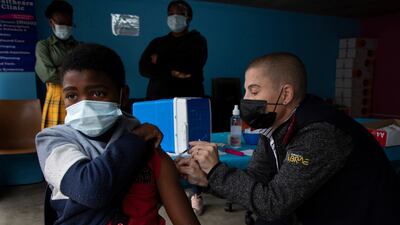
  • A boy receives a Covid-19 vaccination at a site near Johannesburg. The World Health Organisation's Africa director Matshidiso Moeti says the continent is moving into the ‘control phase’ of the pandemic. AP
    A boy receives a Covid-19 vaccination at a site near Johannesburg. The World Health Organisation's Africa director Matshidiso Moeti says the continent is moving into the ‘control phase’ of the pandemic. AP
  • Vaccinations are prepared at a health centre in Nairobi, Kenya. AP
    Vaccinations are prepared at a health centre in Nairobi, Kenya. AP
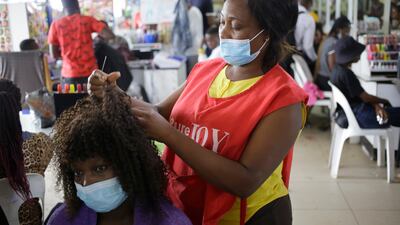
  • With masks on, hairdresser Tembi Ndlovu tends to a client in a salon in Harare, Zimbabwe. AP
    With masks on, hairdresser Tembi Ndlovu tends to a client in a salon in Harare, Zimbabwe. AP
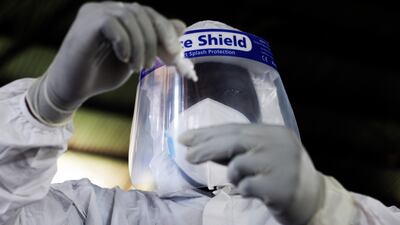
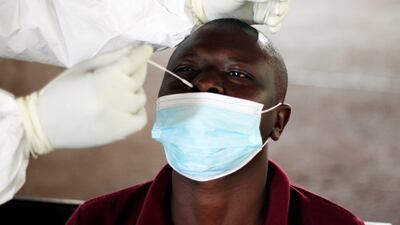
  • A health official takes a sample for tests at a private Covid-19 testing centre in Harare. AP
    A health official takes a sample for tests at a private Covid-19 testing centre in Harare. AP
  • A child receives his Pfizer-BioNTech vaccine against Covi-19 in Diepsloot township near Johannesburg. AP
    A child receives his Pfizer-BioNTech vaccine against Covi-19 in Diepsloot township near Johannesburg. AP
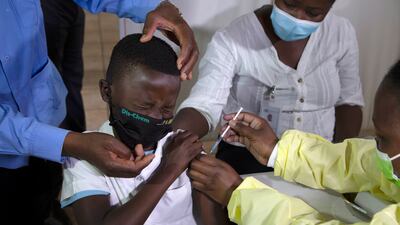
  • Martin Lako prepares to vaccinate Timon Buga Kujo in Juba, South Sudan. Reuters
    Martin Lako prepares to vaccinate Timon Buga Kujo in Juba, South Sudan. Reuters
  • A man is tested for Covid-19 in Harare. AP Photo
    A man is tested for Covid-19 in Harare. AP Photo
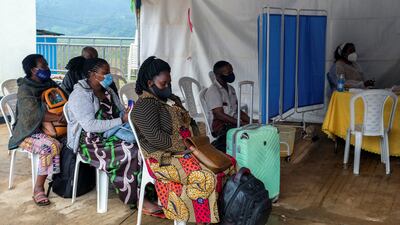
  • Travellers wait for a coronavirus test at the Gatuna border post at Gicumbi, northern Rwanda. Reuters
    Travellers wait for a coronavirus test at the Gatuna border post at Gicumbi, northern Rwanda. Reuters
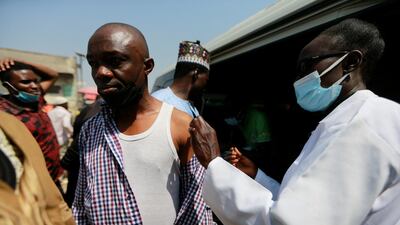
  • A man is vaccinated at Wuse market in Abuja, Nigeria. Reuters
    A man is vaccinated at Wuse market in Abuja, Nigeria. Reuters
Farasan Boat: 128km Away from Anchorage

Director: Mowaffaq Alobaid 

Stars: Abdulaziz Almadhi, Mohammed Al Akkasi, Ali Al Suhaibani

Rating: 4/5

Married Malala

Malala Yousafzai is enjoying married life, her father said.

The 24-year-old married Pakistan cricket executive Asser Malik last year in a small ceremony in the UK.

Ziauddin Yousafzai told The National his daughter was ‘very happy’ with her husband.

The President's Cake

Director: Hasan Hadi

Starring: Baneen Ahmad Nayyef, Waheed Thabet Khreibat, Sajad Mohamad Qasem 

Rating: 4/5

The specs

Engine: 2.0-litre 4-cyl

Power: 153hp at 6,000rpm

Torque: 200Nm at 4,000rpm

Transmission: 6-speed auto

Price: Dh99,000

On sale: now

Ten tax points to be aware of in 2026

1. Domestic VAT refund amendments: request your refund within five years

If a business does not apply for the refund on time, they lose their credit.

2. E-invoicing in the UAE

Businesses should continue preparing for the implementation of e-invoicing in the UAE, with 2026 a preparation and transition period ahead of phased mandatory adoption. 

3. More tax audits

Tax authorities are increasingly using data already available across multiple filings to identify audit risks. 

4. More beneficial VAT and excise tax penalty regime

Tax disputes are expected to become more frequent and more structured, with clearer administrative objection and appeal processes. The UAE has adopted a new penalty regime for VAT and excise disputes, which now mirrors the penalty regime for corporate tax.

5. Greater emphasis on statutory audit

There is a greater need for the accuracy of financial statements. The International Financial Reporting Standards standards need to be strictly adhered to and, as a result, the quality of the audits will need to increase.

6. Further transfer pricing enforcement

Transfer pricing enforcement, which refers to the practice of establishing prices for internal transactions between related entities, is expected to broaden in scope. The UAE will shortly open the possibility to negotiate advance pricing agreements, or essentially rulings for transfer pricing purposes. 

7. Limited time periods for audits

Recent amendments also introduce a default five-year limitation period for tax audits and assessments, subject to specific statutory exceptions. While the standard audit and assessment period is five years, this may be extended to up to 15 years in cases involving fraud or tax evasion. 

8. Pillar 2 implementation 

Many multinational groups will begin to feel the practical effect of the Domestic Minimum Top-Up Tax (DMTT), the UAE's implementation of the OECD’s global minimum tax under Pillar 2. While the rules apply for financial years starting on or after January 1, 2025, it is 2026 that marks the transition to an operational phase.

9. Reduced compliance obligations for imported goods and services

Businesses that apply the reverse-charge mechanism for VAT purposes in the UAE may benefit from reduced compliance obligations. 

10. Substance and CbC reporting focus

Tax authorities are expected to continue strengthening the enforcement of economic substance and Country-by-Country (CbC) reporting frameworks. In the UAE, these regimes are increasingly being used as risk-assessment tools, providing tax authorities with a comprehensive view of multinational groups’ global footprints and enabling them to assess whether profits are aligned with real economic activity. 

Contributed by Thomas Vanhee and Hend Rashwan, Aurifer

Tiger%20Stripes%20
%3Cp%3E%3Cstrong%3EDirector%3A%3C%2Fstrong%3E%20Amanda%20Nell%20Eu%C2%A0%3C%2Fp%3E%0A%3Cp%3E%3Cstrong%3EStars%3A%3C%2Fstrong%3E%20Zafreen%20Zairizal%2C%20Deena%20Ezral%20and%20Piqa%3C%2Fp%3E%0A%3Cp%3E%3Cstrong%3ERating%3A%3C%2Fstrong%3E%204.5%3C%2Fp%3E%0A
How to wear a kandura

Dos

  • Wear the right fabric for the right season and occasion 
  • Always ask for the dress code if you don’t know
  • Wear a white kandura, white ghutra / shemagh (headwear) and black shoes for work 
  • Wear 100 per cent cotton under the kandura as most fabrics are polyester

Don’ts 

  • Wear hamdania for work, always wear a ghutra and agal 
  • Buy a kandura only based on how it feels; ask questions about the fabric and understand what you are buying
Updated: March 27, 2022, 6:28 AM