South African scientists have discovered two new sublineages of the Omicron coronavirus variant, said Tulio de Oliveira, who runs the gene-sequencing institutions in the country.
The lineages have been named BA.4 and BA.5, but Mr de Oliveira said the lineages have not caused a spike in infections in South Africa and have been found in samples from a number of countries.
“Given the very low infections, hospitalisations and deaths in South Africa, we are alerted about the continued evolution but not concerned,” said Mr de Oliveira.
“All of the laboratory science on virus neutralisation and vaccines are already under way and we are strengthening genomic surveillance.”
South Africa and Botswana were the first to discover Omicron last November and South Africa was the first country to be hit by a wave of infections caused by the strain.
But the number of deaths and people requiring hospital treatment were a fraction of those caused by the Delta variant, even as daily cases hit a record high in December.
The sublineages have also been found in samples from Botswana, Belgium, Germany, Denmark and the UK, said Mr de Oliveira.
-
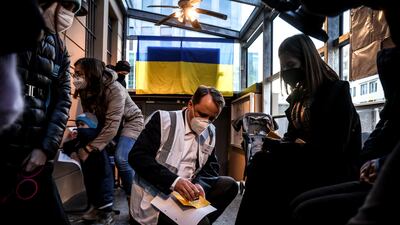
Ukrainians are registered by health workers while waiting to be vaccinated against the coronavirus at their country's embassy in German capital Berlin. EPA -
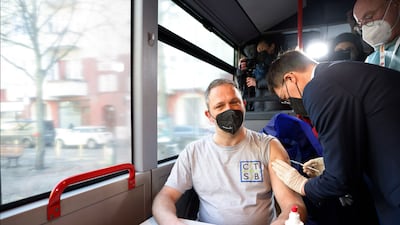
German Health Minister Karl Lauterbach, who studied medicine, vaccinates a man in the Vaccination Helps tour bus, at the project's launch in Berlin. EPA -

A medical worker holds a syringe containing a shot of the Nuvaxovid vaccine by Novavax at the Tegel vaccination center in Berlin. Getty Images -
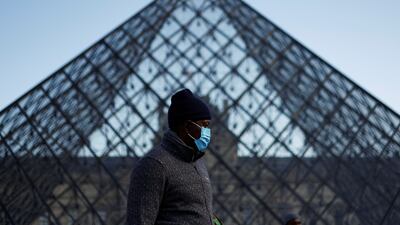
A man wearing a face mask walks past the Louvre Pyramid, at the Louvre museum, in French capital Paris. Reuters -
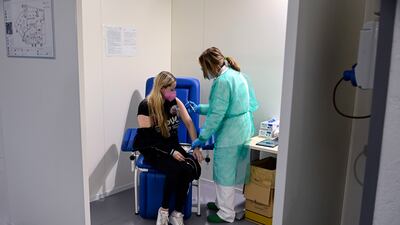
A Ukrainian refugee gets a Covid-19 vaccine at the Acea Hub in Italy's capital Rome. EPA -
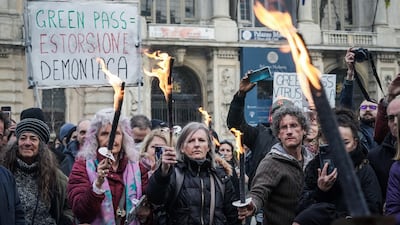
Protesters hold torches to burn Covid-19 vaccination passes, during a demonstration at Castello Square, in Turin, Italy. EPA -
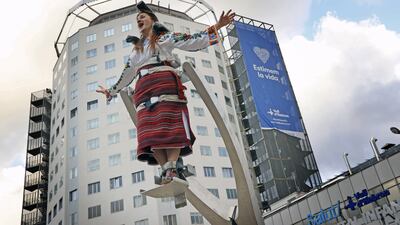
Ukrainian mezzosoprano Maria Melnychyn performs with the La Fura dels Baus theatre company at Vall d'Hebron hospital, in Barcelona, Spain, to mark the second anniversary of the beginning of the pandemic. EPA -
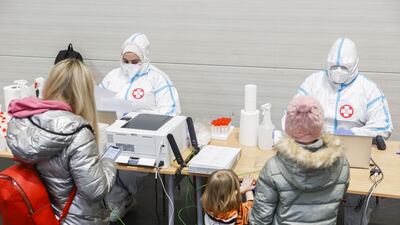
Ukrainian refugees are tested for coronavirus in a reception centre in Vienna, Austria. AFP


So far, four samples containing the sublineages have been identified in Botswana and 23 in South Africa, the World Health Organisation said in a statement.
“There is no cause for alarm” said Matshidiso Moeti, the WHO’s regional director for Africa.
“We are working with scientists in Botswana and South Africa to gain complete behavioural knowledge of these sublineages.”
The two lineages have similar mutations on their spike proteins — the part of the virus that helps the virus attach to human cells — to the BA.2 sublineage, which appears to be more infectious than the original Omicron strain.
The two sublineages differ from each other in terms of amino acid mutations outside the spike protein, Mr Moeti said.