Read the latest updates on the Hajj pilgrimage here
Booking slots on an app to perform a 1,400-year-old religious rite; smart health technology to check on the frail and infirm; and holographic doctors 700 kilometres away to diagnose them remotely. These are merely some of the technological advances that have allowed Saudi Arabian authorities to welcome back a million pilgrims to Hajj.
Officials were able to launch a successful Hajj season with the help of numerous tech-driven projects.
The Smart Pilgrim app made it more convenient for Muslims to make Umrah bookings, even for international pilgrims.
Pilgrims have been able to adopt new and advanced tools that help them arrange all aspects of their trip, from the moment they step off the plane to when they perform the final circuit of the Kaaba.
-

Thousands of Hajj pilgrims in Saudi Arabia make their way to perform the stoning of the devil ritual, which marks the start of the Eid Al Adha holiday. SPA -
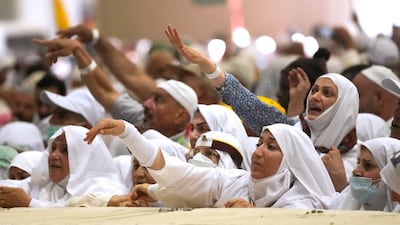
Pilgrims cast stones in the symbolic stoning of the devil ritual during the Hajj pilgrimage in Mina. AP -
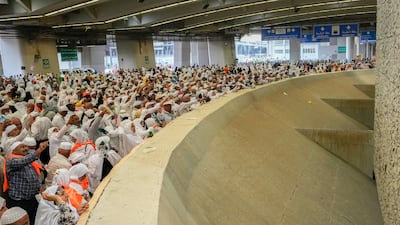
Thousands of Hajj pilgrims take part in the stoning of the devil ritual. AP -
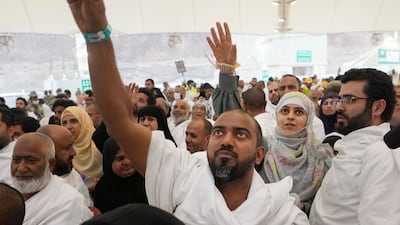
Pilgrims take part in the stoning of the devil ritual in Mina. AP -
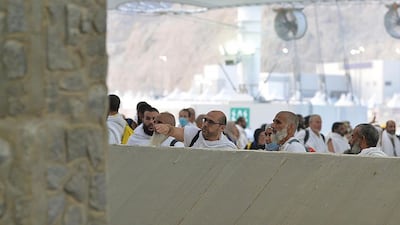
Pilgrims on the first day of Tashreeq take part in the stoning ritual. SPA -
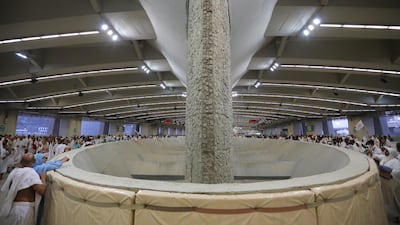
Pilgrims throw pebbles as part of the stoning of the devil ritual at the Jamarat Bridge during Hajj. EPA -
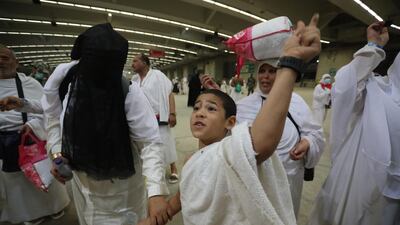
Pilgrims throw pebbles as part of the symbolic stoning of the devil ritual. EPA -
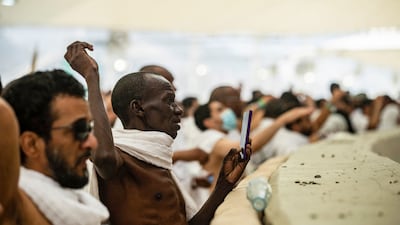
Pilgrims perform the stoning of the devil ritual as this year's expanded Hajj comes to an end. AFP -
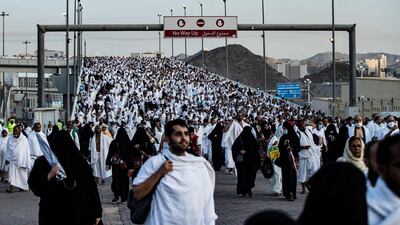
Thousands of pilgrims make their way across Mina to perform the stoning of the devil ritual, which marks the start of the Eid Al Adha holiday. AFP -
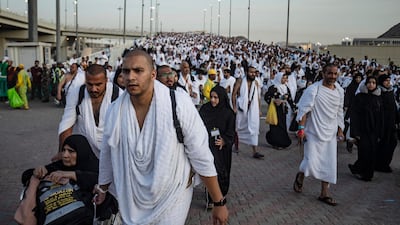
Thousands of pilgrims make their way across the valley of Mina, near Makkah, to perform the stoning of the devil ritual which marks the start of the Eid Al Adha holiday. AFP -
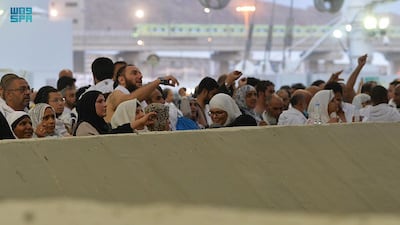
Pilgrims throw stones as part of the ritual. SPA -
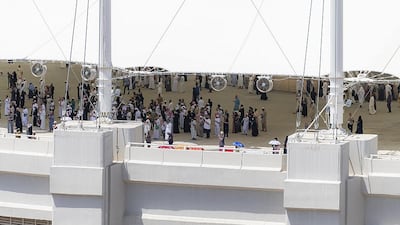
Pilgrims on the first day of Tashreeq take part in the ritual stoning of the devil. SPA


Hussein Sabbagh, as a young Saudi organiser who is managing the group of pilgrims staying in Makkah”, felt it was his utmost duty to ensure the Hajj journey is made easy for pilgrims. “We want to make sure pilgrims can be more focused on worship and performing rites,” he said
Usman, a Pakistani pilgrim, said the chilled conditions in accommodation had made a big difference to his trip. He said air conditioning always kept the temperature cool in his tents at Mina and Arafat.
“Even the bus and trains had brand new LED screens, Wi-Fi and AC,” he said.
At Prince Mohammed bin Abdulaziz International Airport in Madinah, arrivals who fell ill have been offered state-of-the-art technology allowing for doctors in Riyadh, more than 700 kilometres away, to diagnose them via a hologram.
Health authorities have also been providing round-the-clock medical assistance through a toll-free number 937 and the Sehhaty app.
The Hajj and Umrah lounge complex at King Abdulaziz International Airport in Jeddah is equipped with a state-of the-art health centre, with three 24-hour Saudi Red Crescent ambulance teams. The health centre can handle up to 45,000 passengers a day.
-
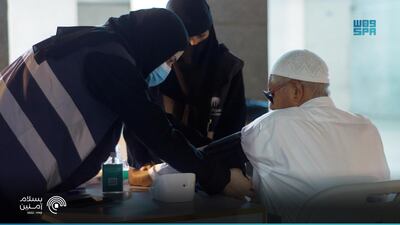
Volunteers assist the elderly during the Hajj pilgrimage. SPA -
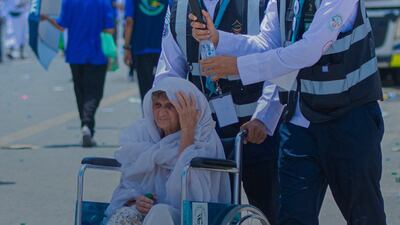
Volunteers assist the elderly during the Hajj pilgrimage. SPA -
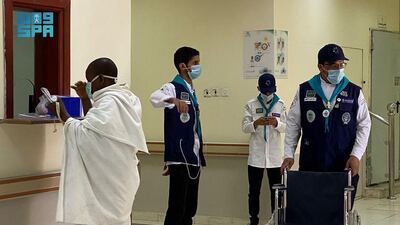
More than 150 medical staff are ready to serve Hajj pilgrims this year. SPA -

More than 150 medical staff are ready to serve Hajj pilgrims this year. SPA -
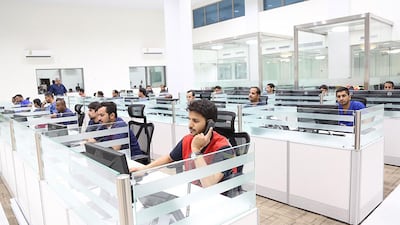
More than 150 medical staff are ready to serve Hajj pilgrims this year. SPA -
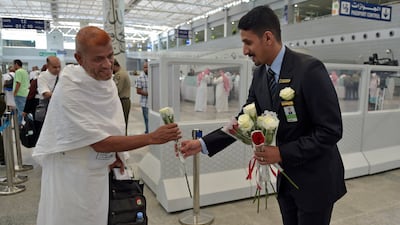
Hajj employees welcome pilgrims at King Abdulaziz International Airport in Jeddah. AFP -
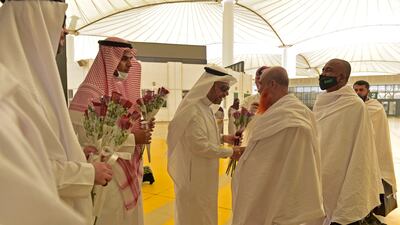
Hajj employees welcome pilgrims at King Abdulaziz International Airport in Jeddah. AFP -
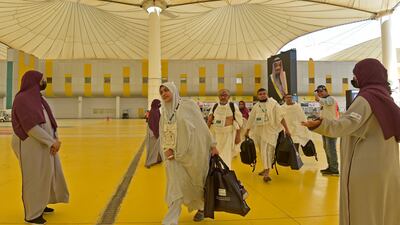
Hajj employees welcome pilgrims at King Abdulaziz International Airport in Jeddah. AFP -
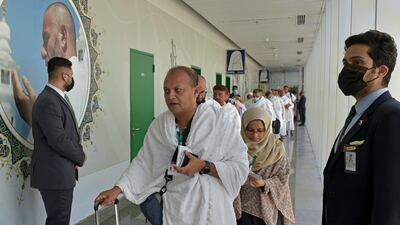
Hajj employees welcome pilgrims at King Abdulaziz International Airport in Jeddah. AFP


Every year, the kingdom provides free health care to millions of people who arrive for the Hajj pilgrimage, with treatment ranging from simple check-ups to dentistry and life-saving heart surgery.
A high-tech mobile dental clinic staffed by 32 employees is stationed at the Al Haram Emergency Hospital.
Saudi Arabian officials spoke on Saturday about their continuing health operations to help make the Hajj experience for pilgrims a smooth one, saying that no epidemic outbreaks or diseases threatening public health have been recorded.
More than 97,000 pilgrims have benefited from these health services in Makkah and Madinah.
Before the pilgrimage started, a team of robots inside the Grand Mosque sanitised the holy site as part of pandemic-control measures to protect worshippers from bacterial and viral threats.
Each robot was programmed to work from five to eight hours without human intervention and could carry up to 23.8 litres of sanitiser.
A group of 100 scholars has been assigned to answer pilgrims' queries during Hajj and interactive robots with 21-inch touchscreens are stationed at the main entrances of the Mataf area ― the open-space around the Kaaba where the Tawaf circumambulation ritual takes place ― to help provide information.
About 2,000 electric vehicles have been stationed close by to help the elderly and people with disabilities at the Grand Mosque. Electronic umbrellas are in operation to protect people from the sun and robots dispense bottles of water. A massive water sprinkler system has been installed to help cool pilgrims, reduce heat and refresh the air.
“They has great arrangements for people with disabilities and older people on wheelchairs,” said Asma, a Saudi pilgrim. “The electronic scooters in the Grand Mosque help pilgrims finish their Hajj super-fast.
“No old chairs and people pushing and getting hurt.”
The Makkah Region Development Authority also equipped the area with more than 600 water coolers so pilgrims could visit them while walking.
Nigerian pilgrim Kaosarah Adeyi was impressed by the level of rognaisaiton and comfort she experienced this Hajj. “ Despite being a desert, we still had everything in abundance. 24/7 electricity, abundant food and water at all points and effective security service.”
“The organisation, crowd control and hospitality of the Government of Kingdom of Saudi Arabia is worthy of emulation.”
This year, a e-bracelet programme was adopted, which stores vital data and provides support. Wristbands, lanyards and badges were handed out to children participating in the pilgrimage, under a safety campaign by Saudi Arabia's Agency for Social and Voluntary Services.
The Saudi ICT infrastructure company Tawal built 31 new towers to join more than 1,000 towers that have been set up to enable its telecom operator clients to serve the pilgrims. This has made for a faster connection between travelling pilgrims and their families back home.
Saudi Arabia's Public Authority for Transport on Saturday launched its electric scooter service for Hajj to enhance the religious experience for pilgrims and reduce travel time from Arafat to Muzdalifah to only 15 minutes. The launch of the scooter service is part of the authority's plan to adopt modern technology and smart mobility services.
Mashaer trains, operating between Makkah, Mina and Muzdalifah, have also been approved to run this year. Service was halted two years ago due to the Covid-19 pandemic.
The 20 trains, measuring 300-metres each, can hold up to 3,500 pilgrims and transport about 70,000 people an hour between the holy sites, which includes the Jamarat bridge station.
Essam Hadi, a Jordanian pilgrim, said welcomed the new transport additions.
“The trains here are so advanced now, I’m going to make my journey to Makkah and Madinah using these high-speed air-conditioned trains,” she said. “We have it so much easier than people in the past and I’m only comparing it to less than a decade ago.”
-
Thousands of Hajj pilgrims in Saudi Arabia make their way to perform the stoning of the devil ritual, which marks the start of the Eid Al Adha holiday. SPA -
Pilgrims cast stones in the symbolic stoning of the devil ritual during the Hajj pilgrimage in Mina. AP -
Thousands of Hajj pilgrims take part in the stoning of the devil ritual. AP -
Pilgrims take part in the stoning of the devil ritual in Mina. AP -
Pilgrims on the first day of Tashreeq take part in the stoning ritual. SPA -
Pilgrims throw pebbles as part of the stoning of the devil ritual at the Jamarat Bridge during Hajj. EPA -
Pilgrims throw pebbles as part of the symbolic stoning of the devil ritual. EPA -
Pilgrims perform the stoning of the devil ritual as this year's expanded Hajj comes to an end. AFP -
Thousands of pilgrims make their way across Mina to perform the stoning of the devil ritual, which marks the start of the Eid Al Adha holiday. AFP -
Thousands of pilgrims make their way across the valley of Mina, near Makkah, to perform the stoning of the devil ritual which marks the start of the Eid Al Adha holiday. AFP -
Pilgrims throw stones as part of the ritual. SPA -
Pilgrims on the first day of Tashreeq take part in the ritual stoning of the devil. SPA
Hajj continues with second and third stoning ritual
More than a million people stone three walls that symbolise the Devil over three days.
The third and final day of the Stoning of the Devil is Monday and pilgrims will leave Mina and perform the farewell Hajj in Makkah by circling the Kaaba before heading home.
“ I used so much force to hit the walls to let out all the frustrations and pain that was inside me for many things I did in the past that I am not proud of,” Suleiman Al Jarrafi, a Palestinian pilgrim working in Doha, told The National.
The stones symbolise the small, medium and large devils representing evil temptation to do wrong.
Muslims believe the Prophet Ibrahim started stoning a wall to defy temptations from the Devil not to sacrifice his son Ismael, as commanded by God.
Later, God rewarded him by asking him to sacrifice a lamb instead, sparing his son.
Farewell circumambulation
When leaving Makkah, pilgrims will stop for the last time at the Great Mosque for Tawaf Al Wadaa (farewell), where they perform the seven circles of the Kaaba once again.
A spokesman for Saudi Arabia's Ministry of Hajj and Umrah has announced that plans for the process of grouping pilgrims to perform Tawaf Al Wadaa have been set.
Hisham Saeed said that the 12th and 13th of Dhu Al Hijjah, falling on Monday and Tuesday, will be reserved for pilgrims from within the kingdom to complete the farewell Tawaf.
International pilgrims will perform the Tawaf on the 14th of Dhu Al Hijjah to conclude their pilgrimage.

