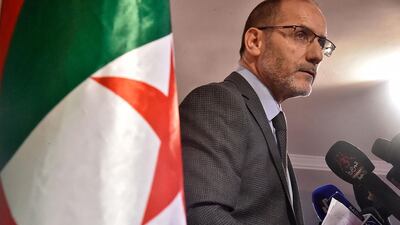
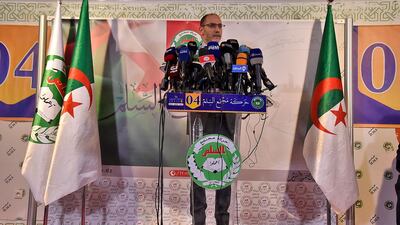
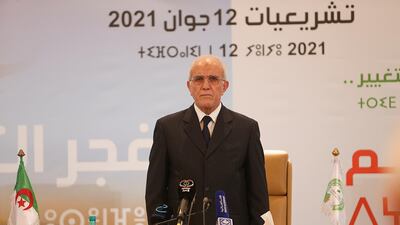
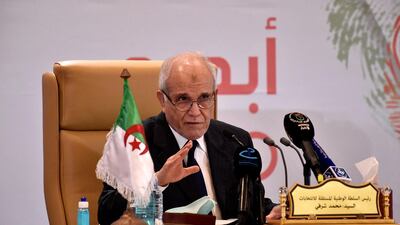
Algeria's new prime minister, Aymen Benabderrahmane, faces an uphill struggle against economic uncertainty, social unrest, and questions over the legitimacy of his government and the position of his ally, President Abdelmadjid Tebboune.
Mr Benabderrahmane’s first task after taking office on June 30 is deciding whether to form a political or technocratic government, with his choice of candidates including members of parliament elected in a vote where boycotts and protests led to only slightly more than a quarter of the electorate taking part.
The turnout for June's legislative poll maintained the declining trend of electoral participation.
Mr Tebboune was elected in December 2019 on the back of less than 60 per cent turnout. Shortly thereafter, one of the main planks of his managed reform programme, a constitutional referendum, drew less than a quarter of the electorate to the polls.
Irrespective of concerns over his government's legitimacy, Mr Benabderrahmane, who was born in Algiers, must deal with looming economic collapse, continued social unrest and the ongoing coronavirus pandemic, which continues to spread through the country.
Mr Benabderrahmane's route to power has been largely unremarkable. After rising to governor of the National Bank, he was appointed finance minister in the cabinet of his predecessor, Abdelaziz Djerad, in June 2020. That economic background might come to be as much of a curse as a blessing. While his past positions give him the experience to manage the challenges ahead, voters are unlikely to forget his role in shaping and maintaining a system that is almost entirely reliant on oil and gas exports to support one of the most generous subsidy systems among Opec countries. Despite rallying in recent months, hydrocarbon prices remain far short of the approximately $135 per barrel threshold that most analysts agree Algeria needs to break even.
With decades of official resistance to the development of a private sector free from government control, Mr Benabderrahmane, 54, must now navigate a course between cutting state subsidies that many Algerians view as a given and maintaining the social stability that governments since the civil war of the 1990s have valued.
How that might be achieved is open to question. Algeria's foreign reserves are reaching critical levels. In 2014, with oil and gas at a high, reserves stood at $200 billion; last year, they had fallen to just $47bn. Analysts generally agree that they have only a year – two at the most – before they run dry and the economy hits the wall.
Irrespective of how Mr Benabderrahmane addresses the country's financial difficulties, he must do so in the face of the continued opposition, both from the street and Islamist factions seeking to take advantage of whatever difficulties his government finds itself in.
Already, the financial impact of coronavirus lockdowns and dwindling reserves are being felt on the street.
“I have a family of seven to support, but the construction company for which I worked has shut down,” Samir Yefsa, an unemployed 50-year-old, told the Financial Times. “The state was our only client, but the government now has no construction programme. I don’t know what to do. I have problems feeding my family. I can only borrow from family and friends who are retired and live on pensions, because others who are younger are in a situation similar to mine.”
The demographic factor is significant. Almost one third of Algeria's population of about 43 million are thought to be under 30 years old, according to Worldometer. Politically restless, frustrated by the status quo and too young to fully recall the horrors of the country's brutal decade of civil war, it was this generation that provided the initial spark for the mass protest movement, or Hirak, that have roiled the country to varying degrees since February 2019.
Overseeing all this is a president who looks increasingly isolated from his own electorate and from the opaque cabal of military officers, trade union officials and businessmen, known collectively as the Pouvoir, or power, who surround him.
“I don't think he was ever supposed to serve a full term,” Zine Labidine Ghebouli, a political analyst specialising in Algeria, told The National. “He was a temporary fix, after [former President Abdelaziz] Bouteflika went.”
Moreover, the president's lukewarm programme of reform has done little to please anyone while alienating all. “Tebboune has failed to create any kind of consensus at any level,” Mr Ghebouli said. “The legislative elections have only highlighted that,” he said, pointing to the low turnout and the president's ill-judged overtures to the country's moderate Islamists in the run to the vote.
“People don't have money. Political issues are becoming socio-economic issues and, with the Hirak having mostly become irrelevant, it's unclear what might happen next. We don't have the money to buy the kind of peace we did in the past and, without that, violence remains a possibility.”
If you go
The flights
Emirates flies from Dubai to Seattle from Dh5,555 return, including taxes.
The car
Hertz offers compact car rental from about $300 (Dh1,100) per week, including taxes. Emirates Skywards members can earn points on their car hire through Hertz.
The national park
Entry to Mount Rainier National Park costs $30 for one vehicle and passengers for up to seven days. Accommodation can be booked through mtrainierguestservices.com. Prices vary according to season. Rooms at the Holiday Inn Yakima cost from $125 per night, excluding breakfast.
HIV on the rise in the region
A 2019 United Nations special analysis on Aids reveals 37 per cent of new HIV infections in the Mena region are from people injecting drugs.
New HIV infections have also risen by 29 per cent in western Europe and Asia, and by 7 per cent in Latin America, but declined elsewhere.
Egypt has shown the highest increase in recorded cases of HIV since 2010, up by 196 per cent.
Access to HIV testing, treatment and care in the region is well below the global average.
Few statistics have been published on the number of cases in the UAE, although a UNAIDS report said 1.5 per cent of the prison population has the virus.
The Sand Castle
Director: Matty Brown
Stars: Nadine Labaki, Ziad Bakri, Zain Al Rafeea, Riman Al Rafeea
Rating: 2.5/5
Company%20profile
%3Cp%3EName%3A%20Tabby%3Cbr%3EFounded%3A%20August%202019%3B%20platform%20went%20live%20in%20February%202020%3Cbr%3EFounder%2FCEO%3A%20Hosam%20Arab%2C%20co-founder%3A%20Daniil%20Barkalov%3Cbr%3EBased%3A%20Dubai%2C%20UAE%3Cbr%3ESector%3A%20Payments%3Cbr%3ESize%3A%2040-50%20employees%3Cbr%3EStage%3A%20Series%20A%3Cbr%3EInvestors%3A%20Arbor%20Ventures%2C%20Mubadala%20Capital%2C%20Wamda%20Capital%2C%20STV%2C%20Raed%20Ventures%2C%20Global%20Founders%20Capital%2C%20JIMCO%2C%20Global%20Ventures%2C%20Venture%20Souq%2C%20Outliers%20VC%2C%20MSA%20Capital%2C%20HOF%20and%20AB%20Accelerator.%3Cbr%3E%3C%2Fp%3E%0A
KILLING OF QASSEM SULEIMANI
Our legal consultant
Name: Dr Hassan Mohsen Elhais
Position: legal consultant with Al Rowaad Advocates and Legal Consultants.
Mercer, the investment consulting arm of US services company Marsh & McLennan, expects its wealth division to at least double its assets under management (AUM) in the Middle East as wealth in the region continues to grow despite economic headwinds, a company official said.
Mercer Wealth, which globally has $160 billion in AUM, plans to boost its AUM in the region to $2-$3bn in the next 2-3 years from the present $1bn, said Yasir AbuShaban, a Dubai-based principal with Mercer Wealth.
“Within the next two to three years, we are looking at reaching $2 to $3 billion as a conservative estimate and we do see an opportunity to do so,” said Mr AbuShaban.
Mercer does not directly make investments, but allocates clients’ money they have discretion to, to professional asset managers. They also provide advice to clients.
“We have buying power. We can negotiate on their (client’s) behalf with asset managers to provide them lower fees than they otherwise would have to get on their own,” he added.
Mercer Wealth’s clients include sovereign wealth funds, family offices, and insurance companies among others.
From its office in Dubai, Mercer also looks after Africa, India and Turkey, where they also see opportunity for growth.
Wealth creation in Middle East and Africa (MEA) grew 8.5 per cent to $8.1 trillion last year from $7.5tn in 2015, higher than last year’s global average of 6 per cent and the second-highest growth in a region after Asia-Pacific which grew 9.9 per cent, according to consultancy Boston Consulting Group (BCG). In the region, where wealth grew just 1.9 per cent in 2015 compared with 2014, a pickup in oil prices has helped in wealth generation.
BCG is forecasting MEA wealth will rise to $12tn by 2021, growing at an annual average of 8 per cent.
Drivers of wealth generation in the region will be split evenly between new wealth creation and growth of performance of existing assets, according to BCG.
Another general trend in the region is clients’ looking for a comprehensive approach to investing, according to Mr AbuShaban.
“Institutional investors or some of the families are seeing a slowdown in the available capital they have to invest and in that sense they are looking at optimizing the way they manage their portfolios and making sure they are not investing haphazardly and different parts of their investment are working together,” said Mr AbuShaban.
Some clients also have a higher appetite for risk, given the low interest-rate environment that does not provide enough yield for some institutional investors. These clients are keen to invest in illiquid assets, such as private equity and infrastructure.
“What we have seen is a desire for higher returns in what has been a low-return environment specifically in various fixed income or bonds,” he said.
“In this environment, we have seen a de facto increase in the risk that clients are taking in things like illiquid investments, private equity investments, infrastructure and private debt, those kind of investments were higher illiquidity results in incrementally higher returns.”
The Abu Dhabi Investment Authority, one of the largest sovereign wealth funds, said in its 2016 report that has gradually increased its exposure in direct private equity and private credit transactions, mainly in Asian markets and especially in China and India. The authority’s private equity department focused on structured equities owing to “their defensive characteristics.”
The Brutalist
Director: Brady Corbet
Stars: Adrien Brody, Felicity Jones, Guy Pearce, Joe Alwyn
Rating: 3.5/5
Personalities on the Plate: The Lives and Minds of Animals We Eat
Barbara J King, University of Chicago Press
I Feel Pretty
Dir: Abby Kohn/Mark Silverstein
Starring: Amy Schumer, Michelle Williams, Emily Ratajkowski, Rory Scovel
SPEC%20SHEET%3A%20SAMSUNG%20GALAXY%20Z%20FOLD5
%3Cp%3E%3Cstrong%3EMain%20display%3A%3C%2Fstrong%3E%207.6%22%20QXGA%2B%20Dynamic%20Amoled%202X%2C%20Infinity%20Flex%2C%202176%20x%201812%2C%2021.6%3A18%2C%20374ppi%2C%20HDR10%2B%2C%20up%20to%20120Hz%3C%2Fp%3E%0A%3Cp%3E%3Cstrong%3ECover%20display%3A%3C%2Fstrong%3E%206.2%22%20HD%2B%20Dynamic%20Amoled%202X%2C%202316%20x%20904%2C%2023.1%3A9%2C%20402ppi%2C%20up%20to%20120Hz%3C%2Fp%3E%0A%3Cp%3E%3Cstrong%3EProcessor%3A%3C%2Fstrong%3E%20Qualcomm%20Snapdragon%208%20Gen%202%2C%204nm%2C%20octa-core%3B%20Adreno%20740%20GPU%3C%2Fp%3E%0A%3Cp%3E%3Cstrong%3EMemory%3A%3C%2Fstrong%3E%2012GB%3C%2Fp%3E%0A%3Cp%3E%3Cstrong%3ECapacity%3A%3C%2Fstrong%3E%20256%2F512GB%20%2F%201TB%20(online%20exclusive)%3C%2Fp%3E%0A%3Cp%3E%3Cstrong%3EPlatform%3A%3C%2Fstrong%3E%20Android%2013%2C%20One%20UI%205.1.1%3C%2Fp%3E%0A%3Cp%3E%3Cstrong%3EMain%20camera%3A%3C%2Fstrong%3E%20Triple%2012MP%20ultra-wide%20(f%2F2.2)%20%2B%2050MP%20wide%20(f%2F1.8)%20%2B%2010MP%20telephoto%20(f%2F2.4)%2C%20dual%20OIS%2C%203x%20optical%20zoom%2C%2030x%20Space%20Zoom%2C%20portrait%2C%20super%20slo-mo%3C%2Fp%3E%0A%3Cp%3E%3Cstrong%3EVideo%3A%3C%2Fstrong%3E%208K%4024fps%2C%204K%4060fps%2C%20full-HD%4060%2F240fps%2C%20HD%40960fps%3B%20slo-mo%4060%2F240%2F960fps%3B%20HDR10%2B%3C%2Fp%3E%0A%3Cp%3E%3Cstrong%3ECover%20camera%3A%3C%2Fstrong%3E%2010MP%20(f%2F2.2)%3C%2Fp%3E%0A%3Cp%3E%3Cstrong%3EInner%20front%20camera%3A%3C%2Fstrong%3E%20Under-display%204MP%20(f%2F1.8)%3C%2Fp%3E%0A%3Cp%3E%3Cstrong%3EBattery%3A%3C%2Fstrong%3E%204400mAh%2C%2025W%20fast%20charging%2C%2015W%20wireless%2C%204.5W%20reverse%20wireless%3C%2Fp%3E%0A%3Cp%3E%3Cstrong%3EConnectivity%3A%3C%2Fstrong%3E%205G%3B%20Wi-Fi%2C%20Bluetooth%205.3%2C%20NFC%20(Samsung%20Pay)%3C%2Fp%3E%0A%3Cp%3E%3Cstrong%3EI%2FO%3A%3C%2Fstrong%3E%20USB-C%3C%2Fp%3E%0A%3Cp%3E%3Cstrong%3ECards%3A%3C%2Fstrong%3E%20Nano-SIM%20%2B%20eSIM%3B%20dual%20nano-SIMs%20%2B%20eSIM%3C%2Fp%3E%0A%3Cp%3E%3Cstrong%3EColours%3A%3C%2Fstrong%3E%20Cream%2C%20icy%20blue%2C%20phantom%20black%3B%20online%20exclusives%20%E2%80%93%20blue%2C%20grey%3C%2Fp%3E%0A%3Cp%3E%3Cstrong%3EIn%20the%20box%3A%3C%2Fstrong%3E%20Fold5%2C%20USB-C-to-USB-C%20cable%3C%2Fp%3E%0A%3Cp%3E%3Cstrong%3EPrice%3A%3C%2Fstrong%3E%20Dh6%2C799%20%2F%20Dh7%2C249%20%2F%20Dh8%2C149%3C%2Fp%3E%0A
MATCH INFO
Uefa Champioons League semi-final, first leg:
Liverpool 5
Salah (35', 45 1'), Mane (56'), Firmino (61', 68')
Roma 2
Dzeko (81'), Perotti (85' pen)
Second leg: May 2, Stadio Olimpico, Rome
The specs
Price, base / as tested Dh960,000
Engine 3.9L twin-turbo V8
Transmission Seven-speed dual-clutch automatic
Power 661hp @8,000rpm
Torque 760Nm @ 3,000rpm
Fuel economy, combined 11.4L / 100k
Killing of Qassem Suleimani
Ferrari 12Cilindri specs
Engine: naturally aspirated 6.5-liter V12
Power: 819hp
Torque: 678Nm at 7,250rpm
Price: From Dh1,700,000
Available: Now