Sudan's Prime Minister Abdalla Hamdok resigns


Hamza Hendawi
  • English
  • Arabic

Sudan’s prime minister Abdalla Hamdok announced his resignation on Sunday, six weeks after he was reinstated by army chief Gen Abdel Fattah Al Burhan to form a new government of independent technocrats.

In a televised address to the nation, Mr Hamdok said: "I have decided to return the mandate you trusted me with and declare my resignation as prime minister.”

Mr Hamdok and his government were dismissed by Gen Al Burhan when he seized power in a coup on October 25.

His reinstatement on November 21 cost the former UN economist his credibility and the support of the powerful pro-democracy movement that once stood firmly behind him.

His resignation will likely deepen Sudan's political crisis as street protests continue unabated against military rule.

Nearly 60 people have been killed in those protests since the coup, which upended the country's democratic transition.

The latest deaths came just hours before Mr Hamdok spoke, when security forces shot dead three protesters in the Khartoum district of Umm Dorman as thousands across the capital rallied against military rule.

In his address, Mr Hamdok, Sudan's first prime minister after the April 2019 ouster of dictator Omar Al Bashir, heaped lavish praise on the pro-democracy movement, singling out members of the Resistance Committees for special commendation.

He also outlined the trajectory of the rift between the civilian and military components of the transitional administration that took office in August 2019.

"Those divisions seeped into society and its different components, allowing hate speech and not recognising the other to surface," he said.

Looking back at Hamdok's return as prime minister - in pictures

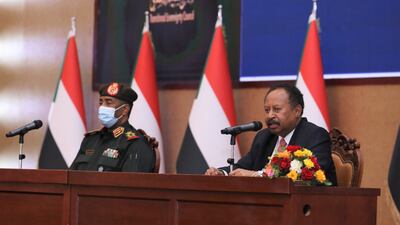
  • Sudan's Prime Minister Abdalla Hamdok, right, and Gen Abdel Fattah Al Burhan have signed an agreement in the capital Khartoum. EPA
    Sudan's Prime Minister Abdalla Hamdok, right, and Gen Abdel Fattah Al Burhan have signed an agreement in the capital Khartoum. EPA
  • Under the deal, Mr Hamdok agreed to lead a government of independent technocrats. EPA
    Under the deal, Mr Hamdok agreed to lead a government of independent technocrats. EPA
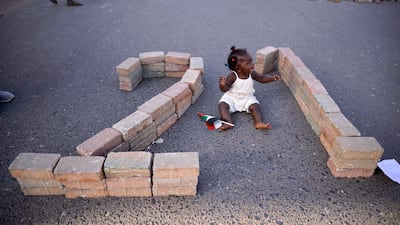
  • Anti-military protests have been held for 21 days in the capital, despite the agreement. AFP
    Anti-military protests have been held for 21 days in the capital, despite the agreement. AFP
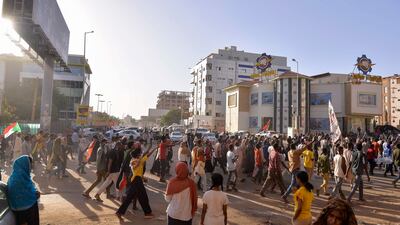
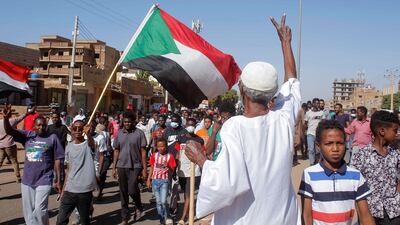
  • Protesters have turned out in large numbers in Khartoum, despite attempts to restore the transition to civilian rule in the country. AFP
    Protesters have turned out in large numbers in Khartoum, despite attempts to restore the transition to civilian rule in the country. AFP
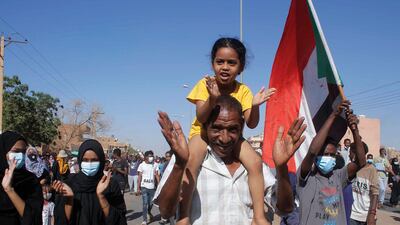
  • Protesters march along 60th Street in Khartoum. AFP
    Protesters march along 60th Street in Khartoum. AFP
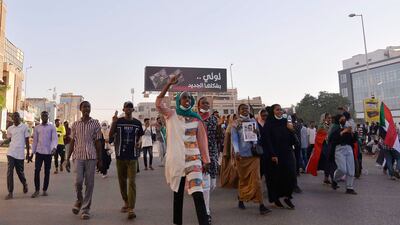
  • Protesters call for a return to civilian rule in Khartoum. AFP
    Protesters call for a return to civilian rule in Khartoum. AFP
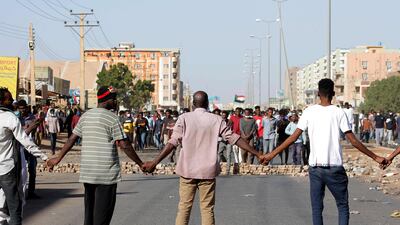
  • Protesters barricade most of the streets in the north of the capital in anticipation of clashes with security forces. AFP
    Protesters barricade most of the streets in the north of the capital in anticipation of clashes with security forces. AFP
  • Anti-military protesters in Khartoum demand the reinstatement of civilian rule in Sudan. AFP
    Anti-military protesters in Khartoum demand the reinstatement of civilian rule in Sudan. AFP
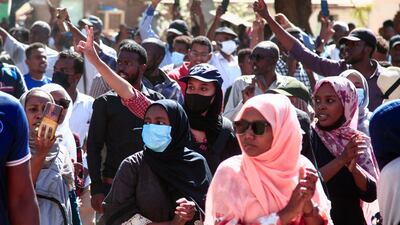
  • Women participate in large numbers in demonstrations in the city. AFP
    Women participate in large numbers in demonstrations in the city. AFP

"I have tried as much as I could to save the country from sliding into the abyss. Now, our country is going through a dangerous juncture that could threaten its very existence unless something is done quickly," he warned.

He urged all stakeholders to begin a dialogue about a national charter and a road map for the transitional period. Elections are expected to be held in July 2023.

Sunday's rallies were the 12th major protest since the military takeover. They were unexpectedly called by pro-democracy groups on Saturday night. The next round of demonstrations was originally due later this week.

Sunday's three fatalities were announced by the Central Doctors Committee, which is aligned with the pro-democracy movement, but has built a reputation for impartiality with its thorough tallying and verifying of victims of political violence since 2018.

"The shooting was unnecessary since no one really planned to march across the Nile to the Republican Palace as announced," said Sulaima Ishaq, a prominent activist from Umm Dorman who witnessed Sunday's rallies.

"It was tragic again today in Umm Dorman," she told The National.

She and another witness who requested anonymity said at least two of the three fatalities were killed by army soldiers who arrived in an armoured vehicle. The three, they said, were shot dead near a Nile bridge that leads to central Khartoum.

'Going back is impossible'

Footage from Umm Dorman shared online earlier on Sunday showed young men, some wrapping themselves in Sudanese flags, dancing to the beat of drums as women ululated.

"The people are stronger; going back is impossible," they chanted, alluding to a return of military rule.

"The revolution is the revolution of the people, to whom power belongs, and troops go back to their barracks," they joyfully shouted.

Gen Al Burhan has repeatedly said that he had ordered an investigation into the killing of protesters, but has never explained who would be investigating or when the findings would be announced.

He also routinely declares his support and admiration for the December Revolution - the name given to the four months of anti-Al Bashir protests in 2018 and 2019 - but appears unwilling to step down and make way for civilian rule as demanded by the pro-democracy movement behind the uprising.

“Let us make it a year of continuing and effective resistance; a graveyard for the arrogant tyrants and all those who oppress our glorious people,” the pro-democracy Sudanese Professionals’ Association said in a Saturday night statement, joining the Resistance Committees in calling for Sunday's rallies.

The two groups have mobilised protests against military rule since the October coup and were behind the protests against Al Bashir, which forced the military to remove him in April 2019.

Sudanese protesters carry a wounded youth on a stretcher during demonstrations against the October 25 coup, in the capital Khartoum, on January 2, 2022. AFP

Responding to the call for rallies on Sunday, security forces on Saturday night blocked bridges across the Nile that connect the sprawling Sudanese capital, according to witnesses and photos shared online. The tactic prevents protesters from gathering in numbers large enough to push through lines of security forces.

Authorities also cut off internet and mobile phone services on Sunday morning, a measure routinely used to stop protesters from co-ordinating and exchanging information during the rallies.

In an address on Saturday night to mark Sudan's 66th independence anniversary, Gen Al Burhan said the country was facing existential threats that could not be ignored and called for dialogue to end the political crisis. He gave no specifics.

Separately, a statement issued after a meeting on Saturday night of the military-led Security and Defence Council appeared to absolve security forces of responsibility for the killing of more than 50 people during protests since October 25. Hundreds of others were injured as security forces used tear gas, rubber bullets, stun grenades and live rounds to disperse protesters.

“The council commended the efforts made by the security agencies and the wisdom they have shown in dealing with security threats,” said the statement issued by the Sovereignty Council, a collective presidency led by Gen Al Burhan.

Sunday’s rallies come only days after tens of thousands of protesters took to the streets in Khartoum. At least five protesters were killed on Thursday and nearly 300 were injured.

Sudanese demonstrators rally in Khartoum against military rule on January 2, 2022. AFP

Witnesses said security forces used unusually excessive force on Thursday, beating up children, chasing protesters on to side streets, firing tear gas in hospitals treating the wounded and stopping ambulances from ferrying the injured.

They said the methods were similar to those used against protesters during the uprising against Al Bashir's rule.

The acting deputy minister, Haitham Awadallah, resigned on Friday in protest against the "disrespect" shown by security forces to the sanctity of hospitals, in a letter seen by The National.

"Things have reached the stage where hospitals are repeatedly stormed and their workers along with visitors and patients are beaten and subjected to tear gas," Mr Awadallah said in his letter to Gen Al Burhan.

The%C2%A0specs%20
%3Cp%3E%3Cstrong%3EEngine%3A%20%3C%2Fstrong%3Etwo%20permanent%20magnet%20synchronous%20motors%3Cbr%3E%3Cstrong%3ETransmission%3A%20%3C%2Fstrong%3Etwo-speed%3Cbr%3E%3Cstrong%3EPower%3A%20%3C%2Fstrong%3E625hp%3Cbr%3E%3Cstrong%3ETorque%3A%20%3C%2Fstrong%3E850Nm%3Cbr%3E%3Cstrong%3ERange%3A%20%3C%2Fstrong%3E456km%3Cbr%3E%3Cstrong%3EPrice%3A%20%3C%2Fstrong%3Efrom%20Dh737%2C480%3Cbr%3E%3Cstrong%3EOn%20sale%3A%20%3C%2Fstrong%3Enow%3C%2Fp%3E%0A
IPL 2018 FINAL

Sunrisers Hyderabad 178-6 (20 ovs)
Chennai Super Kings 181-2 (18.3 ovs)

Chennai win by eight wickets

Brown/Black belt finals

3pm: 49kg female: Mayssa Bastos (BRA) v Thamires Aquino (BRA)
3.07pm: 56kg male: Hiago George (BRA) v Carlos Alberto da Silva (BRA)
3.14pm: 55kg female: Amal Amjahid (BEL) v Bianca Basilio (BRA)
3.21pm: 62kg male: Gabriel de Sousa (BRA) v Joao Miyao (BRA)
3.28pm: 62kg female: Beatriz Mesquita (BRA) v Ffion Davies (GBR)
3.35pm: 69kg male: Isaac Doederlein (BRA) v Paulo Miyao (BRA)
3.42pm: 70kg female: Thamara Silva (BRA) v Alessandra Moss (AUS)
3.49pm: 77kg male: Oliver Lovell (GBR) v Tommy Langarkar (NOR)
3.56pm: 85kg male: Faisal Al Ketbi (UAE) v Rudson Mateus Teles (BRA)
4.03pm: 90kg female: Claire-France Thevenon (FRA) v Gabreili Passanha (BRA)
4.10pm: 94kg male: Adam Wardzinski (POL) v Kaynan Duarte (BRA)
4.17pm: 110kg male: Yahia Mansoor Al Hammadi (UAE) v Joao Rocha (BRA

Schedule:

Pakistan v Sri Lanka:
28 Sep-2 Oct, 1st Test, Abu Dhabi
6-10 Oct, 2nd Test (day-night), Dubai
13 Oct, 1st ODI, Dubai
16 Oct, 2nd ODI, Abu Dhabi
18 Oct, 3rd ODI, Abu Dhabi
20 Oct, 4th ODI, Sharjah
23 Oct, 5th ODI, Sharjah
26 Oct, 1st T20I, Abu Dhabi
27 Oct, 2nd T20I, Abu Dhabi
29 Oct, 3rd T20I, Lahore

Global Fungi Facts

• Scientists estimate there could be as many as 3 million fungal species globally
• Only about 160,000 have been officially described leaving around 90% undiscovered
• Fungi account for roughly 90% of Earth's unknown biodiversity
• Forest fungi help tackle climate change, absorbing up to 36% of global fossil fuel emissions annually and storing around 5 billion tonnes of carbon in the planet's topsoil

COMPANY PROFILE
Name: Kumulus Water
 
Started: 2021
 
Founders: Iheb Triki and Mohamed Ali Abid
 
Based: Tunisia 
 
Sector: Water technology 
 
Number of staff: 22 
 
Investment raised: $4 million 
The Facility’s Versatility

Between the start of the 2020 IPL on September 20, and the end of the Pakistan Super League this coming Thursday, the Zayed Cricket Stadium has had an unprecedented amount of traffic.
Never before has a ground in this country – or perhaps anywhere in the world – had such a volume of major-match cricket.
And yet scoring has remained high, and Abu Dhabi has seen some classic encounters in every format of the game.
 
October 18, IPL, Kolkata Knight Riders tied with Sunrisers Hyderabad
The two playoff-chasing sides put on 163 apiece, before Kolkata went on to win the Super Over
 
January 8, ODI, UAE beat Ireland by six wickets
A century by CP Rizwan underpinned one of UAE’s greatest ever wins, as they chased 270 to win with an over to spare
 
February 6, T10, Northern Warriors beat Delhi Bulls by eight wickets
The final of the T10 was chiefly memorable for a ferocious over of fast bowling from Fidel Edwards to Nicholas Pooran
 
March 14, Test, Afghanistan beat Zimbabwe by six wickets
Eleven wickets for Rashid Khan, 1,305 runs scored in five days, and a last session finish
 
June 17, PSL, Islamabad United beat Peshawar Zalmi by 15 runs
Usman Khawaja scored a hundred as Islamabad posted the highest score ever by a Pakistan team in T20 cricket

Mercer, the investment consulting arm of US services company Marsh & McLennan, expects its wealth division to at least double its assets under management (AUM) in the Middle East as wealth in the region continues to grow despite economic headwinds, a company official said.

Mercer Wealth, which globally has $160 billion in AUM, plans to boost its AUM in the region to $2-$3bn in the next 2-3 years from the present $1bn, said Yasir AbuShaban, a Dubai-based principal with Mercer Wealth.

Within the next two to three years, we are looking at reaching $2 to $3 billion as a conservative estimate and we do see an opportunity to do so,” said Mr AbuShaban.

Mercer does not directly make investments, but allocates clients’ money they have discretion to, to professional asset managers. They also provide advice to clients.

“We have buying power. We can negotiate on their (client’s) behalf with asset managers to provide them lower fees than they otherwise would have to get on their own,” he added.

Mercer Wealth’s clients include sovereign wealth funds, family offices, and insurance companies among others.

From its office in Dubai, Mercer also looks after Africa, India and Turkey, where they also see opportunity for growth.

Wealth creation in Middle East and Africa (MEA) grew 8.5 per cent to $8.1 trillion last year from $7.5tn in 2015, higher than last year’s global average of 6 per cent and the second-highest growth in a region after Asia-Pacific which grew 9.9 per cent, according to consultancy Boston Consulting Group (BCG). In the region, where wealth grew just 1.9 per cent in 2015 compared with 2014, a pickup in oil prices has helped in wealth generation.

BCG is forecasting MEA wealth will rise to $12tn by 2021, growing at an annual average of 8 per cent.

Drivers of wealth generation in the region will be split evenly between new wealth creation and growth of performance of existing assets, according to BCG.

Another general trend in the region is clients’ looking for a comprehensive approach to investing, according to Mr AbuShaban.

“Institutional investors or some of the families are seeing a slowdown in the available capital they have to invest and in that sense they are looking at optimizing the way they manage their portfolios and making sure they are not investing haphazardly and different parts of their investment are working together,” said Mr AbuShaban.

Some clients also have a higher appetite for risk, given the low interest-rate environment that does not provide enough yield for some institutional investors. These clients are keen to invest in illiquid assets, such as private equity and infrastructure.

“What we have seen is a desire for higher returns in what has been a low-return environment specifically in various fixed income or bonds,” he said.

“In this environment, we have seen a de facto increase in the risk that clients are taking in things like illiquid investments, private equity investments, infrastructure and private debt, those kind of investments were higher illiquidity results in incrementally higher returns.”

The Abu Dhabi Investment Authority, one of the largest sovereign wealth funds, said in its 2016 report that has gradually increased its exposure in direct private equity and private credit transactions, mainly in Asian markets and especially in China and India. The authority’s private equity department focused on structured equities owing to “their defensive characteristics.”

Updated: January 03, 2022, 4:28 AM