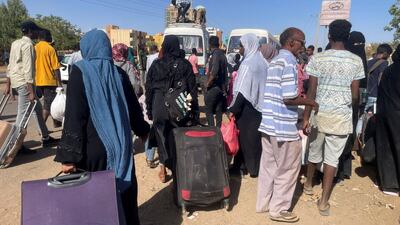
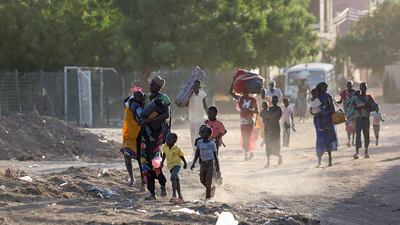
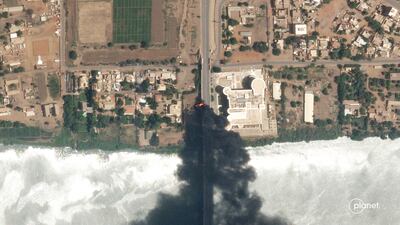
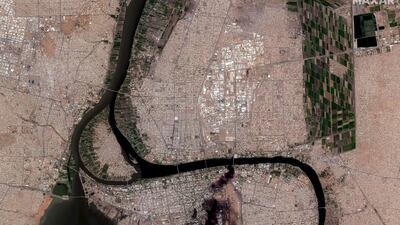
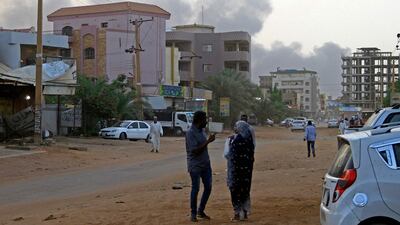
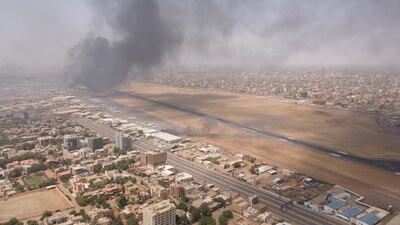
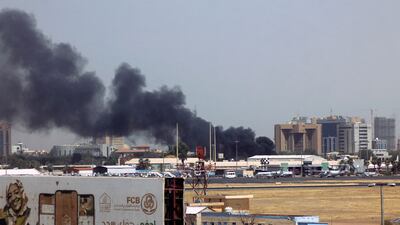
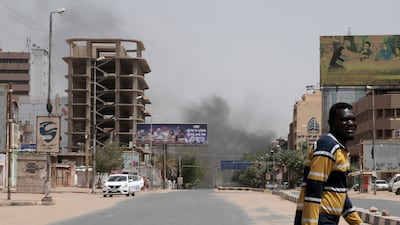
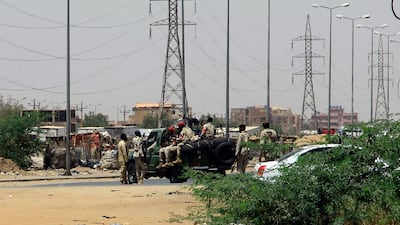
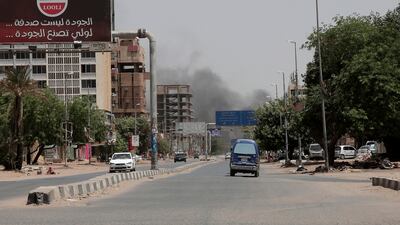
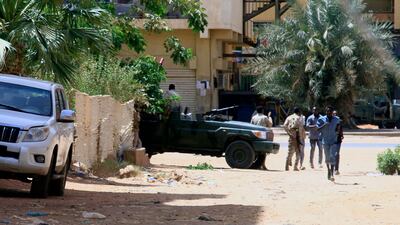
People flee their neighbourhoods amid fighting between the army and paramilitaries in Khartoum on April 19, 2023, following the collapse of a 24-hour truce. (Photo by AFP)

Sudan's warring sides trade blame for civilian deaths as fighting rages on


  • English
  • Arabic

Follow the latest Sudan updates here

The heads of Sudan's warring army and Rapid Support Forces traded blame for civilian casualties and chaos, vowing to fight to the end as clashes entered their sixth day.

About 300 people have been killed and more than 3,000 wounded as clashes rocked Khartoum and other parts of the country, overwhelming most hospitals and trapping children in schools.

“I pray hard for God to spare us,” said Mohammed Al Zaki, a father of five who lives in Omdurman, Khartoum's twin city across the Nile.

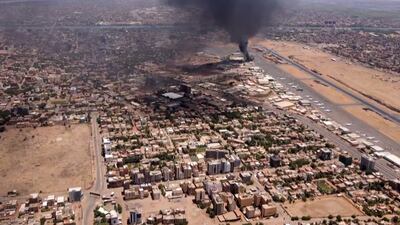
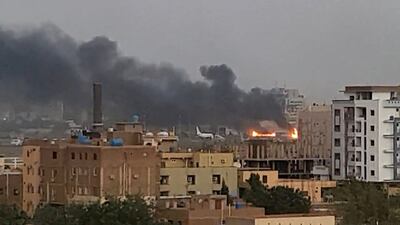
  • Smoke billows above Khartoum's international airport amid fighting between the forces of two rival generals in Sudan. AFP
    Smoke billows above Khartoum's international airport amid fighting between the forces of two rival generals in Sudan. AFP
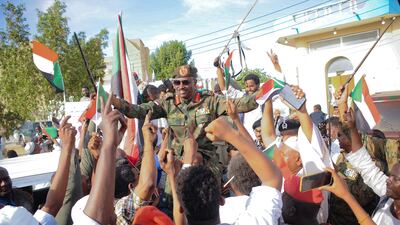
  • People carry Othman Mohamed, a senior military officer loyal to army chief Gen Abdel Fattah Al Burhan, in the Red Sea city of Port Sudan. AFP
    People carry Othman Mohamed, a senior military officer loyal to army chief Gen Abdel Fattah Al Burhan, in the Red Sea city of Port Sudan. AFP
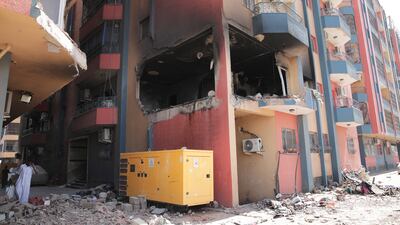
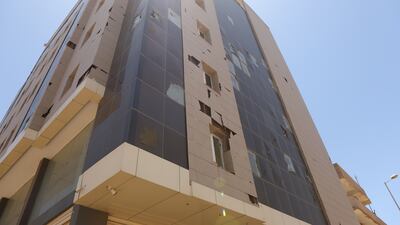
  • Residential buildings damaged in the fighting in Khartoum, Sudan. AP Photo
    Residential buildings damaged in the fighting in Khartoum, Sudan. AP Photo
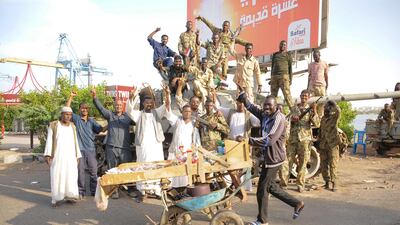
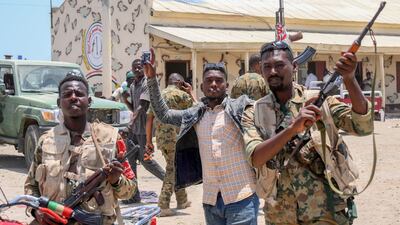
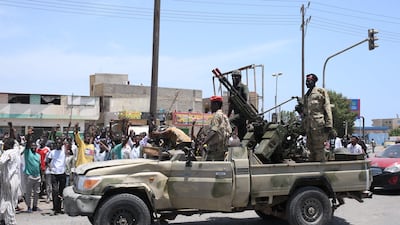
  • People cheer with Sudanese army soldiers manning a position in the Red Sea city of Port Sudan. AFP
    People cheer with Sudanese army soldiers manning a position in the Red Sea city of Port Sudan. AFP
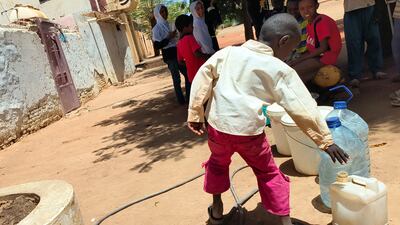
  • People queue for water in Khartoum. The fighting has resulted in food and water shortages. Reuters
    People queue for water in Khartoum. The fighting has resulted in food and water shortages. Reuters
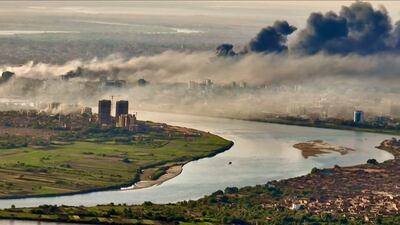
  • Black smoke covering the sky above the capital, Khartoum. AFP
    Black smoke covering the sky above the capital, Khartoum. AFP
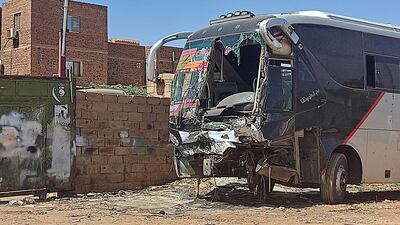
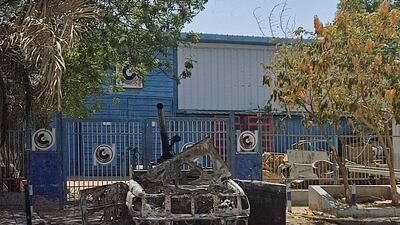
  • Vehicles destroyed during fighting in southern Khartoum. AFP
    Vehicles destroyed during fighting in southern Khartoum. AFP
  • People head for the station to flee Khartoum during clashes between the paramilitary Rapid Support Forces and the army. Reuters
    People head for the station to flee Khartoum during clashes between the paramilitary Rapid Support Forces and the army. Reuters
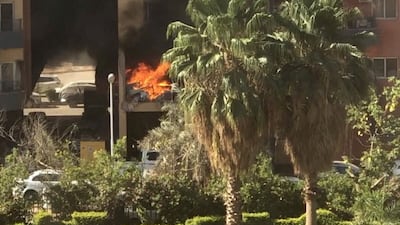
  • Smoke and fire rise from an apartment building, after a shell hit the complex in Khartoum. Reuters
    Smoke and fire rise from an apartment building, after a shell hit the complex in Khartoum. Reuters
  • Heavy fighting has broken out across the country. AFP
    Heavy fighting has broken out across the country. AFP
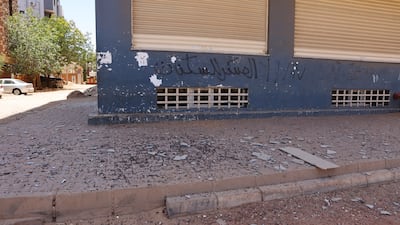
  • A building damaged by the fighting. EPA
    A building damaged by the fighting. EPA
  • A destroyed vehicle of the paramilitary Rapid Support Forces in southern Khartoum. AFP
    A destroyed vehicle of the paramilitary Rapid Support Forces in southern Khartoum. AFP
  • A building damaged by the fighting. EPA
    A building damaged by the fighting. EPA
  • People gather at a bus station to escape Khartoum. Reuters
    People gather at a bus station to escape Khartoum. Reuters
  • People leave their homes amid the fighting. AFP
    People leave their homes amid the fighting. AFP
  • People look for drinking water in Khartoum, Sudan. Faiz Abubakr for The National
    People look for drinking water in Khartoum, Sudan. Faiz Abubakr for The National
  • A building burns at Merowe Airport in Sudan. AFP
    A building burns at Merowe Airport in Sudan. AFP
  • A man holds two bullets that hit his home. Faiz Abubakr for The National
    A man holds two bullets that hit his home. Faiz Abubakr for The National
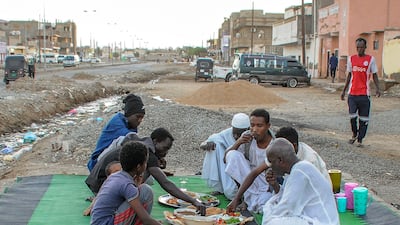
  • People gather for a meal to break their fast during Ramadan in Port Sudan. AFP
    People gather for a meal to break their fast during Ramadan in Port Sudan. AFP
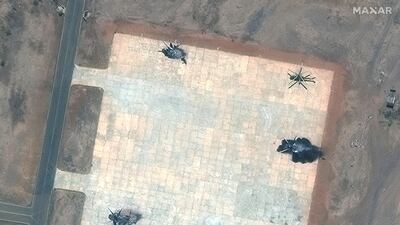
  • Satellite image shows a close-up view of destroyed helicopters in South Khartoum. Reuters
    Satellite image shows a close-up view of destroyed helicopters in South Khartoum. Reuters
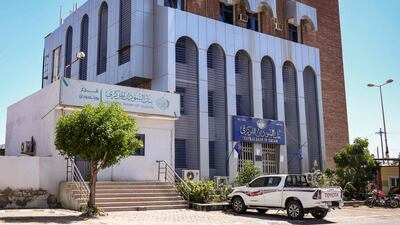
  • The Port Sudan branch of the Central Bank of Sudan. AFP
    The Port Sudan branch of the Central Bank of Sudan. AFP
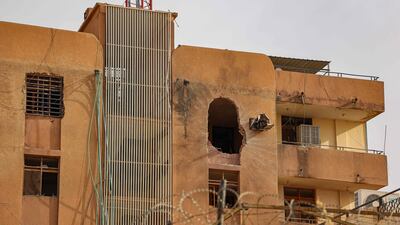
  • A hole from an explosion on the side of a building in Khartoum, after fighting between the Sudanese army and paramilitary forces led by rival generals. AFP
    A hole from an explosion on the side of a building in Khartoum, after fighting between the Sudanese army and paramilitary forces led by rival generals. AFP
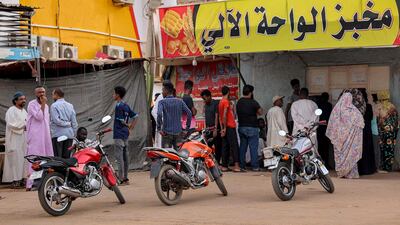
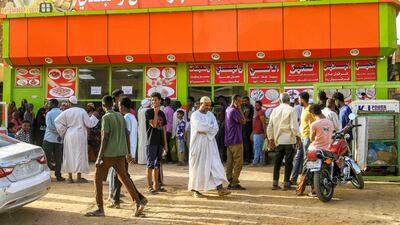
  • People queue for bread outside a bakery amid a food crisis in Khartoum. AFP
    People queue for bread outside a bakery amid a food crisis in Khartoum. AFP
  • Smoke rises above Khartoum. Faiz Abubakr / The National
    Smoke rises above Khartoum. Faiz Abubakr / The National
  • Fearful families try to shelter from the fighting in houses in Khartoum. Faiz Abubakr / The National
    Fearful families try to shelter from the fighting in houses in Khartoum. Faiz Abubakr / The National
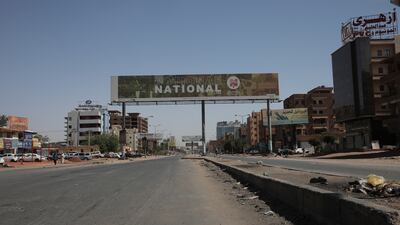
  • A deserted avenue in Khartoum as residents fear to go out due to intense fighting. AP
    A deserted avenue in Khartoum as residents fear to go out due to intense fighting. AP
  • A Sudanese army tank in a street in the Red Sea city of Port Sudan. AFP
    A Sudanese army tank in a street in the Red Sea city of Port Sudan. AFP
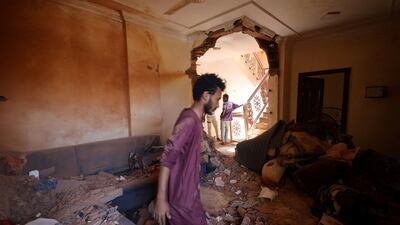
  • Houses have been severely damanged during clashes between the paramilitary Rapid Support Forces and the army. Reuters
    Houses have been severely damanged during clashes between the paramilitary Rapid Support Forces and the army. Reuters
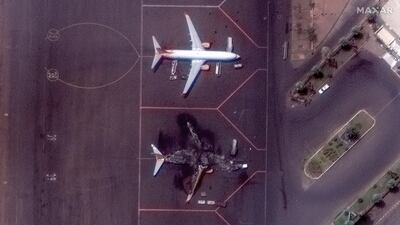
  • Satellite images show a destroyed Ukrainian plane at Khartoum International Airport. Reuters
    Satellite images show a destroyed Ukrainian plane at Khartoum International Airport. Reuters
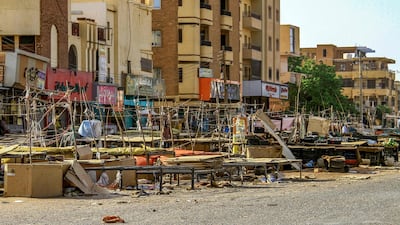
  • Market stalls abandoned in south Khartoum as fighting in the Sudanese capital rages for a third day. AFP
    Market stalls abandoned in south Khartoum as fighting in the Sudanese capital rages for a third day. AFP
  • Smoke rises over buildings during clashes. Reuters
    Smoke rises over buildings during clashes. Reuters
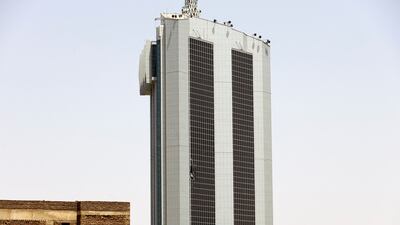
  • Damage at the Communications Authority Building. Reuters
    Damage at the Communications Authority Building. Reuters
  • People queue for bread outside a bakery amid a food crisis. AFP
    People queue for bread outside a bakery amid a food crisis. AFP
  • Destroyed fuel trucks at a depot in Khartoum. Reuters
    Destroyed fuel trucks at a depot in Khartoum. Reuters
  • Sudanese army soldiers, loyal to Gen Abdel Fattah Al Burhan, at the Rapid Support Forces (RSF) base in the Red Sea city of Port Sudan. AFP
    Sudanese army soldiers, loyal to Gen Abdel Fattah Al Burhan, at the Rapid Support Forces (RSF) base in the Red Sea city of Port Sudan. AFP
  • Smoke rises from a fire on the tarmac of Khartoum International Airport in Sudan as fighting between the government and the paramilitary Rapid Support Forces continues. Reuters
    Smoke rises from a fire on the tarmac of Khartoum International Airport in Sudan as fighting between the government and the paramilitary Rapid Support Forces continues. Reuters
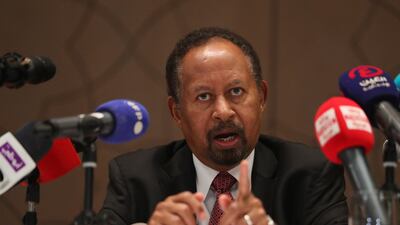
  • Abdalla Hamdok, former prime minister of Sudan, addresses the current crisis and violence on the streets of his homeland at a news conference in Abu Dhabi. Reuters
    Abdalla Hamdok, former prime minister of Sudan, addresses the current crisis and violence on the streets of his homeland at a news conference in Abu Dhabi. Reuters
  • Burning planes at Khartoum International Airport. EPA
    Burning planes at Khartoum International Airport. EPA
  • Damage and a fire on the Kobar Bridge in Khartoum. AFP
    Damage and a fire on the Kobar Bridge in Khartoum. AFP
  • Heavy smoke billows above Khartoum International Airport. AFP
    Heavy smoke billows above Khartoum International Airport. AFP
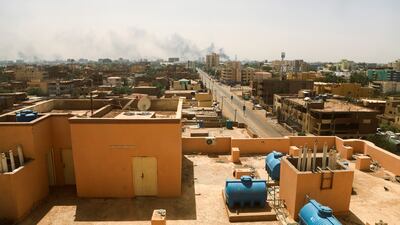
  • Smoke billows above residential buildings in Khartoum, as fighting in Sudan raged for a second day. AFP
    Smoke billows above residential buildings in Khartoum, as fighting in Sudan raged for a second day. AFP
  • A military vehicle patrols the streets as the fighting continues. AFP
    A military vehicle patrols the streets as the fighting continues. AFP
  • Smoke rises over the city. Reuters
    Smoke rises over the city. Reuters
  • Thick smoke rises above buildings near the airport amid clashes between the army and the paramilitary Rapid Support Forces. AFP
    Thick smoke rises above buildings near the airport amid clashes between the army and the paramilitary Rapid Support Forces. AFP
  • Explosions rock the Sudanese capital as paramilitary fighters and the regular army attack each other's bases. AFP
    Explosions rock the Sudanese capital as paramilitary fighters and the regular army attack each other's bases. AFP
  • The fighting has raised fears of a wider conflict in the country. AP
    The fighting has raised fears of a wider conflict in the country. AP
  • Government soldiers stationed on a key road in Khartoum. AFP
    Government soldiers stationed on a key road in Khartoum. AFP
  • The fighting comes days after the army warned the country was at a 'dangerous' turning point. AP
    The fighting comes days after the army warned the country was at a 'dangerous' turning point. AP
  • People walk past a military vehicle in Khartoum. AFP
    People walk past a military vehicle in Khartoum. AFP

“We had never seen anything like this and we are unable to cope. People are shedding tears of blood.”

Others called on the global community to end the fighting.

“Where is the international community? Why are they not working to end this?” asked Mohammed Mostafa, a 38-year-old bank employee, also from Omdurman.

“Everyone is suffering. We have had no water or power.”

Army chief and military ruler Gen Abdel Fattah Al Burhan told The Financial Times that the RSF has engaged in “indiscriminate violence” and claimed that a large part of the paramilitary force was “out of control”.

Gen Al Burhan also blamed the RSF for the death of three World Food Programme workers.

Other NGO workers as well as diplomats have not been spared the violence.

On Monday, the EU ambassador to Sudan was assaulted at his home, after an attack on a diplomatic US convoy was condemned as “reckless and irresponsible” by US Secretary of State Antony Blinken.

RSF leader Gen Mohamed Dagalo, meanwhile, said Gen Al Burhan was leading a “radical gang” attacking non-combatants. He has called the army chief a “liar” and a “war criminal”.

“We’re ready for him to hit us, but not the civilians. We ask God that we gain control and arrest him and bring him to justice,” said Gen Dagalo, more commonly known by the nickname Hemedti.

In an interview with Qatar-based Al Jazeera network, he said the only solution to the country's problems was to bring Gen Al Burhan to justice.

“No negotiations with Al Burhan because he started this fight and is to blame for killing the Sudanese people,” he said.

He said the RSF's priority was to hang on to Khartoum airport.

Sudan’s military has also ruled out negotiations with the RSF and says it will accept only its surrender.

“There would be no armed forces outside the military system,” it said in a statement.

In a move that's symbolically significant, Gen Al Burhan on Thursday issued a decree that ended the merger of the border guards with the RSF under a 2017 law. Under the new decree, the border guard will return to being part of the armed forces. Gen Al Burhan has already issued a decree dissolving the RSF.

Earlier, Gen Dagalo said his paramilitary force had “no objection” to stopping the fighting.

Two 24-hour ceasefires have been declared this week, but neither one has been heeded, with the army and RSF continuing to fight in Khartoum and elsewhere in Sudan.

In a joint statement on Thursday, the UN, African Union and regional International Fund for Agricultural Development asked the two warring sides again to observe a 24-hour cessation of hostilities beginning at 6pm.

Fighting was reported near Khartoum's international airport throughout Thursday morning and was also hit by artillery on Wednesday. The airport is controlled by the RSF.

RSF forces have increased deployments around the Nile-side presidential palace, Sudan's seat of power, according to journalists in Khartoum, while large plumes of smoke could be seen near the army's general command, which has been the scene of fierce clashes and remains contested.

The palace was captured by the RSF last Saturday, the day the fighting began.

The army said it has destroyed RSF reinforcements making their way to the capital.

Three people were killed by stray bullets during violent clashes at a market in northern Sudan, local journalists reported, while three civilians were killed west of Omdurman.

Civilians across Khartoum sheltered indoors, terrified stray bullets would hit them even in their own homes. Thousands have fled the city in recent days, seeking safety in their hometowns and villages.

Residents in the south of Khartoum were awoken early on Thursday by fighter jets and shelling.

“We wish the fighting would stop during Eid festivities,” a local resident told AFP, referring to the holiday that marks the end of Ramadan.

“We know it will not happen, though.”

Around the capital and elsewhere, RSF fighters on top of armoured vehicles and pickup trucks laden with weapons have taken over the streets, the agency reported.

Many have put up checkpoints to search cars carrying civilians trying to escape Khartoum's worst battle zones to safer areas in the capital and beyond.

Khartoum, a city of nearly seven million people on the White and Blue Niles, has seen violence in the years since independence in 1956, mostly due to the nation's track record of military coups, but it has never experienced violence on the scale of the past six days.

With both sides appearing determined to fight until the end, the conflict could turn into a proxy war between regional and world powers, since both Gen Al Burhan and Gen Dagalo have foreign backers.

The specs: 2018 Opel Mokka X

Price, as tested: Dh84,000

Engine: 1.4L, four-cylinder turbo

Transmission: Six-speed auto

Power: 142hp at 4,900rpm

Torque: 200Nm at 1,850rpm

Fuel economy, combined: 6.5L / 100km

Hotel Silence
Auður Ava Ólafsdóttir
Pushkin Press

If you go…

Emirates launched a new daily service to Mexico City this week, flying via Barcelona from Dh3,995.

Emirati citizens are among 67 nationalities who do not require a visa to Mexico. Entry is granted on arrival for stays of up to 180 days. 

Dirham Stretcher tips for having a baby in the UAE

Selma Abdelhamid, the group's moderator, offers her guide to guide the cost of having a young family:

• Buy second hand stuff

 They grow so fast. Don't get a second hand car seat though, unless you 100 per cent know it's not expired and hasn't been in an accident.

• Get a health card and vaccinate your child for free at government health centres

 Ms Ma says she discovered this after spending thousands on vaccinations at private clinics.

• Join mum and baby coffee mornings provided by clinics, babysitting companies or nurseries.

Before joining baby classes ask for a free trial session. This way you will know if it's for you or not. You'll be surprised how great some classes are and how bad others are.

• Once baby is ready for solids, cook at home

Take the food with you in reusable pouches or jars. You'll save a fortune and you'll know exactly what you're feeding your child.

Top financial tips for graduates

Araminta Robertson, of the Financially Mint blog, shares her financial advice for university leavers:

1. Build digital or technical skills: After graduation, people can find it extremely hard to find jobs. From programming to digital marketing, your early twenties are for building skills. Future employers will want people with tech skills.

2. Side hustle: At 16, I lived in a village and started teaching online, as well as doing work as a virtual assistant and marketer. There are six skills you can use online: translation; teaching; programming; digital marketing; design and writing. If you master two, you’ll always be able to make money.

3. Networking: Knowing how to make connections is extremely useful. Use LinkedIn to find people who have the job you want, connect and ask to meet for coffee. Ask how they did it and if they know anyone who can help you. I secured quite a few clients this way.

4. Pay yourself first: The minute you receive any income, put about 15 per cent aside into a savings account you won’t touch, to go towards your emergency fund or to start investing. I do 20 per cent. It helped me start saving immediately.

What is blockchain?

Blockchain is a form of distributed ledger technology, a digital system in which data is recorded across multiple places at the same time. Unlike traditional databases, DLTs have no central administrator or centralised data storage. They are transparent because the data is visible and, because they are automatically replicated and impossible to be tampered with, they are secure.

The main difference between blockchain and other forms of DLT is the way data is stored as ‘blocks’ – new transactions are added to the existing ‘chain’ of past transactions, hence the name ‘blockchain’. It is impossible to delete or modify information on the chain due to the replication of blocks across various locations.

Blockchain is mostly associated with cryptocurrency Bitcoin. Due to the inability to tamper with transactions, advocates say this makes the currency more secure and safer than traditional systems. It is maintained by a network of people referred to as ‘miners’, who receive rewards for solving complex mathematical equations that enable transactions to go through.

However, one of the major problems that has come to light has been the presence of illicit material buried in the Bitcoin blockchain, linking it to the dark web.

Other blockchain platforms can offer things like smart contracts, which are automatically implemented when specific conditions from all interested parties are reached, cutting the time involved and the risk of mistakes. Another use could be storing medical records, as patients can be confident their information cannot be changed. The technology can also be used in supply chains, voting and has the potential to used for storing property records.

The Penguin

Starring: Colin Farrell, Cristin Milioti, Rhenzy Feliz

Creator: Lauren LeFranc

Rating: 4/5

Why your domicile status is important

Your UK residence status is assessed using the statutory residence test. While your residence status – ie where you live - is assessed every year, your domicile status is assessed over your lifetime.

Your domicile of origin generally comes from your parents and if your parents were not married, then it is decided by your father. Your domicile is generally the country your father considered his permanent home when you were born. 

UK residents who have their permanent home ("domicile") outside the UK may not have to pay UK tax on foreign income. For example, they do not pay tax on foreign income or gains if they are less than £2,000 in the tax year and do not transfer that gain to a UK bank account.

A UK-domiciled person, however, is liable for UK tax on their worldwide income and gains when they are resident in the UK.

UAE currency: the story behind the money in your pockets
LA LIGA FIXTURES

Friday Valladolid v Osasuna (Kick-off midnight UAE)

Saturday Valencia v Athletic Bilbao (5pm), Getafe v Sevilla (7.15pm), Huesca v Alaves (9.30pm), Real Madrid v Atletico Madrid (midnight)

Sunday Real Sociedad v Eibar (5pm), Real Betis v Villarreal (7.15pm), Elche v Granada (9.30pm), Barcelona v Levante (midnight)

Monday Celta Vigo v Cadiz (midnight)

Crime%20Wave
%3Cp%3EHeavyweight%20boxer%20Fury%20revealed%20on%20Sunday%20his%20cousin%20had%20been%20%E2%80%9Cstabbed%20in%20the%20neck%E2%80%9D%20and%20called%20on%20the%20courts%20to%20address%20the%20wave%20of%20more%20sentencing%20of%20offenders.%26nbsp%3B%3C%2Fp%3E%0A%3Cp%3ERico%20Burton%2C%2031%2C%20was%20found%20with%20stab%20wounds%20at%20around%203am%20on%20Sunday%20in%20Goose%20Green%2C%20Altrincham%20and%20subsequently%20died%20of%20his%20injuries.%3C%2Fp%3E%0A%3Cp%3E%26nbsp%3B%E2%80%9CMy%20cousin%20was%20murdered%20last%20night%2C%20stabbed%20in%20the%20neck%20this%20is%20becoming%20ridiculous%20%E2%80%A6%20idiots%20carry%20knives.%20This%20needs%20to%20stop%2C%E2%80%9D%0D%20Fury%20said.%20%E2%80%9CAsap%2C%20UK%20government%20needs%20to%20bring%20higher%20sentencing%20for%20knife%20crime%2C%20it%E2%80%99s%20a%20pandemic%20%26amp%3B%20you%20don%E2%80%99t%20know%20how%20bad%20it%20is%20until%20%5Bit%E2%80%99s%5D%201%20of%20your%20own!%3C%2Fp%3E%0A
Tailors and retailers miss out on back-to-school rush

Tailors and retailers across the city said it was an ominous start to what is usually a busy season for sales.
With many parents opting to continue home learning for their children, the usual rush to buy school uniforms was muted this year.
“So far we have taken about 70 to 80 orders for items like shirts and trousers,” said Vikram Attrai, manager at Stallion Bespoke Tailors in Dubai.
“Last year in the same period we had about 200 orders and lots of demand.
“We custom fit uniform pieces and use materials such as cotton, wool and cashmere.
“Depending on size, a white shirt with logo is priced at about Dh100 to Dh150 and shorts, trousers, skirts and dresses cost between Dh150 to Dh250 a piece.”

A spokesman for Threads, a uniform shop based in Times Square Centre Dubai, said customer footfall had slowed down dramatically over the past few months.

“Now parents have the option to keep children doing online learning they don’t need uniforms so it has quietened down.”

Our Time Has Come
Alyssa Ayres, Oxford University Press

Updated: April 20, 2023, 4:08 PM