

Sudan repealed its Israel boycott law in a move welcomed by the US as a 'historic' step towards Khartoum establishing ties with Israel.
The joint meeting of Sudan’s Cabinet and Sovereignty Council passed the decree late on Monday night to abolish the 1958 rule barring diplomatic, business and cultural relations with Israel as well as a blanket ban on interacting with Israeli citizens.
"The United States welcomes Sudan's repeal of its boycott of Israel," State Department Spokesman Ned Price said on Twitter.
“This historic step will create new, promising opportunities for the people of Sudan, Israel, and across the region.”
Last October, Sudan and Israel agreed to normalise relations under an accord sponsored by the US. That deal followed similar agreements signed by the UAE, Bahrain and Israel in August last year and was followed by Morocco in December.
Sudan’s Cabinet voted to repeal the law on April 6, but that decision needed approval by a joint meeting of the Cabinet and the Sovereignty Council to become law.
-
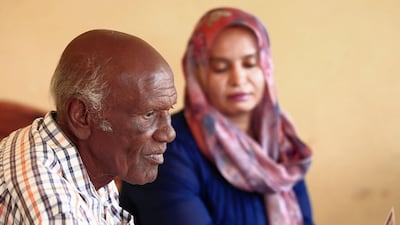
Amin Israil, the grandson of an Iraqi Jew who settled in Sudan and whose family later converted to Islam, and his daughter Salma view old family pictures at their home in Wad Madani, the capital of Sudan's Al Jazirah state. Like elsewhere in the Arab world, Sudanese Jews bore the brunt of growing anti-Israel sentiment amid conflict with the Jewish state. Decades later, their descendants see a recent rapprochement between their country and Israel as an opportunity to connect with their origins. AFP -

A view of grave markers at the 800-square-metre Jewish Cemetery in Sudan's capital Khartoum. The Jewish community in Sudan, like those of other Arab states, dwindled in the latter half of the 20th century, as tensions surrounding the 1948 creation of Israel permeated the region. AFP -
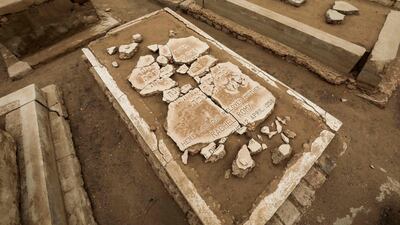
A broken grave marker in the Jewish Cemetery in Khartoum. AFP -

Salma Amin Israil, great-granddaughter of an Iraqi Jew who settled in Sudan and whose family later converted to Islam, and Yosar Basha, another Sudanese woman descended of Jewish origins, chat at Ms Israil's home. AFP -
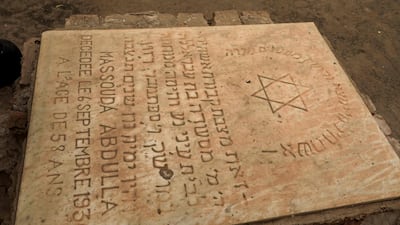
Inscriptions in the Hebrew alphabet and English on a grave at the Jewish cemetery in Khartoum. AFP -

The Jewish community in Sudan was one of the smallest in the Middle East. AFP -
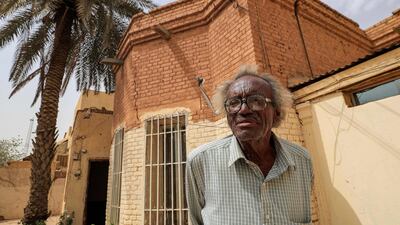
Dr Mansour Israil, the grandson of an Iraqi Jew who settled in Sudan and whose family later converted to Islam, outside his home in the neighbourhood once known as "the Jewish quarter" in Omdurman, the Sudanese capital's twin city across the Nile river. AFP -
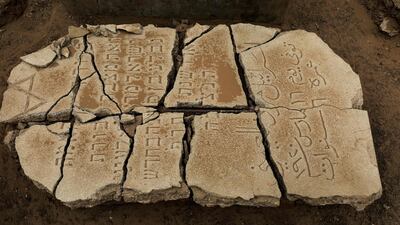
A grave at the Jewish Cemetery in Khartoum. Sudan’s Cabinet voted on April 6, 2021 to repeal a 1958 law mandating a boycott of Israel. AFP -
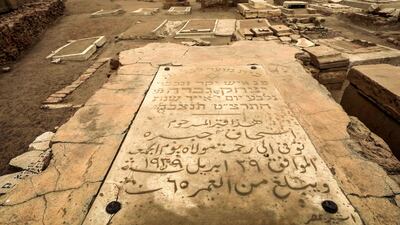
Graves at the cemetery in Khartoum. In October 2020, Sudan and Israel agreed to normalise relations in an accord sponsored by the US. AFP


The Cabinet and the council are the two segments comprising Sudan's transitional administration, which came to office after an August 2019 power-sharing agreement between the pro-democracy group that orchestrated a wave of protests against the rule of dictator Omar Al Bashir and the generals who removed him in April 2019.
The latest move by the Sudanese government regarding Israel removes one more obstacle on the path towards establishing full relations with Israel.
But the countries have already exchanged high-level visits. Sudan also has opened its airspace to civilian Israeli aircraft and the two countries have been exploring ways to upgrade Sudan’s military industries, as well as agricultural and industrial co-operation.
The repeal of the 1958 rule will also remove the threat of fines or 10 years in prison for the roughly 6,000 Sudanese living in Israel if they return home and it opens the door for their relatives to visit them.
Most Arab states adopted a boycott of Israel after the formation of the state in 1948.
It reflected the depth of animosity felt by Arabs towards Israel for decades following several regional conflicts and the displacement of tens of thousands of Palestinians.
Sudanese troops fought alongside Egypt against Israel during the 1973 Arab-Israeli War.
Sudan also housed Egypt’s fighter jets and its air force academy to protect them from Israeli air strikes after the 1967 Arab-Israeli war.
After the 1967 war, which ended with Israeli victory, Arab leaders met in Khartoum and agreed on policies that shaped the Arab-Israeli conflict for years: no peace with Israel, no recognition of Israel and no negotiations with Israel.
During the rule of Al Bashir, Israel launched air strikes on Sudan targeting suspected smuggling routes that it claimed were used to send arms to the Palestinian Hamas group in the Gaza Strip.
Since Khartoum signed the accord to normalise ties with Israel, the US has removed Sudan from the list of states that sponsor terrorism.
That removed international sanctions on Sudan and allowed it to again receive foreign financial assistance and investment from bilateral and international donors.

