

White smoke has been seen billowing from the chimney of the Sistine Chapel, signalling a successor to Pope Francis has been elected.
A joyous crowd cheered and applauded in St Peter's Square as the first puffs of smoke emerged from the Vatican shortly after 6pm local time. The bells of St Peter's Basilica rang out to confirm a decision had been reached.
The conclave of cardinals has been gathered since Wednesday to choose the new leader of the world's 1.4 billion Catholics in a centuries-old ritual.
The white smoke signalled a result on the first full day of balloting, after two bursts of black smoke on Wednesday and earlier on Thursday showed voting was still going on.
The identity of the next pontiff, and his papal name, is due to be announced shortly.
White smoke at Sistine Chapel signals new pope elected - in pictures

Conclave
Following tradition, the cardinals burnt their ballot papers to ensure the secrecy of their votes. Chemicals – potassium chlorate, lactose and chloroform resin – were added to provide the white smoke which acts as a signal to the crowds gathered outside in St Peter's Square that they have agreed who among them will be the 267th pontiff.
The 133 cardinals entered the Sistine Chapel on Wednesday afternoon, sealing themselves away from the outside world until they came to a two-thirds majority decision.
Bright red cassocks, Swiss Guards standing at attention, ancient Latin chants and oaths preceding the slamming shut of the doors were part of he heavily ritualised procedure to the conclave, a word which comes from the Latin term meaning a room that can be locked with a key.
At a mass shortly before being sequestered, the dean of the College of Cardinals, Cardinal Giovanni Battista Re, prayed that the cardinals making up the most geographically diverse conclave in the faith’s 2,000-year history could agree “on the pope that our time needs”, saying it requires a “leader who can awaken consciences”.

Pope Francis, who died last month aged 88, named 108 of the 133 “princes of the church” including younger ones from the “global south”, which injected an unusual degree of uncertainty in the process. This conclave was the largest – and the most international – in history, with representatives from 70 countries across five continents.
For much of the past century, it has taken between three and 14 ballots to find a pope. John Paul I – the pope who reigned for 33 days in 1978 – was elected on the fourth ballot. His successor, John Paul II, needed eight. Pope Francis was elected on the fifth in 2013.
-
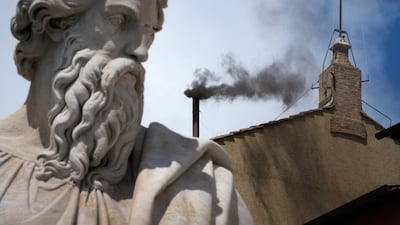
Black smoke billows from the chimney of the Sistine Chapel as Catholic cardinals gather for a second day to elect a new pope. Getty Images -
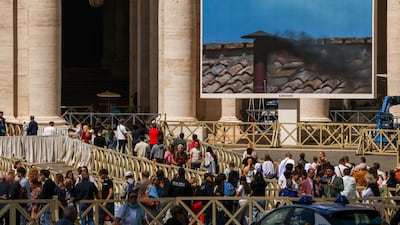
People watch as a screen shows the black smoke emanating from the chimney. The smoke will be white when the new pope is chosen. Reuters -
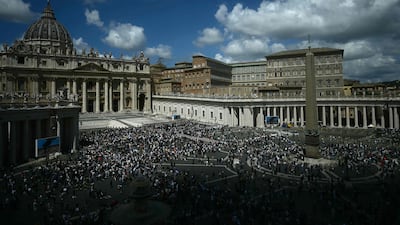
An expectant crowd gathers in St Peter's Square, the Vatican, keen to be there when the replacement for the late Pope Francis is announced. AFP -
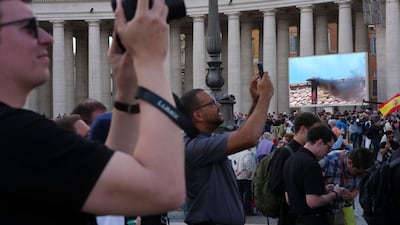
People take photos as black smoke billows from the Sistine Chapel. AP -
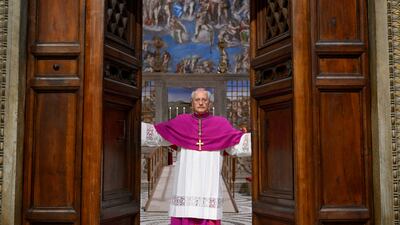
Archbishop Diego Ravelli closes the doors of the Sistine Chapel before the conclave meets for the day. Reuters -
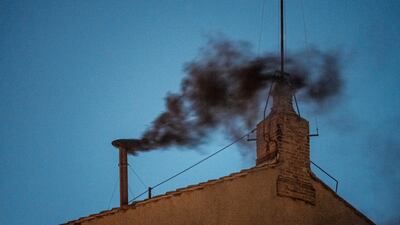
Black smoke rises from the chimney of the Sistine Chapel, where the conclave is taking place, meaning a new pope has not yet been elected and voting will continue. Getty Images -
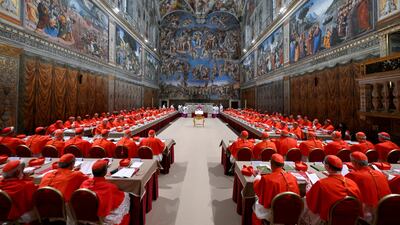
Cardinals pray in the Sistine Chapel. Reuters -
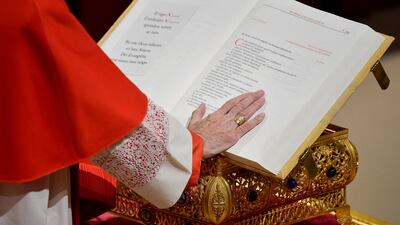
The conclave began on Wednesday. Reuters -
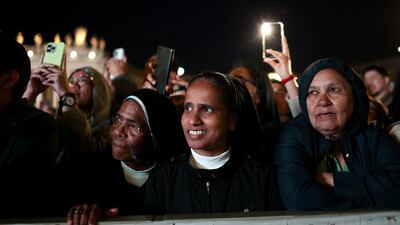
People gather to witness a historic moment at the Vatican. Reuters -
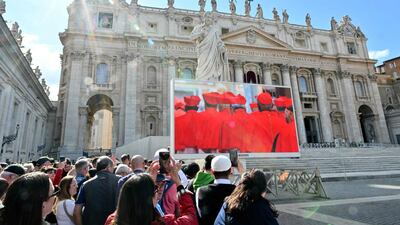
Spectators watch the procession of cardinals to the Sistine Chapel on screen at St Peter's Square in the Vatican. AFP -

Cardinals stand in the Sistine Chapel, preparing for the conclave. Reuters -
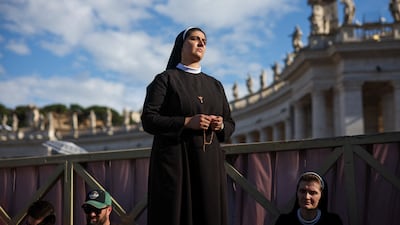
A nun prays at St Peter's Square in the Vatican as the cardinals begin their deliberations. Reuters -
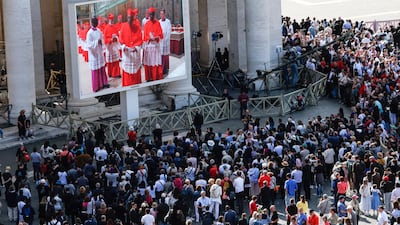
People gather to watch the cardinal-electors entering the Sistine Chapel. EPA -
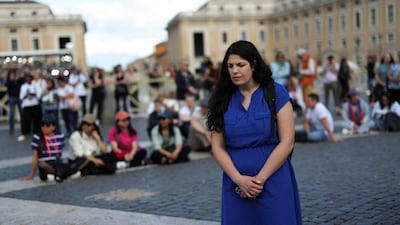
Kneeling in prayer at St Peter's Square. Reuters -
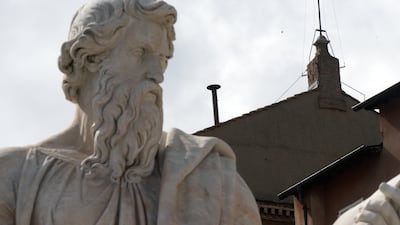
A statue of St Paul in front of the chimney of the Sistine Chapel. The chimney will become the focus of activity inside the chapel for the faithful outside. Getty Images -
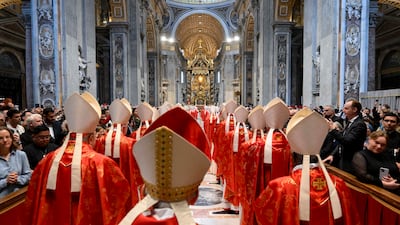
Cardinals attend a special Mass for the election of the pope, before the start of the conclave, at St Peter's Basilica. EPA -
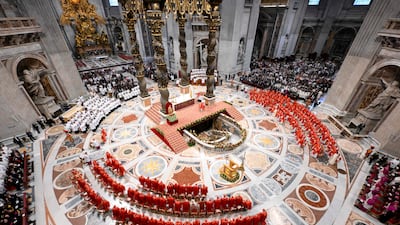
A view of the mass at St Peter's Basilica. EPA


The voting process
Voting for a new pope follows a strict choreography that is dictated by church law.
Each cardinal writes his choice on a piece of paper inscribed with the words “Eligo in summen pontificem” – “I elect as Supreme Pontiff.” They approach the altar one by one and say: “I call as my witness, Christ the Lord who will be my judge, that my vote is given to the one who, before God, I think should be elected.”
The folded ballot is placed on a round plate and tipped into a silver and gold urn. Once cast, the ballots are opened one by one by three different “scrutineers”, cardinals selected at random who write down the names and read them aloud.
The scrutineers, whose work is checked by other cardinals called revisors, then add up the results of each round of balloting and write it down on a separate sheet of paper, which is preserved in the papal archives.
As the scrutineer reads out each name, he pierces each ballot with a needle through the word “Eligo." All the ballots are then bound together with thread, and the bundle is put aside and burnt in the chapel stove along with a chemical to produce the smoke.

