Official property surveyors assess the damage to a residential building following a direct hit from a Hezbollah rocket in northern Israel. Reuters

Hezbollah and Israel trade blows but play down fears of wider war


  • English
  • Arabic

Live updates: Follow the latest on Israel-Gaza

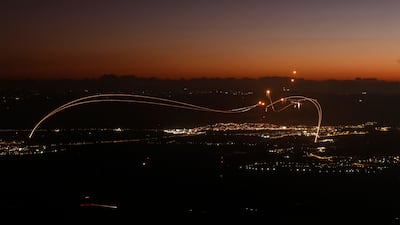
Hezbollah attacked Israel with hundreds of rockets and drones, and the Israeli army responded with a series of strikes against targets in several Lebanese villages, marking some of the most intense phases of the war that the Iran-backed group started ten months ago in support of its ally Hamas.

But the dramatic scenes of rockets and drones being intercepted in Israel's skies and the hits against Lebanon appeared to reflect a calculated and controlled attempt by both sides to showcase their deterrence capabilities while steering away from a full-scale war in a Middle East already engulfed by Israel’s devastating war in Gaza.

“Hezbollah's attack is intended to reinstate the deterrence balance that Israel has been trying to undermine in recent days through its attacks deep inside Lebanon,” a source close to the Iran-backed group told The National.

“Hezbollah, with what it did today, raises the level of the confrontation, but at the same time does not declare an open battle with no rules or limits,” explained the source, who spoke on condition of anonymity.

The Lebanese militant group claimed to have targeted 11 Israeli military sites, including a military site near Tel Aviv, with more than 320 Katyusha rockets and drones, as a retaliation for the assassination of its senior commander Fouad Shukr.

The attack was preceded by pre-emptive Israeli strikes, followed by targeted hits on various locations and positions in Lebanon, which Hezbollah said were evacuated in anticipation of the strikes. The Iran-backed group then added in a later statement that its military operation for Sunday was over.

“Israel must understand that Hezbollah is keen not to expand the confrontation,” affirmed the source.

What occurred behind the scenes and led to the controlled actions wasn't immediately clear.

Earlier this month, political sources in Beirut told The National that Hezbollah and its allies in Lebanon have been indirectly offered “incentives” by western envoys to ensure that the retaliation to Israel’s assassination of the group’s senior military commander does not lead to a full-scale war.

'Saving face'

In recent weeks, diplomatic efforts have intensified in anticipation of retaliation by Iran and Hezbollah against Israel, aiming to ensure that the response does not lead to a major escalation.

Tensions peaked in the region since Iran launched an unprecedented drone and missile barrage against Israel in April in a retaliatory strike to an attack on its Damascus consular section. Two senior generals were killed in the strike, which Tehran blamed on Israel.

An Arab security official told The National that the Israeli and Hezbollah strikes on Sunday were clearly designed to avoid a full-scale war. The official pointed out that the deepest targets of Hezbollah rockets were about 100 kilometres inside Israel and that the group avoided Israeli civilian targets as well as a “spectacular” hit by reaching Tel Aviv.

“It is a more intense Hezbollah attack than usual, but still aimed at saving face and remaining within the same calibrated cycle,” he said.

Mr Shukr and an Iranian military associate were killed in an Israeli strike on a densely populated neighbourhood in Beirut's southern suburbs last month. Hours later, Hamas leader Ismail Haniyeh was assassinated in Tehran. Hezbollah’s Hassan Nasrallah warned that the “red lines” crossed by Israel will usher in a “new phase” of the multifront conflict that will make Israel “weep”.

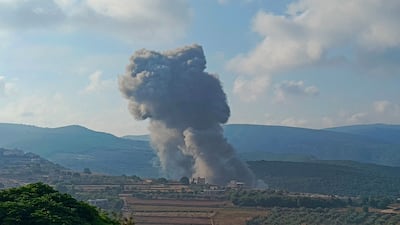
  • An Israeli strike hits southern Lebanon, as seen from Zibqin, Lebanon. Reuters
    An Israeli strike hits southern Lebanon, as seen from Zibqin, Lebanon. Reuters
  • Smoke and dust from an Israeli attack on Zibqin in southern Lebanon. Hezbollah says that on August 25 it launched more than 320 rockets at Israeli military positions. AFP
    Smoke and dust from an Israeli attack on Zibqin in southern Lebanon. Hezbollah says that on August 25 it launched more than 320 rockets at Israeli military positions. AFP
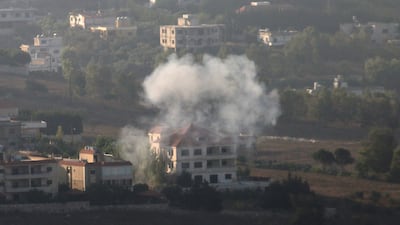
  • Israeli bombardment of the southern Lebanese town of Khiam. Reuters
    Israeli bombardment of the southern Lebanese town of Khiam. Reuters
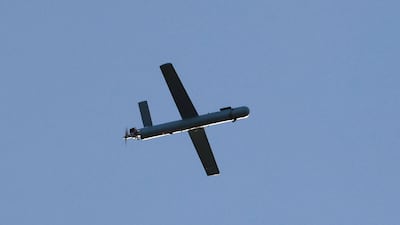
  • A Hezbollah drone over northern Israel. AFP
    A Hezbollah drone over northern Israel. AFP
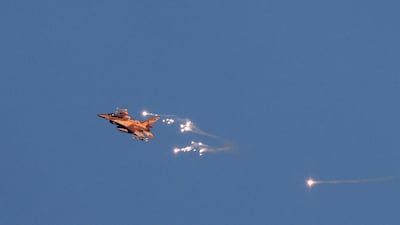
  • From northern Israel, an Israeli warplane fires flares as a countermeasure against an hostile aircraft launched from Lebanon. AFP
    From northern Israel, an Israeli warplane fires flares as a countermeasure against an hostile aircraft launched from Lebanon. AFP
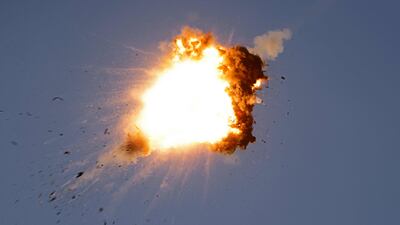
  • A Hezbollah drone is intercepted by the Israeli Air Force over northern Israel. AFP
    A Hezbollah drone is intercepted by the Israeli Air Force over northern Israel. AFP
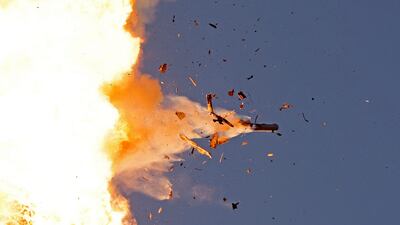
  • A Hezbollah drone is intercepted by the Israeli Air Force over northern Israel. AFP
    A Hezbollah drone is intercepted by the Israeli Air Force over northern Israel. AFP
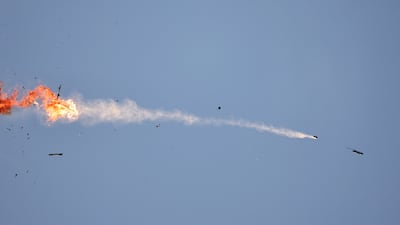
  • A Hezbollah drone is intercepted by the Israeli Air Force over northern Israel. EPA
    A Hezbollah drone is intercepted by the Israeli Air Force over northern Israel. EPA
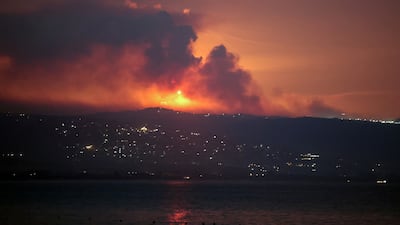
  • Smoke and fire on the Lebanese side of the border with Israel. Reuters
    Smoke and fire on the Lebanese side of the border with Israel. Reuters
  • Rockets fired from southern Lebanon are intercepted by Israeli air defences in the Upper Galilee region of northern Israel on August 23. AFP
    Rockets fired from southern Lebanon are intercepted by Israeli air defences in the Upper Galilee region of northern Israel on August 23. AFP

The two killings marked an escalation with major repercussions for the Middle East in general and the Gaza ceasefire talks in particular. Israel, Iran and Hamas rushed to affirm that they are not seeking a wider war, but the vows of retaliation against Israel suggested a fiercer cycle of violence in parts of the region, particularly as efforts to secure a ceasefire in Gaza have remained unsuccessful.

The Israeli Ministry of Defence declared a state of emergency across the entire territory of Israel for 48 hours after HJezbollah's attacks and the Israeli Prime Minister Benjamin Netanyahu said that the Israeli army has “destroyed thousands of rockets” and that “what happened today is not the end of the story”.

“For Hezbollah, too, this isn’t the end, and the Israelis should expect high-level attacks in the future,” warned the source close to Hezbollah.

However, despite the dramatic scenes, a western diplomatic source said that Hezbollah's attempt to re-establish deterrence appears to have failed with the interception of the rockets and drones, potentially paving the way for further escalation in the long run.

“Of course, Hezbollah will adopt a narrative of victory, but it doesn't align with the reality on the ground," the diplomatic source added.

On Sunday evening, Hezbollah leader Hassan Nasrallah denied in a speech that Israel managed to thwart his group's attack, insisting that a significant number of drones and rockets reached their military targets. He added that his group will assess the attack's impact and decide later if a bigger retaliation is needed.

“At this stage, our country can breath and relax,” he said.

SPEC%20SHEET%3A%20SAMSUNG%20GALAXY%20Z%20FLIP5
%3Cp%3E%3Cstrong%3EDisplay%3A%3C%2Fstrong%3E%20Main%20%E2%80%93%206.7%22%20FHD%2B%20Dynamic%20Amoled%202X%2C%202640%20x%201080%2C%2022%3A9%2C%20425ppi%2C%20HDR10%2B%2C%20up%20to%20120Hz%3B%20cover%20%E2%80%93%203%2F4%22%20Super%20Amoled%2C%20720%20x%20748%2C%20306ppi%3C%2Fp%3E%0A%3Cp%3E%3Cstrong%3EProcessor%3A%3C%2Fstrong%3E%20Qualcomm%20Snapdragon%208%20Gen%202%2C%204nm%2C%20octa-core%3B%20Adreno%20740%20GPU%3C%2Fp%3E%0A%3Cp%3E%3Cstrong%3EMemory%3A%3C%2Fstrong%3E%208GB%3C%2Fp%3E%0A%3Cp%3E%3Cstrong%3ECapacity%3A%3C%2Fstrong%3E%20256%2F512GB%3C%2Fp%3E%0A%3Cp%3E%3Cstrong%3EPlatform%3A%3C%2Fstrong%3E%20Android%2013%2C%20One%20UI%205.1.1%3C%2Fp%3E%0A%3Cp%3E%3Cstrong%3EMain%20camera%3A%3C%2Fstrong%3E%20Dual%2012MP%20ultra-wide%20(f%2F2.2)%20%2B%2012MP%20wide%20(f%2F1.8)%2C%20OIS%3C%2Fp%3E%0A%3Cp%3E%3Cstrong%3EVideo%3A%3C%2Fstrong%3E%204K%4030%2F60fps%2C%20full-HD%4060%2F240fps%2C%20HD%40960fps%3C%2Fp%3E%0A%3Cp%3E%3Cstrong%3EFront%20camera%3A%3C%2Fstrong%3E%2010MP%20(f%2F2.2)%3C%2Fp%3E%0A%3Cp%3E%3Cstrong%3EBattery%3A%3C%2Fstrong%3E%203700mAh%2C%2025W%20fast%20charging%2C%2015W%20wireless%2C%204.5W%20reverse%20wireless%3C%2Fp%3E%0A%3Cp%3E%3Cstrong%3EConnectivity%3A%3C%2Fstrong%3E%205G%3B%20Wi-Fi%2C%20Bluetooth%205.3%2C%20NFC%20(Samsung%20Pay)%3C%2Fp%3E%0A%3Cp%3E%3Cstrong%3EI%2FO%3A%3C%2Fstrong%3E%20USB-C%3C%2Fp%3E%0A%3Cp%3E%3Cstrong%3ECards%3A%3C%2Fstrong%3E%20Nano-SIM%20%2B%20eSIM%3B%20no%20microSD%20slot%3C%2Fp%3E%0A%3Cp%3E%3Cstrong%3EColours%3A%3C%2Fstrong%3E%20Cream%2C%20graphite%2C%20lavender%2C%20mint%3B%20Samsung.com%20exclusives%20%E2%80%93%20blue%2C%20grey%2C%20green%2C%20yellow%3C%2Fp%3E%0A%3Cp%3E%3Cstrong%3EIn%20the%20box%3A%3C%2Fstrong%3E%20Flip%204%2C%20USB-C-to-USB-C%20cable%3C%2Fp%3E%0A%3Cp%3E%3Cstrong%3EPrice%3A%3C%2Fstrong%3E%20Dh3%2C899%20%2F%20Dh4%2C349%3C%2Fp%3E%0A
Ten tax points to be aware of in 2026

1. Domestic VAT refund amendments: request your refund within five years

If a business does not apply for the refund on time, they lose their credit.

2. E-invoicing in the UAE

Businesses should continue preparing for the implementation of e-invoicing in the UAE, with 2026 a preparation and transition period ahead of phased mandatory adoption. 

3. More tax audits

Tax authorities are increasingly using data already available across multiple filings to identify audit risks. 

4. More beneficial VAT and excise tax penalty regime

Tax disputes are expected to become more frequent and more structured, with clearer administrative objection and appeal processes. The UAE has adopted a new penalty regime for VAT and excise disputes, which now mirrors the penalty regime for corporate tax.

5. Greater emphasis on statutory audit

There is a greater need for the accuracy of financial statements. The International Financial Reporting Standards standards need to be strictly adhered to and, as a result, the quality of the audits will need to increase.

6. Further transfer pricing enforcement

Transfer pricing enforcement, which refers to the practice of establishing prices for internal transactions between related entities, is expected to broaden in scope. The UAE will shortly open the possibility to negotiate advance pricing agreements, or essentially rulings for transfer pricing purposes. 

7. Limited time periods for audits

Recent amendments also introduce a default five-year limitation period for tax audits and assessments, subject to specific statutory exceptions. While the standard audit and assessment period is five years, this may be extended to up to 15 years in cases involving fraud or tax evasion. 

8. Pillar 2 implementation 

Many multinational groups will begin to feel the practical effect of the Domestic Minimum Top-Up Tax (DMTT), the UAE's implementation of the OECD’s global minimum tax under Pillar 2. While the rules apply for financial years starting on or after January 1, 2025, it is 2026 that marks the transition to an operational phase.

9. Reduced compliance obligations for imported goods and services

Businesses that apply the reverse-charge mechanism for VAT purposes in the UAE may benefit from reduced compliance obligations. 

10. Substance and CbC reporting focus

Tax authorities are expected to continue strengthening the enforcement of economic substance and Country-by-Country (CbC) reporting frameworks. In the UAE, these regimes are increasingly being used as risk-assessment tools, providing tax authorities with a comprehensive view of multinational groups’ global footprints and enabling them to assess whether profits are aligned with real economic activity. 

Contributed by Thomas Vanhee and Hend Rashwan, Aurifer

SPECS
%3Cp%3E%3Cstrong%3EEngine%3A%20%3C%2Fstrong%3E2-litre%204-cylinder%20petrol%20(V%20Class)%3B%20electric%20motor%20with%2060kW%20or%2090kW%20powerpack%20(EQV)%0D%3Cbr%3E%3Cstrong%3EPower%3A%3C%2Fstrong%3E%20233hp%20(V%20Class%2C%20best%20option)%3B%20204hp%20(EQV%2C%20best%20option)%0D%3Cbr%3E%3Cstrong%3ETorque%3A%3C%2Fstrong%3E%20350Nm%20(V%20Class%2C%20best%20option)%3B%20TBA%20(EQV)%0D%3Cbr%3E%3Cstrong%3EOn%20sale%3A%20%3C%2Fstrong%3EMid-2024%0D%3Cbr%3E%3Cstrong%3EPrice%3A%20%3C%2Fstrong%3ETBA%0D%3C%2Fp%3E%0A
Details

Through Her Lens: The stories behind the photography of Eva Sereny

Forewords by Jacqueline Bisset and Charlotte Rampling, ACC Art Books

Our legal consultant

Name: Dr Hassan Mohsen Elhais

Position: legal consultant with Al Rowaad Advocates and Legal Consultants.

RESULT

Manchester City 5 Swansea City 0
Man City:
D Silva (12'), Sterling (16'), De Bruyne (54' ), B Silva (64' minutes), Jesus (88')

The five pillars of Islam

1. Fasting

2. Prayer

3. Hajj

4. Shahada

5. Zakat 

What can victims do?

Always use only regulated platforms

Stop all transactions and communication on suspicion

Save all evidence (screenshots, chat logs, transaction IDs)

Report to local authorities

Warn others to prevent further harm

Courtesy: Crystal Intelligence

Updated: August 26, 2024, 4:24 AM