
Israel's attacks on Iran have killed a string of senior military and intelligence figures and scientists in what has been described as a "decapitation" strategy against Tehran's alleged nuclear programme.
The Israeli strikes began on Friday, hitting several cities including the capital Tehran. Iranian media reported Maj Gen Hossein Salami, commander of the Islamic Revolutionary Guard Corps, was killed, along with another senior IRGC commander, Maj Gen Gholam Ali Rashid and his son.
The chief of staff of Iran's armed forces, Gen Mohammad Bagheri, was also killed, state television reported.
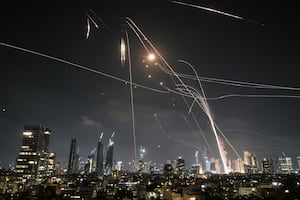
Two prominent Iranian nuclear scientists, Mohammad Mehdi Tehranchi and Fereydoun Abbasi, were also killed, according to the Tasnim news agency.
On Sunday, Israel announced the killings of several senior intelligence leaders as it pressed ahead with its campaign against Iran.
Maj Gen Hossein Salami

Born in Golpayegan, Maj Gen Salami joined the IRGC during the Iran-Iraq War, when he was a college student. He rose through the ranks and was appointed IRGC chief in 2019. Maj Gen Salami was known for his staunch anti-Israel and anti-US rhetoric. In March, he vowed swift retaliation against those who might attack Tehran: “If a threat is carried out, we will respond in the most severe manner – decisive, crushing and devastating.”
Under his leadership, the IRGC expanded its regional influence through proxies in Syria, Iraq, Lebanon and Yemen. He was central to Iran's missile and drone programmes.
Maj Gen Mohammad Bagheri

Maj Gen Bagheri became the chief of staff of Iran’s armed forces in 2016. Previously a high-ranking IRGC officer, he played a central role in co-ordinating Iran’s regular army (Artesh), the IRGC and law enforcement forces.
Maj Gen Bagheri joined the IRGC in the early 1980s, serving in the Iran-Iraq War and later rising through the ranks in intelligence and operational planning. He held a doctorate in political geography and was affiliated with Iran’s top military academic institutions, including the Supreme National Defence University.
As military chief, Maj Gen Bagheri was instrumental in expanding Iran’s missile and drone programmes, as well as deepening military co-operation with Russia, China, and regional allies such as Syria and Hezbollah. He also took a prominent public stance during periods of regional tension, including voicing support for certain Palestinian groups and overseeing air defence alerts in Tehran.
Maj Gen Bagheri was sanctioned by western governments for his role in weapons proliferation and the suppression of nationwide protests in 2022–2023.
Maj Gen Gholam Ali Rashid

Maj Gen Rashid served as commander of Khatam Al Anbiya Central Headquarters, Iran’s strategic joint command overseeing operations of the IRGC, regular army, intelligence and drone and missile deployments, from June 2016.
He began his military career during the Iran–Iraq War, later becoming deputy chief of staff of Iran’s armed forces.
Maj Gen Rashid was a key architect of Iran’s regional military outreach. In interviews he acknowledged controlling “six armies” abroad – including Hezbollah in Lebanon, militias in Iraq, Syria, Palestine, and Yemen – as strategic deterrents.
He publicly warned that attacking Iran would be a “strategic mistake” and supported forward defence across the Middle East.
He was designated and sanctioned by western governments for his role in weapons proliferation, command of the missile and drone programmes and leading Iran’s military co-ordination.
Mohammed Kazemi

The IRGC said on Sunday the head of its intelligence organisation, Mohammed Kazemi, had been killed in an Israeli strike along with two colleagues, Hassan Mohaqeq and Mohsen Baqeri.
Israeli Prime Minister Benjamin Netanyahu said in a Fox News interview the military had "got the chief intelligence officer and his deputy in Tehran" during a third day of strikes.
Only a week earlier, Mr Kazemi was boasting of an "intelligence masterpiece" after Iran claimed to have its hands on files relating to Israel's undeclared nuclear programme.
Appointed in 2022, he was believed to report to Ali Shamkhani, a senior aide to supreme leader Ayatollah Ali Khamenei. The US imposed sanctions on him in 2023 for allegedly overseeing "operations suppressing civil society in Iran and arresting Iranian dissidents".
He blamed US intelligence for sowing an "atmosphere of protest" in Iran during mass anti-regime protests that broke out in 2022 after the death of a young woman, Mahsa Amini, in the custody of Iran's morality police.
The Israeli army described Mohsen Baqeri as head of the Quds Force Intelligence Directorate, as it announced it had also killed his deputy Abu Al Fadl Nikouei. It said they were responsible for providing "operational and intelligence support" to Iranian allies in the Middle East including Hezbollah, Hamas and the Houthis.

