

RELATED: No visa amnesty extension planned to October 31 deadline
Embassy and consular officials have cautioned people on expired tourist and residency visas to regularise their documents with three weeks to go before the UAE amnesty ends.
UAE authorities have waived fines and granted a reprieve until October 31 for people who have overstayed their visas as part of an amnesty programme that allows offenders to leave the country without facing a ban on re-entry.
Envoys and senior diplomats of countries with a large workforce in the UAE said there was an urgent need to drive home the message that people should come forward to legalise their stay as the programme enters the last few weeks.
The Federal Authority for Identity and Citizenship, Customs and Ports Security announced this week there would be no further extension of the scheme. The authority warned of a crackdown on those who breach visa rules and potential penalties after the amnesty programme ends.
labour counsellor, Embassy of Nepal
People with expired documents can regularise their visas by finding a job to remain in the UAE or must leave the country by October 31.
Officials anticipate a surge in the last stretch as more people are expected to approach consulates and government centres to change their status this month.
Nepal had estimated that more than 10,000 of its citizens were living without legal papers in the UAE and set up a help desk in Dubai to provide information to people in need.
The embassy said only about 500 people had obtained exit passes to leave the UAE without paying overstay fines.
“Our preliminary expectation was that 10,000 to 15,000 people would avail of the amnesty, our expectation was high but much fewer people have come forward," Din Bandhu Subedi, labour counsellor at the Nepal embassy in Abu Dhabi, told The National.
-

Faral Ally Hamis, from Tanzania, during the second day of visa amnesty at the General Directorate of Residency and Foreigners Affairs Dubai in Al Awir area. All photos: Pawan Singh / The National -
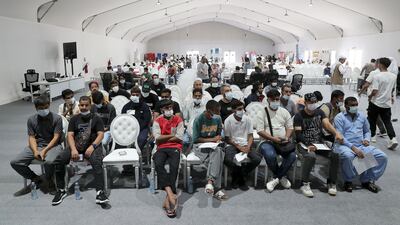
People wait to be seen at the General Directorate of Residency and Foreigners Affairs Dubai. -

Officials help direct those waiting during the second day of visa amnesty in Dubai. -

Visitors were given free coconut water at the General Directorate of Residency and Foreigners Affairs Dubai. -
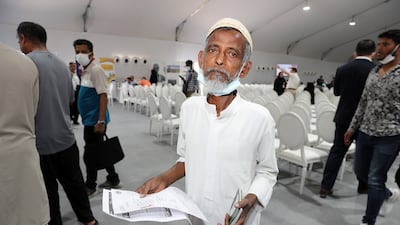
Kashem Samir Hossain, from Bangladesh, during the second day of visa amnesty at the General Directorate of Residency and Foreigners Affairs. -
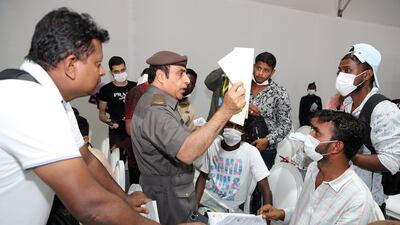
Officials help during the second day of visa amnesty at the General Directorate of Residency and Foreigners Affairs Dubai. -

Officials deal with the queues at the visa amnesty at the General Directorate of Residency and Foreigners Affairs in Al Awir, Dubai. -

Maj Gen Obaid Muhair bin Suroor, Deputy Director General of GDRFA, centre, talking to visitors -
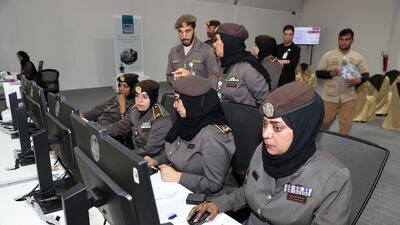
Officials in the women's section during the visa amnesty -

People who have overstayed their residence or visit visas will not be fined -

Venus Devera from the Philippines with her 15-month-old daughter Alvia Faith at the General Directorate in Dubai -

The two-month initiative is open for people with expired residency and visit visas -
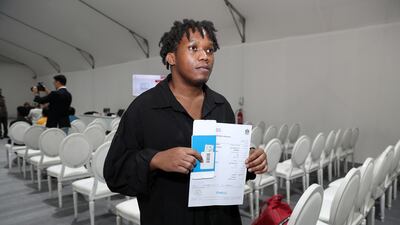
Christopher Kyeyunemr, 29, from Uganda, was one of the first people to obtain the exit pass after living illegally for two years -

Companies set up their stands to recruit candidates during the visa amnesty -

Bachaire Polindao from the Philippines with her 10-month-old daughter Amal Mohamed Mustafa at the amnesty in Dubai -

People wait to have their stay in the UAE legalised


“There is still about a month left and we believe in the coming days, the numbers will definitely increase of people wanting to change their legal status.”
He said the embassy sent out notifications on Facebook and co-ordinated with Nepali groups to spread awareness of the amnesty.
“We tell people it’s a golden chance and an opportunity few people have to get their fines removed," he said. “We will give out more information on our website and on social media. Our message is that if the undocumented citizens don’t respond in time, they will have a big problem after the amnesty ends.
“We make them understand the penalties, fines and legal action they will face so they get serious about the amnesty.”
Chance to return
Diplomatic missions across the country have stayed open at the weekend and extended offices hours during the amnesty period that began on September 1.
Consular officials said more alerts would be sent to their citizens urging them to legalise their stay.
Alexi Gunasekera, Sri Lanka Consul General, said people with expired visas who obtained exit passes wanted to return to the UAE on "proper" jobs.
“The amnesty has been a blessing in disguise for Sri Lankans without work who are facing a lot of challenges,” he said. “What we have seen is that on a daily basis there is a lot of enthusiasm among people to know more about the amnesty. Many people who leave with the amnesty scheme want to come back when they find a better job.”
He said most people had paid large sums of money to secure well-paying jobs promised by unscrupulous agents who duped them by making them fend for themselves when they reached the UAE.
Mr Gunasekera mentioned cases of skilled professionals forced to take on any job to make ends meet.
Embassies and consulates often send out warnings to caution people against entering the UAE and other countries in the Gulf on visit visas in search of work. The advice is to approach recruiters authorised by their governments, verify the salary and the company.
“There are so many people who have come on visit visas who have been promised jobs and given a lot of money to agents,” he said. “I meet people who are well-qualified graduates who are doing unskilled blue-collar work. We have to put a stop to this.”
The consulate has issued about 500 temporary travel documents to people without valid visas and passports to return to Sri Lanka, and served 1,450 people who came in during the extended amnesty service hours.
Life in limbo
Officials said there was more interest among amnesty seekers to remain in the country to find jobs than leave the UAE on exit passes.
The Pakistan embassy and consulate processed 24,128 passports and issued 603 exit passes in September.
“My advice to everyone is that it’s better to legalise your stay or go back because this life in limbo is a difficult life,” said Faisal Niaz Tirmizi, Pakistan's ambassador to the UAE.
The embassy, like other missions, launched campaigns on social media to spread the word about the amnesty process and will step up the awareness drive.
“Our embassies and consulates are open on Saturday as well but there is there is hardly anyone coming for the out pass [exit pass],” he said.
“A lot of people are coming in to renew their passports. Most people are looking for opportunities to stay on in the UAE.”
The Indian consulate in Dubai last month said it had helped issue more than 500 exit permits, more than 600 passports and supported more than 4,000 people with information on the amnesty process.
The consulate has urged Indians to take advantage of the amnesty programme to legalise their stay and approach the mission for more information.

