

Sylvia Earle, one of the world’s most famous oceanographers and marine biologists, has raised the alarm over the stark threat posed to ocean ecosystems by climate change and rampant overfishing.
Dr Earle, 89, holds the record for the deepest untethered walk on the sea floor at a depth of 1,250 feet and was the first woman to lead the National Oceanographic and Atmospheric Administration in the US.
Speaking to The National on a visit to SeaWorld Abu Dhabi, she said the world is “perilously close” to tipping the balance of ocean life.
“We have time but not a lot,” she said. “That's why there's a sense of urgency about protecting what remains of the natural living systems, living deserts, living oceans, coral reefs and the deep sea. Why do we even think of disrupting the deep sea when we have a chance to protect it and keep it safe?”
The impact of fishing and climate change
Earth recorded its hottest year ever last year and Dr Earle spoke of the significant effects that climate change had on ocean life. She said the key was understanding the damage and repairing it, protecting the ocean and restoring stability to what has become an increasingly disrupted system.
“It's not just warming, it's the extremes of hot and cold. It's the unexpected,” said Dr Earle. “Because of the way we have disrupted the atmosphere and the ocean, the living systems, we are now seeing these extremes that are not really favourable to us, and could become so unfavourable that our existence is on the line.”
Dr Earle said that to have a secure, functioning and stable civilisation, we need to be able to anticipate seasons with some predictability. She also criticised overfishing and its damaging impact.
More than one third of all sharks, rays, and chimeras are now at risk of extinction because of overfishing, according to data from the World Wildlife Fund.
“We have taken with such abandon thinking that they [oceans] were infinite in their capacity to recover but now we know that's not true. We have to give them a break,” she said. “Every fish that we take from the wild is a fish that's no longer doing what it does naturally to keep not only itself but the ocean alive.”
Dr Earle said the Earth’s oceans were the planet’s life support system and were now in crisis. She called on people to use their skills and talents to raise awareness and work towards mitigating the problem.
“What are you willing to put into this goal of securing a habitable planet? To me, it's our highest priority,” said Dr Earle. “Nothing else matters. If there's a meltdown of the systems that keep us alive, and it's happening, we are experiencing a meltdown of our life support system. I can hold up the mirror and say, here are the problems and here are the solutions. Nobody can do it all, but everybody can do something.”
She also said there was an urgent need to invest in technology for ocean exploration as only about 10 per cent of the world's oceans have so far been surveyed.

A lifetime of work
Getting knocked over by a wave at the age of three inspired a fascination for the oceans in Dr Earle’s young mind, which turned into a lifelong passion.
“When my family moved to Florida, I was 12 and we lived right on the ocean, and it was part of my life every day,” she said. “I wanted to be an explorer. Children are natural explorers. I wanted to be a scientist. Children are natural scientists. We all start out that way. Somehow, many get turned away from asking questions.”
When Dr Earle started doing fieldwork in the 1950s, scuba equipment was just becoming available and she was one of the few female oceanographers in the world. She described how “innocent” the fish were at the time.
“They'd never seen humans underwater before and they were as curious about me as I was about them,” she said. “It was transformative to see that.”
Ocean conservation - in pictures
-
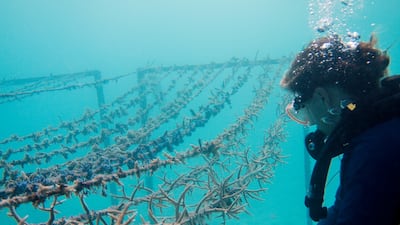
Try coral restoration at Gili Lankanfushi in the Maldives. Photo: Gili Lankanfushi -
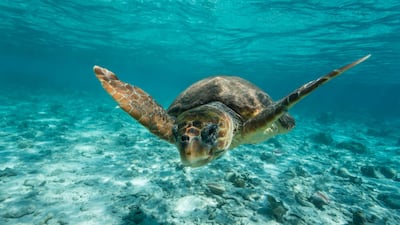
Meet rescued sea turtles at One&Only Cape Town. Photo: Kerzner -
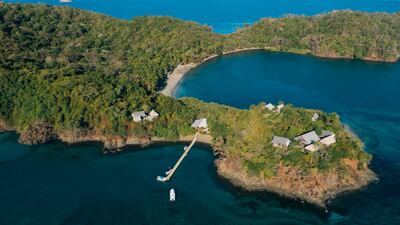
Go whale watching on Islas Secas in Panama. Photo: Beyond Green -
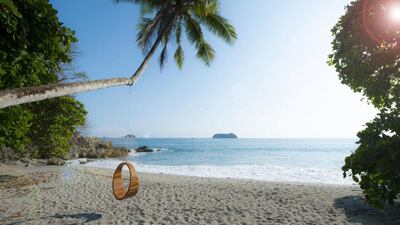
Help to keep the beaches and waters at Arenas Del Mar resort pristine. Photo: ArenasdelMar -
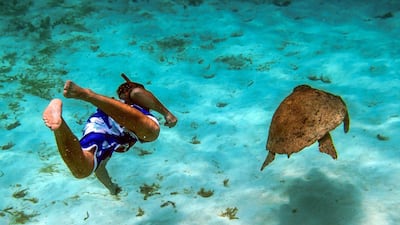
Help to protect the wildlife at Turtle Inn, Placencia, Belize. Photo: Beyond Green -
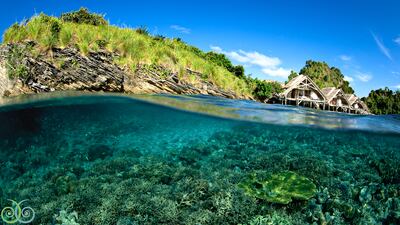
Explore the deep blue at Misool Eco Resort in Indonesia. Photo: Misool


What are the biggest challenges?
Dr Earle said ignorance and waste are the two most significant threats to the world's oceans.
“We have treated the ocean as the ultimate place to dump things, to get rid of waste,” she said. “I've had the privilege of being out under the ocean seeing where all that rubbish goes. I've also seen the loss of wildlife because of our ability to find, capture and extract wildlife. Millions of tonnes of wild animals have been taken from the ocean.
“Most people haven't seen what I've seen, the degradation, the gaps, the loss of sharks. We have stripped wildlife out of the ocean. I've been a witness over the decades of extracting wildlife unsustainably, the loss caused by the belief that the ocean is infinite in its way of being able to yield whatever we want to take and to accept whatever we want to put into the ocean.”
An international target, 30 by 30, sets the goal of protecting at least 30 per cent of the land and 30 per cent of the ocean by 2030. Dr Earle, however, said we are way off track to achieving that goal.
How can people help?
Dr Earle encouraged people to use their skills to create awareness of climate change or to advocate for saving marine life.
“Look in the mirror. Ask who you are, whether you're a child, a mum, a dad, a teacher, whoever you are, whatever power you've got … use what you have,” she said. “Some people can influence fashion, we should make it cool to want to protect nature.”
She said awareness was the best cause for optimism and it was up to humans to use their knowledge to protect the oceans.
“Every breath we take, every drop of water we drink, every bite of food we take, we are all part of what makes what the planet is and will be,” she said. “We have choices, the fish don't.”
“We have to eat differently if we're going to survive,” she said. “It's a different world. Our habits were OK 1,000 years ago,” she said. “I would never tell people what they should eat but I can say here is the consequence of our habits.
“If we continue to degrade the ocean through what we put in, through what we take out in ignorance, it’s not just the creatures of the sea who will suffer, all life on Earth, including ourselves, will pay the price.”
The impact of climate change in the Middle East – in pictures
-

Flooding in the Al Barsha area of Dubai. Chris Whiteoak / The National -
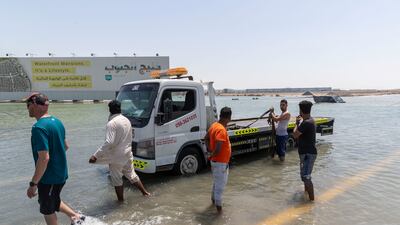
Vehicles being recovered near Al Maktoum airport in Dubai. Antonie Robertson / The National -

Flooding in the Al Barsha area of Dubai. Chris Whiteoak / The National -
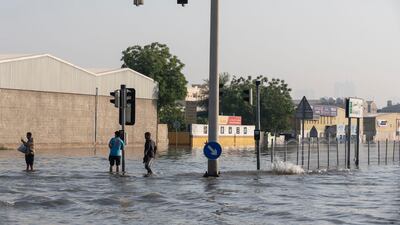
Flooding along Sheikh Zayed Road in Dubai. Antonie Robertson / The National -
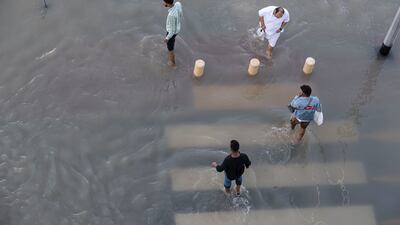
Flooding along Sheikh Zayed Road in Dubai. Antonie Robertson / The National -

Cars move through floodwater in Al Qudra, Dubai. Chris Whiteoak / The National -

Flooding on Dubai's Al Khail Road. Chris Whiteoak / The National -
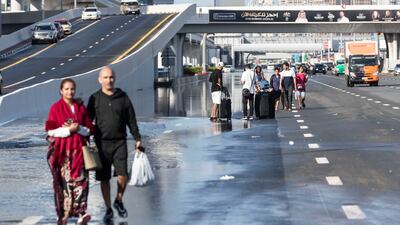
People abandon their cars on Sheikh Zayed Road due to heavy rain. Antonie Robertson/The National -

Flooding on Al Khail Road. Chris Whiteoak / The National -
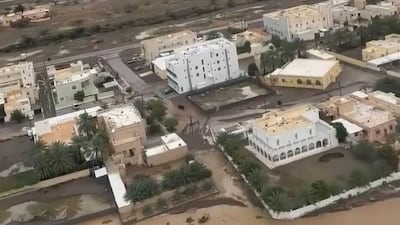
Flooding in Oman. Photo: Royal Oman Police -

A damaged car in Derna, Libya. Reuters -
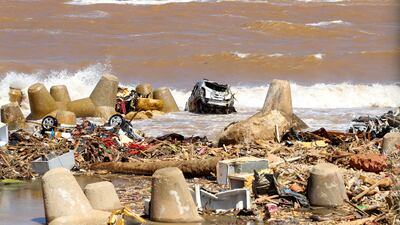
A destroyed vehicle in Derna. AFP -

Abdul Salam Ibrahim Al-Qadi walks on rubble in front of his house, searching for his missing father and brother, in Derna. Reuters -

An aerial view of the destruction in Derna. Reuters -
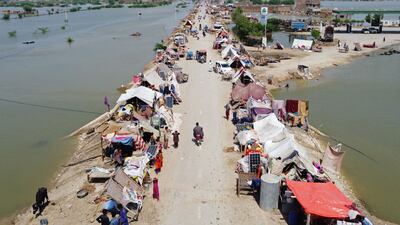
Flood-affected people taking refuge in a makeshift camp after heavy monsoon rains in Jaffarabad district of Balochistan province. AFP -
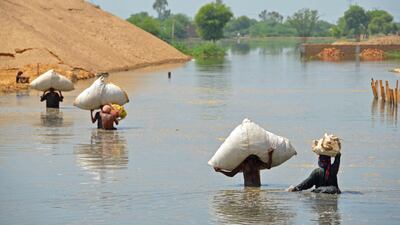
Internally displaced flood-affected people shift husk for their animals in a flood-hit area following heavy rains in Dera Allah Yar in Balochistan. AFP -
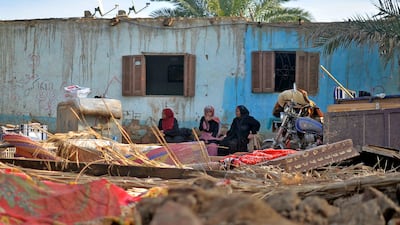
The aftermath of flooding in Egypt's southern city of Aswan, 920 kilometres south of the capital. AFP -

The Nile River from the top of Famine Stela, or Rock of Starvation, Egypt. Reuters -

Volunteers search for people in need following heavy rainfall in east Mosul, Iraq, in March 2020. Reuters -

People clean up after floods in Duhok, Iraq, on March 19. Reuters



