
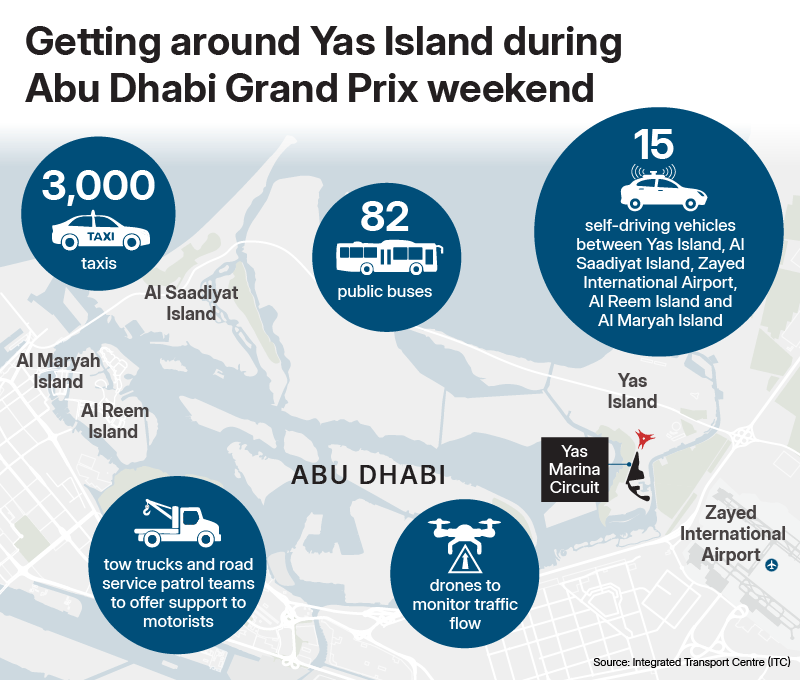
At least 3,000 taxis, more than 80 buses and a fleet of autonomous vehicles are to be used to ensure spectators have a smooth journey to the Abu Dhabi Grand Prix.
The Integrated Transport Centre has unveiled a transport plan for the event, which starts on Yas Island on Thursday, with attendance expected to pass last year's record of 192,000.
The ITC said it will use “all necessary resources” for the four-day race weekend, which includes practice sessions and concerts in the build-up to the main event at Yas Marina Circuit on Sunday, where the Formula One championship will be decided. The centre will also use AI-powered drones to monitor traffic and respond to congestion.


Buses and taxis
The ITC said 82 public buses have been allocated to transport visitors and event organisers.
The Yas circular bus service will carry visitors from Yas Mall (at the Tryano Gate) and from the Warner Bros World car parks to the race circuit gates, Yas Island hotels and the entertainment area.
About 3,000 taxis will be deployed across the four days. Two taxi pick-up and drop-off areas have been designated within the race zone and surrounding event areas, with additional locations near hotels and firework displays. This service covers regular taxis and ride-hailing services such as Uber and Careem.
Autonomous vehicles
A fleet of 15 autonomous vehicles will carry visitors and showcase the emirate’s use of future technology. The vehicles will operate on designated routes across Yas Island, transporting spectators between key points near the race circuit from 3pm to 10pm.
Spectators can also use the existing fleet of more than 30 autonomous vehicles to travel between Yas Island, Saadiyat Island, Zayed International Airport, Reem Island and Al Maryah island, within designated service areas, through the TXAI and Uber smart apps.
Traffic nerve centre
The ITC said it will manage traffic though a nerve centre on Yas Island, by controlling road signals and displaying messages on signs.
Patrol teams will also manage traffic and support stranded road users, such as by providing fuel, changing tyres or recharging vehicle batteries. Tow trucks will remove broken-down vehicles.
Using AI-powered drones, the system will be able to identify vehicles that stop illegally on roads and in pick-up and drop-off areas, automatically recording these incidents by reading number plates and displaying breaches in real time at the control centre.
Taxi parking will also be monitored, with occupancy levels and operational requirements identified to reduce waiting times.

