

UK Chancellor Rachel Reeves, delivering her first budget speech, promised tax rises totting up to £40 billion ($52bn).
The Labour Party government was constrained by its election manifesto pledges that rule out income tax rate increases, rises in corporation tax, VAT or employee national insurance contributions. That means Ms Reeves had to explore several other tax-raising avenues to plug the £22 billion ($28.6bn) black hole in funding gaps she has identified.
A day before Halloween, the trick to watch for was seeing how she raised tax revenue and spending on economy-boosting projects in areas including infrastructure, as well as increasing borrowing, all at the same time. The treat, if she is successful, will be an economy that is on a solid footing, allowing growth to accelerate.
Non-doms
Chancellor Rachel Reeves confirmed the government will abolish the non-dom tax regime from April 2025.
“I have always said that if you make Britain your home, you should pay your tax here. So today, I can confirm, we will abolish the non-dom tax regime and remove the outdated concept of domicile from the tax system from April 2025,” she said.
She said she will introduce a residence-based scheme with “internationally competitive arrangements” for those coming to the UK on a temporary basis.
Essentially, this means, after certain exemptions, non-doms will be taxed on their income and assets outside the UK.
One non-dom told The National that “the exposure of worldwide assets to UK IHT for a non-domiciled individual seems unfair, as we are being taxed in the UK on assets created overseas”.
Inheritance tax
The inheritance tax threshold, a consideration for non-doms in the UK, was frozen for a further two years to 2030.
No inheritance tax is payable on an estate worth less than £325,000, which has been fixed since 2009 and is expected to remain at that level until 2028. But that means that, as house prices rise, more estates are drawn into the inheritance tax net, because the house is usually the most valuable asset in a deceased person's estate.
From April 2026, the first £1m on combined business and agricultural assets will have no inheritance tax. For assets over £1m, inheritance tax will apply with 50 per cent relief, at an effective rate of 20 per cent, she says.
-
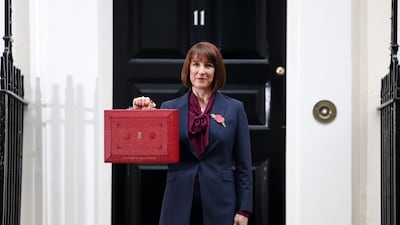
British Chancellor of the Exchequer Rachel Reeves holds up her budget box outside number 11 Downing Street in London. EPA -
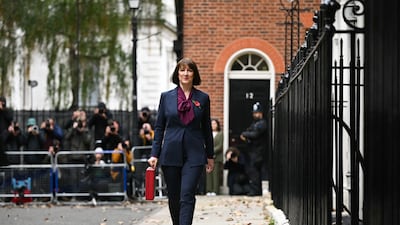
Ms Reeves leaves 11 Downing Street. AFP -
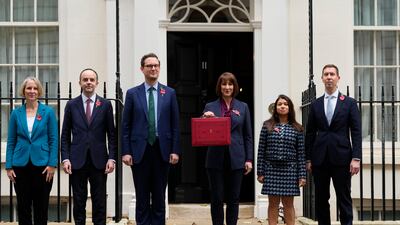
Ms Reeves with her ministerial team, outside No 11 Downing Street. AP -
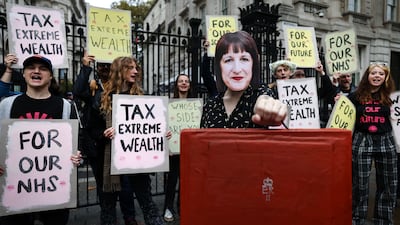
Protesters hold placards as they demonstrate against Ms Reeves' upcoming budget outside Downing Street. EPA -

A view of the Autumn Budget. Photo: by Kirsty O'Connor / Treasury -
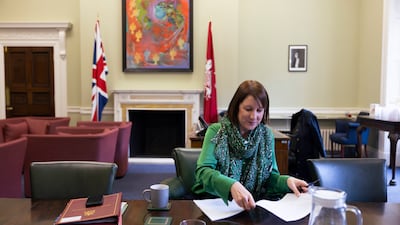
Ms Reeves prepares for the Budget in her office. Photo: Kirsty O'Connor / Treasury -
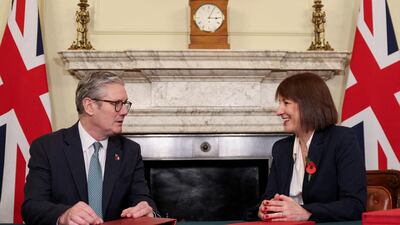
Britain's Prime Minister Keir Starmer meets with Ms Reeves, days before the announcement of the first budget of the new Labour government. Reuters


Capital gains tax
It was widely expected that capital gains tax would be raised. The lower rate goes up from 10 per cent to 18 per cent, and the higher rate from 20 per cent to 24 per cent. The rates on residential property will remain at 18 per cent and 24 per cent.
Only about 350,000 people a year pay CGT, but they plough about £15 billion into the Treasury through it, according to figures from the Institute of Fiscal Studies.
Energy windfall tax
The Chancellor said she will increase the windfall tax on oil and gas profits to 38 per cent from 35 per cent.
Employers' National Insurance contributions
Possibly one of the more controversial budget measures, Ms Reeves increased employer National Insurance contributions, which are essentially a payroll tax.
The Chancellor raised the employer NI rate by 1.2 percentage points to 15 per cent and, at the same time, she lowered the threshold at which companies have to start paying it from £9,100 per year to £5,000, so a higher tax rate that kicks in sooner.
Many experts feel that increasing employer contributions is an extra burden for businesses that have just survived the twin tempests of rising inflation and the Covid-19 pandemic. In addition, a rise in employer NI is also expected to have a knock-on effect on employees, simply because, as a company's payroll costs rise, there is less money for salary increases.
“Businesses will be launching into staff reviews from January, setting remuneration for the new financial year beginning in April, and it won’t be surprising if the costs of a rising NIC bill are taken into account at many firms for that year and years beyond,” said Toby Tallon, tax partner at Evelyn Partners.
Private jets
Increased the rate of air passenger duty for private jets by 50 per cent. Flight taxes for air passengers will see a rise that translates to anything from £7 for a short haul flight to £200 for a long-distance flight.
VAT on private school fees
Confirmation that VAT exemptions on private schools will be scrapped. The government will introduce VAT on private school fees from January 2025, and new legislation will be introduced to remove their business rates relief from April 2025.
The move aims to fund 6,500 new teaching posts in state schools. The French and German ambassadors to the UK had called for international schools to be excluded from the plans.
Stamp duty second homes
The stamp duty land tax surcharge for second homes will increase by two percentage points to five per cent, and will come into effect from Thursday.
Calculating debt
The Chancellor confirmed at the IMF meetings that she will change the way debt is measured. She will focus on public sector net financial liabilities (PSNFL) as her new measure of debt, rather than the current yardstick of underlying public sector net debt. Doing so should enable her to use more than £50 billion more for infrastructure development. But critics have said the move is an accounting gimmick and could in itself be inflationary.
Income tax
The Labour Party had already pledged to avoid putting up income tax rates in the budget.
On personal taxes, the government also announced an end in 2028-29 to the current freeze on income tax thresholds. After that, levels will be uprated in line with inflation – a move to prevent more people being in higher tax brackets because of pay rises.
And the rest
Ms Reeves has announced a £22.6bn increase in the day-to-day health budget and a £3.1 billion increase in the capital budget, which she called the “largest real-terms growth in day-to-day NHS spending outside of Covid since 2010”.
About £1.4 billion has been announced already to rebuild dilapidated schools and to triple investment in free breakfast clubs. Meanwhile, £1.8 billion has been set aside to expand childcare provision and £44 million is to be used to support kinship and foster carers. In addition, the cap on bus fares will rise from £2 fare to £3 until the end of 2025, while £240 million will be given to local services to get people back to work, as the government looks to rein in spending on welfare.
Fuel duty, which motorists pay at the pump as it is included in the price of petrol and diesel, was not changed. The tax on motor fuels was frozen by the previous Conservative government between 2010 and 2022. It was then cut by 5p to 52.95p per litre, where it remains.
Ms Reeves announced a “flat rate duty” on vaping liquid from October 2026, as part of a move to discourage vaping. Vaping products are subject to VAT at 20 per cent but, unlike tobacco, they are not also subject to excise duty.

