

New population figures for Abu Dhabi released this week present an intriguing picture of an emirate undergoing a sustained period of growth.
Data from Statistics Centre Abu Dhabi showed the emirate’s population had passed four million for the first time, which represented a 7.5 per cent increase in population and a 9 per cent increase in the workforce in the past year. SCAD noted that the emirate’s population has grown by more than 50 per cent over the past 10 years.
Some of this should come as no surprise.
The annual Arab Youth Survey traditionally ranks the UAE as the place in the world where young people want to live because of the opportunities it offers and the stability of the country.
And it is not just young people who recognise this country’s enviable track record for growth, safety and development. People from all over the world and from all strata of the economy want to live and work in the UAE and see their long-term futures here.
Dubai’s population is expected to reach four million this year, too. Together, Abu Dhabi and Dubai are now two of the world’s best cities: magnets for talent, beacons of the knowledge economy, safe places to live with world-class facilities and enviable portfolios of tourism and leisure destinations.
The discussion points around population growth are well-rehearsed. Rapid growth sets the conditions for innovation and dynamism and can spur economic expansion – to that point, gross domestic product grew in the UAE by about 4 per cent last year – but fast-paced expansion can also deliver strains on the system in such areas as housing stock and traffic.
A roads survey published this week said that most of those surveyed believe traffic is getting heavier and that congestion is more commonplace. Suggested solutions from the survey include improvements to the bus and road network, expanding metro services and offering more opportunities to work from home.
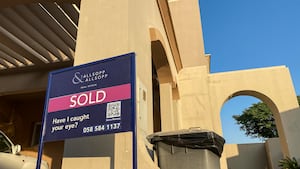
The question of housing is a near perennial one. A generation ago, Abu Dhabi’s housing market was simmering. Too little supply and rapid population growth made it challenging for those who needed to move or had just arrived in the city. A series of measures to ease pressure cooled the market over a prolonged period.
Nowadays, the market has found its natural levels and there is more supply, but there will always be hotspots, some of which can emerge suddenly. The Disney effect, for instance, was visible on Yas Island almost as soon as the announcement of the theme park’s arrival was made earlier this year, even though neither a construction schedule nor a tentative opening date has been confirmed.
But rapid population growth does underscore the need for both Abu Dhabi and Dubai to keep thinking about and developing a range of affordable housing solutions to meet demand.
Abu Dhabi launched a Value Housing Programme in March to deliver what was described as “high-quality units”. Dubai introduced a support scheme for first-time buyers this week in the emirate’s property market. Dubai also approved a plan for more than 17,000 affordable houses in the spring.
The ideal mix is for housing to be available across a wide spectrum of needs. If there is too much luxury housing, the market won’t meet the needs of those with more modest budgets, even though it is common for developers to want to bring high-end properties to the market to stir up a form of mass aspiration and generate bigger profits.
Housing stock imbalance also creates cycles of under and over-supply. If there is too much concentration on one sector or another, an inevitable imbalance ensues, and workers or families will eventually decide that their future lies elsewhere. The system relies on several forms of equilibrium being in play.
Dubai Municipality’s recent moves to tackle illegally partitioned residential units are an important safety measure aimed at clamping down on landlords making this type of conversion into multiple occupancy units. These actions also shed light on the natural human instinct to want to live close to work or where you send your children to school, or to find a place to live where you can make your budget fit.
Further, they indicate a need to keep regulatory enforcement in place and for even more affordable stock to be made available that meets both the municipality’s legal framework and remains within reach of many, both financially and geographically. An equitable property market is a solid building block for growth and happiness in the broader economy.
This is not an issue exclusive to one city or one place in the world.
Older neighbourhoods in Abu Dhabi have dwellings that have been subdivided after they were previously single-family units. It is the responsibility of the building’s owners to stay within the limits of the law with conversions and to ensure their tenants are able to live safely. But the fact that there are such buildings at all is, once again, a symbol of population growth and dynamic market forces. The question then shifts to how do you mitigate these circumstances and what your longer-term response might be. Cities globally have faced that challenge for centuries.
The answer to that challenge may rest in one of the magnets that secures such strong population growth figures in both Dubai and Abu Dhabi in the first place. Namely, the forward-looking nature of urban and economic policy formulation.
There may also be a direct comparison to traffic congestion, one of the other harbingers of rapid population growth. An array of policy prescriptions are inevitably required to find the right solution and keep people moving forwards.

