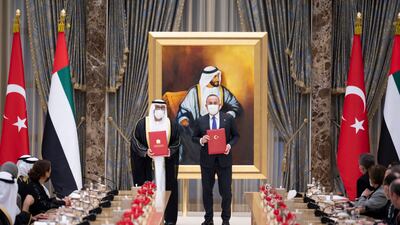
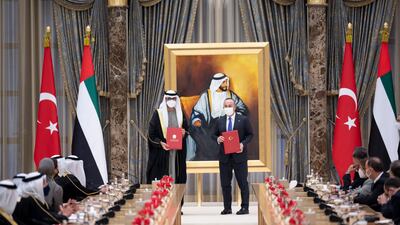
Before Israeli President Isaac Herzog makes his country’s first presidential visit in a dozen years to Turkey next month, he plans to stop in Nicosia and Athens to reassure those allies of Israel’s continued commitment. The order of the meetings is telling: Turkey, last on the agenda, is clearly the headliner, while Cyprus and Greece are opening acts.
Israel’s diplomatic nicety underscores the extent to which Turkey has strengthened its position in the Eastern Mediterranean in the past two years. In late 2019, the EU levied sanctions against Turkey for its exploratory drilling in waters claimed by the Republic of Cyprus, but which Turkey claims belong to the Turkish Republic of Northern Cyprus (TRNC).
Some weeks later, Ankara signed a maritime borders deal with Tripoli that essentially ignored the Greek island of Crete and sparked widespread criticism. The next summer, after a tense standoff of French and Turkish vessels near the Libyan coast, France suspended its Nato patrols in protest of Ankara’s aggressions. Then Turkey and Greece came to the brink of war due to a dispute over a tiny Greek island a few kilometres off the Turkish coast.
September 2020 saw the official formation of the Eastern Mediterranean Gas Forum, which sought to build a major pipeline to Europe. With Israel, Egypt, Greece, Italy, Cyprus and Jordan as members, the new alliance was widely seen as a counter to Turkey. The UAE and EU soon joined as observer states.
By the end of 2020, Ankara appeared increasingly isolated. Fast forward 14 months and it peers out at a new world
Also that September, the US lifted its long-standing arms embargo on Cyprus, enabling military shipments to the Turkish rival. Following Turkey’s purchase of S-400 missile defences from Russia, the US had evicted Turkey from its F-35 programme and many observers called for Turkey to be ousted from Nato. By the end of 2020, when former US president Donald Trump levied sanctions against Turkey for the S-400 purchase, Ankara's isolation seemed complete.
Fast forward 14 months and Ankara peers out at a new world. The race for Eastern Mediterranean gas reserves ended almost before it began, as a price decline and a pandemic-driven drop in demand rendered Europe an unlikely market. Washington underscored this shift last month when it dropped out of the EastMed Pipeline.
What’s more, Turkey boosted its regional energy stance with a sizeable gas discovery in the Black Sea, which is expected to come online next year. More recently, pro-government outlets report another major Black Sea discovery could be in the offing.
Ankara and Athens continue to snipe at each other, but for the past year, the two have regularly met for high-level talks, including this Monday, to settle a range of disputes. In northern Cyprus, Turkey has established a drone base and helped install an Ankara-friendly president. And since TRNC voters now prefer Turkey’s two-state plan to the bizonal federation they had long advocated, the two-state proposal is now part of official negotiations. Meanwhile, Nicosia has shifted from calling for sanctions on Turkey to focusing on confidence-building measures.
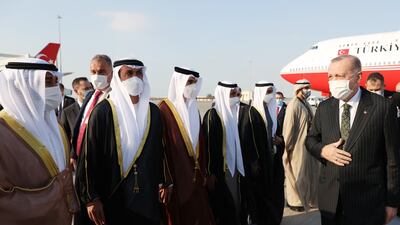
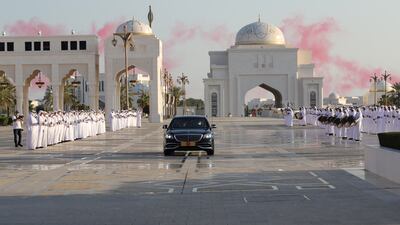
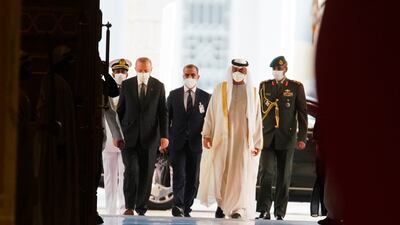
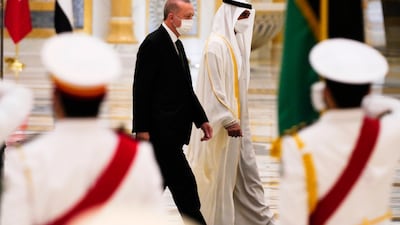
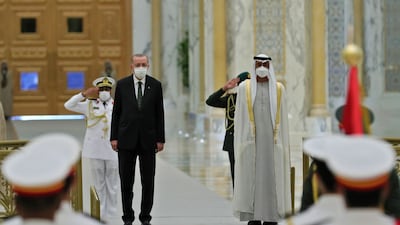
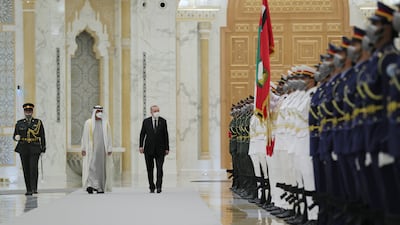
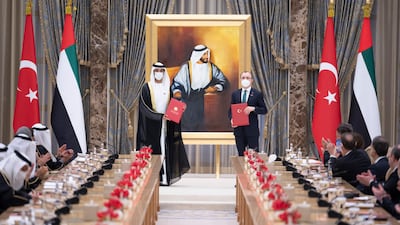
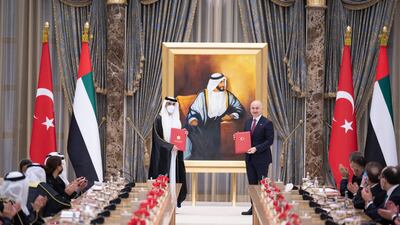
Perhaps most importantly, in recent months Turkey has been able to simultaneously improve ties with regional heavy hitters in Egypt, Saudi Arabia, the UAE and Israel. Last week, the UAE welcomed Turkish President Recep Tayyip Erdogan with great fanfare as the two countries signed more than a dozen co-operative agreements, mostly in defence and trade.
That rapprochement is already paying dividends in Libya. Turkish Ambassador Kenan Yilmaz last month visited House Speaker Aguila Saleh in the country’s east, while the UAE named a new ambassador and reopened its embassy in Tripoli.
Despite the cancellation of the December elections, there seems to be momentum towards reconciliation, with Ankara and Abu Dhabi playing key roles. In addition, the US much prefers the continued military presence of Nato member Turkey in Libya to that of Russia, in the form of Wagner Group militants.
Even the Ukraine crisis has thus far helped boost Turkey's regional profile, as the US and Nato understand that a greater role for Turkey in the Eastern Mediterranean and Black Sea, and as Ukraine’s ally, can help contain Russia. Also, favouring Turkey in these theatres could help keep Ankara onside if war does erupt between Ukraine and Russia, as many expect.
Turkey is now in talks with Riyadh about its president visiting Saudi Arabia, while top Erdogan adviser Ibrahim Kalin stopped in Israel last week to lay the groundwork for Mr Herzog’s Turkey trip. The Israeli president is expected in Ankara March 9-10, and Tel Aviv has made clear that normalisation will not require Turkey to cut ties with Hamas, the Gaza-based, Muslim Brotherhood-linked terror group that has offices in Istanbul.
Anticipation for the summit is considerable, as it will mark the highest-level bilateral meeting since the 2010 Mavi Marmara incident, in which Israeli troops boarded a Turkish humanitarian vessel aiming to break the Gaza blockade and ended up killing 10 Turkish citizens. Some analysts have even suggested that Turkey might offer an alternative to the faltering EastMed Pipeline plan and help deliver Israeli gas to Europe.
Rampant inflation, growing public resentment and record numbers of Covid-19 cases still trouble Turkey at home, but beyond its borders, Ankara is riding high. It’s almost as if the past dozen years had been erased.
To top it off, just as Mr Herzog departs, Turkish officials will open the Antalya Diplomacy Forum. The March 11-13 summit expects high-level delegations from Greece, Egypt, Israel, the Council of Europe, Malta, Iraq and other regional players, perhaps including Armenia.
Turkey is suddenly poised to cement its renewed position of prominence in the Eastern Mediterranean and beyond. It’s all rather tenuous, and one wrong move could still derail this peace train. But since late 2020, what Ankara has achieved with a shift in approach, a dash of desperation and a bit of chutzpah is impressive, and shows just how fleeting isolation can be in this fast-changing geopolitical landscape.
Cinco in numbers
Dh3.7 million
The estimated cost of Victoria Swarovski’s gem-encrusted Michael Cinco wedding gown
46
The number, in kilograms, that Swarovski’s wedding gown weighed.
1,000
The hours it took to create Cinco’s vermillion petal gown, as seen in his atelier [note, is the one he’s playing with in the corner of a room]
50
How many looks Cinco has created in a new collection to celebrate Ballet Philippines’ 50th birthday
3,000
The hours needed to create the butterfly gown worn by Aishwarya Rai to the 2018 Cannes Film Festival.
1.1 million
The number of followers that Michael Cinco’s Instagram account has garnered.
Tonight's Chat on The National
Tonight's Chat is a series of online conversations on The National. The series features a diverse range of celebrities, politicians and business leaders from around the Arab world.
Tonight’s Chat host Ricardo Karam is a renowned author and broadcaster who has previously interviewed Bill Gates, Carlos Ghosn, Andre Agassi and the late Zaha Hadid, among others.
Intellectually curious and thought-provoking, Tonight’s Chat moves the conversation forward.
Facebook | Our website | Instagram
UAE currency: the story behind the money in your pockets
'The Lost Daughter'
Director: Maggie Gyllenhaal
Starring: Olivia Colman, Jessie Buckley, Dakota Johnson
Rating: 4/5
Previous men's records
- 2:01:39: Eliud Kipchoge (KEN) on 16/9/19 in Berlin
- 2:02:57: Dennis Kimetto (KEN) on 28/09/2014 in Berlin
- 2:03:23: Wilson Kipsang (KEN) on 29/09/2013 in Berlin
- 2:03:38: Patrick Makau (KEN) on 25/09/2011 in Berlin
- 2:03:59: Haile Gebreselassie (ETH) on 28/09/2008 in Berlin
- 2:04:26: Haile Gebreselassie (ETH) on 30/09/2007 in Berlin
- 2:04:55: Paul Tergat (KEN) on 28/09/2003 in Berlin
- 2:05:38: Khalid Khannouchi (USA) 14/04/2002 in London
- 2:05:42: Khalid Khannouchi (USA) 24/10/1999 in Chicago
- 2:06:05: Ronaldo da Costa (BRA) 20/09/1998 in Berlin
Ten tax points to be aware of in 2026
1. Domestic VAT refund amendments: request your refund within five years
If a business does not apply for the refund on time, they lose their credit.
2. E-invoicing in the UAE
Businesses should continue preparing for the implementation of e-invoicing in the UAE, with 2026 a preparation and transition period ahead of phased mandatory adoption.
3. More tax audits
Tax authorities are increasingly using data already available across multiple filings to identify audit risks.
4. More beneficial VAT and excise tax penalty regime
Tax disputes are expected to become more frequent and more structured, with clearer administrative objection and appeal processes. The UAE has adopted a new penalty regime for VAT and excise disputes, which now mirrors the penalty regime for corporate tax.
5. Greater emphasis on statutory audit
There is a greater need for the accuracy of financial statements. The International Financial Reporting Standards standards need to be strictly adhered to and, as a result, the quality of the audits will need to increase.
6. Further transfer pricing enforcement
Transfer pricing enforcement, which refers to the practice of establishing prices for internal transactions between related entities, is expected to broaden in scope. The UAE will shortly open the possibility to negotiate advance pricing agreements, or essentially rulings for transfer pricing purposes.
7. Limited time periods for audits
Recent amendments also introduce a default five-year limitation period for tax audits and assessments, subject to specific statutory exceptions. While the standard audit and assessment period is five years, this may be extended to up to 15 years in cases involving fraud or tax evasion.
8. Pillar 2 implementation
Many multinational groups will begin to feel the practical effect of the Domestic Minimum Top-Up Tax (DMTT), the UAE's implementation of the OECD’s global minimum tax under Pillar 2. While the rules apply for financial years starting on or after January 1, 2025, it is 2026 that marks the transition to an operational phase.
9. Reduced compliance obligations for imported goods and services
Businesses that apply the reverse-charge mechanism for VAT purposes in the UAE may benefit from reduced compliance obligations.
10. Substance and CbC reporting focus
Tax authorities are expected to continue strengthening the enforcement of economic substance and Country-by-Country (CbC) reporting frameworks. In the UAE, these regimes are increasingly being used as risk-assessment tools, providing tax authorities with a comprehensive view of multinational groups’ global footprints and enabling them to assess whether profits are aligned with real economic activity.
Contributed by Thomas Vanhee and Hend Rashwan, Aurifer
Mercer, the investment consulting arm of US services company Marsh & McLennan, expects its wealth division to at least double its assets under management (AUM) in the Middle East as wealth in the region continues to grow despite economic headwinds, a company official said.
Mercer Wealth, which globally has $160 billion in AUM, plans to boost its AUM in the region to $2-$3bn in the next 2-3 years from the present $1bn, said Yasir AbuShaban, a Dubai-based principal with Mercer Wealth.
“Within the next two to three years, we are looking at reaching $2 to $3 billion as a conservative estimate and we do see an opportunity to do so,” said Mr AbuShaban.
Mercer does not directly make investments, but allocates clients’ money they have discretion to, to professional asset managers. They also provide advice to clients.
“We have buying power. We can negotiate on their (client’s) behalf with asset managers to provide them lower fees than they otherwise would have to get on their own,” he added.
Mercer Wealth’s clients include sovereign wealth funds, family offices, and insurance companies among others.
From its office in Dubai, Mercer also looks after Africa, India and Turkey, where they also see opportunity for growth.
Wealth creation in Middle East and Africa (MEA) grew 8.5 per cent to $8.1 trillion last year from $7.5tn in 2015, higher than last year’s global average of 6 per cent and the second-highest growth in a region after Asia-Pacific which grew 9.9 per cent, according to consultancy Boston Consulting Group (BCG). In the region, where wealth grew just 1.9 per cent in 2015 compared with 2014, a pickup in oil prices has helped in wealth generation.
BCG is forecasting MEA wealth will rise to $12tn by 2021, growing at an annual average of 8 per cent.
Drivers of wealth generation in the region will be split evenly between new wealth creation and growth of performance of existing assets, according to BCG.
Another general trend in the region is clients’ looking for a comprehensive approach to investing, according to Mr AbuShaban.
“Institutional investors or some of the families are seeing a slowdown in the available capital they have to invest and in that sense they are looking at optimizing the way they manage their portfolios and making sure they are not investing haphazardly and different parts of their investment are working together,” said Mr AbuShaban.
Some clients also have a higher appetite for risk, given the low interest-rate environment that does not provide enough yield for some institutional investors. These clients are keen to invest in illiquid assets, such as private equity and infrastructure.
“What we have seen is a desire for higher returns in what has been a low-return environment specifically in various fixed income or bonds,” he said.
“In this environment, we have seen a de facto increase in the risk that clients are taking in things like illiquid investments, private equity investments, infrastructure and private debt, those kind of investments were higher illiquidity results in incrementally higher returns.”
The Abu Dhabi Investment Authority, one of the largest sovereign wealth funds, said in its 2016 report that has gradually increased its exposure in direct private equity and private credit transactions, mainly in Asian markets and especially in China and India. The authority’s private equity department focused on structured equities owing to “their defensive characteristics.”
Email sent to Uber team from chief executive Dara Khosrowshahi
From: Dara
To: Team@
Date: March 25, 2019 at 11:45pm PT
Subj: Accelerating in the Middle East
Five years ago, Uber launched in the Middle East. It was the start of an incredible journey, with millions of riders and drivers finding new ways to move and work in a dynamic region that’s become so important to Uber. Now Pakistan is one of our fastest-growing markets in the world, women are driving with Uber across Saudi Arabia, and we chose Cairo to launch our first Uber Bus product late last year.
Today we are taking the next step in this journey—well, it’s more like a leap, and a big one: in a few minutes, we’ll announce that we’ve agreed to acquire Careem. Importantly, we intend to operate Careem independently, under the leadership of co-founder and current CEO Mudassir Sheikha. I’ve gotten to know both co-founders, Mudassir and Magnus Olsson, and what they have built is truly extraordinary. They are first-class entrepreneurs who share our platform vision and, like us, have launched a wide range of products—from digital payments to food delivery—to serve consumers.
I expect many of you will ask how we arrived at this structure, meaning allowing Careem to maintain an independent brand and operate separately. After careful consideration, we decided that this framework has the advantage of letting us build new products and try new ideas across not one, but two, strong brands, with strong operators within each. Over time, by integrating parts of our networks, we can operate more efficiently, achieve even lower wait times, expand new products like high-capacity vehicles and payments, and quicken the already remarkable pace of innovation in the region.
This acquisition is subject to regulatory approval in various countries, which we don’t expect before Q1 2020. Until then, nothing changes. And since both companies will continue to largely operate separately after the acquisition, very little will change in either teams’ day-to-day operations post-close. Today’s news is a testament to the incredible business our team has worked so hard to build.
It’s a great day for the Middle East, for the region’s thriving tech sector, for Careem, and for Uber.
Uber on,
Dara
Avatar: Fire and Ash
Director: James Cameron
Starring: Sam Worthington, Sigourney Weaver, Zoe Saldana
Rating: 4.5/5
SPEC%20SHEET%3A%20APPLE%20M3%20MACBOOK%20AIR%20(13%22)
%3Cp%3E%3Cstrong%3EProcessor%3A%3C%2Fstrong%3E%20Apple%20M3%2C%208-core%20CPU%2C%20up%20to%2010-core%20CPU%2C%2016-core%20Neural%20Engine%3C%2Fp%3E%0A%3Cp%3E%3Cstrong%3EDisplay%3A%3C%2Fstrong%3E%2013.6-inch%20Liquid%20Retina%2C%202560%20x%201664%2C%20224ppi%2C%20500%20nits%2C%20True%20Tone%2C%20wide%20colour%3C%2Fp%3E%0A%3Cp%3E%3Cstrong%3EMemory%3A%3C%2Fstrong%3E%208%2F16%2F24GB%3C%2Fp%3E%0A%3Cp%3E%3Cstrong%3EStorage%3A%3C%2Fstrong%3E%20256%2F512GB%20%2F%201%2F2TB%3C%2Fp%3E%0A%3Cp%3E%3Cstrong%3EI%2FO%3A%3C%2Fstrong%3E%20Thunderbolt%203%2FUSB-4%20(2)%2C%203.5mm%20audio%2C%20Touch%20ID%3C%2Fp%3E%0A%3Cp%3E%3Cstrong%3EConnectivity%3A%3C%2Fstrong%3E%20Wi-Fi%206E%2C%20Bluetooth%205.3%3C%2Fp%3E%0A%3Cp%3E%3Cstrong%3EBattery%3A%3C%2Fstrong%3E%2052.6Wh%20lithium-polymer%2C%20up%20to%2018%20hours%2C%20MagSafe%20charging%3C%2Fp%3E%0A%3Cp%3E%3Cstrong%3ECamera%3A%3C%2Fstrong%3E%201080p%20FaceTime%20HD%3C%2Fp%3E%0A%3Cp%3E%3Cstrong%3EVideo%3A%3C%2Fstrong%3E%20Support%20for%20Apple%20ProRes%2C%20HDR%20with%20Dolby%20Vision%2C%20HDR10%3C%2Fp%3E%0A%3Cp%3E%3Cstrong%3EAudio%3A%3C%2Fstrong%3E%204-speaker%20system%2C%20wide%20stereo%2C%20support%20for%20Dolby%20Atmos%2C%20Spatial%20Audio%20and%20dynamic%20head%20tracking%20(with%20AirPods)%3C%2Fp%3E%0A%3Cp%3E%3Cstrong%3EColours%3A%3C%2Fstrong%3E%20Midnight%2C%20silver%2C%20space%20grey%2C%20starlight%3C%2Fp%3E%0A%3Cp%3E%3Cstrong%3EIn%20the%20box%3A%3C%2Fstrong%3E%20MacBook%20Air%2C%2030W%2F35W%20dual-port%2F70w%20power%20adapter%2C%20USB-C-to-MagSafe%20cable%2C%202%20Apple%20stickers%3C%2Fp%3E%0A%3Cp%3E%3Cstrong%3EPrice%3A%3C%2Fstrong%3E%20From%20Dh4%2C599%3C%2Fp%3E%0A
Also on December 7 to 9, the third edition of the Gulf Car Festival (www.gulfcarfestival.com) will take over Dubai Festival City Mall, a new venue for the event. Last year's festival brought together about 900 cars worth more than Dh300 million from across the Emirates and wider Gulf region – and that first figure is set to swell by several hundred this time around, with between 1,000 and 1,200 cars expected. The first day is themed around American muscle; the second centres on supercars, exotics, European cars and classics; and the final day will major in JDM (Japanese domestic market) cars, tuned vehicles and trucks. Individuals and car clubs can register their vehicles, although the festival isn’t all static displays, with stunt drifting, a rev battle, car pulls and a burnout competition.
More from Neighbourhood Watch
SPECS
%3Cp%3E%0D%3Cstrong%3EEngine%3A%3C%2Fstrong%3E%204.0-litre%20twin-turbo%20V8%0D%3Cbr%3E%3Cstrong%3EPower%3A%3C%2Fstrong%3E%20750hp%20at%207%2C500rpm%0D%3Cbr%3E%3Cstrong%3ETorque%3A%3C%2Fstrong%3E%20800Nm%20at%205%2C500rpm%0D%3Cbr%3E%3Cstrong%3ETransmission%3A%3C%2Fstrong%3E%207%20Speed%20dual-clutch%20auto%0D%0D%3Cbr%3E%3Cstrong%3ETop%20speed%3A%3C%2Fstrong%3E%20332kph%0D%3Cbr%3E%3Cstrong%3EFuel%20consumption%3A%3C%2Fstrong%3E%2012.2L%2F100km%0D%3Cbr%3E%3Cstrong%3EOn%20sale%3A%20%3C%2Fstrong%3EYear%20end%0D%3Cbr%3E%3Cstrong%3EPrice%3A%3C%2Fstrong%3E%20From%20Dh1%2C430%2C000%20(coupe)%3B%20From%20Dh1%2C566%2C000%20(Spider)%3C%2Fp%3E%0A
Teri%20Baaton%20Mein%20Aisa%20Uljha%20Jiya
%3Cp%3E%3Cstrong%3EDirectors%3A%3C%2Fstrong%3E%20Amit%20Joshi%20and%20Aradhana%20Sah%3C%2Fp%3E%0A%3Cp%3E%3Cstrong%3ECast%3A%3C%2Fstrong%3E%20Shahid%20Kapoor%2C%20Kriti%20Sanon%2C%20Dharmendra%2C%20Dimple%20Kapadia%2C%20Rakesh%20Bedi%3C%2Fp%3E%0A%3Cp%3E%3Cstrong%3ERating%3A%3C%2Fstrong%3E%204%2F5%3C%2Fp%3E%0A
The%C2%A0specs%20
%3Cp%3E%3Cstrong%3EEngine%3A%20%3C%2Fstrong%3E4.4-litre%2C%20twin-turbo%20V8%0D%3Cbr%3E%3Cstrong%3ETransmission%3A%20%3C%2Fstrong%3Eeight-speed%20auto%0D%3Cbr%3E%3Cstrong%3EPower%3A%20%3C%2Fstrong%3E617hp%0D%3Cbr%3E%3Cstrong%3ETorque%3A%20%3C%2Fstrong%3E750Nm%0D%3Cbr%3E%3Cstrong%3EPrice%3A%20%3C%2Fstrong%3Efrom%20Dh630%2C000%0D%3Cbr%3E%3Cstrong%3EOn%20sale%3A%20%3C%2Fstrong%3Enow%3C%2Fp%3E%0A
Timeline
2012-2015
The company offers payments/bribes to win key contracts in the Middle East
May 2017
The UK SFO officially opens investigation into Petrofac’s use of agents, corruption, and potential bribery to secure contracts
September 2021
Petrofac pleads guilty to seven counts of failing to prevent bribery under the UK Bribery Act
October 2021
Court fines Petrofac £77 million for bribery. Former executive receives a two-year suspended sentence
December 2024
Petrofac enters into comprehensive restructuring to strengthen the financial position of the group
May 2025
The High Court of England and Wales approves the company’s restructuring plan
July 2025
The Court of Appeal issues a judgment challenging parts of the restructuring plan
August 2025
Petrofac issues a business update to execute the restructuring and confirms it will appeal the Court of Appeal decision
October 2025
Petrofac loses a major TenneT offshore wind contract worth €13 billion. Holding company files for administration in the UK. Petrofac delisted from the London Stock Exchange
November 2025
180 Petrofac employees laid off in the UAE
Company Fact Box
Company name/date started: Abwaab Technologies / September 2019
Founders: Hamdi Tabbaa, co-founder and CEO. Hussein Alsarabi, co-founder and CTO
Based: Amman, Jordan
Sector: Education Technology
Size (employees/revenue): Total team size: 65. Full-time employees: 25. Revenue undisclosed
Stage: early-stage startup
Investors: Adam Tech Ventures, Endure Capital, Equitrust, the World Bank-backed Innovative Startups SMEs Fund, a London investment fund, a number of former and current executives from Uber and Netflix, among others.
The specs
Engine: 2.0-litre 4cyl turbo
Power: 261hp at 5,500rpm
Torque: 405Nm at 1,750-3,500rpm
Transmission: 9-speed auto
Fuel consumption: 6.9L/100km
On sale: Now
Price: From Dh117,059
Specs
Engine: Dual-motor all-wheel-drive electric
Range: Up to 610km
Power: 905hp
Torque: 985Nm
Price: From Dh439,000
Available: Now
Russia's Muslim Heartlands
Dominic Rubin, Oxford
More on animal trafficking
Red flags
- Promises of high, fixed or 'guaranteed' returns.
- Unregulated structured products or complex investments often used to bypass traditional safeguards.
- Lack of clear information, vague language, no access to audited financials.
- Overseas companies targeting investors in other jurisdictions - this can make legal recovery difficult.
- Hard-selling tactics - creating urgency, offering 'exclusive' deals.
Courtesy: Carol Glynn, founder of Conscious Finance Coaching