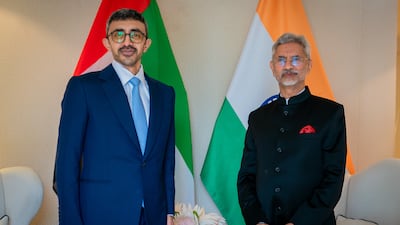
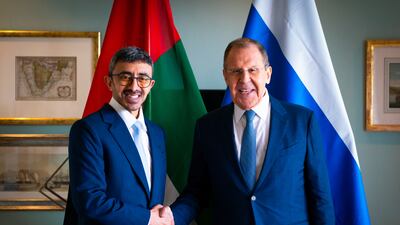
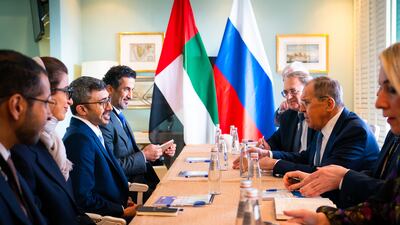
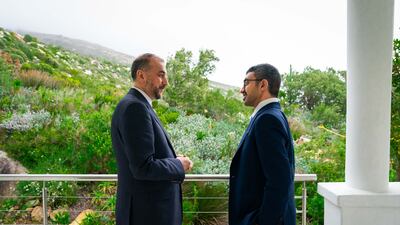
For the better part of the 20th century, international diplomacy danced to the tune of superpowers. A seismic shift occurred in the early 1990s as the US became the solitary global leader. Today, as the world grapples with unprecedented challenges that demand collective efforts, the established norms of international relations are undergoing yet another transformation.
The transition from a unipolar or bipolar world to a multipolar one has thrust middle powers into a pivotal role. In an era where the solutions to global challenges demand collective action, middle powers bring their diplomatic finesse and adaptability to the fore. They can leverage their cultural and economic sway as vital bridges to champion values, promote financial stability, and ensure regional peace.
The simultaneous inclusion of six new members, including former rivals and competitors such as Argentina, Egypt, Ethiopia, Iran, Saudi Arabia and the UAE, into the Brics grouping brings substantial value to the ongoing endeavours of advancing economic diplomacy and political reconciliation in a rapidly changing global landscape.
The UAE sees its Brics membership as diversifying its partnerships and markets while preserving its traditional relations with Europe and the US
The UAE stands at a juncture as it joins Brics. Beyond economic motives, this move signifies the UAE's ambition to amplify its geopolitical sway, encourage multilateral co-operation, and adapt to a multipolar world.
The UAE can solidify its position as a global trade and logistics hub by aligning with the Brics economies. A testament to this potential is the thriving UAE-India bilateral trade, projected to reach $100 billion by 2030, spurred by their Comprehensive Economic Partnership Agreement. China has also become the country's largest non-oil trading partner. Trade between the UAE and Brazil has also increased by a whopping 32 per cent between 2021 and 2022 and surged a further 8 per cent in the first seven months of 2023. Diversification is critical if the country is to achieve its ambition of doubling its gross domestic product by 2030, continuing to reduce its dependency on oil and fostering a knowledge-based economy.
At a time when global confrontation is on the rise, Abu Dhabi sees a long-term investment in co-operation as the best way forward. Joining Brics elevates the UAE's geopolitical clout and the Emirates recognises the importance of consolidating its relations with diverse actors such as the US, China, India, Russia and the EU. From the passage of the landmark resolution addressing hate speech and extremism to the renewal of crucial UN peacekeeping mandates during its second presidency of the Security Council, the UAE has shown that it can be a strong voice for multilateralism.
The UAE's accession to Brics offers more than just economic growth or political clout; it is an opportunity to attract talent and investment through strategic partnerships. Indian IT companies already leverage the UAE as a hub to tap into nearby regional markets. More than 200 Indian companies participated in Gitex Global 2022, the world's biggest technology event. Education partnerships with Brazilian universities can contribute to the UAE's innovation landscape. In 2022, Mubadala invested in two medical universities in Brazil with about 2,000 students.
As a significant oil producer, the UAE stands to find common ground with Brics nations in energy collaboration, renewable energy, energy security and sustainable development. For instance, the UAE and India are close to a renewable energy interconnection agreement. Both countries have agreed to expand bilateral co-operation towards accelerated climate action, including public-private partnership across renewable power deployment, agriculture efficiency, green hydrogen and carbon market development.
The UAE's membership in Brics symbolises its strategic vision of diversification in a world reshaped by the dynamic interplay of multiple powers. Abu Dhabi does not see its accession to Brics as joining a bloc. On the contrary, it sees it as diversifying its partnerships and markets while preserving its traditional relations with Europe and the US. Brics membership empowers the UAE to bolster its multi-alignment strategy by fostering the diplomatic ties that it has with the US through initiatives such as I2U2 (Israel, India, the UAE and the US) and with China through the Brics grouping. The UAE's diplomatic agility, robust economic partnerships and commitment to multilateralism are a beacon of hope amid turbulent times. As the country looks to host Cop28 and the 13th Ministerial Conference of the World Trade Organisation, the UAE's contributions to Brics discussions on climate action, counterterrorism and sustainable development could prove invaluable.
In the intricate tapestry of international relations, middle powers are emerging as the linchpins of co-operation, wielding their influence to build bridges, foster peace and drive progress. The UAE's journey towards Brics membership reflects its determination to shape a brighter global future in a world yearning for collaboration.
The biog
Name: Younis Al Balooshi
Nationality: Emirati
Education: Doctorate degree in forensic medicine at the University of Bonn
Hobbies: Drawing and reading books about graphic design
Ten tax points to be aware of in 2026
1. Domestic VAT refund amendments: request your refund within five years
If a business does not apply for the refund on time, they lose their credit.
2. E-invoicing in the UAE
Businesses should continue preparing for the implementation of e-invoicing in the UAE, with 2026 a preparation and transition period ahead of phased mandatory adoption.
3. More tax audits
Tax authorities are increasingly using data already available across multiple filings to identify audit risks.
4. More beneficial VAT and excise tax penalty regime
Tax disputes are expected to become more frequent and more structured, with clearer administrative objection and appeal processes. The UAE has adopted a new penalty regime for VAT and excise disputes, which now mirrors the penalty regime for corporate tax.
5. Greater emphasis on statutory audit
There is a greater need for the accuracy of financial statements. The International Financial Reporting Standards standards need to be strictly adhered to and, as a result, the quality of the audits will need to increase.
6. Further transfer pricing enforcement
Transfer pricing enforcement, which refers to the practice of establishing prices for internal transactions between related entities, is expected to broaden in scope. The UAE will shortly open the possibility to negotiate advance pricing agreements, or essentially rulings for transfer pricing purposes.
7. Limited time periods for audits
Recent amendments also introduce a default five-year limitation period for tax audits and assessments, subject to specific statutory exceptions. While the standard audit and assessment period is five years, this may be extended to up to 15 years in cases involving fraud or tax evasion.
8. Pillar 2 implementation
Many multinational groups will begin to feel the practical effect of the Domestic Minimum Top-Up Tax (DMTT), the UAE's implementation of the OECD’s global minimum tax under Pillar 2. While the rules apply for financial years starting on or after January 1, 2025, it is 2026 that marks the transition to an operational phase.
9. Reduced compliance obligations for imported goods and services
Businesses that apply the reverse-charge mechanism for VAT purposes in the UAE may benefit from reduced compliance obligations.
10. Substance and CbC reporting focus
Tax authorities are expected to continue strengthening the enforcement of economic substance and Country-by-Country (CbC) reporting frameworks. In the UAE, these regimes are increasingly being used as risk-assessment tools, providing tax authorities with a comprehensive view of multinational groups’ global footprints and enabling them to assess whether profits are aligned with real economic activity.
Contributed by Thomas Vanhee and Hend Rashwan, Aurifer
Zayed Sustainability Prize
SPECS
%3Cp%3E%3Cstrong%3EEngine%3A%20%3C%2Fstrong%3E4-litre%20flat-six%0D%3Cbr%3E%3Cstrong%3EPower%3A%20%3C%2Fstrong%3E525hp%20(GT3)%2C%20500hp%20(GT4)%0D%3Cbr%3E%3Cstrong%3ETorque%3A%20%3C%2Fstrong%3E465Nm%20(GT3)%2C%20450Nm%20(GT4)%0D%3Cbr%3E%3Cstrong%3ETransmission%3A%20%3C%2Fstrong%3ESeven-speed%20automatic%0D%3Cbr%3E%3Cstrong%3EPrice%3A%20%3C%2Fstrong%3EFrom%20Dh944%2C000%20(GT3)%2C%20Dh581%2C700%20(GT4)%0D%3Cbr%3E%3Cstrong%3EOn%20sale%3A%20%3C%2Fstrong%3ENow%0D%3Cbr%3E%3C%2Fp%3E%0A
The specs
Engine: 2.0-litre 4cyl turbo
Power: 261hp at 5,500rpm
Torque: 405Nm at 1,750-3,500rpm
Transmission: 9-speed auto
Fuel consumption: 6.9L/100km
On sale: Now
Price: From Dh117,059
Business Insights
- As per the document, there are six filing options, including choosing to report on a realisation basis and transitional rules for pre-tax period gains or losses.
- SMEs with revenue below Dh3 million per annum can opt for transitional relief until 2026, treating them as having no taxable income.
- Larger entities have specific provisions for asset and liability movements, business restructuring, and handling foreign permanent establishments.
Kibsons%20Cares
%3Cp%3E%3Cstrong%3ERecycling%3Cbr%3E%3C%2Fstrong%3EAny%20time%20you%20receive%20a%20Kibsons%20order%2C%20you%20can%20return%20your%20cardboard%20box%20to%20the%20drivers.%20They%E2%80%99ll%20be%20happy%20to%20take%20it%20off%20your%20hands%20and%20ensure%20it%20gets%20reused%3C%2Fp%3E%0A%3Cp%3E%3Cstrong%3EKind%20to%20health%20and%20planet%3C%2Fstrong%3E%3Cbr%3ESolar%20%E2%80%93%2025-50%25%20of%20electricity%20saved%3Cbr%3EWater%20%E2%80%93%2075%25%20of%20water%20reused%3Cbr%3EBiofuel%20%E2%80%93%20Kibsons%20fleet%20to%20get%2020%25%20more%20mileage%20per%20litre%20with%20biofuel%20additives%3C%2Fp%3E%0A%3Cp%3E%3Cstrong%3ESustainable%20grocery%20shopping%3C%2Fstrong%3E%3Cbr%3ENo%20antibiotics%3Cbr%3ENo%20added%20hormones%3Cbr%3ENo%20GMO%3Cbr%3ENo%20preservatives%3Cbr%3EMSG%20free%3Cbr%3E100%25%20natural%3C%2Fp%3E%0A
Five famous companies founded by teens
There are numerous success stories of teen businesses that were created in college dorm rooms and other modest circumstances. Below are some of the most recognisable names in the industry:
- Facebook: Mark Zuckerberg and his friends started Facebook when he was a 19-year-old Harvard undergraduate.
- Dell: When Michael Dell was an undergraduate student at Texas University in 1984, he started upgrading computers for profit. He starting working full-time on his business when he was 19. Eventually, his company became the Dell Computer Corporation and then Dell Inc.
- Subway: Fred DeLuca opened the first Subway restaurant when he was 17. In 1965, Mr DeLuca needed extra money for college, so he decided to open his own business. Peter Buck, a family friend, lent him $1,000 and together, they opened Pete’s Super Submarines. A few years later, the company was rebranded and called Subway.
- Mashable: In 2005, Pete Cashmore created Mashable in Scotland when he was a teenager. The site was then a technology blog. Over the next few decades, Mr Cashmore has turned Mashable into a global media company.
- Oculus VR: Palmer Luckey founded Oculus VR in June 2012, when he was 19. In August that year, Oculus launched its Kickstarter campaign and raised more than $1 million in three days. Facebook bought Oculus for $2 billion two years later.
APPLE IPAD MINI (A17 PRO)
Display: 21cm Liquid Retina Display, 2266 x 1488, 326ppi, 500 nits
Chip: Apple A17 Pro, 6-core CPU, 5-core GPU, 16-core Neural Engine
Storage: 128/256/512GB
Main camera: 12MP wide, f/1.8, digital zoom up to 5x, Smart HDR 4
Front camera: 12MP ultra-wide, f/2.4, Smart HDR 4, full-HD @ 25/30/60fps
Biometrics: Touch ID, Face ID
Colours: Blue, purple, space grey, starlight
In the box: iPad mini, USB-C cable, 20W USB-C power adapter
Price: From Dh2,099
Our family matters legal consultant
Name: Hassan Mohsen Elhais
Position: legal consultant with Al Rowaad Advocates and Legal Consultants.
More from Neighbourhood Watch
COMPANY%20PROFILE%20
%3Cp%3EName%3A%20DarDoc%3Cbr%3EBased%3A%20Abu%20Dhabi%3Cbr%3EFounders%3A%20Samer%20Masri%2C%20Keswin%20Suresh%3Cbr%3ESector%3A%20HealthTech%3Cbr%3ETotal%20funding%3A%20%24800%2C000%3Cbr%3EInvestors%3A%20Flat6Labs%2C%20angel%20investors%20%2B%20Incubated%20by%20Hub71%2C%20Abu%20Dhabi's%20Department%20of%20Health%3Cbr%3ENumber%20of%20employees%3A%2010%3C%2Fp%3E%0A
25%20Days%20to%20Aden
%3Cp%3EAuthor%3A%20Michael%20Knights%3C%2Fp%3E%0A%3Cp%3EPages%3A%20256%3C%2Fp%3E%0A%3Cp%3EAvailable%3A%20January%2026%3C%2Fp%3E%0A
More from Rashmee Roshan Lall
Our legal columnist
Name: Yousef Al Bahar
Advocate at Al Bahar & Associate Advocates and Legal Consultants, established in 1994
Education: Mr Al Bahar was born in 1979 and graduated in 2008 from the Judicial Institute. He took after his father, who was one of the first Emirati lawyers
Dhadak 2
Director: Shazia Iqbal
Starring: Siddhant Chaturvedi, Triptii Dimri
Rating: 1/5
The specs: 2019 Mercedes-Benz GLE
Price, base / as tested Dh274,000 (estimate)
Engine 3.0-litre inline six-cylinder
Gearbox Nine-speed automatic
Power 245hp @ 4,200rpm
Torque 500Nm @ 1,600rpm
Fuel economy, combined 6.4L / 100km