As a BBC journalist, I often avoided British “royal reporting”. The death of Princess Diana, or the state opening of Parliament were obvious exceptions, but I loathed (and still loathe) the silliness that so much “royal reporting” often seems to involve.
On one occasion, in Washington, I covered the visit of Queen Elizabeth II. One highlight was her speech at the White House. Staff set up the podium for the height of the president, George HW Bush, but he was considerably taller than the Queen, and so when the Queen went to speak at the microphone the main “heads-on” camera showed only what looked like her talking hat. Since there were half a dozen other television cameras available, I made sure we used the side shots showing the Queen speaking to the audience.
Other networks stayed on the “talking hat” – and that humorous glitch made the news bulletins. It was gentle fun, but I cannot bear this bizarre mixture of respect coupled with trivia that so often features in royal reporting.
Over the years, I did meet royal family members and their views were clear. At a social event the Queen’s husband, Prince Philip, once joined a conversation I was having with a prominent American journalist. The Prince dismissed “royal reporting” as “mere gossip and tittle tattle”. Mostly, I agree. And so, fast forward to the past few weeks of bizarre – and offensive – gossip and tittle tattle about the British royals.
Nature abhors a vacuum. Social media abhors an information vacuum
But first, a relevant fact. Statistically, one in two of us alive now will develop some form of cancer. Perhaps you, me, and plenty of people we know. And so when the Princess of Wales, the wife of the British heir to the throne affectionately known as “Kate”, a woman who will be Queen of the United Kingdom one day, disappeared from public view for unspecified hospital treatment, it was not surprising that there was considerable public speculation.
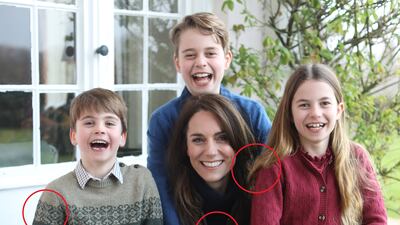
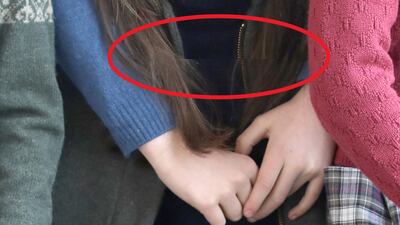
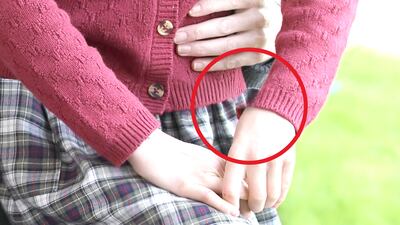
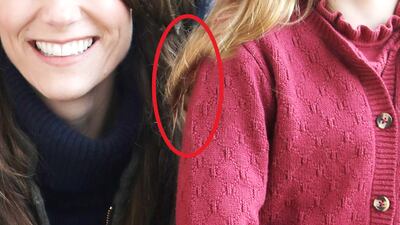
Her cancer diagnosis was eventually made public. But during the news vacuum, “royal reporting” turned on the release of a photoshopped picture of the Princess and her children.
The result was one of the most bizarre media feeding frenzies imaginable. Over the years, I have met many Royal staff and they are generally extremely talented and on-the-ball people. In this case, someone made an unfortunate mistake, allowing the release of the photoshopped image, which was then recalled by newspapers. The gaggle of self-identified “royal experts” then pontificated about what all this meant. They were given platforms in newspapers, on radio and television to drone on at length, often quoting anonymous “sources” revealing nothing much beyond a lack of reliable knowledge.
Nature abhors a vacuum. Social media abhors an information vacuum. Foreign broadcasters went wild with unsubstantiated theories and lurid gossip appeared online. The hurt to a family – royal or otherwise – going through the trauma of serious illness is unimaginable. And so now that the immediate wave of hysteria has broken, perhaps we can take a deep breath and understand what we have actually learnt.
First, people in positions of great power and privilege are – guess what? – human beings. They have the good points and the frailties of the rest of us. King Charles III is also receiving medical treatment – again, not unusual for a man in his seventies. Let’s give him some space to recover without more wild speculation.
Second, the public worldwide, and the British public in particular, will inevitably be curious about the British royal family. Curiosity sells newspapers and engages TV viewers. But feeding this beast produces a great deal of junk journalism. Illness demands privacy.
Third, (as I noted here before) we should all be suspicious of self-described royal experts. Some scholars and a few rigorous writers and commentators do fit that description. Others pretend to know royal secrets to further their careers, turning real lives into marketable commodities.
Fourth, social media is useful and fun, but it can encourage the herd to jump off the information cliff. Fifth – a bit to my surprise – British popular tabloid newspapers were largely cautious and respectful about the Kate stories. Good. Perhaps they might also consider how they handle stories about Harry and Meghan, rather than always painting them as villains in some royal soap opera.
Sixth and finally, can we all have a bit of empathy? In The Merchant of Venice, Shakespeare wrote of our common humanity: “If you prick us, do we not bleed? If you tickle us, do we not laugh?”
Sure, we love gossip about people in power and their frailties, but they bleed and laugh, too. The stumbles of US President Joe Biden make headlines, but that’s also why I feel empathy for him, since I have a clumsy lifetime of tripping over my own feet.
And so maybe, then, there is some good news salvageable from what Prince Philip called the “gossip and tittle tattle”. Our future Queen emerges as an admirable figure. We can wish her a speedy recovery, while learning the clear lesson of this royal saga. We all need to consider which media sources can be trusted and which are simply toxic.

Key facilities
- Olympic-size swimming pool with a split bulkhead for multi-use configurations, including water polo and 50m/25m training lanes
- Premier League-standard football pitch
- 400m Olympic running track
- NBA-spec basketball court with auditorium
- 600-seat auditorium
- Spaces for historical and cultural exploration
- An elevated football field that doubles as a helipad
- Specialist robotics and science laboratories
- AR and VR-enabled learning centres
- Disruption Lab and Research Centre for developing entrepreneurial skills
Tamkeen's offering
- Option 1: 70% in year 1, 50% in year 2, 30% in year 3
- Option 2: 50% across three years
- Option 3: 30% across five years
TUESDAY'S ORDER OF PLAY
Centre Court
Starting at 2pm:
Elina Svitolina (UKR) [3] v Jennifer Brady (USA)
Anastasia Pavlyuchenkova (RUS) v Belinda Bencic (SUI [4]
Not before 7pm:
Sofia Kenin (USA) [5] v Elena Rybakina (KAZ)
Maria Sakkari (GRE) v Aryna Sabalenka (BLR) [7]
Court One
Starting at midday:
Karolina Muchova (CZE) v Katerina Siniakova (CZE)
Kristina Mladenovic (FRA) v Aliaksandra Sasnovich (BLR)
Veronika Kudermetova (RUS) v Dayana Yastermska (UKR)
Petra Martic (CRO) [8] v Su-Wei Hsieh (TPE)
Sorana Cirstea (ROU) v Anett Kontaveit (EST)
Killing of Qassem Suleimani
Innotech Profile
Date started: 2013
Founder/CEO: Othman Al Mandhari
Based: Muscat, Oman
Sector: Additive manufacturing, 3D printing technologies
Size: 15 full-time employees
Stage: Seed stage and seeking Series A round of financing
Investors: Oman Technology Fund from 2017 to 2019, exited through an agreement with a new investor to secure new funding that it under negotiation right now.
Who's who in Yemen conflict
Houthis: Iran-backed rebels who occupy Sanaa and run unrecognised government
Yemeni government: Exiled government in Aden led by eight-member Presidential Leadership Council
Southern Transitional Council: Faction in Yemeni government that seeks autonomy for the south
Habrish 'rebels': Tribal-backed forces feuding with STC over control of oil in government territory
The Pope's itinerary
Sunday, February 3, 2019 - Rome to Abu Dhabi
1pm: departure by plane from Rome / Fiumicino to Abu Dhabi
10pm: arrival at Abu Dhabi Presidential Airport
Monday, February 4
12pm: welcome ceremony at the main entrance of the Presidential Palace
12.20pm: visit Abu Dhabi Crown Prince at Presidential Palace
5pm: private meeting with Muslim Council of Elders at Sheikh Zayed Grand Mosque
6.10pm: Inter-religious in the Founder's Memorial
Tuesday, February 5 - Abu Dhabi to Rome
9.15am: private visit to undisclosed cathedral
10.30am: public mass at Zayed Sports City – with a homily by Pope Francis
12.40pm: farewell at Abu Dhabi Presidential Airport
1pm: departure by plane to Rome
5pm: arrival at the Rome / Ciampino International Airport
Scoreline
Ireland 16 (Tries: Stockdale Cons: Sexton Pens: Sexton 3)
New Zealand 9 (Pens: Barrett 2 Drop Goal: Barrett)
Mercer, the investment consulting arm of US services company Marsh & McLennan, expects its wealth division to at least double its assets under management (AUM) in the Middle East as wealth in the region continues to grow despite economic headwinds, a company official said.
Mercer Wealth, which globally has $160 billion in AUM, plans to boost its AUM in the region to $2-$3bn in the next 2-3 years from the present $1bn, said Yasir AbuShaban, a Dubai-based principal with Mercer Wealth.
“Within the next two to three years, we are looking at reaching $2 to $3 billion as a conservative estimate and we do see an opportunity to do so,” said Mr AbuShaban.
Mercer does not directly make investments, but allocates clients’ money they have discretion to, to professional asset managers. They also provide advice to clients.
“We have buying power. We can negotiate on their (client’s) behalf with asset managers to provide them lower fees than they otherwise would have to get on their own,” he added.
Mercer Wealth’s clients include sovereign wealth funds, family offices, and insurance companies among others.
From its office in Dubai, Mercer also looks after Africa, India and Turkey, where they also see opportunity for growth.
Wealth creation in Middle East and Africa (MEA) grew 8.5 per cent to $8.1 trillion last year from $7.5tn in 2015, higher than last year’s global average of 6 per cent and the second-highest growth in a region after Asia-Pacific which grew 9.9 per cent, according to consultancy Boston Consulting Group (BCG). In the region, where wealth grew just 1.9 per cent in 2015 compared with 2014, a pickup in oil prices has helped in wealth generation.
BCG is forecasting MEA wealth will rise to $12tn by 2021, growing at an annual average of 8 per cent.
Drivers of wealth generation in the region will be split evenly between new wealth creation and growth of performance of existing assets, according to BCG.
Another general trend in the region is clients’ looking for a comprehensive approach to investing, according to Mr AbuShaban.
“Institutional investors or some of the families are seeing a slowdown in the available capital they have to invest and in that sense they are looking at optimizing the way they manage their portfolios and making sure they are not investing haphazardly and different parts of their investment are working together,” said Mr AbuShaban.
Some clients also have a higher appetite for risk, given the low interest-rate environment that does not provide enough yield for some institutional investors. These clients are keen to invest in illiquid assets, such as private equity and infrastructure.
“What we have seen is a desire for higher returns in what has been a low-return environment specifically in various fixed income or bonds,” he said.
“In this environment, we have seen a de facto increase in the risk that clients are taking in things like illiquid investments, private equity investments, infrastructure and private debt, those kind of investments were higher illiquidity results in incrementally higher returns.”
The Abu Dhabi Investment Authority, one of the largest sovereign wealth funds, said in its 2016 report that has gradually increased its exposure in direct private equity and private credit transactions, mainly in Asian markets and especially in China and India. The authority’s private equity department focused on structured equities owing to “their defensive characteristics.”
UAE currency: the story behind the money in your pockets
UK’s AI plan
- AI ambassadors such as MIT economist Simon Johnson, Monzo cofounder Tom Blomfield and Google DeepMind’s Raia Hadsell
- £10bn AI growth zone in South Wales to create 5,000 jobs
- £100m of government support for startups building AI hardware products
- £250m to train new AI models
Why it pays to compare
A comparison of sending Dh20,000 from the UAE using two different routes at the same time - the first direct from a UAE bank to a bank in Germany, and the second from the same UAE bank via an online platform to Germany - found key differences in cost and speed. The transfers were both initiated on January 30.
Route 1: bank transfer
The UAE bank charged Dh152.25 for the Dh20,000 transfer. On top of that, their exchange rate margin added a difference of around Dh415, compared with the mid-market rate.
Total cost: Dh567.25 - around 2.9 per cent of the total amount
Total received: €4,670.30
Route 2: online platform
The UAE bank’s charge for sending Dh20,000 to a UK dirham-denominated account was Dh2.10. The exchange rate margin cost was Dh60, plus a Dh12 fee.
Total cost: Dh74.10, around 0.4 per cent of the transaction
Total received: €4,756
The UAE bank transfer was far quicker – around two to three working days, while the online platform took around four to five days, but was considerably cheaper. In the online platform transfer, the funds were also exposed to currency risk during the period it took for them to arrive.
RESULTS
Dubai Kahayla Classic – Group 1 (PA) $750,000 (Dirt) 2,000m
Winner: Deryan, Ioritz Mendizabal (jockey), Didier Guillemin (trainer).
Godolphin Mile – Group 2 (TB) $750,000 (D) 1,600m
Winner: Secret Ambition, Tadhg O’Shea, Satish Seemar
Dubai Gold Cup – Group 2 (TB) $750,000 (Turf) 3,200m
Winner: Subjectivist, Joe Fanning, Mark Johnston
Al Quoz Sprint – Group 1 (TB) $1million (T) 1,200m
Winner: Extravagant Kid, Ryan Moore, Brendan Walsh
UAE Derby – Group 2 (TB) $750,000 (D) 1,900m
Winner: Rebel’s Romance, William Buick, Charlie Appleby
Dubai Golden Shaheen – Group 1 (TB) $1.5million (D) 1,200m
Winner: Zenden, Antonio Fresu, Carlos David
Dubai Turf – Group 1 (TB) $4million (T) 1,800m
Winner: Lord North, Frankie Dettori, John Gosden
Dubai Sheema Classic – Group 1 (TB) $5million (T) 2,410m
Winner: Mishriff, John Egan, John Gosden
The story in numbers
18
This is how many recognised sects Lebanon is home to, along with about four million citizens
450,000
More than this many Palestinian refugees are registered with UNRWA in Lebanon, with about 45 per cent of them living in the country’s 12 refugee camps
1.5 million
There are just under 1 million Syrian refugees registered with the UN, although the government puts the figure upwards of 1.5m
73
The percentage of stateless people in Lebanon, who are not of Palestinian origin, born to a Lebanese mother, according to a 2012-2013 study by human rights organisation Frontiers Ruwad Association
18,000
The number of marriages recorded between Lebanese women and foreigners between the years 1995 and 2008, according to a 2009 study backed by the UN Development Programme
77,400
The number of people believed to be affected by the current nationality law, according to the 2009 UN study
4,926
This is how many Lebanese-Palestinian households there were in Lebanon in 2016, according to a census by the Lebanese-Palestinian dialogue committee
How much do leading UAE’s UK curriculum schools charge for Year 6?
- Nord Anglia International School (Dubai) – Dh85,032
- Kings School Al Barsha (Dubai) – Dh71,905
- Brighton College Abu Dhabi - Dh68,560
- Jumeirah English Speaking School (Dubai) – Dh59,728
- Gems Wellington International School – Dubai Branch – Dh58,488
- The British School Al Khubairat (Abu Dhabi) - Dh54,170
- Dubai English Speaking School – Dh51,269
*Annual tuition fees covering the 2024/2025 academic year
Abu Dhabi Sustainability Week