Demands for justice have accompanied the jubilation at the fall of Syria’s Bashar Al Assad. That is understandable as the atrocities under his misrule touched so many.
The full horrors are coming into focus as prisons and torture cells are thrown open, and mass graves identified. The destruction, displacement and disappearances that accompanied the 13-year civil war indicate the systematic abuse of human rights and humanitarian law, as well as war crimes and crimes against humanity.
Even where laws are bent or broken by the powerful, it is inconceivable that such heinous acts go unpunished. The basic instinct for wrongs to be righted infuses the 1948 Universal Declaration of Human Rights, which calls for “equal protection” and “effective remedy” by law.
What justice are Syrians wanting, and how do they want it dispensed? Although this month’s national conference of political and social actors has been postponed, the new rulers should not decide without consulting the most affected, even if traumatised communities mourning their losses will not have settled mindsets.
Meanwhile, as some ponder brutal vengeance, the interim government asks people not to take justice into their own hands. Others argue for ignoring what happened and moving on.
Neither extreme benefits Syria. For example, victor’s justice as imposed by the Allies in the post-Second World War Nuremberg and Tokyo Trials is unacceptable if only Mr Al Assad’s operatives are tried, and no other criminals from ISIS, Hezbollah, foreign forces and predecessors of Hayat Tahrir Al Sham. Conversely, impunity through amnesia can seed future trouble, as in Lebanon after its 1975-1990 civil war.
With so much at stake, Syria cannot afford the luxury of justice that simply provides the gratification of punishing a few war criminals. Instead, a pragmatic judicial formula is required to advance a higher national purpose that is critical for Syria’s future.
Justice must, therefore, bring meaning for those who suffered, offer restitution where possible and signal pathways towards closure and healing. Associated accountability must de-toxify public and private institutions, restore trust in government, and enable revised political, economic, social, security and legal foundations so that Syria does not regress to brutal violence.
To realise this tall order requires following clear principles starting with the aphorism “justice must not only be done but also be seen to be done”. That needs Syrian-led processes close to the crimes occurred, rather than in foreign jurisdictions.
While prosecutions under “universal jurisdiction” by third countries have a role when alleged perpetrators are caught on their territory, as has happened in Germany, this provides limited comfort.
Involving the International Criminal Court is even less fruitful. Syria is not a signatory to the Rome Statute, and Russia and China have previously vetoed UN Security Council referral to the ICC. As Mr Al Assad is currently hosted by Russia, whose leader is himself under ICC indictment for alleged crimes in Ukraine, the Russian veto remains.
Could a refugee-hosting state such as ICC-member Jordan trigger a process, as happened with the Rohingya expulsions from Myanmar into Bangladesh? The utility of that is uncertain because the ICC moves at a glacial pace.
The International Court of Justice has proved even more toothless, not just in the ongoing Israel/Gaza case, but specifically in Syria where its 2023 “provisional measures” against torture and cruel degrading treatment were simply ignored.
Justice delayed is justice denied, thereby creating disgruntlement and risking recovery and stability. If international mechanisms are not up to the job, Syria must find its own approaches, even as the broken nation must also tackle other urgent needs.
Where to start poses a conundrum. Syria’s new rulers have frozen the constitution and formed a legal and human rights committee to propose amendments. How that affects its penal code and judicial practice – an inherited mix of Ottoman, French and Islamic laws along with Assad-era diktats – is unclear.
Who will be prosecuted? The interim government wants to focus on senior leaders and organisers who have “blood on their hands”. But Mr Al Assad’s terror apparatus relied on a vast network of functionaries who co-operated voluntarily or under coercion. Social justice requires their accountability through acknowledgment mechanisms akin to South Africa’s Truth and Reconciliation Commission and Rwanda’s grassroots or “gacaca” courts.
Where will prosecutions occur? Syria has a panoply of constitutional, civil, criminal, military and security courts. But with judges and prosecutors appointed by the previous discredited regime, a special court or tribunal with integrity and independence is needed.
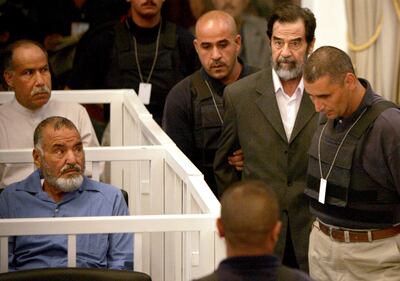
If Syria is unable to create this, hybrid national and international tribunals offer a way. But experience is mixed. The Special Tribunal for Lebanon after the 2005 assassination of former prime minister Rafic Hariri folded in 2023, its job not done despite expending more than a billion dollars. The flawed methods of the Iraqi High Tribunal were blamed for an alleged “show trial” in 2005 that sentenced former president Saddam Hussein to death. Both hybrid courts sought global and domestic legitimacy through combining international and national laws but satisfied neither.
Moreover, authorising a Syrian hybrid court would require a UN Security Council resolution that Russia must be persuaded not to veto.
The Syrian context is further complicated because reforming its discredited Assad-era penal code will take time. And the extent to which revisions would comply with international norms remains to be seen, especially if Syria decides on adopting the sharia as its foundation. If so, which version of sharia would Syria select? Members of the Organisation of Islamic Co-operation do not have a uniform code with each country’s political and religious traditions guiding diverse practices.
There is a parallel debate on the compatibility of international and Islamic laws were they to be hybridised. While they converge over prohibiting war crimes and violations of international humanitarian law, there are significant differences when it comes to trial processes, protecting defendant rights and sentencing policies.
That makes international co-operation to build resource-constrained Syria’s judicial capacity more difficult.
For example, many European nations would be prohibited to extradite alleged Syrian criminals to a country that retains capital punishment on its statute books. It also raises a dilemma for the UN Independent, Impartial and Independent Mechanism charged with investigating and prosecuting serious crimes in Syria. Should they share evidence when the UN Human Rights Office advocates for the universal abolition of the death penalty?
Perhaps Syria would be well-advised to follow the example of Rwanda, which abolished the death penalty after the 1994 genocide. As General – later President – Kagame told me at the time: “Our country has had enough killing; we don’t need more.”
The same could be said for Syria. Its dilemma is that while the torments it endured demand tough-minded accountability, its dreams of a better future require tender-hearted justice. That includes investing in new humane detention centres for alleged and convicted war criminals to demonstrate the sharp contrast from the notorious Sednaya and similar prisons.
Traditionally, the moral force in justice is personified in the figure of Lady Justice. Her scales balance the relativity of opposing evidence with intent to restore harmony, the noblest of governance virtues. Her sword represents authority’s promise of swift and definitive justice. But notably, India and other democracies have replaced the mighty sword with a book, signifying the primacy of constitutionally derived law.
More contentious is Lady Justice’s blindfold. She is depicted that way in US and other supreme courts to signify blind impartiality. But not in the UK’s central court and most newer jurisdictions because justice cannot be blind to wrongs playing out in front of her.
The new Syria has already revised its flag. But to re-envision its symbols for justice, it must decide what type of nation it wants to construct before giving life and meaning to those symbols. In doing so, Syrians may reflect that it should not be lawyers – national or international – that dictate what they must do, but how humanity and reason guide their conscience.
'Shakuntala Devi'
Starring: Vidya Balan, Sanya Malhotra
Director: Anu Menon
Rating: Three out of five stars
War 2
Director: Ayan Mukerji
Stars: Hrithik Roshan, NTR, Kiara Advani, Ashutosh Rana
Rating: 2/5
UK-EU trade at a glance
EU fishing vessels guaranteed access to UK waters for 12 years
Co-operation on security initiatives and procurement of defence products
Youth experience scheme to work, study or volunteer in UK and EU countries
Smoother border management with use of e-gates
Cutting red tape on import and export of food
Voy!%20Voy!%20Voy!
%3Cp%3E%3Cstrong%3EDirector%3A%3C%2Fstrong%3E%20Omar%20Hilal%3Cbr%3E%3Cstrong%3EStars%3A%3C%2Fstrong%3E%20Muhammad%20Farrag%2C%20Bayoumi%20Fouad%2C%20Nelly%20Karim%3Cbr%3E%3Cstrong%3ERating%3A%3C%2Fstrong%3E%204%2F5%3C%2Fp%3E%0A
The specs
Engine: 4.0-litre V8 twin-turbocharged and three electric motors
Power: Combined output 920hp
Torque: 730Nm at 4,000-7,000rpm
Transmission: 8-speed dual-clutch automatic
Fuel consumption: 11.2L/100km
On sale: Now, deliveries expected later in 2025
Price: expected to start at Dh1,432,000
Sholto Byrnes on Myanmar politics
If you go
Flights
Emirates flies from Dubai to Phnom Penh with a stop in Yangon from Dh3,075, and Etihad flies from Abu Dhabi to Phnom Penh with its partner Bangkok Airlines from Dh2,763. These trips take about nine hours each and both include taxes. From there, a road transfer takes at least four hours; airlines including KC Airlines (www.kcairlines.com) offer quick connecting flights from Phnom Penh to Sihanoukville from about $100 (Dh367) return including taxes. Air Asia, Malindo Air and Malaysian Airlines fly direct from Kuala Lumpur to Sihanoukville from $54 each way. Next year, direct flights are due to launch between Bangkok and Sihanoukville, which will cut the journey time by a third.
The stay
Rooms at Alila Villas Koh Russey (www.alilahotels.com/ kohrussey) cost from $385 per night including taxes.
Red flags
- Promises of high, fixed or 'guaranteed' returns.
- Unregulated structured products or complex investments often used to bypass traditional safeguards.
- Lack of clear information, vague language, no access to audited financials.
- Overseas companies targeting investors in other jurisdictions - this can make legal recovery difficult.
- Hard-selling tactics - creating urgency, offering 'exclusive' deals.
Courtesy: Carol Glynn, founder of Conscious Finance Coaching
What are NFTs?
Are non-fungible tokens a currency, asset, or a licensing instrument? Arnab Das, global market strategist EMEA at Invesco, says they are mix of all of three.
You can buy, hold and use NFTs just like US dollars and Bitcoins. “They can appreciate in value and even produce cash flows.”
However, while money is fungible, NFTs are not. “One Bitcoin, dollar, euro or dirham is largely indistinguishable from the next. Nothing ties a dollar bill to a particular owner, for example. Nor does it tie you to to any goods, services or assets you bought with that currency. In contrast, NFTs confer specific ownership,” Mr Das says.
This makes NFTs closer to a piece of intellectual property such as a work of art or licence, as you can claim royalties or profit by exchanging it at a higher value later, Mr Das says. “They could provide a sustainable income stream.”
This income will depend on future demand and use, which makes NFTs difficult to value. “However, there is a credible use case for many forms of intellectual property, notably art, songs, videos,” Mr Das says.
TRAINING FOR TOKYO
A typical week's training for Sebastian, who is competing at the ITU Abu Dhabi World Triathlon on March 8-9:
- Four swim sessions (14km)
- Three bike sessions (200km)
- Four run sessions (45km)
- Two strength and conditioning session (two hours)
- One session therapy session at DISC Dubai
- Two-three hours of stretching and self-maintenance of the body
ITU Abu Dhabi World Triathlon
For more information go to www.abudhabi.triathlon.org.
UAE currency: the story behind the money in your pockets
Killing of Qassem Suleimani
The White Lotus: Season three
Creator: Mike White
Starring: Walton Goggins, Jason Isaacs, Natasha Rothwell
Rating: 4.5/5
The stats: 2017 Jaguar XJ
Price, base / as tested Dh326,700 / Dh342,700
Engine 3.0L V6
Transmission Eight-speed automatic
Power 340hp @ 6,000pm
Torque 450Nm @ 3,500rpm
Fuel economy, combined 9.1L / 100km
if you go
The flights
Etihad, Emirates and Singapore Airlines fly direct from the UAE to Singapore from Dh2,265 return including taxes. The flight takes about 7 hours.
The hotel
Rooms at the M Social Singapore cost from SG $179 (Dh488) per night including taxes.
The tour
Makan Makan Walking group tours costs from SG $90 (Dh245) per person for about three hours. Tailor-made tours can be arranged. For details go to www.woknstroll.com.sg
Specs
Engine: 51.5kW electric motor
Range: 400km
Power: 134bhp
Torque: 175Nm
Price: From Dh98,800
Available: Now
Sole survivors
- Cecelia Crocker was on board Northwest Airlines Flight 255 in 1987 when it crashed in Detroit, killing 154 people, including her parents and brother. The plane had hit a light pole on take off
- George Lamson Jr, from Minnesota, was on a Galaxy Airlines flight that crashed in Reno in 1985, killing 68 people. His entire seat was launched out of the plane
- Bahia Bakari, then 12, survived when a Yemenia Airways flight crashed near the Comoros in 2009, killing 152. She was found clinging to wreckage after floating in the ocean for 13 hours.
- Jim Polehinke was the co-pilot and sole survivor of a 2006 Comair flight that crashed in Lexington, Kentucky, killing 49.
Milestones on the road to union
1970
October 26: Bahrain withdraws from a proposal to create a federation of nine with the seven Trucial States and Qatar.
December: Ahmed Al Suwaidi visits New York to discuss potential UN membership.
1971
March 1: Alex Douglas Hume, Conservative foreign secretary confirms that Britain will leave the Gulf and “strongly supports” the creation of a Union of Arab Emirates.
July 12: Historic meeting at which Sheikh Zayed and Sheikh Rashid make a binding agreement to create what will become the UAE.
July 18: It is announced that the UAE will be formed from six emirates, with a proposed constitution signed. RAK is not yet part of the agreement.
August 6: The fifth anniversary of Sheikh Zayed becoming Ruler of Abu Dhabi, with official celebrations deferred until later in the year.
August 15: Bahrain becomes independent.
September 3: Qatar becomes independent.
November 23-25: Meeting with Sheikh Zayed and Sheikh Rashid and senior British officials to fix December 2 as date of creation of the UAE.
November 29: At 5.30pm Iranian forces seize the Greater and Lesser Tunbs by force.
November 30: Despite a power sharing agreement, Tehran takes full control of Abu Musa.
November 31: UK officials visit all six participating Emirates to formally end the Trucial States treaties
December 2: 11am, Dubai. New Supreme Council formally elects Sheikh Zayed as President. Treaty of Friendship signed with the UK. 11.30am. Flag raising ceremony at Union House and Al Manhal Palace in Abu Dhabi witnessed by Sheikh Khalifa, then Crown Prince of Abu Dhabi.
December 6: Arab League formally admits the UAE. The first British Ambassador presents his credentials to Sheikh Zayed.
December 9: UAE joins the United Nations.
Miss Granny
Director: Joyce Bernal
Starring: Sarah Geronimo, James Reid, Xian Lim, Nova Villa
3/5
(Tagalog with Eng/Ar subtitles)
Dhadak
Director: Shashank Khaitan
Starring: Janhvi Kapoor, Ishaan Khattar, Ashutosh Rana
Stars: 3
'The Woman in the House Across the Street from the Girl in the Window'
Director:Michael Lehmann
Stars:Kristen Bell
Rating: 1/5
Blackpink World Tour [Born Pink] In Cinemas
Starring: Rose, Jisoo, Jennie, Lisa
Directors: Min Geun, Oh Yoon-Dong
Rating: 3/5
Story%20behind%20the%20UAE%20flag
%3Cp%3EThe%20UAE%20flag%20was%20first%20unveiled%20on%20December%202%2C%201971%2C%20the%20day%20the%20UAE%20was%20formed.%C2%A0%3C%2Fp%3E%0A%3Cp%3EIt%20was%20designed%20by%20Abdullah%20Mohammed%20Al%20Maainah%2C%2019%2C%20an%20Emirati%20from%20Abu%20Dhabi.%C2%A0%3C%2Fp%3E%0A%3Cp%3EMr%20Al%20Maainah%20said%20in%20an%20interview%20with%20%3Cem%3EThe%20National%3C%2Fem%3E%20in%202011%20he%20chose%20the%20colours%20for%20local%20reasons.%C2%A0%3C%2Fp%3E%0A%3Cp%3EThe%20black%20represents%20the%20oil%20riches%20that%20transformed%20the%20UAE%2C%20green%20stands%20for%20fertility%20and%20the%20red%20and%20white%20colours%20were%20drawn%20from%20those%20found%20in%20existing%20emirate%20flags.%3C%2Fp%3E%0A
UAE currency: the story behind the money in your pockets
Global Fungi Facts
• Scientists estimate there could be as many as 3 million fungal species globally
• Only about 160,000 have been officially described leaving around 90% undiscovered
• Fungi account for roughly 90% of Earth's unknown biodiversity
• Forest fungi help tackle climate change, absorbing up to 36% of global fossil fuel emissions annually and storing around 5 billion tonnes of carbon in the planet's topsoil
COMPANY%20PROFILE
%3Cp%3E%3Cstrong%3EName%3A%20%3C%2Fstrong%3EEjari%3Cbr%3E%3Cstrong%3EBased%3A%20%3C%2Fstrong%3ERiyadh%2C%20Saudi%20Arabia%3Cbr%3E%3Cstrong%3EFounders%3A%20%3C%2Fstrong%3EYazeed%20Al%20Shamsi%2C%20Fahad%20Albedah%2C%20Mohammed%20Alkhelewy%20and%20Khalid%20Almunif%3Cbr%3E%3Cstrong%3ESector%3A%20%3C%2Fstrong%3EPropTech%3Cbr%3E%3Cstrong%3ETotal%20funding%3A%20%3C%2Fstrong%3E%241%20million%3Cbr%3E%3Cstrong%3EInvestors%3A%20%3C%2Fstrong%3ESanabil%20500%20Mena%2C%20Hambro%20Perks'%20Oryx%20Fund%20and%20angel%20investors%3Cbr%3E%3Cstrong%3ENumber%20of%20employees%3A%20%3C%2Fstrong%3E8%3C%2Fp%3E%0A
BMW M5 specs
Engine: 4.4-litre twin-turbo V-8 petrol enging with additional electric motor
Power: 727hp
Torque: 1,000Nm
Transmission: 8-speed auto
Fuel consumption: 10.6L/100km
On sale: Now
Price: From Dh650,000
Defence review at a glance
• Increase defence spending to 2.5% of GDP by 2027 but given “turbulent times it may be necessary to go faster”
• Prioritise a shift towards working with AI and autonomous systems
• Invest in the resilience of military space systems.
• Number of active reserves should be increased by 20%
• More F-35 fighter jets required in the next decade
• New “hybrid Navy” with AUKUS submarines and autonomous vessels
SPECS
%3Cp%3E%3Cstrong%3EEngine%3A%20%3C%2Fstrong%3E4-litre%20flat-six%0D%3Cbr%3E%3Cstrong%3EPower%3A%20%3C%2Fstrong%3E525hp%20(GT3)%2C%20500hp%20(GT4)%0D%3Cbr%3E%3Cstrong%3ETorque%3A%20%3C%2Fstrong%3E465Nm%20(GT3)%2C%20450Nm%20(GT4)%0D%3Cbr%3E%3Cstrong%3ETransmission%3A%20%3C%2Fstrong%3ESeven-speed%20automatic%0D%3Cbr%3E%3Cstrong%3EPrice%3A%20%3C%2Fstrong%3EFrom%20Dh944%2C000%20(GT3)%2C%20Dh581%2C700%20(GT4)%0D%3Cbr%3E%3Cstrong%3EOn%20sale%3A%20%3C%2Fstrong%3ENow%0D%3Cbr%3E%3C%2Fp%3E%0A
Company profile: buybackbazaar.com
Name: buybackbazaar.com
Started: January 2018
Founder(s): Pishu Ganglani and Ricky Husaini
Based: Dubai
Sector: FinTech, micro finance
Initial investment: $1 million