Since returning to power in January, US President Donald Trump has thrown the world into confusion with contradictory moves – issuing ultimatums and deadlines only to walk them back.
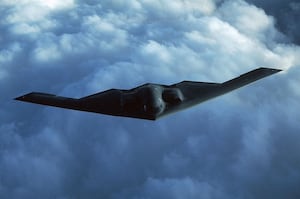
This was the case on in the early hours of Sunday morning, too, when he attacked three of Iran’s nuclear facilities after having earlier announced that he would give two weeks’ time for the ongoing Israel-Iran war to be resolved diplomatically.
Mr Trump had usually been averse to wars and their consequences. He has often been influenced by the last person to interact with him, whoever that might be, particularly if he or she offered him a political safety net. Yet on Saturday, he shed the pejorative tag “Taco” – or “Trump Always Chickens Out” – which he earned for his on-again, off-again tariff war with the rest of the world.
The US strikes have left the international community unable to predict what its President will do next on the Iran issue, and whether he even has an exit strategy.
Iran’s supreme leader, Ayatollah Ali Khamenei, faces a different predicament. The US, no matter what Mr Trump chooses, is more or less capable of weathering the fallout. Iran, on other hand, will find itself teetering on the edge of devastation if Mr Khamenei widens the war to defend his establishment at the country’s expense.
So who now has the initiative?
Peering into Mr Trump’s mind to understand how he thinks is a near impossible task. He is convinced that the art of negotiation and inducements can still help convince Tehran to abandon its nuclear and ballistic missiles programmes, as well as its doctrine of expansionism, and make peace. Deep down, the US President appears to believe that if he were to sit face to face with Mr Khamenei, he could persuade him to strike a deal.
Mr Trump’s demand that Iran surrender unconditionally appeared to have stirred the establishment’s instinct, making it react viscerally to what it views as humiliating rhetoric. And so in the run-up to the strikes, Tehran made it clear that if Washington enters the conflict directly, all options would be on the table – from closing the Strait of Hormuz to activating its armed proxies in the region and attacking American interests. It also boasted of hitting Israeli cities with its missiles and insisted that nothing can bring down the establishment in Tehran.
Yet it had to take a step back, particularly after concluding that neither Russia nor China were prepared to stand with it, despite their security pacts. It sought help from the European troika of France, Germany and the UK – countries that were involved in the 2015 Iran nuclear deal – to end the war. But the talks involving Iranian Foreign Minister Abbas Araghchi failed to make a breakthrough.
French President Emmanuel Macron floated a proposal involving three pillars: curbing Iran’s nuclear programme, its ballistic missiles programme and its funding of regional armed groups. Those pillars still stand, should Mr Khamenei accept the diplomatic exit from this war.
Mr Macron’s statement marked a shift in the framework of the US-Iran bilateral talks led by Mr Araghchi and Mr Trump’s envoy, Steve Witkoff, brokered by Oman, which focused solely on the nuclear issue. Those five rounds misled Iran – or Iran misled itself – into believing it had succeeded in excluding missiles and proxies from the negotiations. But Israel’s pre-emptive military actions aborted the chances of Mr Trump and his envoy being ensnared by Iran’s negotiating tactics.
The hardening of public positions on all sides suggests there is little room for Iranian concessions on any of these issues. Yet what might unfold behind the scenes could force Iran’s leaders into making trade-offs in exchange for silent guarantees that they stay in power, effectively thwarting Israel’s effort to end their rule.
Mr Khamenei now stands in the shadow of his predecessor, Ayatollah Ruhollah Khomeini, who once said he had to drink from a poisoned chalice when he agreed to a ceasefire that ended Iran’s eight-year war with Iraq in 1988 for the sake of regime preservation. What does Mr Khamenei intend to do to prevent its collapse?
Will he decide that inflicting damage on Israel’s infrastructure and rousing Iranian pride are both key to its survival? Or is a deal on the horizon after the US stepped in as a direct actor in this war? In other words, will the internal divisions between hardliners and reformists in the Islamic Republic lead to the conclusion that reforming the establishment’s doctrine is the only means to ensure its survival?
The Israel-Iran war of attrition has already cost both sides, and each is boasting of having inflicted serious damage on the other. Israel has made it clear that this is Mr Trump’s war as much as its own. The losses Israel has suffered have made it unwilling to continue serving as a proxy in the US-led war. This is a qualitative shift in the equation.
Perhaps this is now a duel between Mr Trump and Mr Khamenei. Or perhaps this is a war between the extremist ideologies that govern both Iran and Israel, and which the US seeks to tame. Perhaps it’s both.
Israeli Prime Minister Benjamin Netanyahu rejects any fundamental solution in the Middle East because his hard-right government’s ideology precludes accepting a Palestinian state, just as the ideology of the Islamic Republic precludes a normal Middle East as long as it pursues Iranian hegemony enforced by armed proxies.
We will know soon if Iran’s rulers are genuinely ready to compromise and secure a deal to preserve their rule, or if the hardliners within effectively embrace existential self-harm. Either way, unlike in the past, today the tactic of buying time has diminishing returns for the Islamic Republic.
UK’s AI plan
- AI ambassadors such as MIT economist Simon Johnson, Monzo cofounder Tom Blomfield and Google DeepMind’s Raia Hadsell
- £10bn AI growth zone in South Wales to create 5,000 jobs
- £100m of government support for startups building AI hardware products
- £250m to train new AI models
Desert Warrior
Starring: Anthony Mackie, Aiysha Hart, Ben Kingsley
Director: Rupert Wyatt
Rating: 3/5
England v West Indies
England squad for the first Test Cook, Stoneman, Westley, Root (captain), Malan, Stokes, Bairstow, Moeen, Roland-Jones, Broad, Anderson, Woakes, Crane
Fixtures
1st Test Aug 17-21, Edgbaston
2nd Test Aug 25-29, Headingley
3rd Test Sep 7-11, Lord's
%20Ramez%20Gab%20Min%20El%20Akher
%3Cp%3E%3Cstrong%3ECreator%3A%3C%2Fstrong%3E%20Ramez%20Galal%3C%2Fp%3E%0A%3Cp%3E%3Cstrong%3EStarring%3A%3C%2Fstrong%3E%20Ramez%20Galal%3C%2Fp%3E%0A%3Cp%3E%3Cstrong%3EStreaming%20on%3A%20%3C%2Fstrong%3EMBC%20Shahid%3C%2Fp%3E%0A%3Cp%3E%3Cstrong%3ERating%3A%20%3C%2Fstrong%3E2.5%2F5%3C%2Fp%3E%0A
Mercer, the investment consulting arm of US services company Marsh & McLennan, expects its wealth division to at least double its assets under management (AUM) in the Middle East as wealth in the region continues to grow despite economic headwinds, a company official said.
Mercer Wealth, which globally has $160 billion in AUM, plans to boost its AUM in the region to $2-$3bn in the next 2-3 years from the present $1bn, said Yasir AbuShaban, a Dubai-based principal with Mercer Wealth.
“Within the next two to three years, we are looking at reaching $2 to $3 billion as a conservative estimate and we do see an opportunity to do so,” said Mr AbuShaban.
Mercer does not directly make investments, but allocates clients’ money they have discretion to, to professional asset managers. They also provide advice to clients.
“We have buying power. We can negotiate on their (client’s) behalf with asset managers to provide them lower fees than they otherwise would have to get on their own,” he added.
Mercer Wealth’s clients include sovereign wealth funds, family offices, and insurance companies among others.
From its office in Dubai, Mercer also looks after Africa, India and Turkey, where they also see opportunity for growth.
Wealth creation in Middle East and Africa (MEA) grew 8.5 per cent to $8.1 trillion last year from $7.5tn in 2015, higher than last year’s global average of 6 per cent and the second-highest growth in a region after Asia-Pacific which grew 9.9 per cent, according to consultancy Boston Consulting Group (BCG). In the region, where wealth grew just 1.9 per cent in 2015 compared with 2014, a pickup in oil prices has helped in wealth generation.
BCG is forecasting MEA wealth will rise to $12tn by 2021, growing at an annual average of 8 per cent.
Drivers of wealth generation in the region will be split evenly between new wealth creation and growth of performance of existing assets, according to BCG.
Another general trend in the region is clients’ looking for a comprehensive approach to investing, according to Mr AbuShaban.
“Institutional investors or some of the families are seeing a slowdown in the available capital they have to invest and in that sense they are looking at optimizing the way they manage their portfolios and making sure they are not investing haphazardly and different parts of their investment are working together,” said Mr AbuShaban.
Some clients also have a higher appetite for risk, given the low interest-rate environment that does not provide enough yield for some institutional investors. These clients are keen to invest in illiquid assets, such as private equity and infrastructure.
“What we have seen is a desire for higher returns in what has been a low-return environment specifically in various fixed income or bonds,” he said.
“In this environment, we have seen a de facto increase in the risk that clients are taking in things like illiquid investments, private equity investments, infrastructure and private debt, those kind of investments were higher illiquidity results in incrementally higher returns.”
The Abu Dhabi Investment Authority, one of the largest sovereign wealth funds, said in its 2016 report that has gradually increased its exposure in direct private equity and private credit transactions, mainly in Asian markets and especially in China and India. The authority’s private equity department focused on structured equities owing to “their defensive characteristics.”
The%20specs
%3Cp%3E%3Cstrong%3EEngine%3A%3C%2Fstrong%3E%202-litre%204-cylinder%3Cbr%3E%3Cstrong%3EPower%3A%20%3C%2Fstrong%3E153hp%20at%206%2C000rpm%3Cbr%3E%3Cstrong%3ETorque%3A%20%3C%2Fstrong%3E200Nm%20at%204%2C000rpm%3Cbr%3E%3Cstrong%3ETransmission%3A%20%3C%2Fstrong%3E6-speed%20auto%3Cbr%3E%3Cstrong%3EFuel%20consumption%3A%20%3C%2Fstrong%3E6.3L%2F100km%3Cbr%3E%3Cstrong%3EPrice%3A%20%3C%2Fstrong%3EDh106%2C900%3Cbr%3E%3Cstrong%3EOn%20sale%3A%20%3C%2Fstrong%3Enow%3C%2Fp%3E%0A
Profile of RentSher
Started: October 2015 in India, November 2016 in UAE
Founders: Harsh Dhand; Vaibhav and Purvashi Doshi
Based: Bangalore, India and Dubai, UAE
Sector: Online rental marketplace
Size: 40 employees
Investment: $2 million
What is the Supreme Petroleum Council?
The Abu Dhabi Supreme Petroleum Council was established in 1988 and is the highest governing body in Abu Dhabi’s oil and gas industry. The council formulates, oversees and executes the emirate’s petroleum-related policies. It also approves the allocation of capital spending across state-owned Adnoc’s upstream, downstream and midstream operations and functions as the company’s board of directors. The SPC’s mandate is also required for auctioning oil and gas concessions in Abu Dhabi and for awarding blocks to international oil companies. The council is chaired by Sheikh Khalifa, the President and Ruler of Abu Dhabi while Sheikh Mohamed bin Zayed, Abu Dhabi’s Crown Prince and Deputy Supreme Commander of the Armed Forces, is the vice chairman.
The%20specs
%3Cp%3E%3Cstrong%3EEngine%3A%3C%2Fstrong%3E%206.4-litre%20V8%0D%3Cbr%3E%3Cstrong%3ETransmission%3A%20%3C%2Fstrong%3E8-speed%20auto%0D%3Cbr%3E%3Cstrong%3EPower%3A%20%3C%2Fstrong%3E470bhp%0D%3Cbr%3E%3Cstrong%3ETorque%3A%20%3C%2Fstrong%3E637Nm%0D%3Cbr%3E%3Cstrong%3EPrice%3A%20%3C%2Fstrong%3EDh375%2C900%20(estimate)%0D%3Cbr%3E%3Cstrong%3EOn%20sale%3A%3C%2Fstrong%3E%20now%3C%2Fp%3E%0A
How to help
Send “thenational” to the following numbers or call the hotline on: 0502955999
2289 – Dh10
2252 – Dh 50
6025 – Dh20
6027 – Dh 100
6026 – Dh 200
THREE
%3Cp%3EDirector%3A%20Nayla%20Al%20Khaja%3C%2Fp%3E%0A%3Cp%3EStarring%3A%20Jefferson%20Hall%2C%20Faten%20Ahmed%2C%20Noura%20Alabed%2C%20Saud%20Alzarooni%3C%2Fp%3E%0A%3Cp%3ERating%3A%203.5%2F5%3C%2Fp%3E%0A
Ziina users can donate to relief efforts in Beirut
Ziina users will be able to use the app to help relief efforts in Beirut, which has been left reeling after an August blast caused an estimated $15 billion in damage and left thousands homeless. Ziina has partnered with the United Nations High Commissioner for Refugees to raise money for the Lebanese capital, co-founder Faisal Toukan says. “As of October 1, the UNHCR has the first certified badge on Ziina and is automatically part of user's top friends' list during this campaign. Users can now donate any amount to the Beirut relief with two clicks. The money raised will go towards rebuilding houses for the families that were impacted by the explosion.”
Infiniti QX80 specs
Engine: twin-turbocharged 3.5-liter V6
Power: 450hp
Torque: 700Nm
Price: From Dh450,000, Autograph model from Dh510,000
Available: Now
Emergency
Director: Kangana Ranaut
Stars: Kangana Ranaut, Anupam Kher, Shreyas Talpade, Milind Soman, Mahima Chaudhry
Rating: 2/5