When discussing advancements in research, the focus tends to centre on money, machines and milestones. But no ecosystem thrives solely on infrastructure. It depends on people and how effectively they are connected.
Across the UAE, researchers and engineers are tackling challenges in areas that run from healthcare and sustainability to AI and quantum technologies. Their work supports the nation’s ambition to become a global hub for advanced technology. According to the World Intellectual Property Organisation, the UAE ranks first in the Arab world and 32nd globally in its Global Innovation Index, which is a sign of national momentum. However, these efforts often remain fragmented – individuals working in isolation, disconnected from the opportunities where their expertise is most needed.
This is rarely due to a lack of talent. The UAE has made substantial investments in education and research and development talent. More often, it is a matter of visibility, of knowing who is working on what, and how to engage them. Talent infrastructure matters as much as physical infrastructure. Without systems that enable collaboration, knowledge sharing and recognition, even the most advanced facilities risk being underused.
Bridging the gap between institutional silos and national priorities depends on co-ordination tools that researchers trust, use and feel a part of. Effective planning depends not only on sound analysis, but also on the ability to bring together expertise across different fields.
The Emirates has taken significant steps in this direction. The UAE Research Map enables researchers to showcase their expertise and connect with peers across various disciplines. The UAE Research Hub complements this by providing streamlined access to specialised facilities, services and equipment that might otherwise remain inaccessible. Together, these platforms are designed not only to reduce technical friction but also to create an inclusive and supportive environment for experts at every career stage across the national R&D landscape.
Critically, they act as a kind of one-stop shop, enabling professionals to discover collaboration opportunities, identify funding calls and engage peer networks without relying on pre-existing connections or social capital. By highlighting real expertise and making achievements visible, these tools reduce the burden of networking and make it easier to contribute, especially for those outside traditional academic hierarchies.
-
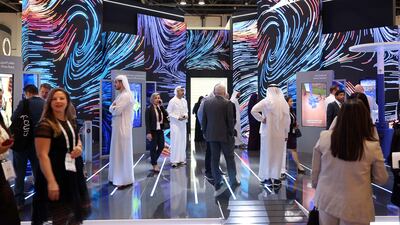
Visitors at the Roads and Transport Authority stand on October 14, the first day of Gitex Global held at Dubai World Trade Centre. All photos: Pawan Singh / The National -
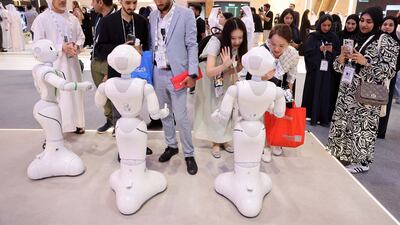
Visitors meet and interact with robots at the Government of Dubai stand on the first day of Gitex Global -
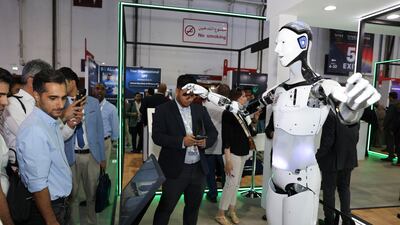
A humanoid robot draws visitors to the Redington stand on the first day of Gitex Global in Dubai -
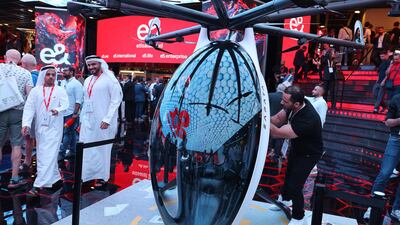
An air scooter at the e& (Etisalat) stand on the first day of Gitex Global -

A concept electric car attracts attention at the e& (Etisalat) stand on the first day of Gitex Global in Dubai -
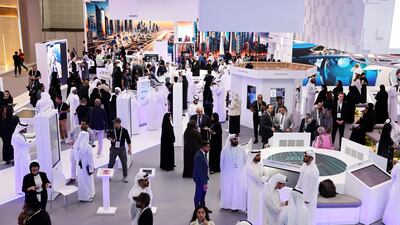
Visitors on the first day of Gitex Global held at Dubai World Trade Centre -
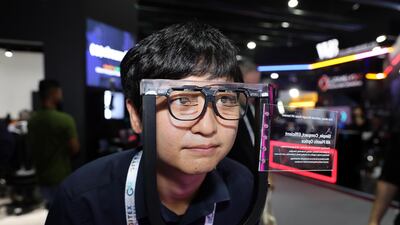
Jaehyeok Kim, chief executive of Letinar, demonstrates the Advanced AR smart glasses on day one of Gitex Global in Dubai -
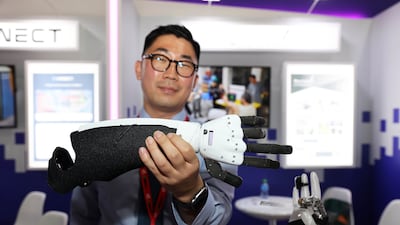
Moonsuk Kim, chief investment officer with Mandro, shows prosthetic hands at the company's stand on the first day of Gitex Global -
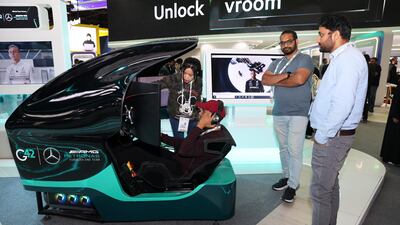
Visitors at the G42 stand on the first day of Gitex Global in Dubai -

Concept electric car at the e& (Etisalat) stand at Gitex Global -

Maha the Emirati humanoid teacher at the du stand on the first day of Gitex Global in Dubai -
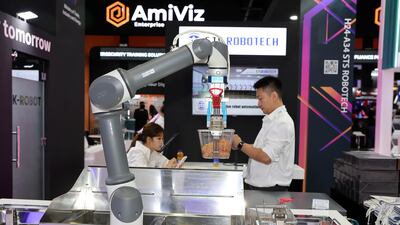
STS Robotech's Chicken Robot cooks up Halal fried food at Gitex Global -
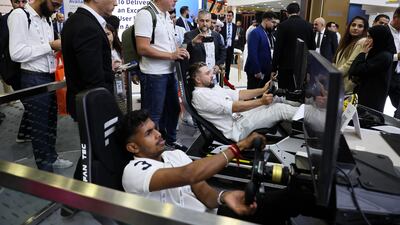
Visitors at the Oracle stand on the first day of Gitex Global held at Dubai World Trade Centre -
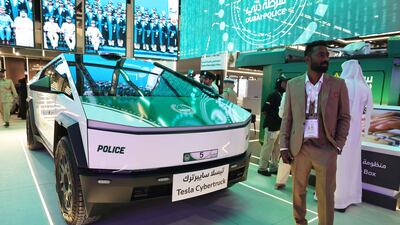
A Tesla Cybertruck at the Dubai Police stand of Gitex Global


But platforms alone are not enough. They must become embedded in daily research practice. This means encouraging researchers to maintain open, up-to-date profiles. It means treating national platforms as a default starting point when seeking collaborators, mentors or technical expertise. And it requires cultivating a culture in which contribution is recognised across institutions and sectors, not only within formal roles.
This visibility is especially powerful for early-career researchers and students. When they can see the real people behind the science, their projects, career paths and contributions, it demystifies Stem fields and reveals the many routes into them. Role models matter. A transparent and diverse research community helps young people imagine themselves in these roles, guiding them towards futures they might not have otherwise considered.
At the same time, experienced professionals are more likely to stay engaged when their contributions are acknowledged, whether through mentorship, advisory roles or participation in national initiatives. Recognition reinforces purpose and a visible, connected community reduces professional isolation, creating a shared sense of mission that sustains long-term motivation.
Importantly, open research profiles benefit not only academics. They also enable educators, startups, investors, public agencies and industry leaders to connect with relevant expertise. In doing so, they accelerate cross-sector collaboration, enhance problem-solving capacity and ensure that research is not kept separate from its application.
Globally, countries leading in innovation, from South Korea to Finland, are not only investing in infrastructure and technology, but also in the social architecture that connects researchers and ideas. The UAE’s focus on sovereign capabilities and homegrown innovation reflects this same imperative. But talent remains the common denominator. If we are to lead in advanced technologies, we must ensure that knowledge flows freely within the system and that people know how to contribute and where to turn for support.
The expertise already exists. What we need are systems that highlight it, networks that bridge disciplines and practices that reward collective effort. These must become routine, not exceptional. This is because research does not thrive in isolation. Progress depends not only on what we know, but on the strength of the connections that turn knowledge into impact.