• A worker of the Venezuelan state oil company PDVSA waves an Iranian flag as the Iranian-flagged oil tanker Fortune docks at the El Palito refinery in Puerto Cabello, in the northern state of Carabobo, Venezuela. AFP
    A worker of the Venezuelan state oil company PDVSA waves an Iranian flag as the Iranian-flagged oil tanker Fortune docks at the El Palito refinery in Puerto Cabello, in the northern state of Carabobo, Venezuela. AFP
  • Workers on the 'Fortune' the Iranian ship with gasoline in Puerto Cabello, Venezuela. EPA
    Workers on the 'Fortune' the Iranian ship with gasoline in Puerto Cabello, Venezuela. EPA
  • Iranian-flagged oil tanker Fortune docked at the El Palito refinery after its arrival to Puerto Cabello, in the northern state of Carabobo, Venezuela. AFP
    Iranian-flagged oil tanker Fortune docked at the El Palito refinery after its arrival to Puerto Cabello, in the northern state of Carabobo, Venezuela. AFP
  • A worker of the state-oil company Pdvsa holds an Iranian flag during the arrival of the Iranian tanker ship "Fortune" at El Palito refinery in Puerto Cabello, Venezuela. Reuters
    A worker of the state-oil company Pdvsa holds an Iranian flag during the arrival of the Iranian tanker ship "Fortune" at El Palito refinery in Puerto Cabello, Venezuela. Reuters
  • Crew of the Iranian tanker ship "Fortune" are seen at the deck during the arrival at El Palito refinery in Puerto Cabello, Venezuela. Reuters
    Crew of the Iranian tanker ship "Fortune" are seen at the deck during the arrival at El Palito refinery in Puerto Cabello, Venezuela. Reuters
  • Workers of the state-oil company Pdvsa holding Iranian and Venezuelan flags greet during the arrival of the Iranian tanker ship "Fortune" at El Palito refinery in Puerto Cabello, Venezuela. Reuters
    Workers of the state-oil company Pdvsa holding Iranian and Venezuelan flags greet during the arrival of the Iranian tanker ship "Fortune" at El Palito refinery in Puerto Cabello, Venezuela. Reuters
  • A Venezuelan oil worker holding a small Iranian flag attends a ceremony for the arrival of Iranian oil tanker Fortune at the El Palito refinery near Puerto Cabello, Venezuela. AP Photo
    A Venezuelan oil worker holding a small Iranian flag attends a ceremony for the arrival of Iranian oil tanker Fortune at the El Palito refinery near Puerto Cabello, Venezuela. AP Photo
  • The Venezuelan industry minister Tareck El Aissami (C), speaks next to Venezuela's defence Minister Vladimir Padrino(R) after the Iranian oil tanker Fortune docked at the El Palito refinery in Puerto Cabello, in the northern state of Carabobo, Venezuela. AFP
    The Venezuelan industry minister Tareck El Aissami (C), speaks next to Venezuela's defence Minister Vladimir Padrino(R) after the Iranian oil tanker Fortune docked at the El Palito refinery in Puerto Cabello, in the northern state of Carabobo, Venezuela. AFP
  • A worker of the Venezuelan state oil company PDVSA looks at the oil tanker Fortune as it docks at the El Palito refinery in Puerto Cabello in the northern state of Carabobo, Venezuela. AFP
    A worker of the Venezuelan state oil company PDVSA looks at the oil tanker Fortune as it docks at the El Palito refinery in Puerto Cabello in the northern state of Carabobo, Venezuela. AFP
  • Workers with the flags of Venezuela and Iran waiting for Venezuela Minister of Petroleum Tareck el Aissami in Puerto Cabello, Venezuela during his visit to the 'Fortune' Iranian ship. EPA
    Workers with the flags of Venezuela and Iran waiting for Venezuela Minister of Petroleum Tareck el Aissami in Puerto Cabello, Venezuela during his visit to the 'Fortune' Iranian ship. EPA
  • Venezuela Minister of Petroleum Tareck el Aissami in Puerto Cabello, Venezuela during his visit to the 'Fortune' Iranian ship. EPA
    Venezuela Minister of Petroleum Tareck el Aissami in Puerto Cabello, Venezuela during his visit to the 'Fortune' Iranian ship. EPA

Caesar Act: US sanctions against Iran's partners are a statement of intent


  • English
  • Arabic

The scope and scale of American sanctions against the Iranian regime evidently run wide and deep. They extend themselves from faraway Venezuela to nearby Syria via Lebanon. They also target such specific figures as Venezuelan President Nicolas Maduro, Syrian President Bashar Al Assad and Hassan Nasrallah, who heads the Lebanese militia group Hezbollah; common to all these figures is, of course, their errant behaviour on the global stage and a refusal to play by international rules.

In oil-rich Venezuela, the Russians and Chinese weighed their options against Washington's clampdown on Caracas's ability to sell them its crude – through a sanctions regime that left petroleum companies petrified – and decided to leave. When Iran stepped into the breach, it too faced the Trump administration's music: when Caracas began trading its gold in exchange for refined fuel transported to the beleaguered South American country in Iranian tankers, the US imposed sanctions on 125 of those tankers and blocked the only route available, thereby triggering an economic collapse in Venezuela.

Last week, the Syrian regime was slapped with the Caesar Act, a piece of US legislation that seeks to curb the ability of Mr Al Assad, his family members and associates to continue profiting from the ongoing civil war and getting away with their crimes against humanity. Washington's goal may not be to topple the regime but force it to drive out its Iranian backers currently operating within its borders and agree to a power-sharing agreement with the opposition.

  • After nearly a decade of war, Syria is crumbling under the weight of a repressive, corrupt ruling elite, a pandemic and an economic downslide compounded by western sanctions. AP Photo
    After nearly a decade of war, Syria is crumbling under the weight of a repressive, corrupt ruling elite, a pandemic and an economic downslide compounded by western sanctions. AP Photo
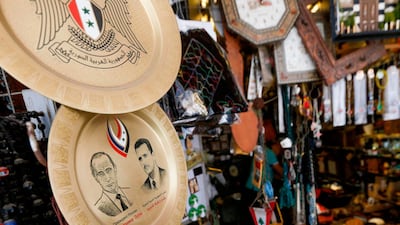
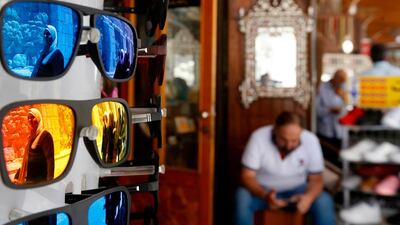
  • Souvenir plates bearing the Syrian flag and the portraits of Russian President Vladimir Putin and Syrian President Bashar Al Assad are pictured in a shop in a bazaar in old Damascus. AFP
    Souvenir plates bearing the Syrian flag and the portraits of Russian President Vladimir Putin and Syrian President Bashar Al Assad are pictured in a shop in a bazaar in old Damascus. AFP
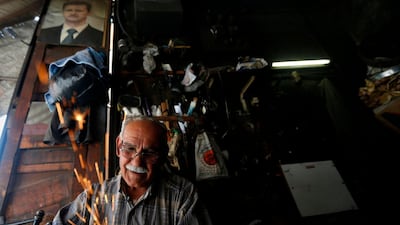
  • A man works in his metal workshop beneath a portrait of Syrian President Bashar Al Assad in old Damascus earlier this week. AFP
    A man works in his metal workshop beneath a portrait of Syrian President Bashar Al Assad in old Damascus earlier this week. AFP
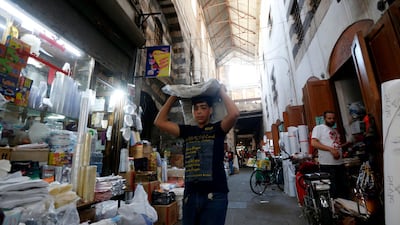
  • A Syrian boy carrying textiles is pictured in the bazaar in old Damascus. AFP
    A Syrian boy carrying textiles is pictured in the bazaar in old Damascus. AFP
  • A Syrian shopkeeper waits for customers in a bazaar in old Damascus. AFP
    A Syrian shopkeeper waits for customers in a bazaar in old Damascus. AFP
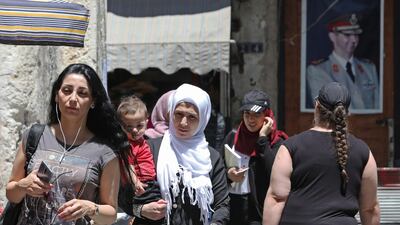
  • Syrians walk in old Damascus in front of a portrait of Syrian President Bashar Al Assad. AFP
    Syrians walk in old Damascus in front of a portrait of Syrian President Bashar Al Assad. AFP
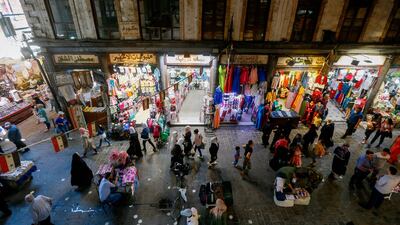
  • Syrian shoppers walk in the bazaar in old Damascus. AFP
    Syrian shoppers walk in the bazaar in old Damascus. AFP
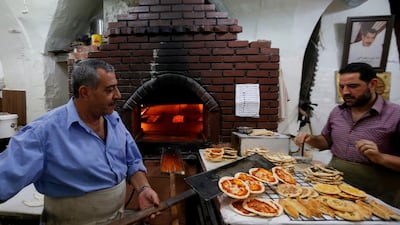
  • Syrian men work in their bakery in old Damascus. AFP
    Syrian men work in their bakery in old Damascus. AFP
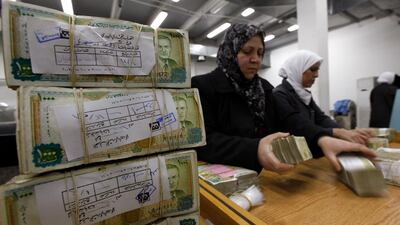
  • Employees stack packets of the Syrian pound in the Central Syrian Bank in Damascus. AP Photo
    Employees stack packets of the Syrian pound in the Central Syrian Bank in Damascus. AP Photo
  • An anti-Assad regime demonstration under way in Suweida, southern Syria, in early June 2020. AFP
    An anti-Assad regime demonstration under way in Suweida, southern Syria, in early June 2020. AFP

Meanwhile in crisis-hit Lebanon, where Hezbollah has a stake in government, it appears that Nasrallah has a plan ostensibly to save his country from economic collapse by ending the "dollarisation" of its economy. It is a pipe dream – one that is predicated on the idea of Beirut bartering with Tehran using the national currency – and could effectively turn Lebanon into another Venezuela, which pursued a "gold for oil" arrangement with Iran. He has also pledged to keep Lebanon's border with Syria open and help Damascus in any way Hezbollah can.

It is worth noting that Nasrallah has struck a defiant note from a position of considerable weakness, having been set back by sanctions put in place against Hezbollah and its patrons in Tehran.

At least that is how Brian Hook, the US Special Representative for Iran, sees it, based on my conversation with him at the Beirut Institute seventh e-policy circle last week. Mr Hook has accused Nasrallah of “shedding crocodile tears” for the Lebanese people, who have been feeling the economic pinch for the past few months, thanks in large part to gross mismanagement by its government. “Hezbollah has undercut the security, prosperity and welfare of the Lebanese people – in the same way that the Iranian regime has done that for the Iranian people," he added.

To be sure, the situation in Lebanon is more complicated.

The people there have long been accustomed to blaming others for their problems, with many of them living either in selfish apathy or in the shadow of their sectarian leaders. A case in point is the uprising that began last October with much promise before the people allowed it to be co-opted by partisan elements across political and ideological divides. As a result, the country continues to be riddled with the same old economic and governance problems, with little appetite on the part of the ruling elite to implement much-needed reforms.

Of course, Hezbollah is a significant piece in that puzzle. And if one were to take Mr Hook at his word, this will not be the last that Nasrallah – or for that matter Mr Al Assad and the regime in Tehran – have heard from the Trump administration.

“The US is going to withhold reconstruction assistance for Syria until all forces under Iranian command and control leave the country," he said. "Iran has got to get out of Syria and I see increased incentives for both [Russia] and [Mr Al] Assad to at some point have Iran exit."

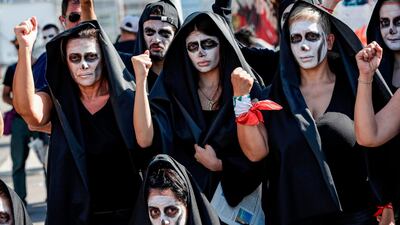
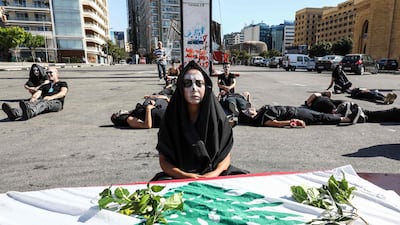
  • Lebanese anti-government protesters take part in a symbolic funeral for the country in the capital Beirut on June 13, 2020, the third consecutive day of demonstrations over a deepening economic crisis. AFP
    Lebanese anti-government protesters take part in a symbolic funeral for the country in the capital Beirut on June 13, 2020, the third consecutive day of demonstrations over a deepening economic crisis. AFP
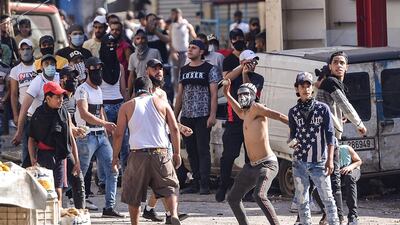
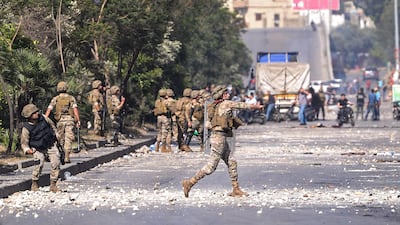
  • Lebanese anti-government protesters throw rocks at soldiers amid clashes in the Bab al-Tabbaneh neighbourhood in the northern port city of Tripoli on the third consecutive day of demonstrations against deepening economic crisis. AFP
    Lebanese anti-government protesters throw rocks at soldiers amid clashes in the Bab al-Tabbaneh neighbourhood in the northern port city of Tripoli on the third consecutive day of demonstrations against deepening economic crisis. AFP
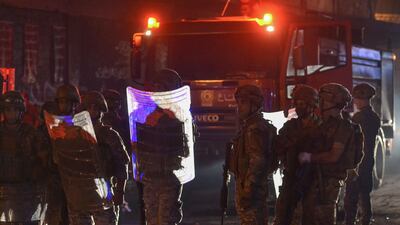
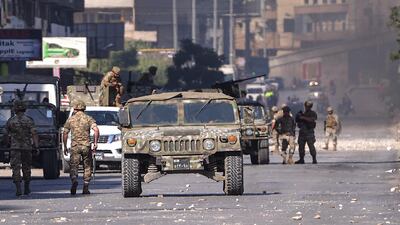
  • Lebanese soldiers deploy by a civil defence firefighting truck during clashes with anti-government protesters in the northern port city of Tripoli amid fresh demonstrations over a spiralling economic crisis. AFP
    Lebanese soldiers deploy by a civil defence firefighting truck during clashes with anti-government protesters in the northern port city of Tripoli amid fresh demonstrations over a spiralling economic crisis. AFP
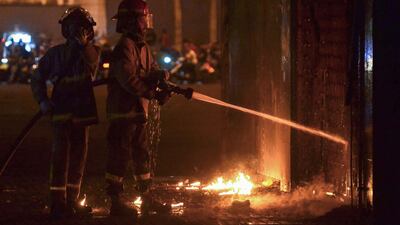
  • Lebanese civil defence firefighters extinguish flames in a shop as anti-government protesters and security forces clash in the northern port city of Tripoli amid fresh demonstrations over a spiralling economic crisis. AFP
    Lebanese civil defence firefighters extinguish flames in a shop as anti-government protesters and security forces clash in the northern port city of Tripoli amid fresh demonstrations over a spiralling economic crisis. AFP
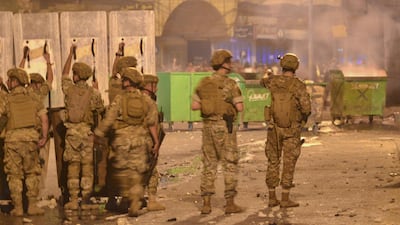
  • Lebanese soldiers with riot gear react during clashes with anti-government protesters in the northern port city of Tripoli amid fresh demonstrations over a spiralling economic crisis. AFP
    Lebanese soldiers with riot gear react during clashes with anti-government protesters in the northern port city of Tripoli amid fresh demonstrations over a spiralling economic crisis. AFP
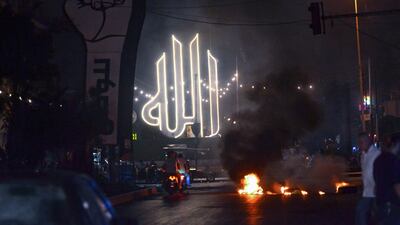
  • Lebanese anti-government protesters block a road with burning tyres in the northern port city of Tripoli amid fresh protests over a spiralling economic crisis. AFP
    Lebanese anti-government protesters block a road with burning tyres in the northern port city of Tripoli amid fresh protests over a spiralling economic crisis. AFP
  • Lebanese anti-government protesters clash with security forces in the northern port city of Tripoli amid fresh protests over a spiralling economic crisis. AFP
    Lebanese anti-government protesters clash with security forces in the northern port city of Tripoli amid fresh protests over a spiralling economic crisis. AFP
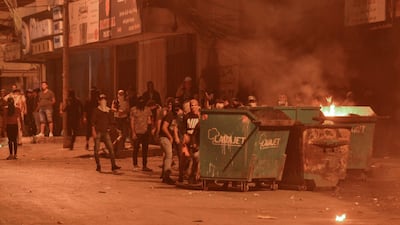
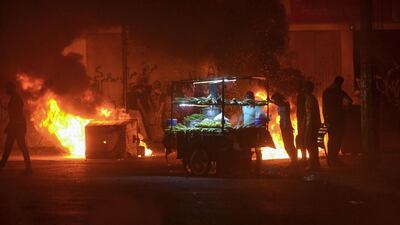
  • Lebanese anti-government protesters buy corn from a street vendor next to burning garbage bins during clashes with security forces in the northern port city of Tripoli amid fresh protests over a spiralling economic crisis. AFP
    Lebanese anti-government protesters buy corn from a street vendor next to burning garbage bins during clashes with security forces in the northern port city of Tripoli amid fresh protests over a spiralling economic crisis. AFP
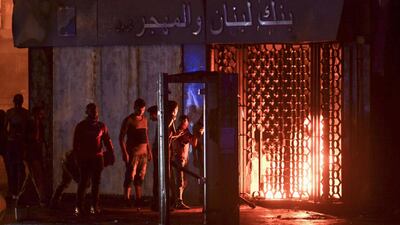
  • Lebanese anti-government protesters take shelter behind a public phone booth as a local bank's branch burns during clashes with security forces in the northern port city of Tripoli amid fresh protests over a spiralling economic crisis. AFP
    Lebanese anti-government protesters take shelter behind a public phone booth as a local bank's branch burns during clashes with security forces in the northern port city of Tripoli amid fresh protests over a spiralling economic crisis. AFP
  • Lebanese anti-government protesters take part in a symbolic funeral for the country in the central area of the capital Beirut on the third consecutive day of demonstrations over a deepening economic crisis. AFP
    Lebanese anti-government protesters take part in a symbolic funeral for the country in the central area of the capital Beirut on the third consecutive day of demonstrations over a deepening economic crisis. AFP
  • Lebanese soldiers deploy during an anti-government protest in the Bab al-Tabbaneh neighbourhood in the northern port city of Tripoli on the third day of demonstrations across the country over deepening economic crisis. AFP
    Lebanese soldiers deploy during an anti-government protest in the Bab al-Tabbaneh neighbourhood in the northern port city of Tripoli on the third day of demonstrations across the country over deepening economic crisis. AFP
  • Lebanese soldiers clash with anti-government protesters in the Bab al-Tabbaneh neighbourhood in the northern port city of Tripoli on the third day of demonstrations across the country against deepening economic crisis. AFP
    Lebanese soldiers clash with anti-government protesters in the Bab al-Tabbaneh neighbourhood in the northern port city of Tripoli on the third day of demonstrations across the country against deepening economic crisis. AFP

In other words, Washington aims to pressure Moscow, which is allied to Damascus, to break away from Tehran – or possibly face sanctions of its own, including the blacklisting of its businesses under the Caesar Act. Mr Hook described the US move so far as a statement of its intent to bring change. “People should understand that if we are willing to target and designate [Mr Al] Assad, then no one who is involved in these atrocities [in Syria] should feel safe," he said.

It is therefore important for the Lebanese and Syrian people, and their leaders, to understand that the Caesar Act is a tool that the US is determined to use with the purpose of holding wrongdoers accountable – much the same way Venezuela is being dealt with.

Circling back to Caracas, its relationship with Tehran has come under scrutiny. But Elliott Abrams, the US Special Representative for Venezuela, told me that it is the larger impact of the Maduro government's actions that concerns him more. Predicting that Iran would eventually stop shipping fuel to Venezuela, Mr Abrams said: "We'll see if they have enough tankers actually to [continue] this [arrangement]."

He compared the situation pertaining to refugees and displaced people in Syria with that of Venezuela. "The Maduro dictatorship has created five million migrants and refugees, and this burden is a very heavy one for Latin America, South America, and particularly in the Caribbean," he pointed out. "It's the largest refugee crisis in the history of Latin America. By the end of this year, it will be larger than the Syrian refugee crisis."

According to Mr Abrams, the unfortunate situations prevalent in both countries are the outcome of "human action by corrupt, venal, brutal rulers". And that the Trump administration has determined that the only solution is that "those rulers must go".

Raghida Dergham is the founder and executive chairwoman of the Beirut Institute

What is the FNC?

The Federal National Council is one of five federal authorities established by the UAE constitution. It held its first session on December 2, 1972, a year to the day after Federation.
It has 40 members, eight of whom are women. The members represent the UAE population through each of the emirates. Abu Dhabi and Dubai have eight members each, Sharjah and Ras al Khaimah six, and Ajman, Fujairah and Umm Al Quwain have four.
They bring Emirati issues to the council for debate and put those concerns to ministers summoned for questioning. 
The FNC’s main functions include passing, amending or rejecting federal draft laws, discussing international treaties and agreements, and offering recommendations on general subjects raised during sessions.
Federal draft laws must first pass through the FNC for recommendations when members can amend the laws to suit the needs of citizens. The draft laws are then forwarded to the Cabinet for consideration and approval. 
Since 2006, half of the members have been elected by UAE citizens to serve four-year terms and the other half are appointed by the Ruler’s Courts of the seven emirates.
In the 2015 elections, 78 of the 252 candidates were women. Women also represented 48 per cent of all voters and 67 per cent of the voters were under the age of 40.
 

The specs

Engine: 3.0-litre 6-cyl turbo

Power: 435hp at 5,900rpm

Torque: 520Nm at 1,800-5,500rpm

Transmission: 9-speed auto

Price: from Dh498,542

On sale: now

The%20specs%3A%202024%20Mercedes%20E200
%3Cp%3E%3Cstrong%3EEngine%3A%20%3C%2Fstrong%3E2.0-litre%20four-cyl%20turbo%20%2B%20mild%20hybrid%0D%3Cbr%3E%3Cstrong%3EPower%3A%20%3C%2Fstrong%3E204hp%20at%205%2C800rpm%20%2B23hp%20hybrid%20boost%0D%3Cbr%3E%3Cstrong%3ETorque%3A%20%3C%2Fstrong%3E320Nm%20at%201%2C800rpm%20%2B205Nm%20hybrid%20boost%0D%3Cbr%3E%3Cstrong%3ETransmission%3A%20%3C%2Fstrong%3E9-speed%20auto%0D%3Cbr%3E%3Cstrong%3EFuel%20consumption%3A%20%3C%2Fstrong%3E7.3L%2F100km%0D%3Cbr%3E%3Cstrong%3EOn%20sale%3A%20%3C%2Fstrong%3ENovember%2FDecember%0D%3Cbr%3E%3Cstrong%3EPrice%3A%20%3C%2Fstrong%3EFrom%20Dh205%2C000%20(estimate)%3C%2Fp%3E%0A
The specs

Engine: 2.0-litre 4-cylinder turbo hybrid

Transmission: eight-speed automatic

Power: 390bhp

Torque: 400Nm

Price: Dh340,000 ($92,579

Traits of Chinese zodiac animals

Tiger:independent, successful, volatile
Rat:witty, creative, charming
Ox:diligent, perseverent, conservative
Rabbit:gracious, considerate, sensitive
Dragon:prosperous, brave, rash
Snake:calm, thoughtful, stubborn
Horse:faithful, energetic, carefree
Sheep:easy-going, peacemaker, curious
Monkey:family-orientated, clever, playful
Rooster:honest, confident, pompous
Dog:loyal, kind, perfectionist
Boar:loving, tolerant, indulgent   

Who's who in Yemen conflict

Houthis: Iran-backed rebels who occupy Sanaa and run unrecognised government

Yemeni government: Exiled government in Aden led by eight-member Presidential Leadership Council

Southern Transitional Council: Faction in Yemeni government that seeks autonomy for the south

Habrish 'rebels': Tribal-backed forces feuding with STC over control of oil in government territory

Company Profile

Company name: Yeepeey

Started: Soft launch in November, 2020

Founders: Sagar Chandiramani, Jatin Sharma and Monish Chandiramani

Based: Dubai

Industry: E-grocery

Initial investment: $150,000

Future plan: Raise $1.5m and enter Saudi Arabia next year

hall of shame

SUNDERLAND 2002-03

No one has ended a Premier League season quite like Sunderland. They lost each of their final 15 games, taking no points after January. They ended up with 19 in total, sacking managers Peter Reid and Howard Wilkinson and losing 3-1 to Charlton when they scored three own goals in eight minutes.

SUNDERLAND 2005-06

Until Derby came along, Sunderland’s total of 15 points was the Premier League’s record low. They made it until May and their final home game before winning at the Stadium of Light while they lost a joint record 29 of their 38 league games.

HUDDERSFIELD 2018-19

Joined Derby as the only team to be relegated in March. No striker scored until January, while only two players got more assists than goalkeeper Jonas Lossl. The mid-season appointment Jan Siewert was to end his time as Huddersfield manager with a 5.3 per cent win rate.

ASTON VILLA 2015-16

Perhaps the most inexplicably bad season, considering they signed Idrissa Gueye and Adama Traore and still only got 17 points. Villa won their first league game, but none of the next 19. They ended an abominable campaign by taking one point from the last 39 available.

FULHAM 2018-19

Terrible in different ways. Fulham’s total of 26 points is not among the lowest ever but they contrived to get relegated after spending over £100 million (Dh457m) in the transfer market. Much of it went on defenders but they only kept two clean sheets in their first 33 games.

LA LIGA: Sporting Gijon, 13 points in 1997-98.

BUNDESLIGA: Tasmania Berlin, 10 points in 1965-66

How to come clean about financial infidelity
  • Be honest and transparent: It is always better to own up than be found out. Tell your partner everything they want to know. Show remorse. Inform them of the extent of the situation so they know what they are dealing with.
  • Work on yourself: Be honest with yourself and your partner and figure out why you did it. Don’t be ashamed to ask for professional help. 
  • Give it time: Like any breach of trust, it requires time to rebuild. So be consistent, communicate often and be patient with your partner and yourself.
  • Discuss your financial situation regularly: Ensure your spouse is involved in financial matters and decisions. Your ability to consistently follow through with what you say you are going to do when it comes to money can make all the difference in your partner’s willingness to trust you again.
  • Work on a plan to resolve the problem together: If there is a lot of debt, for example, create a budget and financial plan together and ensure your partner is fully informed, involved and supported. 

Carol Glynn, founder of Conscious Finance Coaching

While you're here
Company%20profile
%3Cp%3EName%3A%20Tabby%3Cbr%3EFounded%3A%20August%202019%3B%20platform%20went%20live%20in%20February%202020%3Cbr%3EFounder%2FCEO%3A%20Hosam%20Arab%2C%20co-founder%3A%20Daniil%20Barkalov%3Cbr%3EBased%3A%20Dubai%2C%20UAE%3Cbr%3ESector%3A%20Payments%3Cbr%3ESize%3A%2040-50%20employees%3Cbr%3EStage%3A%20Series%20A%3Cbr%3EInvestors%3A%20Arbor%20Ventures%2C%20Mubadala%20Capital%2C%20Wamda%20Capital%2C%20STV%2C%20Raed%20Ventures%2C%20Global%20Founders%20Capital%2C%20JIMCO%2C%20Global%20Ventures%2C%20Venture%20Souq%2C%20Outliers%20VC%2C%20MSA%20Capital%2C%20HOF%20and%20AB%20Accelerator.%3Cbr%3E%3C%2Fp%3E%0A
EMILY%20IN%20PARIS%3A%20SEASON%203
%3Cp%3ECreated%20by%3A%20Darren%20Star%3C%2Fp%3E%0A%3Cp%3EStarring%3A%20Lily%20Collins%2C%20Philippine%20Leroy-Beaulieu%2C%20Ashley%20Park%3C%2Fp%3E%0A%3Cp%3ERating%3A%202.75%2F5%3C%2Fp%3E%0A
Profile of Tarabut Gateway

Founder: Abdulla Almoayed

Based: UAE

Founded: 2017

Number of employees: 35

Sector: FinTech

Raised: $13 million

Backers: Berlin-based venture capital company Target Global, Kingsway, CE Ventures, Entrée Capital, Zamil Investment Group, Global Ventures, Almoayed Technologies and Mad’a Investment.

ENGLAND SQUAD

Team: 15 Mike Brown, 14 Anthony Watson, 13 Ben Te'o, 12 Owen Farrell, 11 Jonny May, 10 George Ford, 9 Ben Youngs, 1 Mako Vunipola, 2 Dylan Hartley, 3 Dan Cole, 4 Joe Launchbury, 5 Maro Itoje, 6 Courtney Lawes, 7 Chris Robshaw, 8 Sam Simmonds

Replacements 16 Jamie George, 17 Alec Hepburn, 18 Harry Williams, 19 George Kruis, 20 Sam Underhill, 21 Danny Care, 22 Jonathan Joseph, 23 Jack Nowell

The%20specs
%3Cp%3E%3Cstrong%3EEngine%3A%20%3C%2Fstrong%3E2.0-litre%204-cyl%20turbo%3Cbr%3E%3Cstrong%3EPower%3A%20%3C%2Fstrong%3E190hp%20at%205%2C600rpm%3Cbr%3E%3Cstrong%3ETorque%3A%20%3C%2Fstrong%3E320Nm%20at%201%2C500-4%2C000rpm%3Cbr%3E%3Cstrong%3ETransmission%3A%20%3C%2Fstrong%3E7-speed%20dual-clutch%20auto%3Cbr%3E%3Cstrong%3EFuel%20consumption%3A%20%3C%2Fstrong%3E10.9L%2F100km%3Cbr%3E%3Cstrong%3EPrice%3A%20%3C%2Fstrong%3EFrom%20Dh119%2C900%3Cbr%3E%3Cstrong%3EOn%20sale%3A%20%3C%2Fstrong%3ENow%3C%2Fp%3E%0A
The Voice of Hind Rajab

Starring: Saja Kilani, Clara Khoury, Motaz Malhees

Director: Kaouther Ben Hania

Rating: 4/5

Avatar: Fire and Ash

Director: James Cameron

Starring: Sam Worthington, Sigourney Weaver, Zoe Saldana

Rating: 4.5/5