The notion of our vast world as a "global village" has perhaps never before had such resonance. What began as a localised outbreak of a novel virus, has in mere weeks become a pandemic of unprecedented proportions.
Covid-19 is the very definition of a crisis in a globalised world; its spread rapid and wide-reaching, its impacts profound and interconnected.
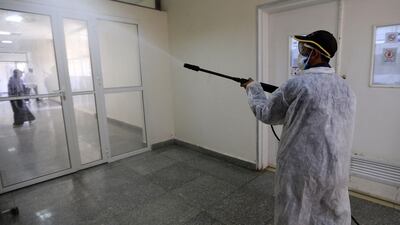
Countries are containing the virus by testing, treating and tracing, by limiting travel and imposing quarantine measures. But it continues onwards like a wave – one that may crash on those least able to withstand it.
As I write, 210 countries have reported cases, over 128,000 people have lost their lives, infections have tipped 2 million, societies are in turmoil and economies at a standstill.
Such an extraordinary challenge requires an extraordinary response; decisive, bold, and – above all – collective and grounded in solidarity with the whole of humanity as we weather this storm together.
Covid-19 is the defining public health crisis of our time, but it is fast becoming much more. By challenging every country and community it impacts, it has the potential to create devastating social, economic and political consequences that may leave deep scars.
In a previous column, I explained why when food security is threatened, so too are stability and prosperity. As the full effect of Covid-19 across the world unfolds, we are truly in uncharted territory.
We have already witnessed how it is blind to national borders, race, ethnicity or economic strength.
We have seen how the world’s most developed nations, with unrivalled capacities to endure the challenge and safeguard domestic populations, have struggled to confront it.
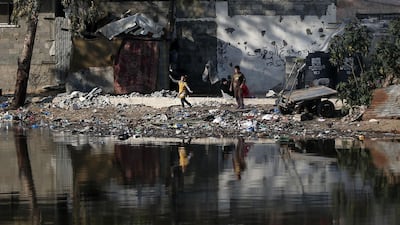
Although the impact of the pandemic has only just begun to reveal itself in the world’s so-called “developing” nations, there is good reason to believe that they will be disproportionately affected.
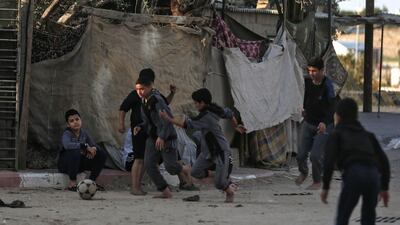
Already dealing with economic shocks, conflict and the effects of climate change, these countries will have to face devastating consequences. Consequences that will impact all aspects of life – starting with food insecurity, as the most basic of needs.
Entering 2020, the number of hungry people around the world was already on the rise.
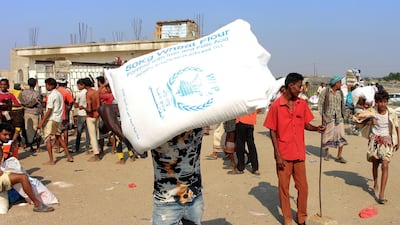
Today, over 800 million people face chronic undernourishment and 100 million are in need of life-saving food assistance.
The world has long produced more than enough food to feed its over 7 billion inhabitants
Covid-19 risks undermining efforts to reverse this trend.
Why?
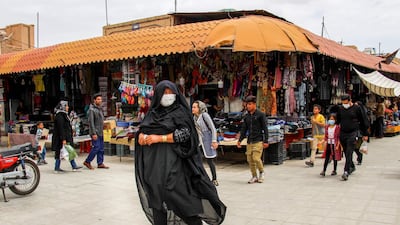
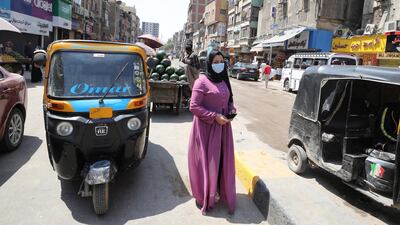
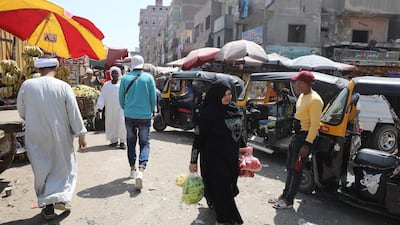
To begin, communities in the “developing” world tend to live in closer proximity to one another, complicating social distancing and massively increasing the risk of spread.
A higher proportion of people suffer from pre-existing health problems that render them more vulnerable to the disease.
As everywhere, stay-at-home measures and other necessary restrictions will mean lost production, lost employment and lost income.
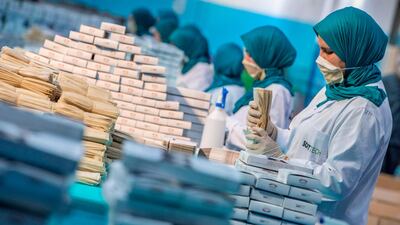
Governments in these countries cannot replicate the stimulus responses of their "developed" counterparts. They face fewer and harder choices when confronted with the pandemic and its multitude of impacts. Health systems are weaker and ill prepared for a crisis of this kind.
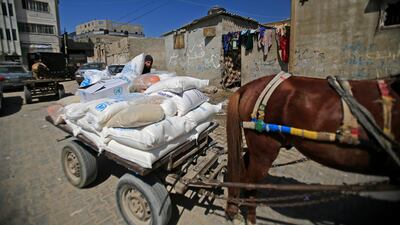
Economies depend largely on imports of staple foods to ensure the food security of their populations. Already, Covid-19 related containment measures have started to make it more challenging to move food from the world’s breadbaskets to where it is consumed.
If additional restrictions are imposed on exports and major supply routes close or slow down, food may not reach where it is needed and prices may rise.
We saw during the 2007-2008 global financial crisis how inflation can hit developing countries and their populations hardest; particularly as poor families spend a higher proportion of their income on food.
Global food markets are still well supplied and prices remain stable as I write this. We know that the world has long produced more than enough food to feed its almost eight billion inhabitants. What happens next depends in large measure on how the world responds.
Many before me have observed that Covid-19 may be the greatest test to humanity since World War Two, but it is a test of a very different nature.
While nations of the world have long focused on protecting themselves against known enemies, we may have neglected to prepare for an invisible adversary to all of humankind.
If nothing else, this pandemic should remind us that we are all equal as citizens of the world and this is why any effort to confront its human and economic costs must be truly global in design and application.
It may be hard to think of the world at this time when so many of us are feeling the immediate, painful impact of the pandemic. But think of the world we must. For, as long as Covid-19 rages somewhere it is a threat everywhere.
As long as people suffer its direct and indirect consequences in the world's most vulnerable corners, those consequences will affect all of us. The crisis knows no borders, neither should the response.
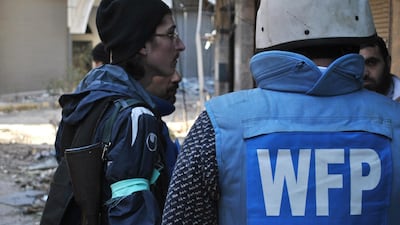
Here, at the United Nations World Food Programme (WFP) we are working tirelessly to do our part. We are closely monitoring trends in food security, health access and markets around the world and are sharing that information widely to support global decision-making.
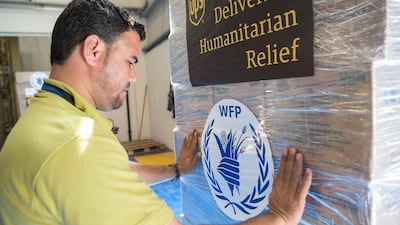
As the logistics backbone of the humanitarian community, we are rolling out essential support services so that humanitarian and health workers on the frontlines of the Covid-19 pandemic are able to stay and deliver.
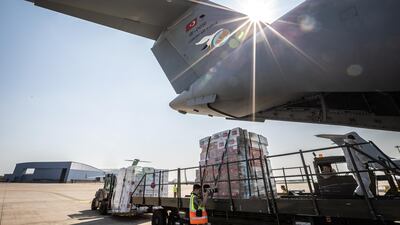
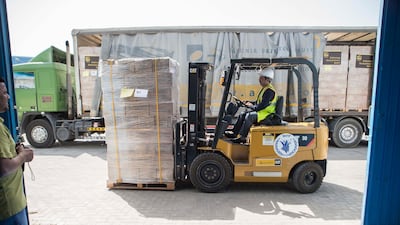
We are establishing humanitarian hubs to facilitate the dispatch of essential cargo, setting up air transport links, contracting charter vessels and providing passenger air and Medevac services for humanitarian and health staff.
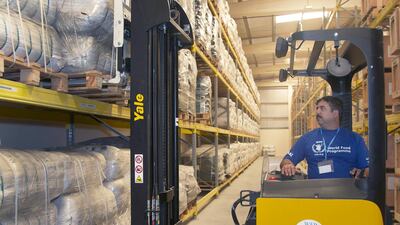
Right here in the UAE – where WFP is generously hosted at Dubai's International Humanitarian City and runs the biggest of its six United Nations humanitarian response depots where it procures, stores and rapidly transports emergency supplies on behalf of the humanitarian community – we are readying our support. But we urgently need $350 million to do this.
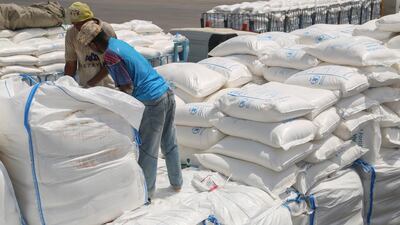
We are working to sustain – and scale-up if necessary – our vital food assistance programmes which already offer a lifeline to close to 100 million vulnerable people every year.
To do so, we are adapting our delivery mechanisms in the face of border closures, travel restrictions and supply chain complexities never seen before. It is a sobering reality that if the critical work of WFP cannot be carried out – if our supply chain breaks down or we do not receive the $1.9 billion we require to sustain operations for three months – some 150,000 people could lose their lives every day.
Ten short years away from 2030, the world has suffered a major setback in its quest to achieve the Sustainable Development Goals. Goals that were designed to embody a universally shared vision of a safe, just and sustainable world in which the whole of humanity thrives. At this critical moment in history, let us stand together again in this same spirit.
Many have remarked that life may never be the same after Covid-19 but I believe that by working together in solidarity we can build our "global village" back better.
Mageed Yahia is the Director of the United Nations World Food Programme Office in UAE and regional representative of the WFP in GCC
Islamophobia definition
A widely accepted definition was made by the All Party Parliamentary Group on British Muslims in 2019: “Islamophobia is rooted in racism and is a type of racism that targets expressions of Muslimness or perceived Muslimness.” It further defines it as “inciting hatred or violence against Muslims”.
Explainer: Tanween Design Programme
Non-profit arts studio Tashkeel launched this annual initiative with the intention of supporting budding designers in the UAE. This year, three talents were chosen from hundreds of applicants to be a part of the sixth creative development programme. These are architect Abdulla Al Mulla, interior designer Lana El Samman and graphic designer Yara Habib.
The trio have been guided by experts from the industry over the course of nine months, as they developed their own products that merge their unique styles with traditional elements of Emirati design. This includes laboratory sessions, experimental and collaborative practice, investigation of new business models and evaluation.
It is led by British contemporary design project specialist Helen Voce and mentor Kevin Badni, and offers participants access to experts from across the world, including the likes of UK designer Gareth Neal and multidisciplinary designer and entrepreneur, Sheikh Salem Al Qassimi.
The final pieces are being revealed in a worldwide limited-edition release on the first day of Downtown Designs at Dubai Design Week 2019. Tashkeel will be at stand E31 at the exhibition.
Lisa Ball-Lechgar, deputy director of Tashkeel, said: “The diversity and calibre of the applicants this year … is reflective of the dynamic change that the UAE art and design industry is witnessing, with young creators resolute in making their bold design ideas a reality.”
Ten tax points to be aware of in 2026
1. Domestic VAT refund amendments: request your refund within five years
If a business does not apply for the refund on time, they lose their credit.
2. E-invoicing in the UAE
Businesses should continue preparing for the implementation of e-invoicing in the UAE, with 2026 a preparation and transition period ahead of phased mandatory adoption.
3. More tax audits
Tax authorities are increasingly using data already available across multiple filings to identify audit risks.
4. More beneficial VAT and excise tax penalty regime
Tax disputes are expected to become more frequent and more structured, with clearer administrative objection and appeal processes. The UAE has adopted a new penalty regime for VAT and excise disputes, which now mirrors the penalty regime for corporate tax.
5. Greater emphasis on statutory audit
There is a greater need for the accuracy of financial statements. The International Financial Reporting Standards standards need to be strictly adhered to and, as a result, the quality of the audits will need to increase.
6. Further transfer pricing enforcement
Transfer pricing enforcement, which refers to the practice of establishing prices for internal transactions between related entities, is expected to broaden in scope. The UAE will shortly open the possibility to negotiate advance pricing agreements, or essentially rulings for transfer pricing purposes.
7. Limited time periods for audits
Recent amendments also introduce a default five-year limitation period for tax audits and assessments, subject to specific statutory exceptions. While the standard audit and assessment period is five years, this may be extended to up to 15 years in cases involving fraud or tax evasion.
8. Pillar 2 implementation
Many multinational groups will begin to feel the practical effect of the Domestic Minimum Top-Up Tax (DMTT), the UAE's implementation of the OECD’s global minimum tax under Pillar 2. While the rules apply for financial years starting on or after January 1, 2025, it is 2026 that marks the transition to an operational phase.
9. Reduced compliance obligations for imported goods and services
Businesses that apply the reverse-charge mechanism for VAT purposes in the UAE may benefit from reduced compliance obligations.
10. Substance and CbC reporting focus
Tax authorities are expected to continue strengthening the enforcement of economic substance and Country-by-Country (CbC) reporting frameworks. In the UAE, these regimes are increasingly being used as risk-assessment tools, providing tax authorities with a comprehensive view of multinational groups’ global footprints and enabling them to assess whether profits are aligned with real economic activity.
Contributed by Thomas Vanhee and Hend Rashwan, Aurifer
Key recommendations
- Fewer criminals put behind bars and more to serve sentences in the community, with short sentences scrapped and many inmates released earlier.
- Greater use of curfews and exclusion zones to deliver tougher supervision than ever on criminals.
- Explore wider powers for judges to punish offenders by blocking them from attending football matches, banning them from driving or travelling abroad through an expansion of ‘ancillary orders’.
- More Intensive Supervision Courts to tackle the root causes of crime such as alcohol and drug abuse – forcing repeat offenders to take part in tough treatment programmes or face prison.
The specs
Engine: 2.0-litre four-cylinder turbo
Power: 178hp at 5,500rpm
Torque: 280Nm at 1,350-4,200rpm
Transmission: seven-speed dual-clutch auto
Price: from Dh209,000
On sale: now
How to apply for a drone permit
- Individuals must register on UAE Drone app or website using their UAE Pass
- Add all their personal details, including name, nationality, passport number, Emiratis ID, email and phone number
- Upload the training certificate from a centre accredited by the GCAA
- Submit their request
What are the regulations?
- Fly it within visual line of sight
- Never over populated areas
- Ensure maximum flying height of 400 feet (122 metres) above ground level is not crossed
- Users must avoid flying over restricted areas listed on the UAE Drone app
- Only fly the drone during the day, and never at night
- Should have a live feed of the drone flight
- Drones must weigh 5 kg or less
Name: Peter Dicce
Title: Assistant dean of students and director of athletics
Favourite sport: soccer
Favourite team: Bayern Munich
Favourite player: Franz Beckenbauer
Favourite activity in Abu Dhabi: scuba diving in the Northern Emirates
Which honey takes your fancy?
Al Ghaf Honey
The Al Ghaf tree is a local desert tree which bears the harsh summers with drought and high temperatures. From the rich flowers, bees that pollinate this tree can produce delicious red colour honey in June and July each year
Sidr Honey
The Sidr tree is an evergreen tree with long and strong forked branches. The blossom from this tree is called Yabyab, which provides rich food for bees to produce honey in October and November. This honey is the most expensive, but tastiest
Samar Honey
The Samar tree trunk, leaves and blossom contains Barm which is the secret of healing. You can enjoy the best types of honey from this tree every year in May and June. It is an historical witness to the life of the Emirati nation which represents the harsh desert and mountain environments
UAE currency: the story behind the money in your pockets
The Byblos iftar in numbers
29 or 30 days – the number of iftar services held during the holy month
50 staff members required to prepare an iftar
200 to 350 the number of people served iftar nightly
160 litres of the traditional Ramadan drink, jalab, is served in total
500 litres of soup is served during the holy month
200 kilograms of meat is used for various dishes
350 kilograms of onion is used in dishes
5 minutes – the average time that staff have to eat
The%20specs%3A%202024%20Mercedes%20E200
%3Cp%3E%3Cstrong%3EEngine%3A%20%3C%2Fstrong%3E2.0-litre%20four-cyl%20turbo%20%2B%20mild%20hybrid%0D%3Cbr%3E%3Cstrong%3EPower%3A%20%3C%2Fstrong%3E204hp%20at%205%2C800rpm%20%2B23hp%20hybrid%20boost%0D%3Cbr%3E%3Cstrong%3ETorque%3A%20%3C%2Fstrong%3E320Nm%20at%201%2C800rpm%20%2B205Nm%20hybrid%20boost%0D%3Cbr%3E%3Cstrong%3ETransmission%3A%20%3C%2Fstrong%3E9-speed%20auto%0D%3Cbr%3E%3Cstrong%3EFuel%20consumption%3A%20%3C%2Fstrong%3E7.3L%2F100km%0D%3Cbr%3E%3Cstrong%3EOn%20sale%3A%20%3C%2Fstrong%3ENovember%2FDecember%0D%3Cbr%3E%3Cstrong%3EPrice%3A%20%3C%2Fstrong%3EFrom%20Dh205%2C000%20(estimate)%3C%2Fp%3E%0A
The specs: Fenyr SuperSport
Price, base: Dh5.1 million
Engine: 3.8-litre twin-turbo flat-six
Transmission: Seven-speed automatic
Power: 800hp @ 7,100pm
Torque: 980Nm @ 4,000rpm
Fuel economy, combined: 13.5L / 100km
Jetour T1 specs
Engine: 2-litre turbocharged
Power: 254hp
Torque: 390Nm
Price: From Dh126,000
Available: Now
Mohammed bin Zayed Majlis
Company Profile
Company name: NutriCal
Started: 2019
Founder: Soniya Ashar
Based: Dubai
Industry: Food Technology
Initial investment: Self-funded undisclosed amount
Future plan: Looking to raise fresh capital and expand in Saudi Arabia
Total Clients: Over 50
The Bio
Hometown: Bogota, Colombia
Favourite place to relax in UAE: the desert around Al Mleiha in Sharjah or the eastern mangroves in Abu Dhabi
The one book everyone should read: 100 Years of Solitude by Gabriel Garcia Marquez. It will make your mind fly
Favourite documentary: Chasing Coral by Jeff Orlowski. It's a good reality check about one of the most valued ecosystems for humanity
Conservative MPs who have publicly revealed sending letters of no confidence
- Steve Baker
- Peter Bone
- Ben Bradley
- Andrew Bridgen
- Maria Caulfield
- Simon Clarke
- Philip Davies
- Nadine Dorries
- James Duddridge
- Mark Francois
- Chris Green
- Adam Holloway
- Andrea Jenkyns
- Anne-Marie Morris
- Sheryll Murray
- Jacob Rees-Mogg
- Laurence Robertson
- Lee Rowley
- Henry Smith
- Martin Vickers
- John Whittingdale
How to help
Donate towards food and a flight by transferring money to this registered charity's account.
Account name: Dar Al Ber Society
Account Number: 11 530 734
IBAN: AE 9805 000 000 000 11 530 734
Bank Name: Abu Dhabi Islamic Bank
To ensure that your contribution reaches these people, please send the copy of deposit/transfer receipt to: juhi.khan@daralber.ae
Skoda Superb Specs
Engine: 2-litre TSI petrol
Power: 190hp
Torque: 320Nm
Price: From Dh147,000
Available: Now
Tips for job-seekers
- Do not submit your application through the Easy Apply button on LinkedIn. Employers receive between 600 and 800 replies for each job advert on the platform. If you are the right fit for a job, connect to a relevant person in the company on LinkedIn and send them a direct message.
- Make sure you are an exact fit for the job advertised. If you are an HR manager with five years’ experience in retail and the job requires a similar candidate with five years’ experience in consumer, you should apply. But if you have no experience in HR, do not apply for the job.
David Mackenzie, founder of recruitment agency Mackenzie Jones Middle East
Vikram%20Vedha
%3Cp%3E%3Cstrong%3EDirectors%3A%3C%2Fstrong%3E%20Gayatri%2C%20Pushkar%3C%2Fp%3E%0A%3Cp%3E%3Cstrong%3EStars%3A%3C%2Fstrong%3E%20Hrithik%20Roshan%2C%20Saif%20Ali%20Khan%2C%20Radhika%20Apte%3C%2Fp%3E%0A%3Cp%3E%3Cstrong%3ERating%3A%C2%A0%3C%2Fstrong%3E3.5%2F5%3C%2Fp%3E%0A
Unresolved crisis
Russia and Ukraine have been locked in a bitter conflict since 2014, when Ukraine’s Kremlin-friendly president was ousted, Moscow annexed Crimea and then backed a separatist insurgency in the east.
Fighting between the Russia-backed rebels and Ukrainian forces has killed more than 14,000 people. In 2015, France and Germany helped broker a peace deal, known as the Minsk agreements, that ended large-scale hostilities but failed to bring a political settlement of the conflict.
The Kremlin has repeatedly accused Kiev of sabotaging the deal, and Ukrainian officials in recent weeks said that implementing it in full would hurt Ukraine.
MATCH INFO
Inter Milan 2 (Vecino 65', Barella 83')
Verona 1 (Verre 19' pen)
How to keep control of your emotions
If your investment decisions are being dictated by emotions such as fear, greed, hope, frustration and boredom, it is time for a rethink, Chris Beauchamp, chief market analyst at online trading platform IG, says.
Greed
Greedy investors trade beyond their means, open more positions than usual or hold on to positions too long to chase an even greater gain. “All too often, they incur a heavy loss and may even wipe out the profit already made.
Tip: Ignore the short-term hype, noise and froth and invest for the long-term plan, based on sound fundamentals.
Fear
The risk of making a loss can cloud decision-making. “This can cause you to close out a position too early, or miss out on a profit by being too afraid to open a trade,” he says.
Tip: Start with a plan, and stick to it. For added security, consider placing stops to reduce any losses and limits to lock in profits.
Hope
While all traders need hope to start trading, excessive optimism can backfire. Too many traders hold on to a losing trade because they believe that it will reverse its trend and become profitable.
Tip: Set realistic goals. Be happy with what you have earned, rather than frustrated by what you could have earned.
Frustration
Traders can get annoyed when the markets have behaved in unexpected ways and generates losses or fails to deliver anticipated gains.
Tip: Accept in advance that asset price movements are completely unpredictable and you will suffer losses at some point. These can be managed, say, by attaching stops and limits to your trades.
Boredom
Too many investors buy and sell because they want something to do. They are trading as entertainment, rather than in the hope of making money. As well as making bad decisions, the extra dealing charges eat into returns.
Tip: Open an online demo account and get your thrills without risking real money.
Name: Brendalle Belaza
From: Crossing Rubber, Philippines
Arrived in the UAE: 2007
Favourite place in Abu Dhabi: NYUAD campus
Favourite photography style: Street photography
Favourite book: Harry Potter
Skewed figures
In the village of Mevagissey in southwest England the housing stock has doubled in the last century while the number of residents is half the historic high. The village's Neighbourhood Development Plan states that 26% of homes are holiday retreats. Prices are high, averaging around £300,000, £50,000 more than the Cornish average of £250,000. The local average wage is £15,458.
Mercer, the investment consulting arm of US services company Marsh & McLennan, expects its wealth division to at least double its assets under management (AUM) in the Middle East as wealth in the region continues to grow despite economic headwinds, a company official said.
Mercer Wealth, which globally has $160 billion in AUM, plans to boost its AUM in the region to $2-$3bn in the next 2-3 years from the present $1bn, said Yasir AbuShaban, a Dubai-based principal with Mercer Wealth.
“Within the next two to three years, we are looking at reaching $2 to $3 billion as a conservative estimate and we do see an opportunity to do so,” said Mr AbuShaban.
Mercer does not directly make investments, but allocates clients’ money they have discretion to, to professional asset managers. They also provide advice to clients.
“We have buying power. We can negotiate on their (client’s) behalf with asset managers to provide them lower fees than they otherwise would have to get on their own,” he added.
Mercer Wealth’s clients include sovereign wealth funds, family offices, and insurance companies among others.
From its office in Dubai, Mercer also looks after Africa, India and Turkey, where they also see opportunity for growth.
Wealth creation in Middle East and Africa (MEA) grew 8.5 per cent to $8.1 trillion last year from $7.5tn in 2015, higher than last year’s global average of 6 per cent and the second-highest growth in a region after Asia-Pacific which grew 9.9 per cent, according to consultancy Boston Consulting Group (BCG). In the region, where wealth grew just 1.9 per cent in 2015 compared with 2014, a pickup in oil prices has helped in wealth generation.
BCG is forecasting MEA wealth will rise to $12tn by 2021, growing at an annual average of 8 per cent.
Drivers of wealth generation in the region will be split evenly between new wealth creation and growth of performance of existing assets, according to BCG.
Another general trend in the region is clients’ looking for a comprehensive approach to investing, according to Mr AbuShaban.
“Institutional investors or some of the families are seeing a slowdown in the available capital they have to invest and in that sense they are looking at optimizing the way they manage their portfolios and making sure they are not investing haphazardly and different parts of their investment are working together,” said Mr AbuShaban.
Some clients also have a higher appetite for risk, given the low interest-rate environment that does not provide enough yield for some institutional investors. These clients are keen to invest in illiquid assets, such as private equity and infrastructure.
“What we have seen is a desire for higher returns in what has been a low-return environment specifically in various fixed income or bonds,” he said.
“In this environment, we have seen a de facto increase in the risk that clients are taking in things like illiquid investments, private equity investments, infrastructure and private debt, those kind of investments were higher illiquidity results in incrementally higher returns.”
The Abu Dhabi Investment Authority, one of the largest sovereign wealth funds, said in its 2016 report that has gradually increased its exposure in direct private equity and private credit transactions, mainly in Asian markets and especially in China and India. The authority’s private equity department focused on structured equities owing to “their defensive characteristics.”
UAE currency: the story behind the money in your pockets