I first met 26-year old Bahati Ernestine in Nairobi in late 2019, when in-person events were still the norm. Her story offered a rare light in what was yet another jargon-studded conference – to seek solutions for hundreds of thousands of refugees stuck in remote camps in Kenya.
Among the world’s mere three per cent of refugees to have completed university education, Bahati had surmounted immeasurable odds to earn a nursing degree. Escaping genocide in Rwanda in 1994, Bahati’s family had first fled to the Democratic Republic of Congo from where they eventually made their way to Kenya. Upon arriving in Kenya, Bahati’s parents decided against settling in a refugee camp, opting instead to make a living on the outskirts of Nairobi.
That decision changed the course of Bahati's life. It created education opportunities she may not have had in a camp. She had the courage and determination to persevere, snapping up a scholarship programme and an internship at the renowned Kenyatta National Hospital.
Along the way, she faced the sort of challenges that those without a country to call home often do: convincing the bureaucracy of her existence, fighting to be seen as more than just a refugee. The lack of a birth certificate and limited rights meant that this remained a constant struggle.
I have spent the last two years closely following the waning hopes of Dadaab refugees. Their three-decade ordeal for human dignity remains elusive, locked up as they are in remote camps. So, stumbling upon Bahati provided hope. Her struggle and resilience – formidable, given the odds she was up against – was made possible by choices, however limited.
Humanitarian aid can still support them to transition to a life of dignity
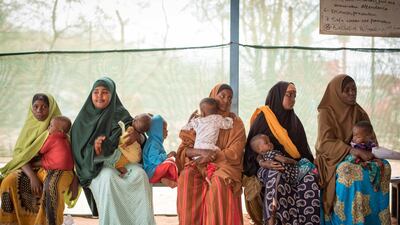
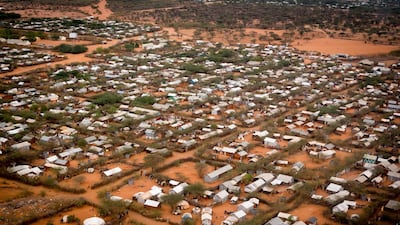
But for the more than 200,000 refugees in Dadaab, consigned to a barren prison, there has never been much choice except to go back to the country they had fled. For the majority that is Somalia, where the skills needed to evade threat to life are as elemental as the ones required to not go hungry.
It all stems from a catastrophic choice in policy: to keep refugees in camps, where they remain dependent on measly and ever-dwindling humanitarian assistance, with little no access to jobs, higher education or specialised health care.
Camps are lifesaving to start with, but when time spent in them drags into decades, they can test human resilience, grind hopes and crush the talent of people who, in normal circumstances, could contribute so much to society.
It was this realisation two years ago that prompted the UN General Assembly to ratify the Global Compact on Refugees (GCR). The Compact made assisting refugees a global public responsibility, requiring increased support for host countries to ensure that they could provide refugees access to public services, as well as assimilate them into the social fabric of their nations. Many rich countries also recognised the need for additional efforts to provide resettlement options for refugees.
They need access to opportunities – mostly educational and to earn livelihoods – and the chance to choose how they want to live
The Compact’s promise reverberated in Kenya and the wider region. Local counties such as Garissa – which hosts Dadaab – started working on including refugees in their development plans, likely seeing an opportunity to attract more funding to develop the region.
And at the first-ever Global Refugee Forum in December 2019, the countries in the region, under the auspices of the Inter-Governmental Authority on Development, pledged to establish a “Support Platform”, which could mobilise funding to help host countries such as Kenya implement the commitments they took when subscribing to the GRC.
Covid-19 slashed that progress. All of last year, Dadaab refugees saw few efforts to develop durable solutions which respect their dignity and legitimate aspiration to have a life, rather than just survive. And resettlement options have all but dried up, with UNHCR announcing 2020 to be a record low for resettlement.
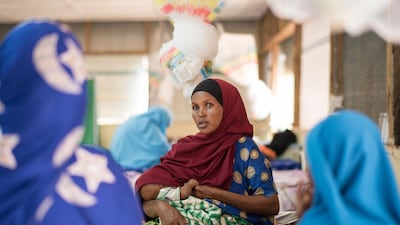
So the “city of thorns” remains, where lives continue to be on hold and dreams die a slow death. The withering hopes of successive generations is taking a severe psychological toll on many. As we warned, a mental health crisis is growing in Dadaab. In 2020, at least 13 people have attempted suicide in Dagahaley camp, two of those attempts were fatal.
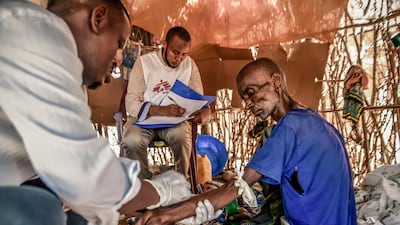
Dadaab also presents a critical challenge for organisations like mine. For how long do we continue to support a camp that saves lives but robs people of dignity? We have been providing medical services for most of the camp’s three-decades’ existence. By doing so, are we perpetuating a soul-crushing system?
As a humanitarian organisation with limited means, we are doing our bit by providing a small number of scholarships for refugee adults to study nursing and other paramedical professions. Once they graduate, they become part of a vital health force, sorely needed to address public health challenges in countries like Kenya.
But as Bahati knows too well, education is only one among a series of hurdles that refugees must overcome. Even just securing a work permit requires navigating a labyrinthine bureaucracy.
Bahati is determined to persevere. She told me she will push the system to get to practice nursing. In Swahili, “Bahati” means luck. So, with some luck on her side, she may well succeed.
But refugees in Dadaab will need much more than luck to turn their fortunes around. They need access to opportunities – mostly educational and to earn livelihoods – and the chance to choose how they want to live. Humanitarian aid has been vital in sustaining Dadaab refugees; it can still support them to transition to a life of dignity.
Emmanuelle Privat is deputy country director of Médecins Sans Frontières in Kenya
UAE currency: the story behind the money in your pockets
The specs
Engine: 2.0-litre 4-cyl
Power: 153hp at 6,000rpm
Torque: 200Nm at 4,000rpm
Transmission: 6-speed auto
Price: Dh99,000
On sale: now
Timeline
2012-2015
The company offers payments/bribes to win key contracts in the Middle East
May 2017
The UK SFO officially opens investigation into Petrofac’s use of agents, corruption, and potential bribery to secure contracts
September 2021
Petrofac pleads guilty to seven counts of failing to prevent bribery under the UK Bribery Act
October 2021
Court fines Petrofac £77 million for bribery. Former executive receives a two-year suspended sentence
December 2024
Petrofac enters into comprehensive restructuring to strengthen the financial position of the group
May 2025
The High Court of England and Wales approves the company’s restructuring plan
July 2025
The Court of Appeal issues a judgment challenging parts of the restructuring plan
August 2025
Petrofac issues a business update to execute the restructuring and confirms it will appeal the Court of Appeal decision
October 2025
Petrofac loses a major TenneT offshore wind contract worth €13 billion. Holding company files for administration in the UK. Petrofac delisted from the London Stock Exchange
November 2025
180 Petrofac employees laid off in the UAE
Kanye%20West
%3Cp%3EYe%20%E2%80%94%20the%20rapper%20formerly%20known%20as%20Kanye%20West%20%E2%80%94%20has%20seen%20his%20net%20worth%20fall%20to%20%24400%20million%20in%20recent%20weeks.%20That%E2%80%99s%20a%20precipitous%20drop%20from%20Bloomberg%E2%80%99s%20estimates%20of%20%246.8%20billion%20at%20the%20end%20of%202021.%3Cbr%3EYe%E2%80%99s%20wealth%20plunged%20after%20business%20partners%2C%20including%20Adidas%2C%20severed%20ties%20with%20him%20on%20the%20back%20of%20anti-Semitic%20remarks%20earlier%20this%20year.%3Cbr%3EWest%E2%80%99s%20present%20net%20worth%20derives%20from%20cash%2C%20his%20music%2C%20real%20estate%20and%20a%20stake%20in%20former%20wife%20Kim%20Kardashian%E2%80%99s%20shapewear%20firm%2C%20Skims.%3C%2Fp%3E%0A
UAE currency: the story behind the money in your pockets
BMW M5 specs
Engine: 4.4-litre twin-turbo V-8 petrol enging with additional electric motor
Power: 727hp
Torque: 1,000Nm
Transmission: 8-speed auto
Fuel consumption: 10.6L/100km
On sale: Now
Price: From Dh650,000
The biog
Favourite hobby: I love to sing but I don’t get to sing as much nowadays sadly.
Favourite book: Anything by Sidney Sheldon.
Favourite movie: The Exorcist 2. It is a big thing in our family to sit around together and watch horror movies, I love watching them.
Favourite holiday destination: The favourite place I have been to is Florence, it is a beautiful city. My dream though has always been to visit Cyprus, I really want to go there.
Previous men's records
- 2:01:39: Eliud Kipchoge (KEN) on 16/9/19 in Berlin
- 2:02:57: Dennis Kimetto (KEN) on 28/09/2014 in Berlin
- 2:03:23: Wilson Kipsang (KEN) on 29/09/2013 in Berlin
- 2:03:38: Patrick Makau (KEN) on 25/09/2011 in Berlin
- 2:03:59: Haile Gebreselassie (ETH) on 28/09/2008 in Berlin
- 2:04:26: Haile Gebreselassie (ETH) on 30/09/2007 in Berlin
- 2:04:55: Paul Tergat (KEN) on 28/09/2003 in Berlin
- 2:05:38: Khalid Khannouchi (USA) 14/04/2002 in London
- 2:05:42: Khalid Khannouchi (USA) 24/10/1999 in Chicago
- 2:06:05: Ronaldo da Costa (BRA) 20/09/1998 in Berlin
Credit Score explained
What is a credit score?
In the UAE your credit score is a number generated by the Al Etihad Credit Bureau (AECB), which represents your credit worthiness – in other words, your risk of defaulting on any debt repayments. In this country, the number is between 300 and 900. A low score indicates a higher risk of default, while a high score indicates you are a lower risk.
Why is it important?
Financial institutions will use it to decide whether or not you are a credit risk. Those with better scores may also receive preferential interest rates or terms on products such as loans, credit cards and mortgages.
How is it calculated?
The AECB collects information on your payment behaviour from banks as well as utilitiy and telecoms providers.
How can I improve my score?
By paying your bills on time and not missing any repayments, particularly your loan, credit card and mortgage payments. It is also wise to limit the number of credit card and loan applications you make and to reduce your outstanding balances.
How do I know if my score is low or high?
By checking it. Visit one of AECB’s Customer Happiness Centres with an original and valid Emirates ID, passport copy and valid email address. Liv. customers can also access the score directly from the banking app.
How much does it cost?
A credit report costs Dh100 while a report with the score included costs Dh150. Those only wanting the credit score pay Dh60. VAT is payable on top.
Stan%20Lee
%3Cp%3E%3Cstrong%3EDirector%3A%3C%2Fstrong%3E%20David%20Gelb%3C%2Fp%3E%0A%3Cp%3E%3Cstrong%3ERating%3A%3C%2Fstrong%3E%203%2F5%3C%2Fp%3E%0A
UPI facts
More than 2.2 million Indian tourists arrived in UAE in 2023
More than 3.5 million Indians reside in UAE
Indian tourists can make purchases in UAE using rupee accounts in India through QR-code-based UPI real-time payment systems
Indian residents in UAE can use their non-resident NRO and NRE accounts held in Indian banks linked to a UAE mobile number for UPI transactions
UAE v IRELAND
All matches start at 10am, and will be played in Abu Dhabi
1st ODI, Friday, January 8
2nd ODI, Sunday, January 10
3rd ODI, Tuesday, January 12
4th ODI, Thursday, January 14
If you go...
Fly from Dubai or Abu Dhabi to Chiang Mai in Thailand, via Bangkok, before taking a five-hour bus ride across the Laos border to Huay Xai. The land border crossing at Huay Xai is a well-trodden route, meaning entry is swift, though travellers should be aware of visa requirements for both countries.
Flights from Dubai start at Dh4,000 return with Emirates, while Etihad flights from Abu Dhabi start at Dh2,000. Local buses can be booked in Chiang Mai from around Dh50
Ten tax points to be aware of in 2026
1. Domestic VAT refund amendments: request your refund within five years
If a business does not apply for the refund on time, they lose their credit.
2. E-invoicing in the UAE
Businesses should continue preparing for the implementation of e-invoicing in the UAE, with 2026 a preparation and transition period ahead of phased mandatory adoption.
3. More tax audits
Tax authorities are increasingly using data already available across multiple filings to identify audit risks.
4. More beneficial VAT and excise tax penalty regime
Tax disputes are expected to become more frequent and more structured, with clearer administrative objection and appeal processes. The UAE has adopted a new penalty regime for VAT and excise disputes, which now mirrors the penalty regime for corporate tax.
5. Greater emphasis on statutory audit
There is a greater need for the accuracy of financial statements. The International Financial Reporting Standards standards need to be strictly adhered to and, as a result, the quality of the audits will need to increase.
6. Further transfer pricing enforcement
Transfer pricing enforcement, which refers to the practice of establishing prices for internal transactions between related entities, is expected to broaden in scope. The UAE will shortly open the possibility to negotiate advance pricing agreements, or essentially rulings for transfer pricing purposes.
7. Limited time periods for audits
Recent amendments also introduce a default five-year limitation period for tax audits and assessments, subject to specific statutory exceptions. While the standard audit and assessment period is five years, this may be extended to up to 15 years in cases involving fraud or tax evasion.
8. Pillar 2 implementation
Many multinational groups will begin to feel the practical effect of the Domestic Minimum Top-Up Tax (DMTT), the UAE's implementation of the OECD’s global minimum tax under Pillar 2. While the rules apply for financial years starting on or after January 1, 2025, it is 2026 that marks the transition to an operational phase.
9. Reduced compliance obligations for imported goods and services
Businesses that apply the reverse-charge mechanism for VAT purposes in the UAE may benefit from reduced compliance obligations.
10. Substance and CbC reporting focus
Tax authorities are expected to continue strengthening the enforcement of economic substance and Country-by-Country (CbC) reporting frameworks. In the UAE, these regimes are increasingly being used as risk-assessment tools, providing tax authorities with a comprehensive view of multinational groups’ global footprints and enabling them to assess whether profits are aligned with real economic activity.
Contributed by Thomas Vanhee and Hend Rashwan, Aurifer
Killing of Qassem Suleimani
The view from The National
INDIA SQUAD
Virat Kohli (capt), Rohit Sharma, Shikhar Dhawan, KL Rahul, Vijay Shankar, MS Dhoni (wk), Kedar Jadhav, Dinesh Karthik, Yuzvendra Chahal, Kuldeep Yadav, Bhuvneshwar Kumar, Jasprit Bumrah, Hardik Pandya, Ravindra Jadeja, Mohammed Shami
The specs: 2017 Porsche 718 Cayman
Price, base / as tested Dh222,500 / Dh296,870
Engine 2.0L, flat four-cylinder
Transmission Seven-speed PDK
Power 300hp @ 6,500rpm
Torque 380hp @ 1,950rpm
Fuel economy, combined 6.9L / 100km
Bundesliga fixtures
Saturday, May 16 (kick-offs UAE time)
Borussia Dortmund v Schalke (4.30pm)
RB Leipzig v Freiburg (4.30pm)
Hoffenheim v Hertha Berlin (4.30pm)
Fortuna Dusseldorf v Paderborn (4.30pm)
Augsburg v Wolfsburg (4.30pm)
Eintracht Frankfurt v Borussia Monchengladbach (7.30pm)
Sunday, May 17
Cologne v Mainz (4.30pm),
Union Berlin v Bayern Munich (7pm)
Monday, May 18
Werder Bremen v Bayer Leverkusen (9.30pm)