
The Strait of Hormuz, which links the Arabian Gulf to the Gulf of Oman and the Arabian Sea, is one of the world’s most strategic maritime intersections. Every day, ships carry around 21 million barrels of oil, which accounts for roughly 21 per cent of global consumption through the strait, according to the US Energy Information Administration. The waterway is just 33 kilometres wide at its narrowest point, with a shipping lane just 3km wide in either direction.
The Strait is of crucial importance to the world in terms of oil supply, and to the UAE as one of the primary means of transporting exported oil. And the UAE's east coast is also a vital maritime hub, especially since the opening of the Habshan-Fujairah oil pipeline in 2012, which transports up to 75 per cent of the country's oil exports from Abu Dhabi to Fujairah, according to S&P Global Platts.
On a day-to-day level, the amount of traffic moving through coastal waters causes air pollution, particularly from diesel engines. Vessel discharges such as oil and chemical spills can sometimes be a concern as well. The release of oil-based discharges into the water is extremely harmful to wildlife and sea life. It can take weeks, months or even years to clean up.
We only have to see the recent example in Mauritius where the MV Wakashio struck a coral reef on July 25, resulting in 1,000 tonnes of oil spilling into the sea, with devastating consequences to coral, fish and other marine life. This is not a new issue. From 2010 to 2020, more than 60 such incidents have been reported globally, resulting in the loss of 164,000 tonnes of oil.
Companies with marine operations in the UAE have taken extra precautions when it comes to oil spills and have heavily invested in boosting preparedness for such incidents. And there are restrictions posed by UAE’s Federal Law No 24, which states that all means of marine transport are prohibited from disposing oil in the sea. Stringent checks by UAE authorities are in place to make sure the law is observed. Yet, considering the quantities of oil being transported by ships in UAE waters, we will always have to stay vigilant of the threat of oil spills.
Oil slicks are extremely harmful to the marine environment. The UAE waters contain dolphins, dugongs, sharks and turtles – along with over 500 species of fish. The country also has more than 150 square kilometres of precious mangroves, which act as "green lungs" for our cities, while also providing a habitat for wildlife.


The UAE is home to 11 designated sites listed by the Ramsar Convention, an international treaty to conserve wetlands. And our 1,318km beaches are also key drivers for tourism and quality of life for our communities. And the commercial fishing on shores aids the UAE's food security.
More widely, the sea covers 70 per cent of the Earth’s surface, and unhealthy oceans speed the process of climate change and extreme weather patterns. It is therefore crucial that we do everything we can to protect this natural resource.
-
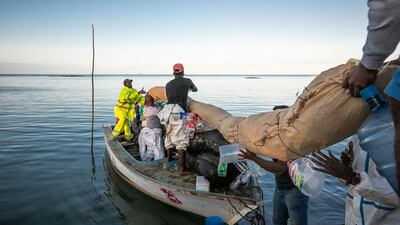
Volunteers prepare to place handmade oil barriers in the sea at the Mahébourg waterfront in Mauritius. AFP -
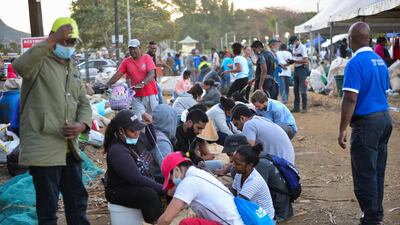
Volunteers prepare a handmade oil barrier to block leaked oil from the bulk carrier ship MV Wakashio. REUTERS -
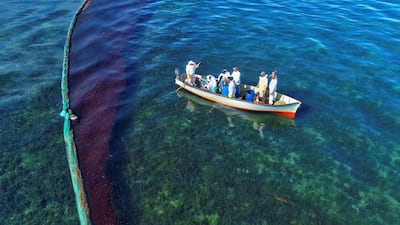
A drone image shows fishermen on a boat as they volunteer near the area where the bulk carrier ship MV Wakashio, belonging to a Japanese company but Panamanian-flagged, ran aground on a reef, at Riviere des Creoles, Mauritius. REUTERS -

The MV Wakashio stranded close to Pointe d'Esny, Mauritius. EPA -
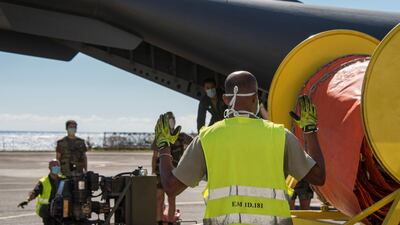
People prepare a plane carrying light equipment and pollution experts before it flies to Mauritius, following fuel spillage from the bulk carrier ship MV Wakashio, at Saint-Denis de la Reunion airport on the island of Reunion, France. REUTERS -
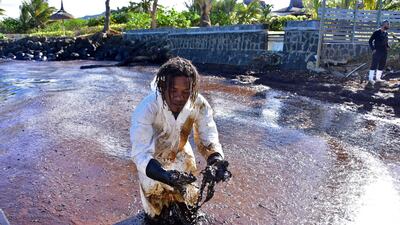
A volunteer is seen in the leaked oil from the bulk carrier ship MV Wakashio. Reuters -
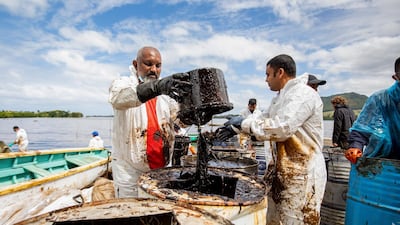
Local volunteers clean up oil washing up on the beach from the MV Wakashio. EPA -

An aerial photograph shows oil drifting ashore over coral reefs from the MV Wakashio. AFP -
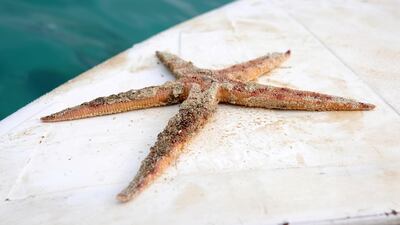
A dead starfish is seen following leaked oil from the bulk carrier ship MV Wakashio, Mauritius. Reuters -

A drone image shows volunteers preparing to handle leaked oil from the bulk carrier ship MV Wakashio. Reuters -

An aerial view shows people scooping leaked oil. AFP -
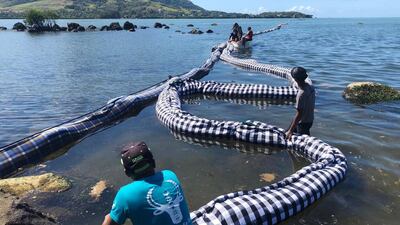
Local volunteers making absorbent barriers of straw stuffed into fabric sacks to contain oil from the MV Wakashio. EPA -

Local volunteers lifting absorbent barriers made of straw stuffed into fabric sacks to contain oil from the MV Wakashio. EPA -

A general view shows the bulk carrier ship MV Wakashio. Reuters -
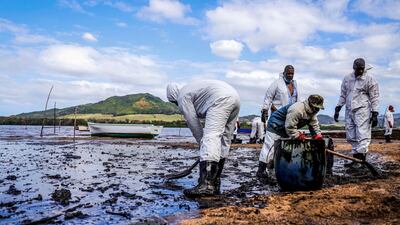
People scoop leaked oil from the vessel MV Wakashio, belonging to a Japanese company but Panamanian-flagged, that ran aground and caused oil leakage near Blue bay Marine Park in southeast Mauritius. AFP -
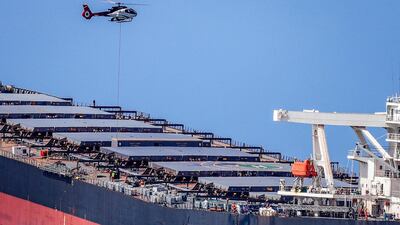
A helicopter hovers over the vessel MV Wakashio in southeast Mauritius. AFP -
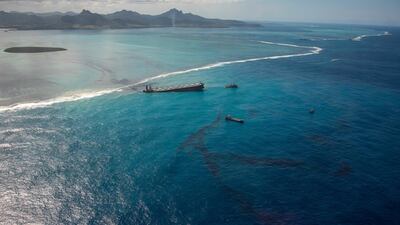
The Indian Ocean island of Mauritius has declared a "state of environmental emergency" after the Japanese-owned ship that ran aground offshore days ago began spilling tons of fuel. AP -

Local volunteers clean up oil washing up on the beach from the MV Wakashio off the southeast coast of Mauritius. EPA -

Local volunteers make absorbent barriers of straw stuffed into fabric sacks to contain oil from the MV Wakashio. EPA -
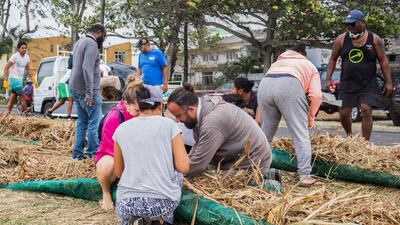
Local volunteers make absorbent barriers of straw stuffed into fabric sacks to contain oil from the MV Wakashio. EPA -
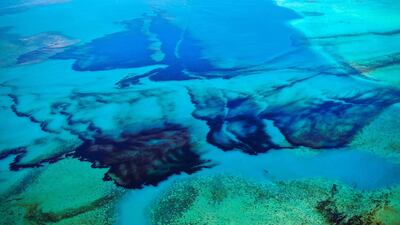
An aerial photograph shows oil drifting ashore over coral reefs from the MV Wakashio. EPA -
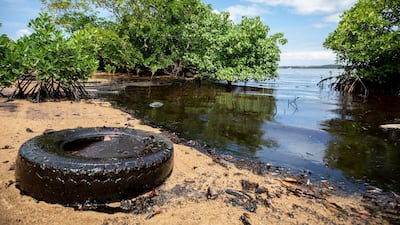
A general view of oil washed up on a beach from the MV Wakashio. EPA


The UAE has long tried to preserve the marine environment. Federal Law No 24 was passed in 1999, prohibiting vessels from discharging oil into the marine environment. This has helped, though most incidents since then have happened in international waters, making it difficult to police illegal activity.
The Ministry of Climate Change and Environment also has a national emergency plan to respond to incidents, which includes monitoring coastal areas using AI, remote sensors and predictive modelling programmes. It also recently announced a plan to collaborate with the private sector to rehabilitate the UAE’s marine ecosystems, including the cultivation of coral reefs and construction of artificial caves to mitigate the damage caused by previous spills.
Seeing as the Emirates has a coastline on both sides of the Arabian Peninsula, the two coasts are literally at our doorstep. And it is important that moving forward, we boost our ability to respond to any future incidents. At Bee'ah we have been involved in coastal clean-up operations, including the recent Khor Fakkan incident. And we can boost our capabilities in various ways: by exploring the setup of oil spill preparedness and response centres; the mobilisation of our equipment and personnel to assist, and workshops with government stakeholders.
All these steps will greatly enhance our coasts and marine life, which are vital to our economy, the ecosystem and a more sustainable future. Our seas are among the busiest in the world and we have a responsibility to preserve them for posterity.
Khaled Al Huraimel is group chief executive of Bee’ah

