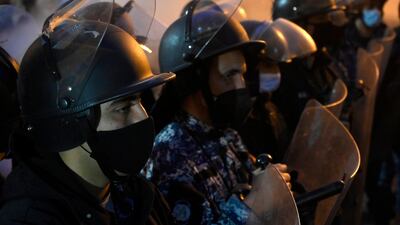
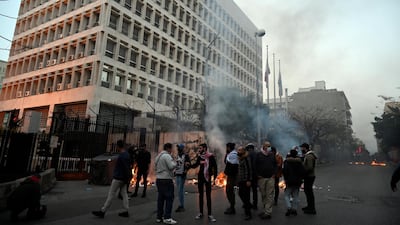
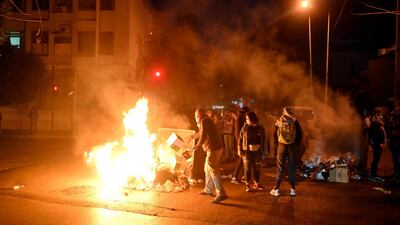
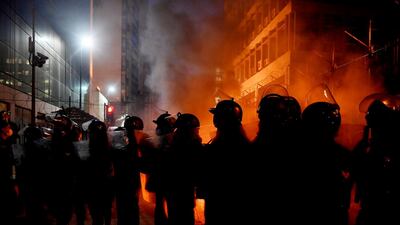
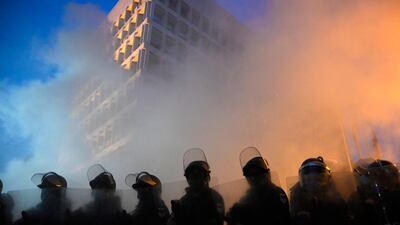
As Lebanon continues to disintegrate, its political system is unequivocally broken. What had been an interesting consociational model until its civil war in 1975, was replaced at the war's end in 1990 with a pluralistic system of national pie-sharing that included the wartime leaders and a new class of businessmen.
That system began to collapse in late 2019, as Lebanon's debt and declining capital inflows brought the country to its knees financially. From a political perspective, this killed the cash cow the political cartel in power had relentlessly plundered. Yet these leaders have refused to surrender any power, while an armed militia, Hezbollah, whose loyalty is to Iran, has continued to impose its preferences, preventing the country from exiting its dire situation.
Lebanon's war ended in 1990, a year after parliament's approval of the Taif Agreement, a political reform plan negotiated in Taif, Saudi Arabia, in September-October 1989. The constitution was amended, transforming a presidential system into one in which the main executive body became the council of ministers. While the changes redistributed power among the religious communities, what Taif also created was a perfect structure for a carving up of the state among sectarian leaders, many of whom had previously led militias.
Whereas sectarian power-sharing had been a feature of the pre-war state, the war and Syrian hegemony after 1990 thoroughly undermined national institutions. The sectarian leaders and their Syrian patrons were able to hijack the state after the war ended and turn ministries and state bodies into profitable fiefdoms. Consequently, Lebanon’s financial system in the 1990s was geared towards financing what had become the facade of a state, one ruled by politicians for whom all issues were resolved through manufactured crises that hastened mutually-profitable resolutions. Lebanon’s reconstruction generated massive corruption and theft, which became an inherent part of the political order.
Since the Syrian withdrawal in 2005, after the killing of Rafik Hariri, the post-Taif constitution has been transformed into an instrument of blockage. By effectively imposing a system of sectarian unanimity for all major decisions, the document has prevented progress when there is no consensus among the ruling cartel. The political system has staggered from one impasse to the next, as the politicians and parties have held the state hostage in order to force through their political priorities.
The impaired nature of political decision-making has heightened a feeling that a united Lebanon is no longer worth preserving. That is why the country's sectarian reflexes are pushing many to think of mechanisms of separation that would allow Lebanon to function better, albeit within the hollowed out shell of a single state.
Now seems to be the time to think about reimagining Lebanon
A major factor encouraging such thinking is the presence of Hezbollah. Because the party is too strong to be brought to heel by the state and is closely integrated with one of Lebanon’s major religious communities, there are those who believe the best option is to move towards a soft divorce. In that way, many areas of Lebanon might be able to isolate themselves from Hezbollah’s efforts to use the central government to impose its will, or wage war with Israel on Iran’s behalf.
Partition cannot work in so small an entity as Lebanon, while federalism has problems of its own, not least how to reach arrangements over religiously mixed districts. But Taif did offer a partial path out by laying the groundwork for a process of administrative decentralisation.
According to Taif, this would involve broadening the authority of the heads of the muhafazaat, or governorates, and qadas, or small administrative districts. Councils would be put in place for each qada, offering some freedom, and Taif mentions redrawing Lebanon’s administrative map to boost local development.
The Taif proposals can be expanded if the aim is to accentuate decentralisation. While governors and heads of qadas in Lebanon are appointed by the central government, filling these positions through local elections instead could be a way of limiting the potential impact of political obstruction at the centre.
The purpose would be to allow each governorate and qada to function in a relatively autonomous way from the rest of the country. In the mind of supporters, this would mean that sectarian demographics at the national level would matter less, because minorities, particularly the Christians and Druze, would manage their own affairs in their respective areas. More important, this could potentially represent an initial step towards federalism.
Doubtless, there are problems with this idea. For one, Hezbollah could oppose giving up on a Lebanese state that protects its weapons, and it would be more vulnerable to attack in a country where it is mainly limited to Shia majority areas. But a decentralised system would also relieve it of having to constantly control a country whose myriad sects increasingly reject the party’s agenda.
Such a system would also reinforce sectarian leaders and parties in areas where they dominate, to the detriment of those opposing them. In other words, the sectarian stranglehold of the political cartel could be transferred to the local level. Yet an upside is that Lebanon also tends to retain strong pluralistic impulses locally, where personal and family ties tend to dominate.
But as the masonry keeps falling, now seems to be the time to think about reimagining Lebanon, whether this involves decentralisation or some other system that gives the Lebanese more of a role in deciding their fate. The post-war system morphed into a criminal enterprise run by leaders who robbed the population. Lebanon's social contract is dead and has to be replaced.
Michael Young is a senior editor at the Carnegie Middle East Centre in Beirut and a Lebanon columnist for The National

SPEC%20SHEET%3A%20APPLE%20M3%20MACBOOK%20AIR%20(13%22)
%3Cp%3E%3Cstrong%3EProcessor%3A%3C%2Fstrong%3E%20Apple%20M3%2C%208-core%20CPU%2C%20up%20to%2010-core%20CPU%2C%2016-core%20Neural%20Engine%3C%2Fp%3E%0A%3Cp%3E%3Cstrong%3EDisplay%3A%3C%2Fstrong%3E%2013.6-inch%20Liquid%20Retina%2C%202560%20x%201664%2C%20224ppi%2C%20500%20nits%2C%20True%20Tone%2C%20wide%20colour%3C%2Fp%3E%0A%3Cp%3E%3Cstrong%3EMemory%3A%3C%2Fstrong%3E%208%2F16%2F24GB%3C%2Fp%3E%0A%3Cp%3E%3Cstrong%3EStorage%3A%3C%2Fstrong%3E%20256%2F512GB%20%2F%201%2F2TB%3C%2Fp%3E%0A%3Cp%3E%3Cstrong%3EI%2FO%3A%3C%2Fstrong%3E%20Thunderbolt%203%2FUSB-4%20(2)%2C%203.5mm%20audio%2C%20Touch%20ID%3C%2Fp%3E%0A%3Cp%3E%3Cstrong%3EConnectivity%3A%3C%2Fstrong%3E%20Wi-Fi%206E%2C%20Bluetooth%205.3%3C%2Fp%3E%0A%3Cp%3E%3Cstrong%3EBattery%3A%3C%2Fstrong%3E%2052.6Wh%20lithium-polymer%2C%20up%20to%2018%20hours%2C%20MagSafe%20charging%3C%2Fp%3E%0A%3Cp%3E%3Cstrong%3ECamera%3A%3C%2Fstrong%3E%201080p%20FaceTime%20HD%3C%2Fp%3E%0A%3Cp%3E%3Cstrong%3EVideo%3A%3C%2Fstrong%3E%20Support%20for%20Apple%20ProRes%2C%20HDR%20with%20Dolby%20Vision%2C%20HDR10%3C%2Fp%3E%0A%3Cp%3E%3Cstrong%3EAudio%3A%3C%2Fstrong%3E%204-speaker%20system%2C%20wide%20stereo%2C%20support%20for%20Dolby%20Atmos%2C%20Spatial%20Audio%20and%20dynamic%20head%20tracking%20(with%20AirPods)%3C%2Fp%3E%0A%3Cp%3E%3Cstrong%3EColours%3A%3C%2Fstrong%3E%20Midnight%2C%20silver%2C%20space%20grey%2C%20starlight%3C%2Fp%3E%0A%3Cp%3E%3Cstrong%3EIn%20the%20box%3A%3C%2Fstrong%3E%20MacBook%20Air%2C%2030W%2F35W%20dual-port%2F70w%20power%20adapter%2C%20USB-C-to-MagSafe%20cable%2C%202%20Apple%20stickers%3C%2Fp%3E%0A%3Cp%3E%3Cstrong%3EPrice%3A%3C%2Fstrong%3E%20From%20Dh4%2C599%3C%2Fp%3E%0A
Ten tax points to be aware of in 2026
1. Domestic VAT refund amendments: request your refund within five years
If a business does not apply for the refund on time, they lose their credit.
2. E-invoicing in the UAE
Businesses should continue preparing for the implementation of e-invoicing in the UAE, with 2026 a preparation and transition period ahead of phased mandatory adoption.
3. More tax audits
Tax authorities are increasingly using data already available across multiple filings to identify audit risks.
4. More beneficial VAT and excise tax penalty regime
Tax disputes are expected to become more frequent and more structured, with clearer administrative objection and appeal processes. The UAE has adopted a new penalty regime for VAT and excise disputes, which now mirrors the penalty regime for corporate tax.
5. Greater emphasis on statutory audit
There is a greater need for the accuracy of financial statements. The International Financial Reporting Standards standards need to be strictly adhered to and, as a result, the quality of the audits will need to increase.
6. Further transfer pricing enforcement
Transfer pricing enforcement, which refers to the practice of establishing prices for internal transactions between related entities, is expected to broaden in scope. The UAE will shortly open the possibility to negotiate advance pricing agreements, or essentially rulings for transfer pricing purposes.
7. Limited time periods for audits
Recent amendments also introduce a default five-year limitation period for tax audits and assessments, subject to specific statutory exceptions. While the standard audit and assessment period is five years, this may be extended to up to 15 years in cases involving fraud or tax evasion.
8. Pillar 2 implementation
Many multinational groups will begin to feel the practical effect of the Domestic Minimum Top-Up Tax (DMTT), the UAE's implementation of the OECD’s global minimum tax under Pillar 2. While the rules apply for financial years starting on or after January 1, 2025, it is 2026 that marks the transition to an operational phase.
9. Reduced compliance obligations for imported goods and services
Businesses that apply the reverse-charge mechanism for VAT purposes in the UAE may benefit from reduced compliance obligations.
10. Substance and CbC reporting focus
Tax authorities are expected to continue strengthening the enforcement of economic substance and Country-by-Country (CbC) reporting frameworks. In the UAE, these regimes are increasingly being used as risk-assessment tools, providing tax authorities with a comprehensive view of multinational groups’ global footprints and enabling them to assess whether profits are aligned with real economic activity.
Contributed by Thomas Vanhee and Hend Rashwan, Aurifer
UPI facts
More than 2.2 million Indian tourists arrived in UAE in 2023
More than 3.5 million Indians reside in UAE
Indian tourists can make purchases in UAE using rupee accounts in India through QR-code-based UPI real-time payment systems
Indian residents in UAE can use their non-resident NRO and NRE accounts held in Indian banks linked to a UAE mobile number for UPI transactions
Ten10 Cricket League
Venue and schedule Sharjah Cricket Stadium, December 14 to 17
Teams
Maratha Arabians Leading player: Virender Sehwag; Top picks: Mohammed Amir, Imad Wasim; UAE players: Shaiman Anwar, Zahoor Khan
Bengal Lions Leading player: Sarfraz Ahmed; Top picks: Sunil Narine, Mustafizur Rahman; UAE players: Mohammed Naveed, Rameez Shahzad
Kerala Kings Leading player: Eoin Morgan; Top picks: Kieron Pollard, Sohail Tanvir; UAE players: Rohan Mustafa, Imran Haider
Pakhtoons Leading player: Shahid Afridi; Top picks: Fakhar Zaman, Tamim Iqbal; UAE players: Amjad Javed, Saqlain Haider
Punjabi Legends Leading player: Shoaib Malik; Top picks: Hasan Ali, Chris Jordan; UAE players: Ghulam Shabber, Shareef Asadullah
Team Sri Lanka Cricket Will be made up of Colombo players who won island’s domestic limited-overs competition
Classification of skills
A worker is categorised as skilled by the MOHRE based on nine levels given in the International Standard Classification of Occupations (ISCO) issued by the International Labour Organisation.
A skilled worker would be someone at a professional level (levels 1 – 5) which includes managers, professionals, technicians and associate professionals, clerical support workers, and service and sales workers.
The worker must also have an attested educational certificate higher than secondary or an equivalent certification, and earn a monthly salary of at least Dh4,000.
Our family matters legal consultant
Name: Hassan Mohsen Elhais
Position: legal consultant with Al Rowaad Advocates and Legal Consultants.
Jetour T1 specs
Engine: 2-litre turbocharged
Power: 254hp
Torque: 390Nm
Price: From Dh126,000
Available: Now
The finalists
Player of the Century, 2001-2020: Cristiano Ronaldo (Juventus), Lionel Messi (Barcelona), Mohamed Salah (Liverpool), Ronaldinho
Coach of the Century, 2001-2020: Pep Guardiola (Manchester City), Jose Mourinho (Tottenham Hotspur), Zinedine Zidane (Real Madrid), Sir Alex Ferguson
Club of the Century, 2001-2020: Al Ahly (Egypt), Bayern Munich (Germany), Barcelona (Spain), Real Madrid (Spain)
Player of the Year: Cristiano Ronaldo, Lionel Messi, Robert Lewandowski (Bayern Munich)
Club of the Year: Bayern Munich, Liverpool, Real Madrid
Coach of the Year: Gian Piero Gasperini (Atalanta), Hans-Dieter Flick (Bayern Munich), Jurgen Klopp (Liverpool)
Agent of the Century, 2001-2020: Giovanni Branchini, Jorge Mendes, Mino Raiola
Mica
Director: Ismael Ferroukhi
Stars: Zakaria Inan, Sabrina Ouazani
3 stars
Company profile
Name: One Good Thing
Founders: Bridgett Lau and Micheal Cooke
Based in: Dubai
Sector: e-commerce
Size: 5 employees
Stage: Looking for seed funding
Investors: Self-funded and seeking external investors
EVIL%20DEAD%20RISE
%3Cp%3E%3Cstrong%3EDirector%3A%20%3C%2Fstrong%3ELee%20Cronin%3Cbr%3E%3Cstrong%3EStars%3A%20%3C%2Fstrong%3EAlyssa%20Sutherland%2C%20Morgan%20Davies%2C%20Lily%20Sullivan%3Cbr%3E%3Cstrong%3ERating%3A%3C%2Fstrong%3E%205%2F5%3C%2Fp%3E%0A
What is blockchain?
Blockchain is a form of distributed ledger technology, a digital system in which data is recorded across multiple places at the same time. Unlike traditional databases, DLTs have no central administrator or centralised data storage. They are transparent because the data is visible and, because they are automatically replicated and impossible to be tampered with, they are secure.
The main difference between blockchain and other forms of DLT is the way data is stored as ‘blocks’ – new transactions are added to the existing ‘chain’ of past transactions, hence the name ‘blockchain’. It is impossible to delete or modify information on the chain due to the replication of blocks across various locations.
Blockchain is mostly associated with cryptocurrency Bitcoin. Due to the inability to tamper with transactions, advocates say this makes the currency more secure and safer than traditional systems. It is maintained by a network of people referred to as ‘miners’, who receive rewards for solving complex mathematical equations that enable transactions to go through.
However, one of the major problems that has come to light has been the presence of illicit material buried in the Bitcoin blockchain, linking it to the dark web.
Other blockchain platforms can offer things like smart contracts, which are automatically implemented when specific conditions from all interested parties are reached, cutting the time involved and the risk of mistakes. Another use could be storing medical records, as patients can be confident their information cannot be changed. The technology can also be used in supply chains, voting and has the potential to used for storing property records.
The past Palme d'Or winners
2018 Shoplifters, Hirokazu Kore-eda
2017 The Square, Ruben Ostlund
2016 I, Daniel Blake, Ken Loach
2015 Dheepan, Jacques Audiard
2014 Winter Sleep (Kış Uykusu), Nuri Bilge Ceylan
2013 Blue is the Warmest Colour (La Vie d'Adèle: Chapitres 1 et 2), Abdellatif Kechiche, Adele Exarchopoulos and Lea Seydoux
2012 Amour, Michael Haneke
2011 The Tree of Life, Terrence Malick
2010 Uncle Boonmee Who Can Recall His Past Lives (Lung Bunmi Raluek Chat), Apichatpong Weerasethakul
2009 The White Ribbon (Eine deutsche Kindergeschichte), Michael Haneke
2008 The Class (Entre les murs), Laurent Cantet