Every nation remembers the glories of the past, battles won, the triumphs of its art and culture. England has a lot to remember but – again like every other nation – there are matters which have been downplayed, conveniently forgotten or overlooked.
Some of these events are now being remembered in ways that do not fit in with the versions of history most British people learnt at school. But history is not fixed. It is a constant re-examining of the past in light of new evidence and as seen from new perspectives.
A new generation of British scholars and writers includes people of colour who have family roots in the old Empire, British India, Africa and the Caribbean. They are re-evaluating British history and the Empire not through the eyes of the colonisers but also from those of the colonised. The results are stories that are either very different or the same but told from very different angles and written in ways which can make uncomfortable reading.
A symposium of academics this month at Churchill College, Cambridge, discussed whether the reputation of Britain’s great war hero, Winston Churchill – the man whose name the college bears – needs a profound historical re-evaluation. That event was billed as a “critical reassessment of Churchill’s life and legacy in light of his views on empire and race".
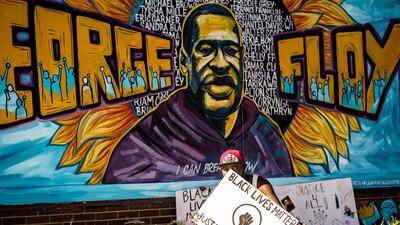
One contributor spoke of Churchill as contributing to the 1943 Bengal famine. Another said Churchill was a racist, and drew comparisons with the Nazis. Meanwhile a British newspaper revealed that "hard left and foreign activists try to topple Britain's statues". The newspaper detailed how statues to some British philanthropists, commemorated for their good works 200 years ago, are in reality also monuments to men (always men) who made their fortunes through the slave trade. All this has been energised by the Black Lives Matter movement and it has also provoked a political backlash.
No version of history can be an unquestionable truth
Statues of people who most of us have never heard of are being defended as if they are sacred to the well-being of the nation, rather than a legitimate part of the debate around not just who we were, but who we are now. And that is the catch. History is not only about the past. It is about the past interpreted in the present to help guide the future.
I don’t want to see statues vandalised, but I do want to learn more about the human beings who are glorified in public spaces and about the atrocities some committed to earn their fortunes. There have even been claims that challenging the reputations of great figures of the past is somehow “denying our history". It is not denying history. It is adding to history by hearing voices that too often have been silenced.
Winston Churchill remains for me a great British hero, the man who saved Britain and Europe from Nazi domination. But I also want to learn more about the 1943 Bengal famine and other stories modern historians may tell about this colossal figure. As Oliver Cromwell demanded, when he sat for a portrait in the 17th century, we need to see “warts and all".
And what are the reactionary voices afraid of? Is it the fact that heroes are imperfect human beings, like the rest of us? The real fears seem rooted in Britain’s present insecurity. Brexit is, predictably, a failure. The coronavirus vaccination programme is going well, but the British government has botched much of the pandemic.
The UK economy has contracted sharply, and when recent YouGov polls asked voters if they “wish they still had an empire," the UK came top in the imperial nostalgia stakes. Some 27 per cent of Britons admitted to wanting an empire back, ahead of the Netherlands (26 per cent) and Belgium (21 per cent). These statistics are depressing but also revealing.
A post-imperial backward looking confusion blights British politics. Last year some newspapers confected a ludicrous "row" about the BBC considering not singing "Rule, Britannia" in the Royal Albert Hall, a song written in 1740. The re-evaluation of Churchill and the Empire, plus questioning the characters of those memorialised in statues, are treated in some newspapers almost as acts of treason.
My own historical re-evaluation of empire began when a friend gave me a book called King Leopold's Ghost by Adam Hochschild. It is a disturbing account of the despicable treatment of people in the Congo during Belgium's imperial adventure in west Africa. The book did that most difficult thing – it made me think. Re-thinking prejudices and myths is what history is for. It is not a religion, which demands belief.
No version of history can be an unquestionable truth. Above all, history cannot simply be one perspective, most especially not only the account of the colonisers, ignoring the reality of slavery and abuse. I will be reading the new accounts of Churchill and the empire with interest – and will do so critically.
New wave historians of empire can themselves expect to be questioned rigorously, and they will be. But they must not be shouted down or ignored. Telling inconvenient truths is not a crime. It is a virtue.
Gavin Esler is a broadcaster and UK columnist for The National
How to avoid crypto fraud
- Use unique usernames and passwords while enabling multi-factor authentication.
- Use an offline private key, a physical device that requires manual activation, whenever you access your wallet.
- Avoid suspicious social media ads promoting fraudulent schemes.
- Only invest in crypto projects that you fully understand.
- Critically assess whether a project’s promises or returns seem too good to be true.
- Only use reputable platforms that have a track record of strong regulatory compliance.
- Store funds in hardware wallets as opposed to online exchanges.
F1 The Movie
Starring: Brad Pitt, Damson Idris, Kerry Condon, Javier Bardem
Director: Joseph Kosinski
Rating: 4/5
Ten tax points to be aware of in 2026
1. Domestic VAT refund amendments: request your refund within five years
If a business does not apply for the refund on time, they lose their credit.
2. E-invoicing in the UAE
Businesses should continue preparing for the implementation of e-invoicing in the UAE, with 2026 a preparation and transition period ahead of phased mandatory adoption.
3. More tax audits
Tax authorities are increasingly using data already available across multiple filings to identify audit risks.
4. More beneficial VAT and excise tax penalty regime
Tax disputes are expected to become more frequent and more structured, with clearer administrative objection and appeal processes. The UAE has adopted a new penalty regime for VAT and excise disputes, which now mirrors the penalty regime for corporate tax.
5. Greater emphasis on statutory audit
There is a greater need for the accuracy of financial statements. The International Financial Reporting Standards standards need to be strictly adhered to and, as a result, the quality of the audits will need to increase.
6. Further transfer pricing enforcement
Transfer pricing enforcement, which refers to the practice of establishing prices for internal transactions between related entities, is expected to broaden in scope. The UAE will shortly open the possibility to negotiate advance pricing agreements, or essentially rulings for transfer pricing purposes.
7. Limited time periods for audits
Recent amendments also introduce a default five-year limitation period for tax audits and assessments, subject to specific statutory exceptions. While the standard audit and assessment period is five years, this may be extended to up to 15 years in cases involving fraud or tax evasion.
8. Pillar 2 implementation
Many multinational groups will begin to feel the practical effect of the Domestic Minimum Top-Up Tax (DMTT), the UAE's implementation of the OECD’s global minimum tax under Pillar 2. While the rules apply for financial years starting on or after January 1, 2025, it is 2026 that marks the transition to an operational phase.
9. Reduced compliance obligations for imported goods and services
Businesses that apply the reverse-charge mechanism for VAT purposes in the UAE may benefit from reduced compliance obligations.
10. Substance and CbC reporting focus
Tax authorities are expected to continue strengthening the enforcement of economic substance and Country-by-Country (CbC) reporting frameworks. In the UAE, these regimes are increasingly being used as risk-assessment tools, providing tax authorities with a comprehensive view of multinational groups’ global footprints and enabling them to assess whether profits are aligned with real economic activity.
Contributed by Thomas Vanhee and Hend Rashwan, Aurifer
Kill%20
%3Cp%3E%3Cstrong%3EDirector%3A%3C%2Fstrong%3E%20Nikhil%20Nagesh%20Bhat%3C%2Fp%3E%0A%3Cp%3E%3Cstrong%3EStarring%3C%2Fstrong%3E%3A%20Lakshya%2C%20Tanya%20Maniktala%2C%20Ashish%20Vidyarthi%2C%20Harsh%20Chhaya%2C%20Raghav%20Juyal%3C%2Fp%3E%0A%3Cp%3E%3Cstrong%3ERating%3A%3C%2Fstrong%3E%204.5%2F5%3Cbr%3E%3C%2Fp%3E%0A
Skoda Superb Specs
Engine: 2-litre TSI petrol
Power: 190hp
Torque: 320Nm
Price: From Dh147,000
Available: Now
More from Rashmee Roshan Lall
COMPANY%20PROFILE
%3Cp%3E%3Cstrong%3EName%3A%20%3C%2Fstrong%3EQureos%0D%3Cbr%3E%3Cstrong%3EBased%3A%20%3C%2Fstrong%3EUAE%0D%3Cbr%3E%3Cstrong%3ELaunch%20year%3A%20%3C%2Fstrong%3E2021%0D%3Cbr%3E%3Cstrong%3ENumber%20of%20employees%3A%20%3C%2Fstrong%3E33%0D%3Cbr%3E%3Cstrong%3ESector%3A%20%3C%2Fstrong%3ESoftware%20and%20technology%0D%3Cbr%3E%3Cstrong%3EFunding%3A%20%3C%2Fstrong%3E%243%20million%0D%3Cbr%3E%3C%2Fp%3E%0A
Labour dispute
The insured employee may still file an ILOE claim even if a labour dispute is ongoing post termination, but the insurer may suspend or reject payment, until the courts resolve the dispute, especially if the reason for termination is contested. The outcome of the labour court proceedings can directly affect eligibility.
- Abdullah Ishnaneh, Partner, BSA Law
More from Neighbourhood Watch
Ten10 Cricket League
Venue and schedule Sharjah Cricket Stadium, December 14 to 17
Teams
Maratha Arabians Leading player: Virender Sehwag; Top picks: Mohammed Amir, Imad Wasim; UAE players: Shaiman Anwar, Zahoor Khan
Bengal Lions Leading player: Sarfraz Ahmed; Top picks: Sunil Narine, Mustafizur Rahman; UAE players: Mohammed Naveed, Rameez Shahzad
Kerala Kings Leading player: Eoin Morgan; Top picks: Kieron Pollard, Sohail Tanvir; UAE players: Rohan Mustafa, Imran Haider
Pakhtoons Leading player: Shahid Afridi; Top picks: Fakhar Zaman, Tamim Iqbal; UAE players: Amjad Javed, Saqlain Haider
Punjabi Legends Leading player: Shoaib Malik; Top picks: Hasan Ali, Chris Jordan; UAE players: Ghulam Shabber, Shareef Asadullah
Team Sri Lanka Cricket Will be made up of Colombo players who won island’s domestic limited-overs competition
Defending champions
World Series: South Africa
Women’s World Series: Australia
Gulf Men’s League: Dubai Exiles
Gulf Men’s Social: Mediclinic Barrelhouse Warriors
Gulf Vets: Jebel Ali Dragons Veterans
Gulf Women: Dubai Sports City Eagles
Gulf Under 19: British School Al Khubairat
Gulf Under 19 Girls: Dubai Exiles
UAE National Schools: Al Safa School
International Invitational: Speranza 22
International Vets: Joining Jack
UAE currency: the story behind the money in your pockets
On racial profiling at airports
MATCH INFO
Tottenham 4 (Alli 51', Kane 50', 77'. Aurier 73')
Olympiakos 2 (El-Arabi 06', Semedo')
How much of your income do you need to save?
The more you save, the sooner you can retire. Tuan Phan, a board member of SimplyFI.com, says if you save just 5 per cent of your salary, you can expect to work for another 66 years before you are able to retire without too large a drop in income.
In other words, you will not save enough to retire comfortably. If you save 15 per cent, you can forward to another 43 working years. Up that to 40 per cent of your income, and your remaining working life drops to just 22 years. (see table)
Obviously, this is only a rough guide. How much you save will depend on variables, not least your salary and how much you already have in your pension pot. But it shows what you need to do to achieve financial independence.
Mobile phone packages comparison
BACK%20TO%20ALEXANDRIA
%3Cp%3E%3Cstrong%3EDirector%3A%20%3C%2Fstrong%3ETamer%20Ruggli%3C%2Fp%3E%0A%3Cp%3E%3Cstrong%3EStarring%3A%20%3C%2Fstrong%3ENadine%20Labaki%2C%20Fanny%20Ardant%3C%2Fp%3E%0A%3Cp%3E%3Cstrong%3ERating%3A%20%3C%2Fstrong%3E3.5%2F5%3C%2Fp%3E%0A
Mercer, the investment consulting arm of US services company Marsh & McLennan, expects its wealth division to at least double its assets under management (AUM) in the Middle East as wealth in the region continues to grow despite economic headwinds, a company official said.
Mercer Wealth, which globally has $160 billion in AUM, plans to boost its AUM in the region to $2-$3bn in the next 2-3 years from the present $1bn, said Yasir AbuShaban, a Dubai-based principal with Mercer Wealth.
“Within the next two to three years, we are looking at reaching $2 to $3 billion as a conservative estimate and we do see an opportunity to do so,” said Mr AbuShaban.
Mercer does not directly make investments, but allocates clients’ money they have discretion to, to professional asset managers. They also provide advice to clients.
“We have buying power. We can negotiate on their (client’s) behalf with asset managers to provide them lower fees than they otherwise would have to get on their own,” he added.
Mercer Wealth’s clients include sovereign wealth funds, family offices, and insurance companies among others.
From its office in Dubai, Mercer also looks after Africa, India and Turkey, where they also see opportunity for growth.
Wealth creation in Middle East and Africa (MEA) grew 8.5 per cent to $8.1 trillion last year from $7.5tn in 2015, higher than last year’s global average of 6 per cent and the second-highest growth in a region after Asia-Pacific which grew 9.9 per cent, according to consultancy Boston Consulting Group (BCG). In the region, where wealth grew just 1.9 per cent in 2015 compared with 2014, a pickup in oil prices has helped in wealth generation.
BCG is forecasting MEA wealth will rise to $12tn by 2021, growing at an annual average of 8 per cent.
Drivers of wealth generation in the region will be split evenly between new wealth creation and growth of performance of existing assets, according to BCG.
Another general trend in the region is clients’ looking for a comprehensive approach to investing, according to Mr AbuShaban.
“Institutional investors or some of the families are seeing a slowdown in the available capital they have to invest and in that sense they are looking at optimizing the way they manage their portfolios and making sure they are not investing haphazardly and different parts of their investment are working together,” said Mr AbuShaban.
Some clients also have a higher appetite for risk, given the low interest-rate environment that does not provide enough yield for some institutional investors. These clients are keen to invest in illiquid assets, such as private equity and infrastructure.
“What we have seen is a desire for higher returns in what has been a low-return environment specifically in various fixed income or bonds,” he said.
“In this environment, we have seen a de facto increase in the risk that clients are taking in things like illiquid investments, private equity investments, infrastructure and private debt, those kind of investments were higher illiquidity results in incrementally higher returns.”
The Abu Dhabi Investment Authority, one of the largest sovereign wealth funds, said in its 2016 report that has gradually increased its exposure in direct private equity and private credit transactions, mainly in Asian markets and especially in China and India. The authority’s private equity department focused on structured equities owing to “their defensive characteristics.”
Cricket World Cup League 2 Fixtures
Saturday March 5, UAE v Oman, ICC Academy (all matches start at 9.30am)
Sunday March 6, Oman v Namibia, ICC Academy
Tuesday March 8, UAE v Namibia, ICC Academy
Wednesday March 9, UAE v Oman, ICC Academy
Friday March 11, Oman v Namibia, Sharjah Cricket Stadium
Saturday March 12, UAE v Namibia, Sharjah Cricket Stadium
UAE squad
Ahmed Raza (captain), Chirag Suri, Muhammad Waseem, CP Rizwan, Vriitya Aravind, Asif Khan, Basil Hameed, Rohan Mustafa, Kashif Daud, Zahoor Khan, Junaid Siddique, Karthik Meiyappan, Akif Raja, Rahul Bhatia
WHEN TO GO:
September to November or March to May; this is when visitors are most likely to see what they’ve come for.
WHERE TO STAY:
Meghauli Serai, A Taj Safari - Chitwan National Park resort (tajhotels.com) is a one-hour drive from Bharatpur Airport with stays costing from Dh1,396 per night, including taxes and breakfast. Return airport transfers cost from Dh661.
HOW TO GET THERE:
Etihad Airways regularly flies from Abu Dhabi to Kathmandu from around Dh1,500 per person return, including taxes. Buddha Air (buddhaair.com) and Yeti Airlines (yetiairlines.com) fly from Kathmandu to Bharatpur several times a day from about Dh660 return and the flight takes just 20 minutes. Driving is possible but the roads are hilly which means it will take you five or six hours to travel 148 kilometres.